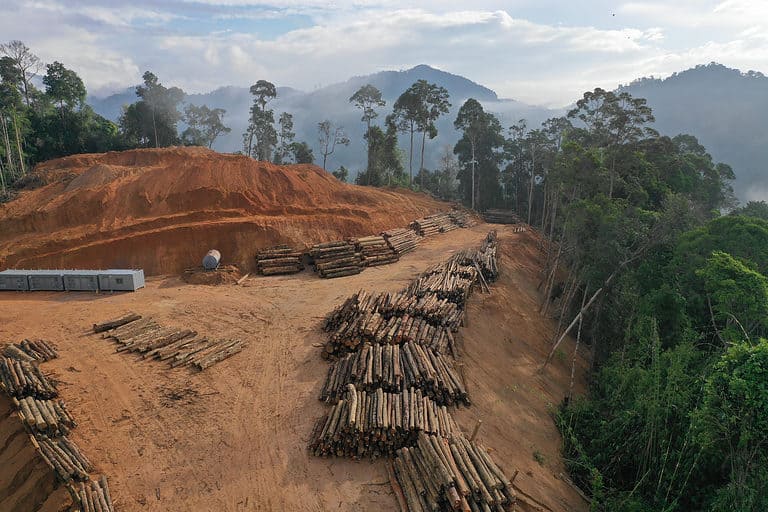

A rainforest is defined as a forest where rainfall is abundant and even continuous. A tropical rainforest gets between 96 and 177 inches every year. The amount of rainfall in a temperate rainforest isn’t well defined, but it is still heavy. Definitions may also include the density of the tree canopy and plants that don’t need fire for their seeds to germinate. In any case, rainforests are the habitat of much of the world’s flora and fauna, some of which are rare or even undiscovered. With that in mind, here are 10 amazing animals that live in rainforests around the world.
Australian False Vampire Bat
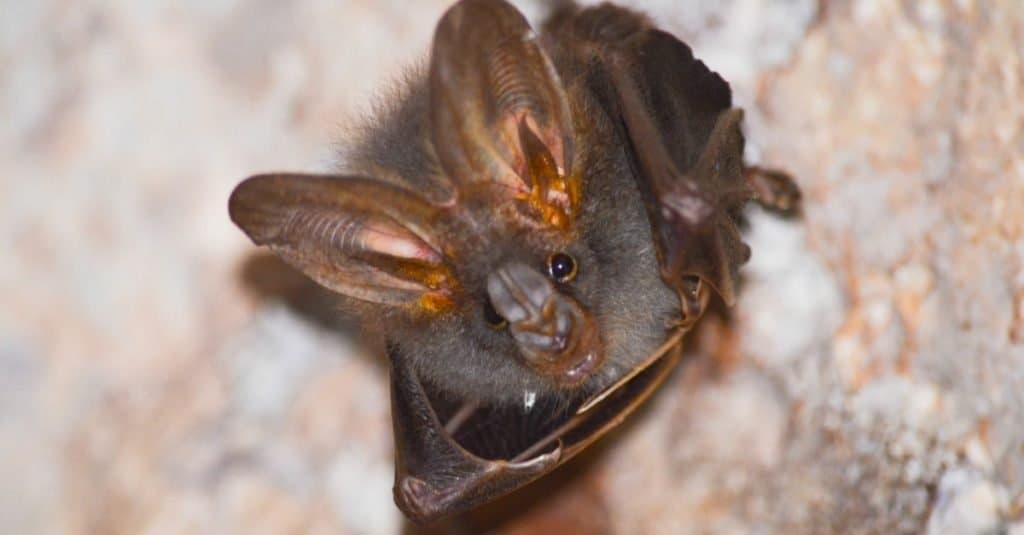
Ghost bats, also known as false vampire bats, are perfectly harmless creatures.
©Visanuwit thongon/Shutterstock.com
False Vampire bats, also called ghost bats, are only found in Australia and live in the North Queensland rainforest where they shelter in crevices and old mines. The false vampire bat’s habitat is being destroyed, making it rare to find very large colonies of these bats. The animal has a body length of between 4.53 and 5.12 inches and weighs between 4.58 to 5.99 ounces. It has a nearly 20-inch wingspan and a distinctive nose leaf. Its fur is silvery, which explains the nickname ghost bat.
One thing that makes this rainforest animal unique among Australian bats is that it’s a carnivore. False Vampire bats eat birds, frogs, insects, mammals, and reptiles. They also aren’t above eating other bats, devouring the entire animal, including bones, teeth, fur, and feathers. The false vampire bat family gets its name from the idea that they were once thought to be vampire bats, feeding on the blood of other animals. But they were later found to be bats that eat the entire bodies of their prey.
Orange Albatross Butterfly
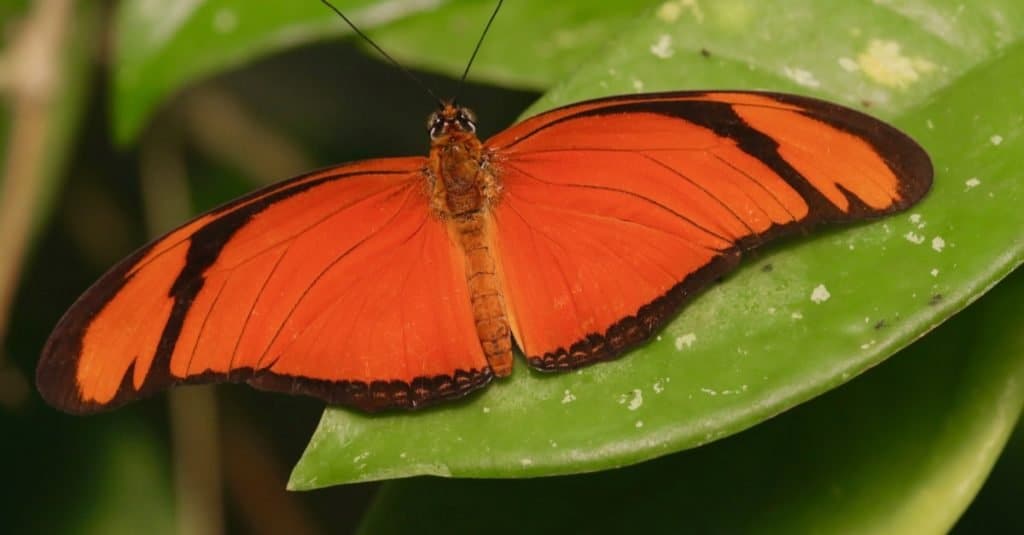
Butterflies, like the orange albatross butterfly, use their feet to taste.
©Kiki Dohmeier/Shutterstock.com
The wing color of the male of the orange albatross butterfly is unique, being wholly orange. The wings of the females are also orange, but they have black bands and a black border. Females tend to stay in the canopy of the forest while the males can be seen puddling in damp rivers and stream banks.
The orange albatross butterfly has a wingspan of between 2.25 and 3 inches and sips nectar from a variety of tropical plants. In its larval stage, the orange albatross caterpillar uses caper plants as hosts. These beautiful rainforest animals are found in the rainforests of Northern India, Malaysia, Sulawesi, and the Philippines.
South American Tapir
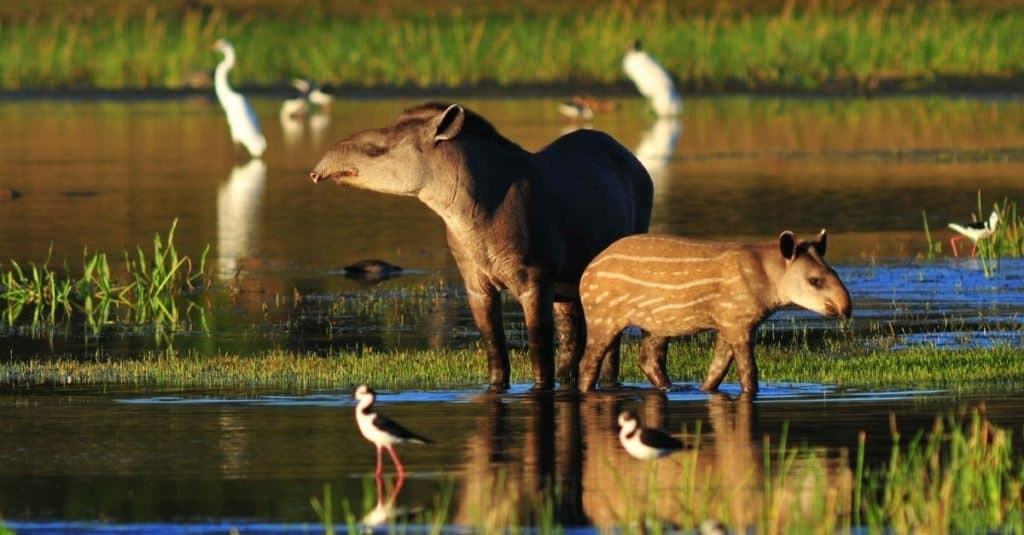
Tapirs are capable swimmers and divers that will flee predators by moving to water.
©Lucas Leuzinger/Shutterstock.com
Native to the rain forests of Central and South America, the South American tapir is the largest extant terrestrial mammal found in the Amazon. Its body, covered in dark brown hairs, ranges in length from 5.9 to 8.2 feet and stands between 30 to 43 inches high at the shoulder. Tapirs weigh between 500-700 pounds. It has a prehensile nose that allows it to pull leaves, buds, shoots, and fruit from trees. This rainforest animal’s size makes it prey for only the biggest and most aggressive predators such as crocodiles and jaguars. Tapirs live between 25 and 30 years.
The South American tapir is a herbivore and enjoys a breeding period in the spring. After a pregnancy of about 13 months, the female tapir gives birth to a 15-pound baby with a brown coat streaked with white.
Poison Dart Frog
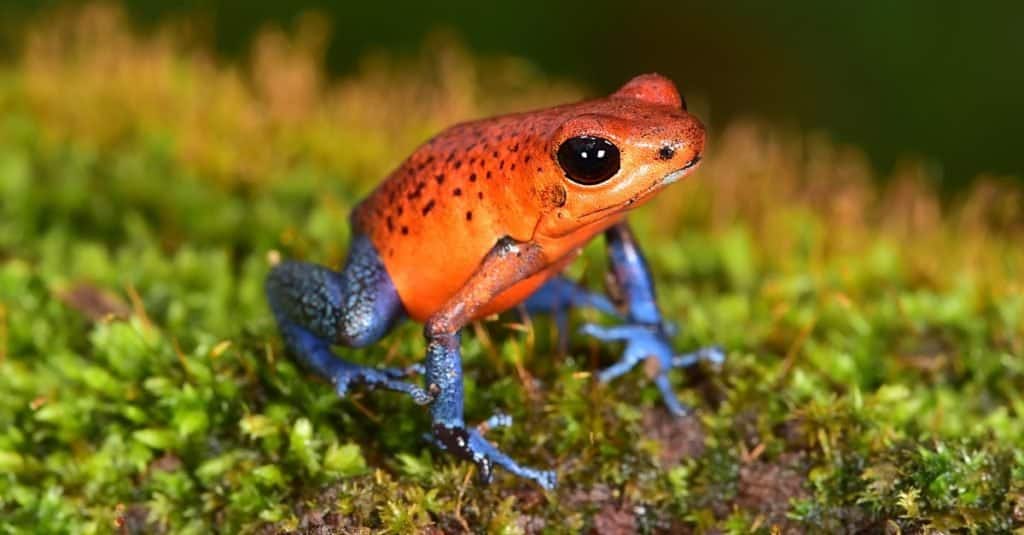
Beautiful but deadly: poison dart frogs have toxic skin.
©worldswildlifewonders/Shutterstock.com
Poison dart frogs are tiny with vivid, jewel-like colors. But don’t let their lovely colors or small stature fool you. These rainforest creatures are dangerous to handle thanks to the potent venom in their skin. Found in the rainforests of Central and South America, poison dart frogs get their name from the Native American practice of dipping the tips of their darts into their skin to make their weapons more lethal. The frogs used for this were all members of the Phyllobates genus.
The bright colors of these rainforest animals warn potential predators of their toxicity. The toxins don’t arise in the frog naturally but come from the ants and termites that they eat. Poison dart frogs lay their eggs in places where there’s at least a little moisture, such as leaves after rainfall. When the tadpoles hatch out of the eggs, the adult carries them one by one to a body of water. The mother may provide unfertilized eggs for the tadpoles to eat until they undergo metamorphosis.
Emerald Boa Constrictor
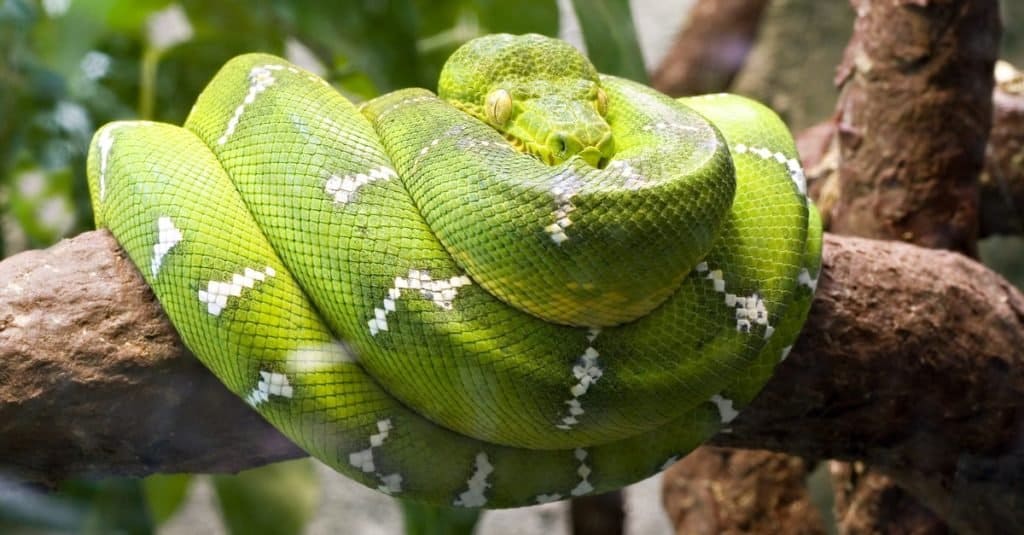
The Emerald boa constrictor is also known as the green tree boa.
©Hannamariah/Shutterstock.com
The beautiful emerald boa constrictor, also called the emerald tree boa, gets its name from its bright green color, which is unique among the snakes of South America. The green scales are punctuated with white broken stripes that resemble lightning bolts. Juveniles are red or orange before they take on the vibrant green color between the ages of nine and 12 months.
The snake, which can grow to 6 feet in length, is found in Northern South America. Emerald boas eat small birds, frogs, lizards, and mammals. Thanks to its slow metabolism, the emerald boa doesn’t need to feed that often and can stay healthy even if it doesn’t eat for months. This rainforest animal is nonvenomous but has well-developed front teeth that can deliver a memorable bite.
Banana Slug
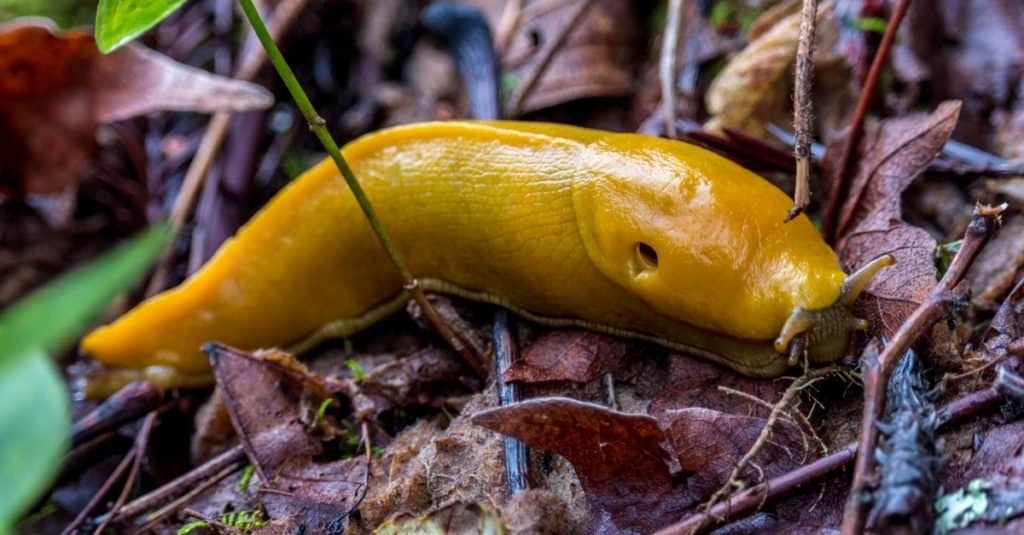
A banana slug is among the slowest creatures on Earth, moving at a maximum speed of six and a half inches per minute.
©MC Creative/Shutterstock.com
Not all rainforests are tropical. The Hoh Forest in the U.S. state of Washington is a temperate rainforest, and one of its most famous denizens is the banana slug. As its name suggests, the banana slug is often bright yellow, but it can also be green, white, or shades of brown. These slugs also change colors according to their environment and their health.
The Pacific banana slug, which is found in the Hoh forest, can grow to nearly 10 inches long and weigh a quarter of a pound. It’s also long-lived for a slug, living as long as 7 years.
Indri
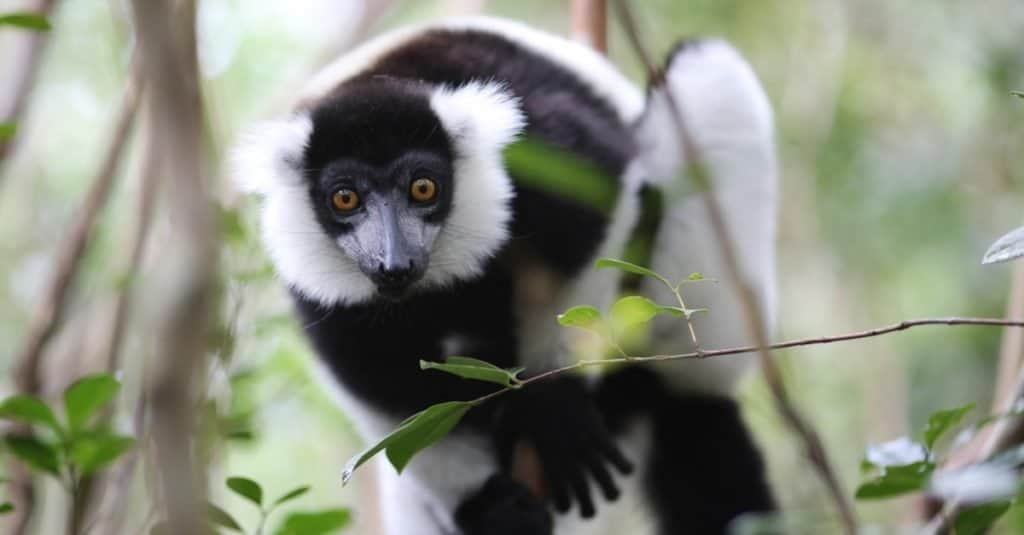
The Indri’s hind legs are very long, and come in handy when jumping through the trees; the Indri can jump up to 30 ft (10 m) between branches.
©Iryna Art/Shutterstock.com
The indri or babakoto is a critically endangered lemur native to Madagascar. It is the largest lemur. The indri has a body length of 23.5 to 28 inches and weighs between 13 and 21 pounds. This animal has a woolly black coat with white patches found on the arms, the legs, and the back of its head and neck, though the face is naked and its skin is black. The staring eyes are green, and the ears have black tufts.
The indri is a herbivore that eats leaves, seeds, flowers, and fruit. They live in family groups. Indris are monogamous and will only seek another mate when their original mate dies. Family groups are made up of a mated pair and their offspring. Females dominate males, with the alpha female leading the group as it forages among the trees. The indri is known for its vocalizations, which can be roars, wails, honks, wheezes, and hums.
Blue Bird-of-Paradise
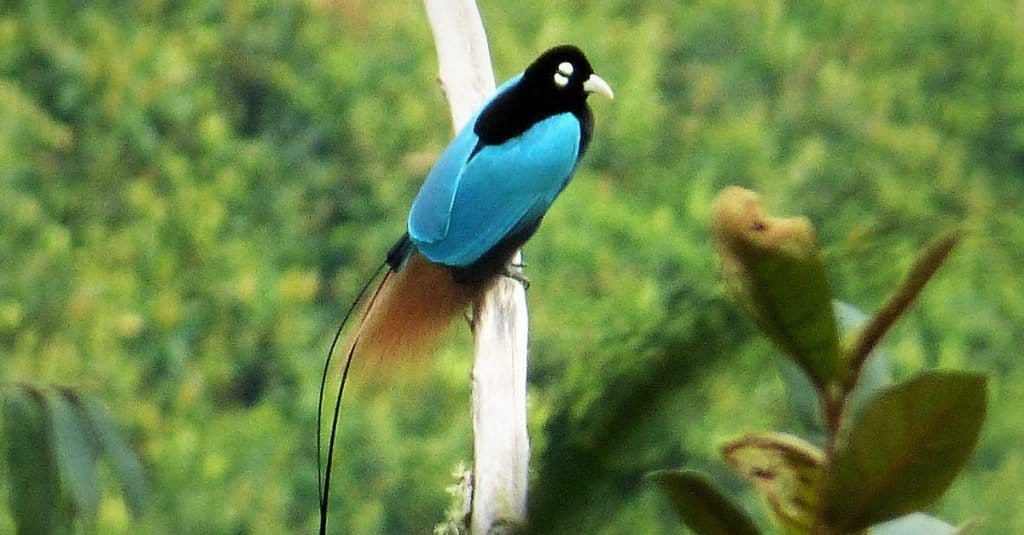
The blue bird of paradise is regarded by ornithologists as the loveliest of all birds.
©gailhampshire from Cradley, Malvern, U.K / CC BY 2.0, via Wikimedia Commons – Original / License
The blue bird-of-paradise, a stunningly beautiful rainforest creature, is found in Eastern New Guinea. Females and juveniles form flocks, but adult males are usually solitary. Males have a black head with eyes ringed in white, a velvety blue back, and colorful flank plumes. Their tail filaments are what make them unique. At 13.5 inches long, they are longer than the bird’s 12-inch long body.
The male blue bird-of-paradise uses his plumage to impress potential mates in an amazing upside-down courtship dance, all the while making a metallic noise that makes him sound like a wind-up toy. If the female is receptive, they will mate. The female will proceed to build a nest and lay one or two eggs, as the male goes on to woo yet another female.
Jaguar
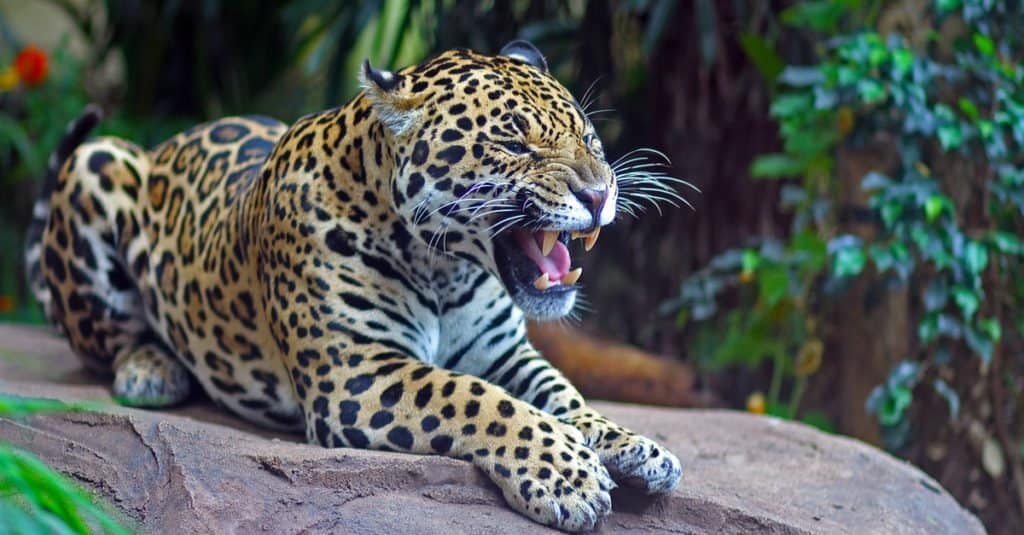
The word jaguar, or yaguar, means he who kills with one leap.
©GoWildPhotography/Shutterstock.com
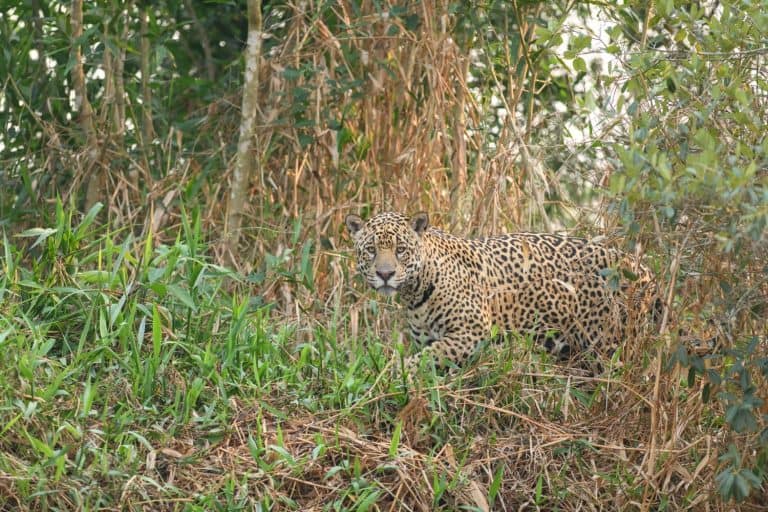
The amazing, powerful jaguar is the largest wild cat in the New World. A jaguar can be 6.25 feet long, excluding the tail, and weigh as much as 350 pounds. It can be mistaken for a leopard, but it is bigger and stockier and has a shorter tail. Instead of individual spots, it has a pattern of attractive rosettes on much of its body, and spots along its backbone may merge to form a single dark line.
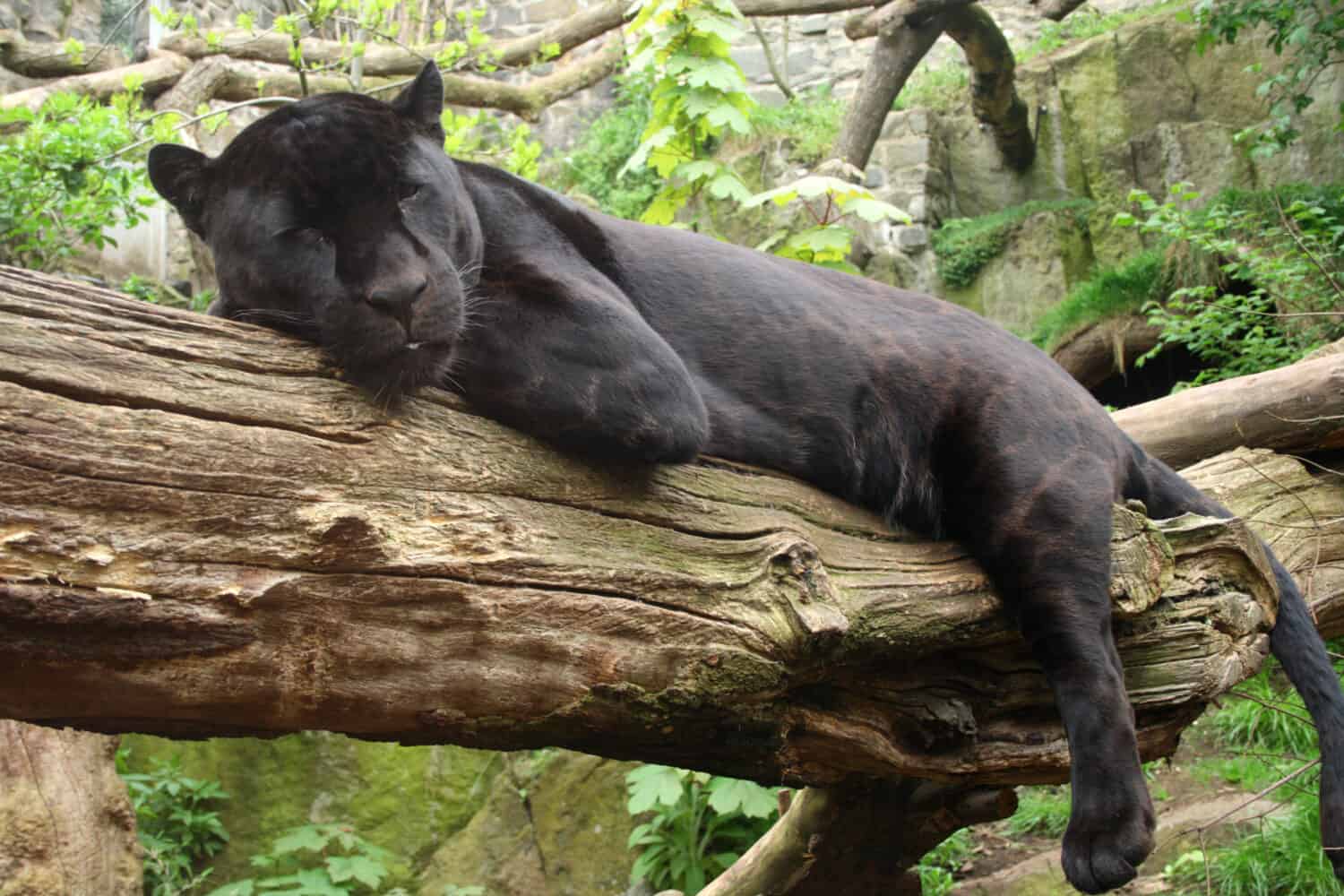
Black jaguars aren’t as rare as some think, and their spots can be detected when light is focused on the animal’s coat. The jaguar lives in the rainforests of Central America and Northern South America close to bodies of water. Jaguars are exceptional swimmers.
Goliath Bird-Eating Spider
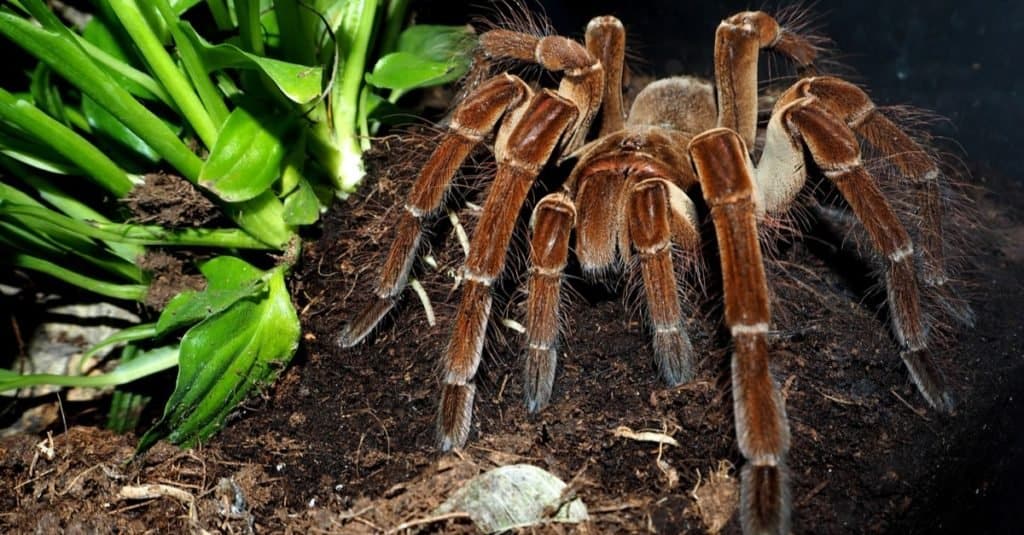
Goliath bird-eating spiders don’t always eat birds, but they occasionally do.
©NataliSel/Shutterstock.com
Despite its name, the Goliath bird-eating spider primarily feeds on insects and small vertebrates, and incidents of it catching and eating birds are rare. However, the Goliath part of its name is accurate because these spiders are enormous! Only Australia’s huntsman spider has a longer leg span. The Goliath bird-eater can weigh as much as 6.02 ounces, have a body that’s 5 inches long, and a leg span that’s almost a foot wide. Its fangs are formidable at 1.57 inches, but its venom is fairly harmless to humans. Sometimes, the spider doesn’t inject venom at all when it bites.
The body of the Goliath bird-eating spider is hairy, with hairs ranging in color from tan to golden. Females live much longer than males. A female can live as long as 25 years. Males only live between three and six years. However, female bird-eating spiders don’t kill and eat the males after they mate as other tarantulas do. Females lay between 100 and 200 eggs which will hatch in 6-8 weeks.