
Beneath its lush emerald canopy, the rainforest is never silent. Countless voices echo across its towering trees and tangled vines, producing a wild symphony of sound. From the shrill calls of tree frogs to the piercing cry of howler monkeys, the rainforest is a chorus of some of the loudest voices on Earth. Here are the 10 loudest animals living in the rainforest!
10. Coquí (Eleutherodactylus)
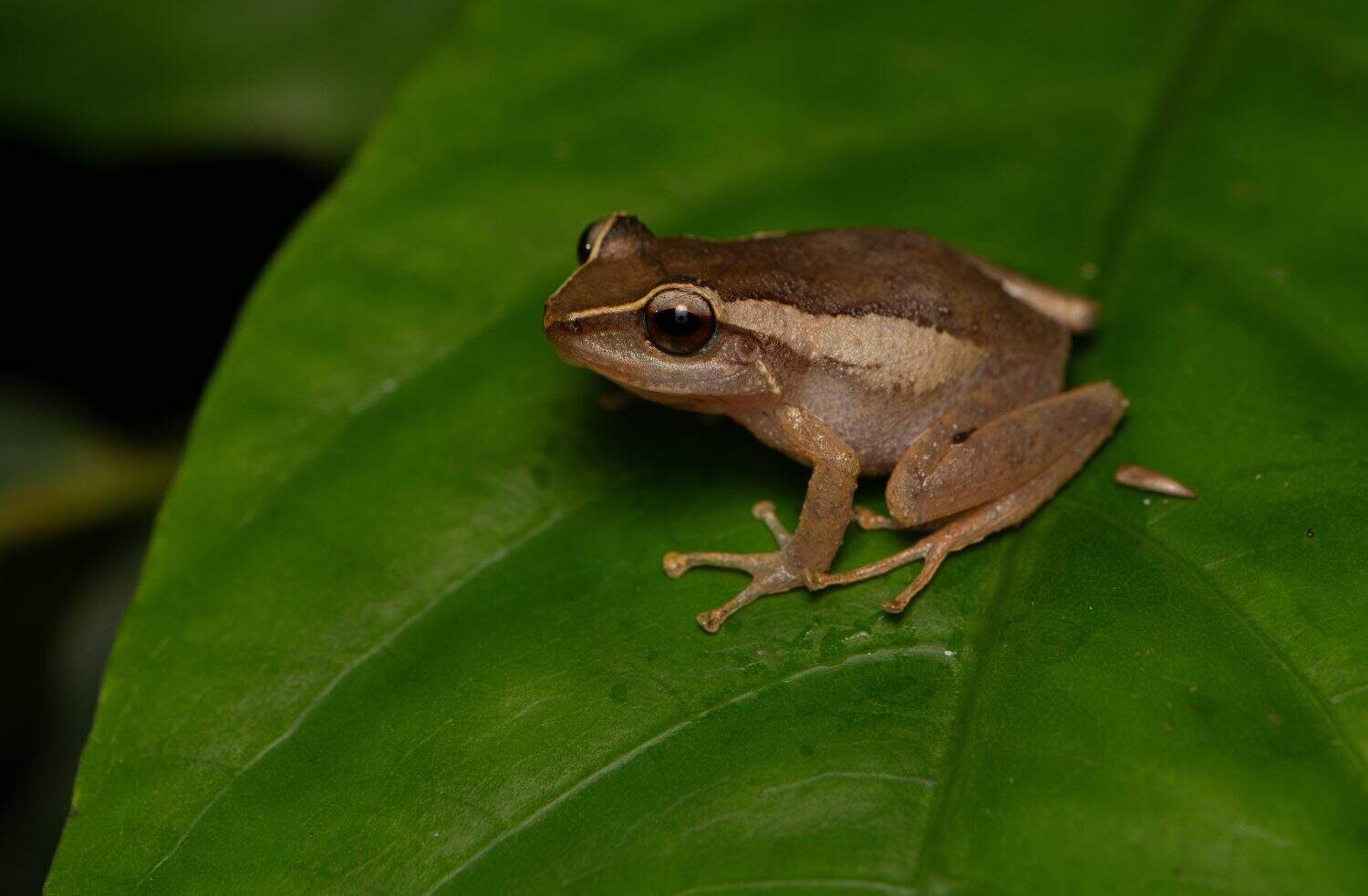
Coquí frogs are some of the loudest frogs in the world.
©Julio Salgado/Shutterstock.com
Native to Puerto Rico, the coquí frog has become an unofficial symbol of the island. Although there are several species in the genus, the upland coquí (Eleutherodactylus portoricensis) and the common coquí (Eleutherodactylus coqui) are well known for their particularly loud calls. Male coquís are incredibly noisy, with nighttime mating calls that can reach 80 to 90 decibels. Their name, coquí, is actually onomatopoeic, mimicking the sound that they make. Despite their powerful voice, however, these tree frogs are tiny, typically only growing 1 to 2 inches long. Coquís have also been introduced as non-native species in areas outside Puerto Rico, including the U.S. Virgin Islands, Florida, and Hawaii.
9. Horned Screamer (Anhima cornuta)
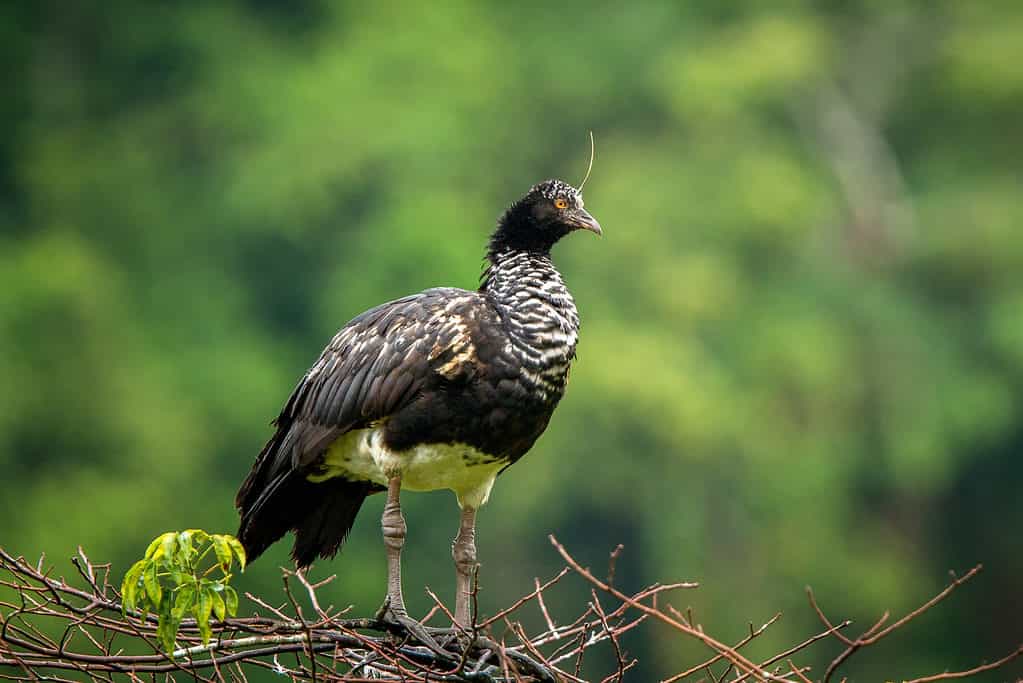
Horned screamers are related to swans, geese, and ducks.
©Jiri Hrebicek/Shutterstock.com
The horned screamer is an apt name for this unique and unusual bird. Its call, which reaches a 100 to 110 decibels, is so loud it could put many horror film screams to shame. Found in the Amazonian lowlands, these gigantic birds sport a thin, 6-inch-long horn made of cartilage atop their heads. In addition to this unicorn-like ornament, they also have 2-inch-long bone and keratin spurs on each wing, which they use for fighting. Weighing up to 7 pounds, horned screamers have a wingspan of about 5.5 feet. They are covered in gray and black feathers with a white underbelly.
8. African Cicada (Brevisana brevis)
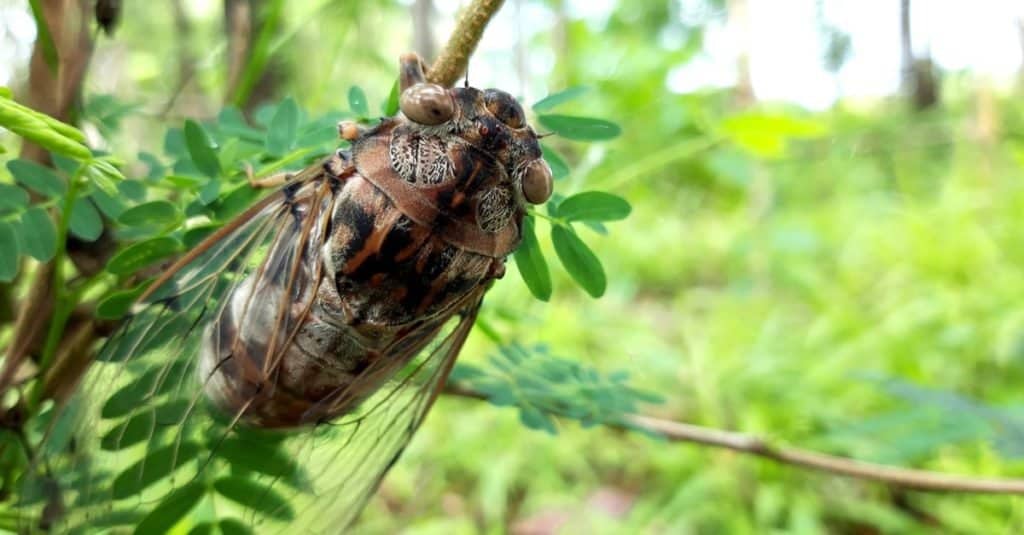
African cicadas are also called shrill thorntree cicadas.
©suradech123yim/Shutterstock.com
Some of the rainforest’s most thunderous residents are cicadas. These insects can be surprisingly loud, such as the African cicada, which can produce a sound pressure level of 106.7 decibels — a sound as loud as a power drill or a lawnmower. Found in South Africa, Angola, Malawi, and Zimbabwe, male African cicadas produce this deafening sound by vibrating a special, drum-like organ called a tymbal. To avoid the chaos of competing calls, different species have developed a clever strategy: acoustic partitioning. This allows the cicadas to “split” the sound space and communicate without interfering with one another.
7. Screaming Piha (Lipaugus vociferans)
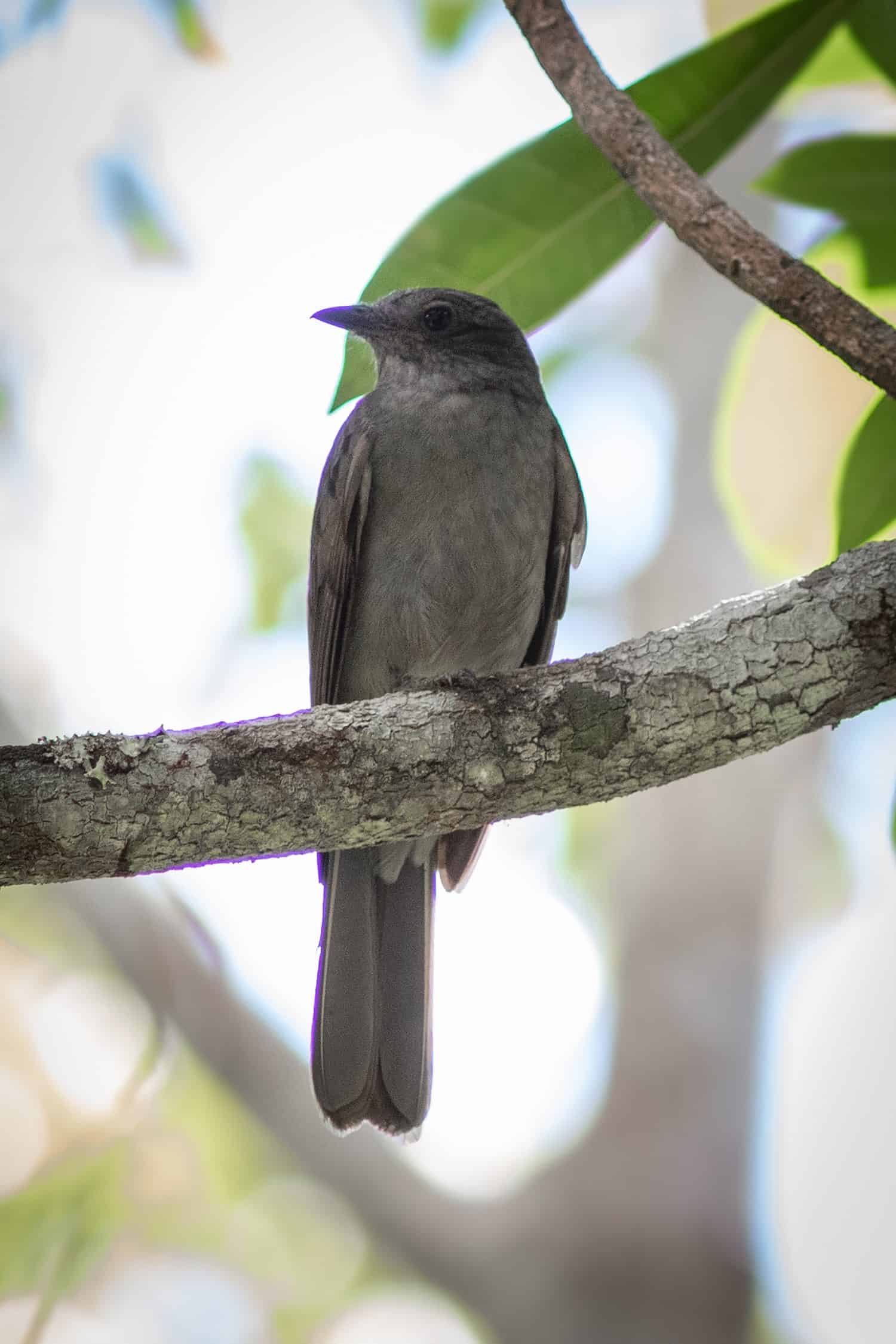
Screaming pihas live in the lower and middle canopies of the rainforest.
©Diego Murta/Shutterstock.com
With a name like “screaming piha,” you can definitely expect this bird to make some impressive noise. This tropical bird is the second loudest bird ever recorded, with a piercing whistle-like song that can reach 116 decibels. That’s a sound louder than a chainsaw, and almost as loud as a riveting gun. Although its gray and gray-brown feathers may seem a bit dull for a tropical rainforest bird, the screaming piha compensates for its lack of flashy plumage with its powerful call. This unmistakable three-part song is a common sound throughout the Amazon rainforest, as these birds are both widespread and abundant.
6. Bare-Throated Bellbird (Procnias nudicollis)
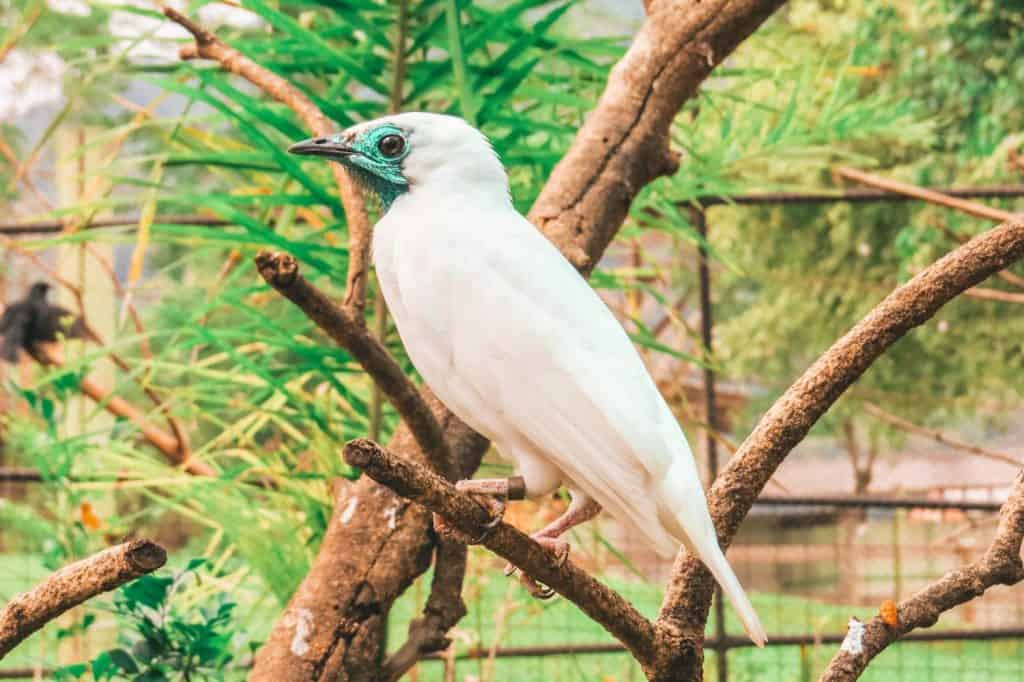
The bare-throated bellbird’s call can be heard from nearly a mile away.
©Maycon Cesconetto/Shutterstock.com
The bare-throated bellbird is a striking creature found in fruit-rich rainforests. Native to parts of Brazil, Paraguay, and Argentina, these unique birds are known for their incredibly powerful calls. While a specific decibel measurement has not yet been recorded, their voices are likely as strong as their cousin, the white bellbird, which can reach up to 125 decibels. Male bare-throated bellbirds are stark white with a vibrant, teal throat, while females are a mix of olive and yellow with a blackish throat. Unfortunately, these beautiful birds are a Near-Threatened species, and some populations in northeastern Brazil have been completely wiped out.
5. White Bellbird (Procnias albus)
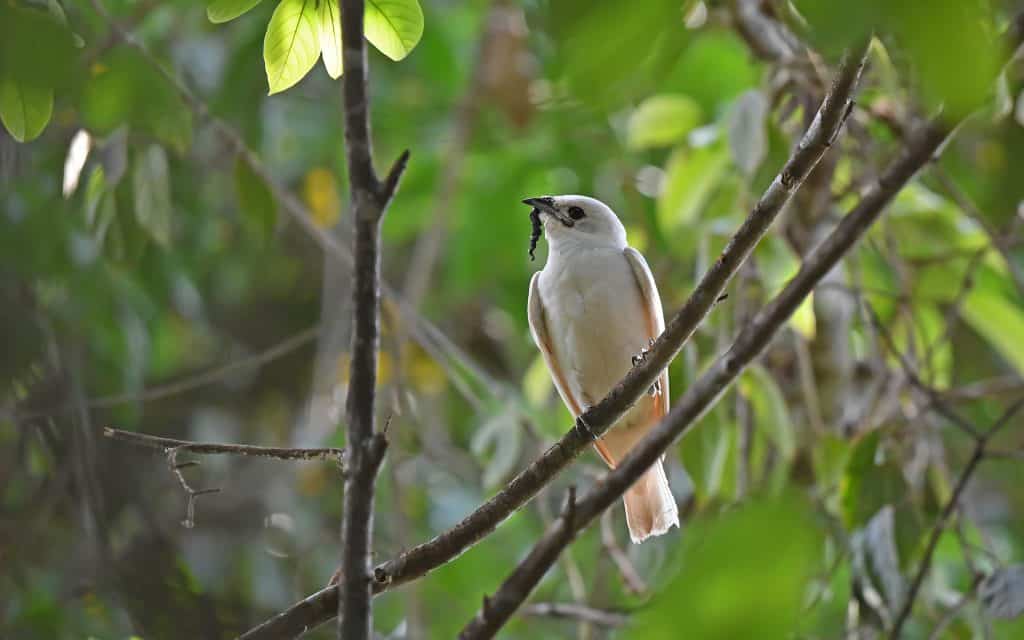
Male white bellbirds use their loud calls to attract females.
©(c) Christoph Moning, some rights reserved (CC BY) / CC BY 4.0 / Wikimedia Commons – Original / License
With one of the loudest bird songs in the world, the white bellbird produces a call documented at an astounding 125 to 128 decibels — more than three times louder than the screaming piha. However, the bird’s song isn’t a melodic, sweet sound, but an abrupt, piercing clang, like an emergency alarm, guaranteed to startle anyone in the vicinity. Exclusively found in the rainforests of northeastern South America, only male white bellbirds produce calls at this impressive volume. Female birds are remarkably quiet, but the males’ powerful bell-like call can rival the noise produced by a live rock concert.
4. Salmon-Crested Cockatoo (Cacatua moluccensis)
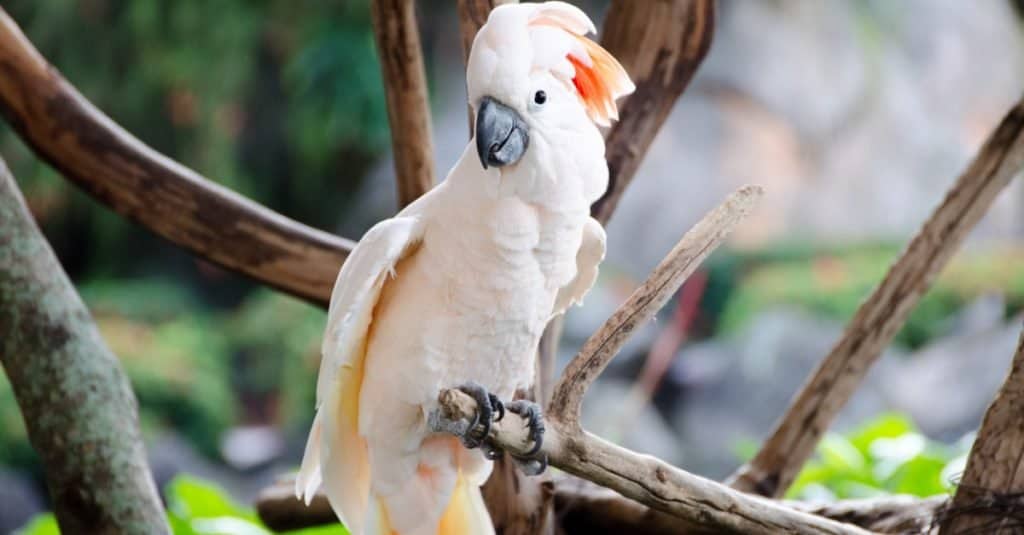
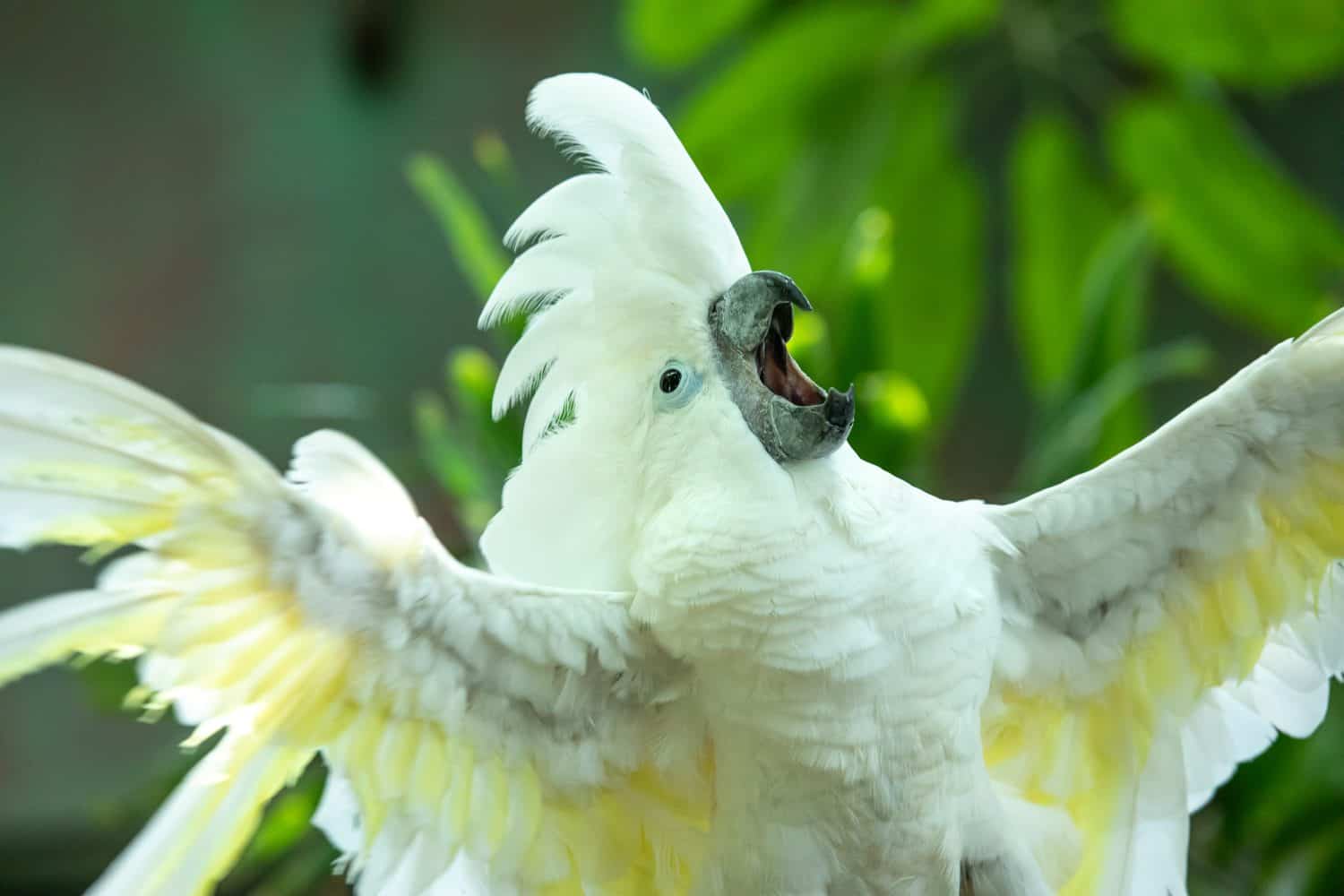
Salmon-crested cockatoos eat insects, larvae, seeds, nuts, berries, and coconuts.
©CG3/Shutterstock.com
The salmon-crested cockatoo is a stunning and intelligent bird, known for being the loudest in its family, Cacatuidae. With calls reaching up to 129 decibels, the bird’s squawks are as loud as a jackhammer. Native to the dense forest canopies of the Seram Archipelago in Eastern Indonesia, these birds’ powerful calls allow them to communicate across vast distances and through the thick jungle vegetation. These large, beautiful birds have white feathers and a striking salmon-pink crest. Sadly, the salmon-crested cockatoo is an Endangered species, and its population is rapidly declining due to habitat loss and the illegal pet trade.
3. Lesser Bulldog Bat (Noctilio albiventris)
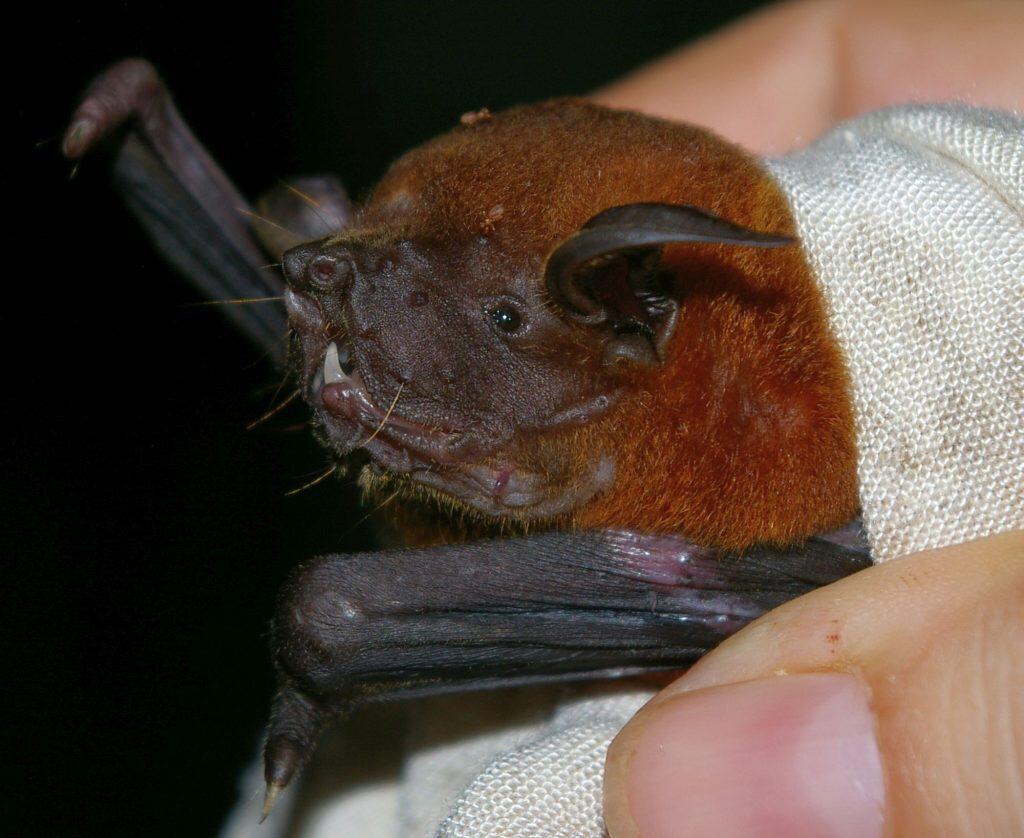
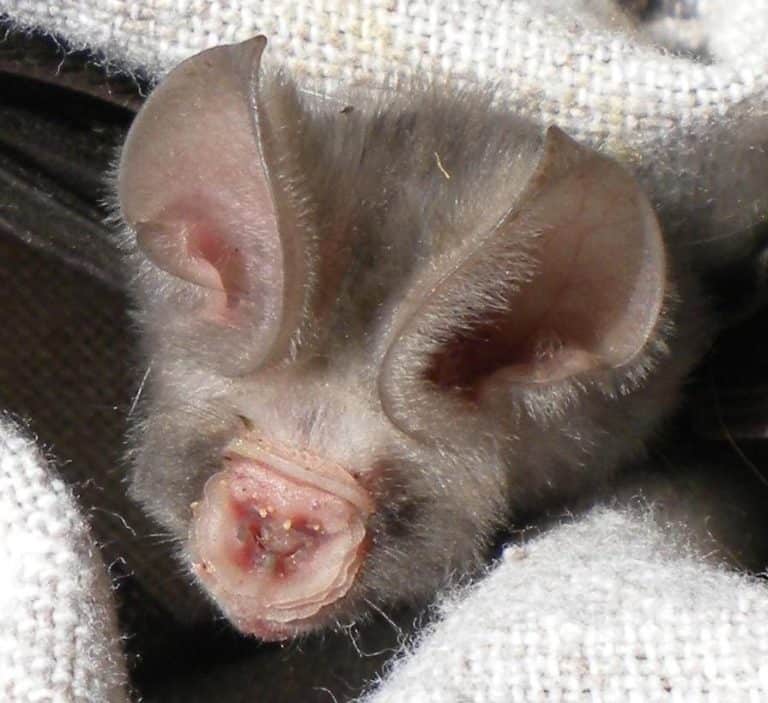
At just 2 to 3.5 inches long, lesser bulldog bats prove that even small animals can make a big sound.
©Felineora / CC BY-SA 3.0 / Wikimedia Commons – Original / License
The lesser bulldog bat has a chirp that can reach up to 137 decibels, just slightly quieter than its larger cousin, the greater bulldog bat. Lesser bulldog bats use their extremely high-frequency chirps to locate insects flying above water. Found in South and Central America, these surprisingly loud bats fly low and will even scoop up insects off the water’s surface. Lesser bulldog bats have a distinctive face, which resembles a bulldog with its puffy cheeks and swollen-looking lips. Their fur ranges from yellowish to reddish and grayish.
2. Greater Bulldog Bat (Noctilio leporinus)
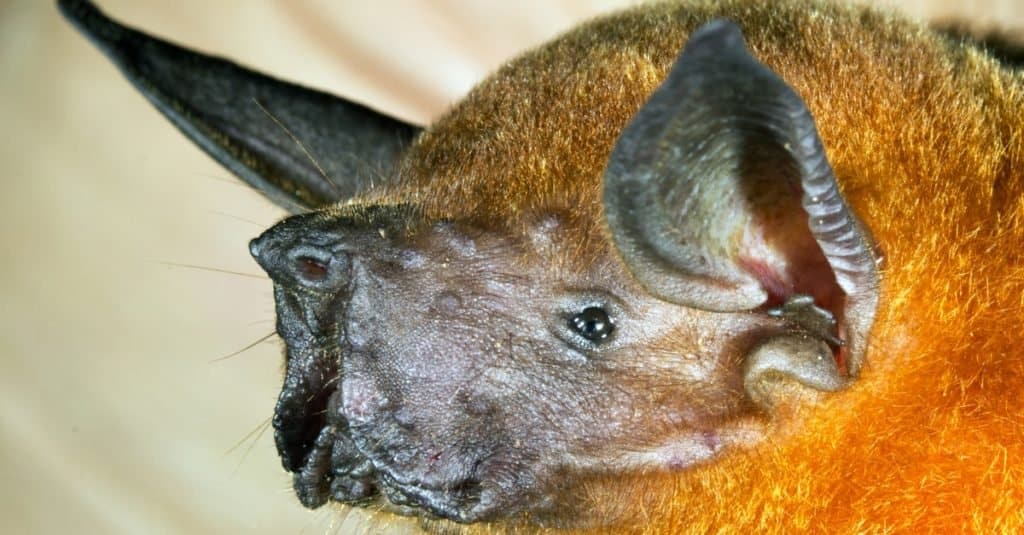
Greater bulldog bats emit a surprisingly high frequency for their size.
©Dr Morley Read/Shutterstock.com
The greater bulldog bat, also known as the fisherman bat, is one of the loudest animals in the rainforest. Producing calls that can exceed 140 decibels, it is the loudest bat on Earth. These bats live near water and use their loud, high-frequency chirps for echolocation, allowing them to pinpoint and snatch fish from the water with their large claws.
Like their smaller cousins, greater bulldog bats are named for their distinctive bulldog-like faces. Male bats are easily identified by their bright orange-red fur, while females and younger bats have more subdued brown or dull gray colors. Found in tropical regions of Central and South America, Mexico, and the Caribbean, the greater bulldog bat measures between 3.8 to 5.2 inches long.
1. Howler Monkey (Alouatta)
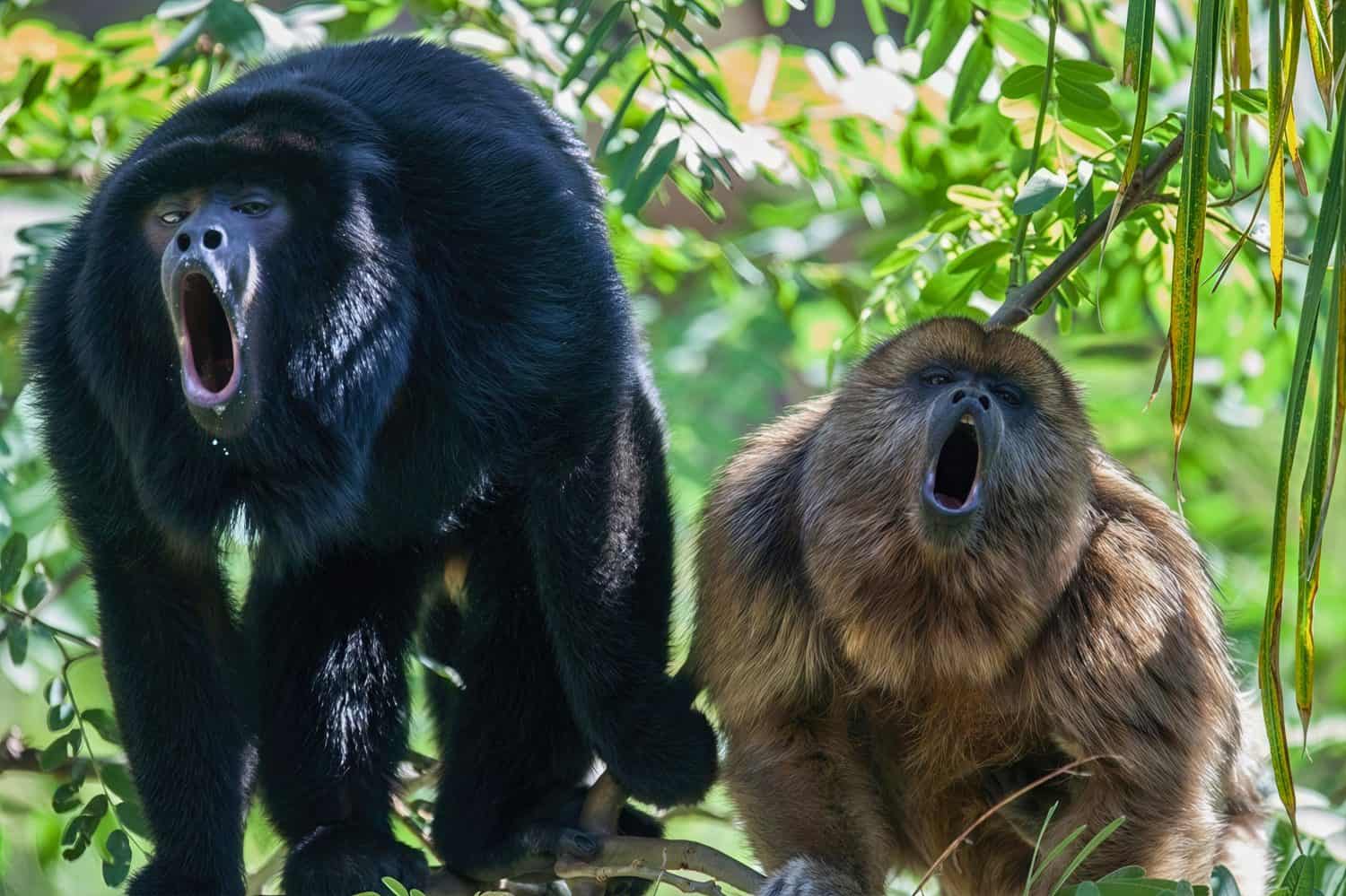
Both male and female howler monkeys use their powerful calls to signal distress or warn off intruders.
©Martens Coyotes/Shutterstock.com
It’s no surprise that the howler monkey lives up to its name, topping this list with one of the loudest voices in the rainforest. Native to Central and South America, these large primates have an especially large hyoid bone (similar to an Adam’s apple), which allows them to produce such impressive sounds. Males have larger hyoid bones, allowing them to produce louder sounds than females.
There are at least 13 species of howler monkeys, with their calls ranging from 90 to 140 decibels. They are one of the loudest land animals in the world, and their distinctive deep, guttural howls can be heard up to 3 miles away. Their calls, which can sound eerily similar to a lion’s roar, serve as a form of long-distance communication between monkey troops, especially in the mornings and evenings each day.