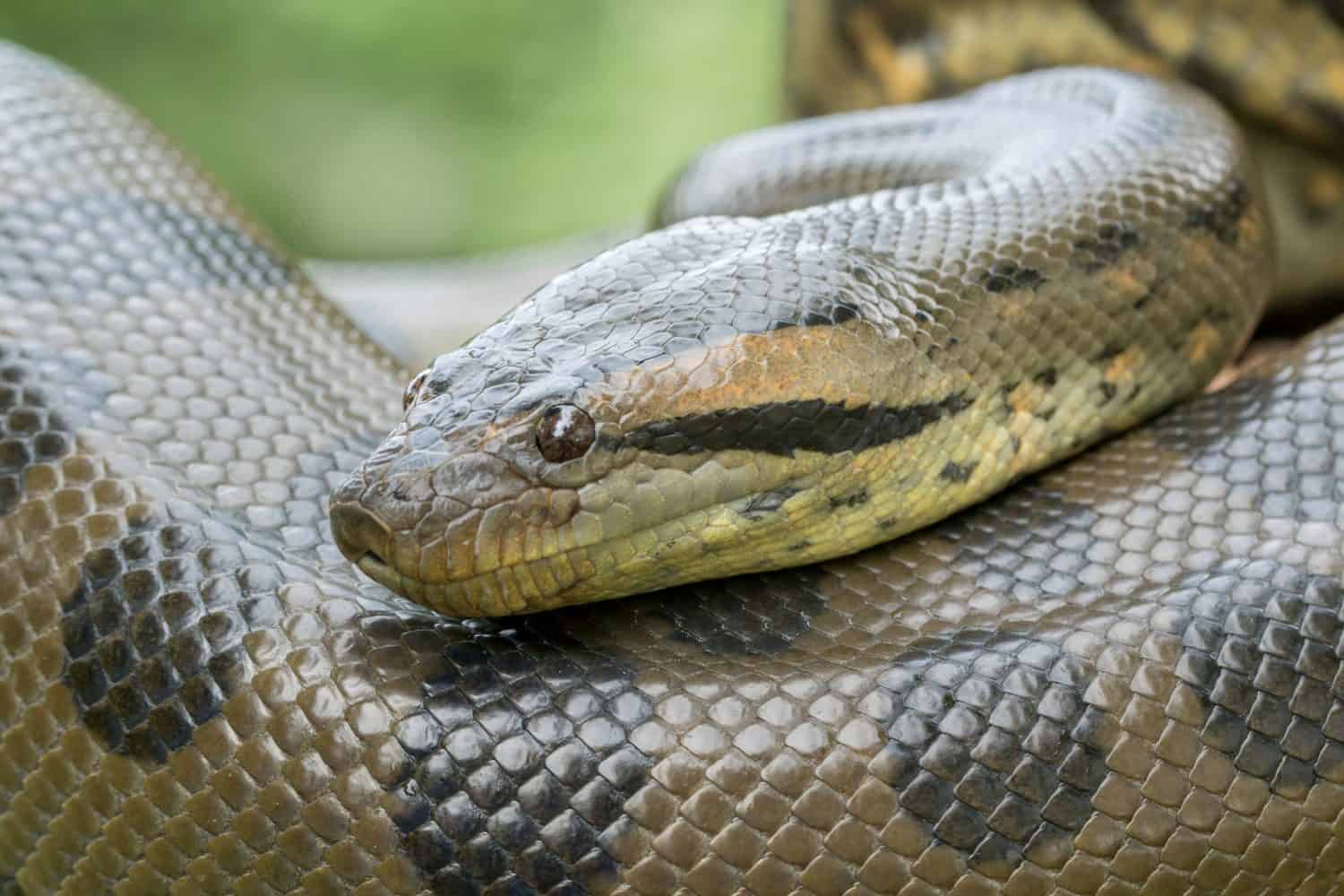

Snakes are some of the most interesting creatures on the planet. With a variety of species, each with unique traits, snakes amaze us with their fascinating abilities and behaviors. One famous species is the green anaconda. This Instagram post by @the_3obs discusses how females of this species cannibalize the males after mating! Read here to learn about one of nature’s most bizarre courtship rituals—and how much scientists know about why snakes do it.

Cannibalism sometimes occurs in snakes.
©slowmotiongli/Shutterstock.com
Cannibals By Nature
As is common in most snake species, female green anacondas are typically larger than males. A female typically grows to around 15 feet long, and her weight ranges from 70 to 170 pounds. Some of the largest ever have grown past 29 feet, making these snakes truly intimidating. Males, on the other hand, typically reach lengths of 9 to 14 feet and weigh around 30 to 70 pounds. This drastic size difference is due to the females’ reproductive needs; a larger size allows them to produce more eggs. In the case of green anacondas, this size difference also means that females can consume their mates.
During mating, green anacondas form what is known as a “breeding ball,” in which multiple males (sometimes up to 13) coil around a single female to compete for the chance to mate. There are several theories as to why the female cannibalizes after mating, with some researchers suggesting it provides a nutritional boost. Due to the female’s long gestation period, around seven months, having extra nutrition is vital for her health. Sexual selection may also play a role. If the female consumes the weaker males, only the strong males are left for reproduction. However, much about this behavior remains unknown. In addition to the motive behind the act, the frequency of cannibalization is also not well understood. Regardless, this strange yet fascinating behavior highlights the green anaconda’s remarkable adaptations for survival.