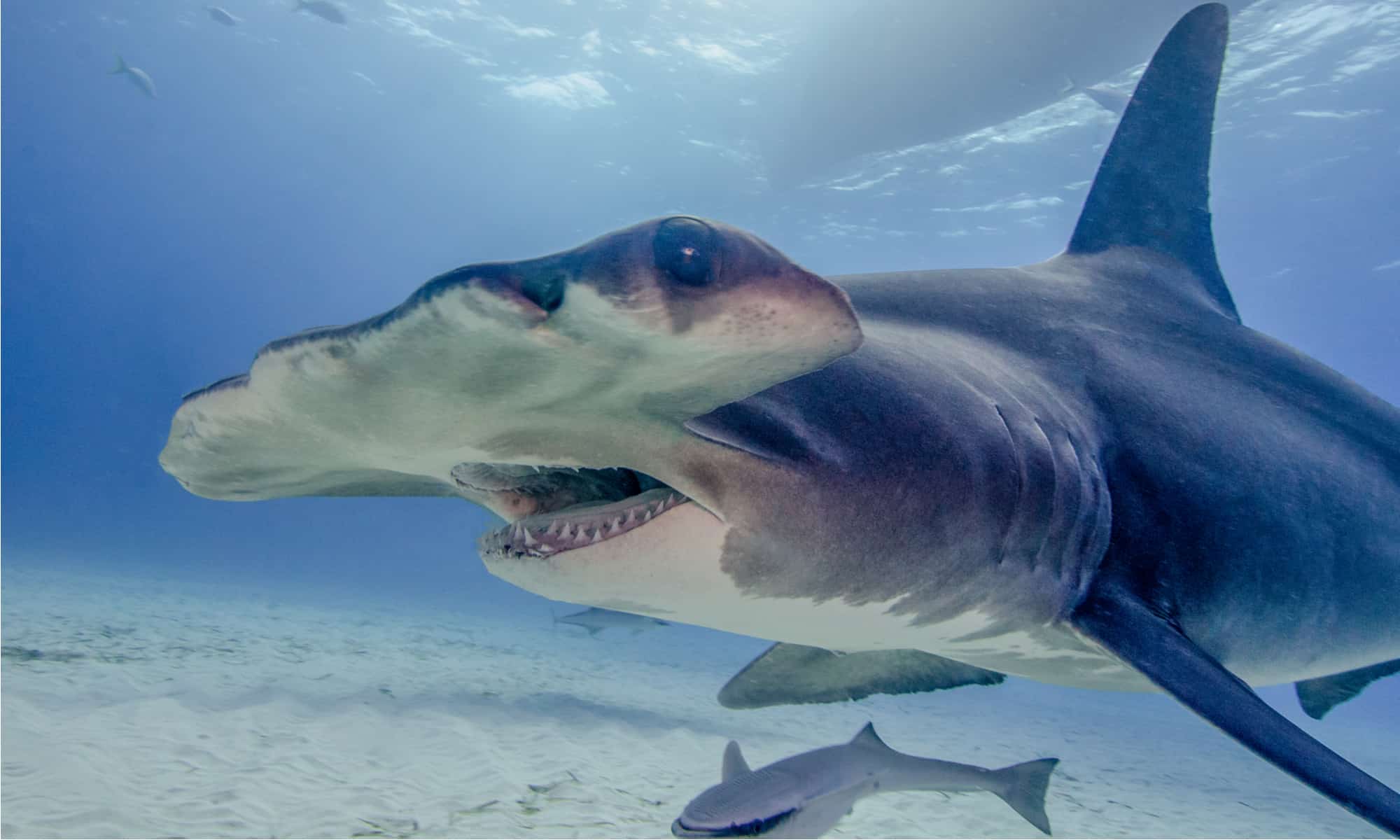

High-speed chases are thrilling, exhilarating, and slightly terrifying. However, a high-speed chase on water adds another level to the imminent danger. We’re not talking about an episode of “Cops,” though. We’re talking about this video, showing a hammerhead shark matching the incredible pace of a ray. When it comes to swimming, both animals excel in speed. But which one would ultimately come out on top? Would it be the ray, with its sleek body and ethereal movement? Or the hammerhead, with its strong build and propeller-like tail?
The Strength of a Hammerhead Shark
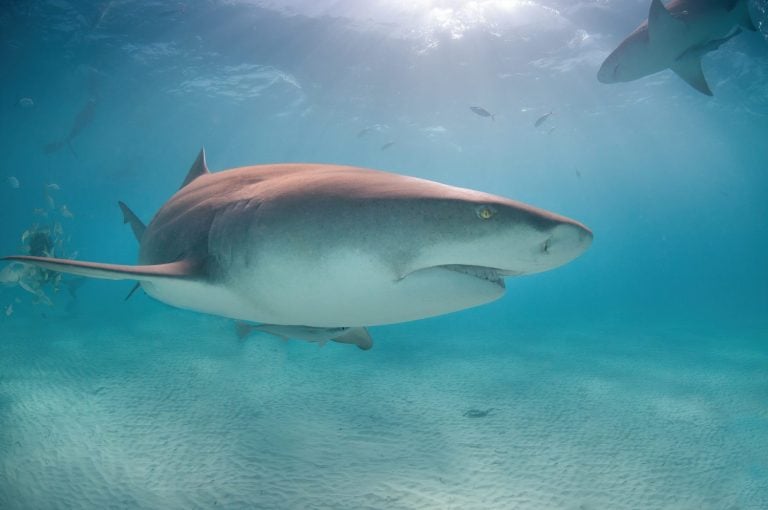
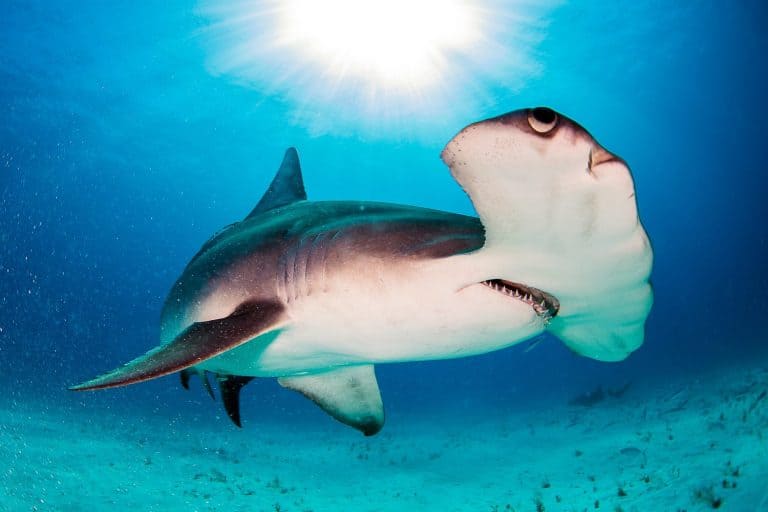
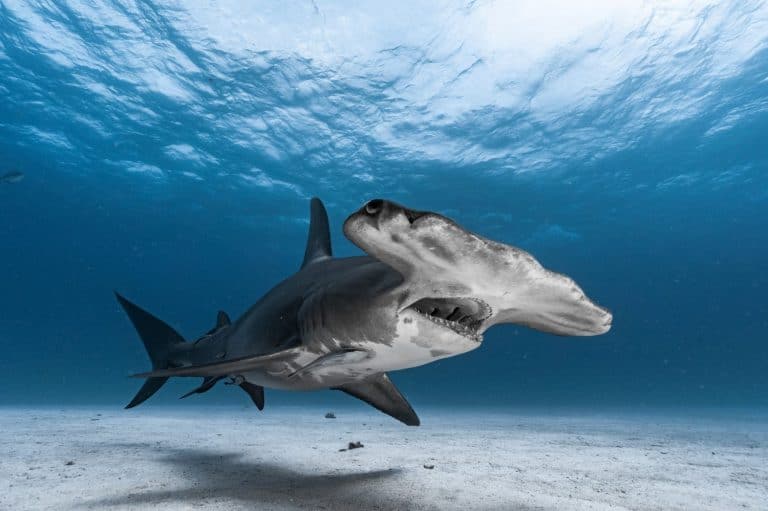
Hammerhead sharks (Sphyrnidae) are known for speed, among other strong attributes. It can cut through the water at 25 miles per hour, rivaling a car driving through a school zone. In the water, this is a tremendous speed, especially while hunting. At 13-20 feet long and weighing up to a ton, a hammerhead shark is nearly impossible to stop when it swims toward prey at full speed. Some experts believe that the shape of a hammerhead’s head also helps it slice through the water. With reinforced balance and exceptional sensory function, they are genuinely the ocean’s apex predators.
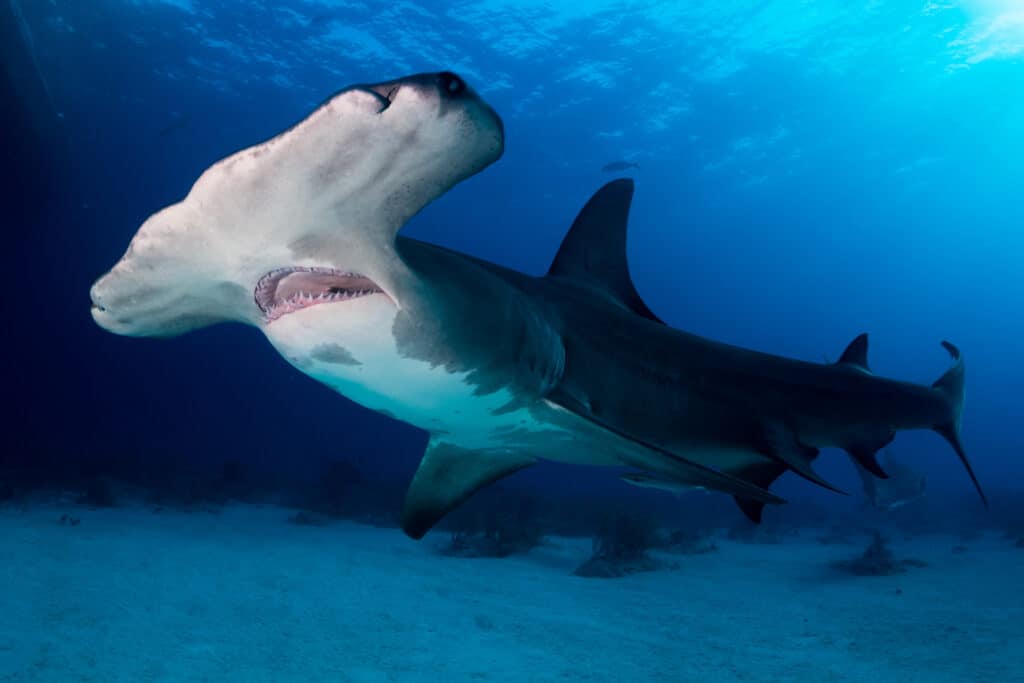
Blink and you’ll miss it!
©HakBak/Shutterstock.com
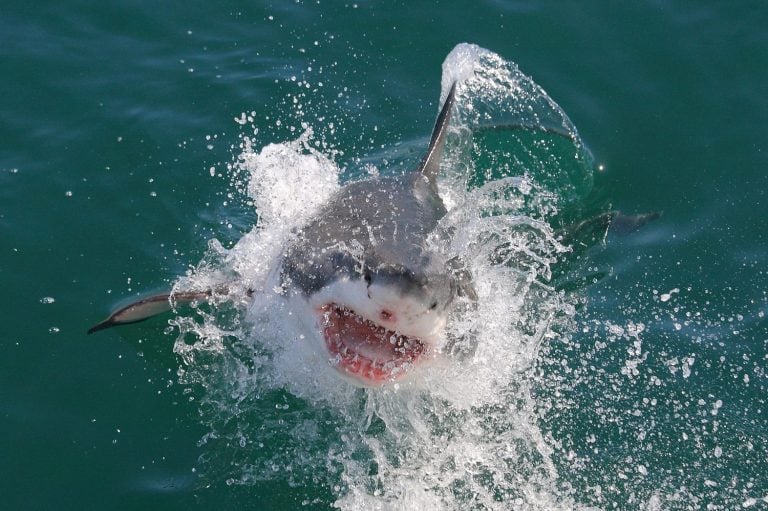
In the video, the hammerhead shark moves so quickly that it’s challenging to determine its species. It remains neck-in-neck with the ray it’s chasing up until the very end, showcasing the prowess it’s known for. Even when the ray spins in a circle to try to throw off the hammerhead, the shark keeps up. Its never relenting pursuit is only a testament to its ambush-style hunting ability. What’s even more incredible is how well this hammerhead keeps up when the ray is out of the water. This hammerhead doesn’t hesitate or slow down, even after the ray jumps into the air to escape. Hammerheads routinely hunt rays, so this shark is likely familiar with its unpredictably evasive maneuvers.
The Speed of a Ray
Interestingly enough, rays can usually swim at half the speed of a hammerhead shark. They typically cruise around 3-6MPH on average, which, theoretically, should make them easy prey for a shark. However, it’s their agility and movement that make them a worthy challenge for any predator. In the video, we can see how well the oscillation of a ray’s fins works in propelling it forward. The sound of slapping is a result of its flapping, which displaces the water around it as it picks up speed. As water is displaced, it creates a wake around the animal. This wake helps to stabilize the ray as it swims, and also makes a slight challenge for any fish following behind.

A sprint can only last so long.
©BlackFarm/Shutterstock.com
Some rays, such as the manta ray, can reach a speed of 22-24 MPH, according to Ask Nature. This is referred to as a “sprint.” It’s a sudden burst of speed that is not sustainable over the long term. Therefore, it’s not always a reliable defensive move when being chased by a predator like this hammerhead shark. Breaching is far more reliable, and it’s also what rays are known for. Also known as “flying,” rays use their pectoral fins to propel themselves out of the water. The reason for this behavior is still unknown, but some experts believe it’s an effort to rid themselves of parasites, engage in communication, or as a mating ritual. Avoiding predators is another reason, and this YouTube video stands as good evidence of that.
Hammerhead Vs. Manta Ray: Who Wins?
While this video leaves us on a cliffhanger, evidence shows that hammerhead sharks are effective predators of rays. Some species, such as great hammerheads, are known for regularly preying on rays, specifically stingrays. They’re common prey for large shark species, and are also hunted by orcas, bull sharks, and tiger sharks. Hammerheads also have a very strategic way of hunting rays. They can pin down prey using their heads, making it virtually impossible for the animal to escape. While the manta ray is stuck, they bite its fins with rows of sharp teeth, immobilizing the animal.
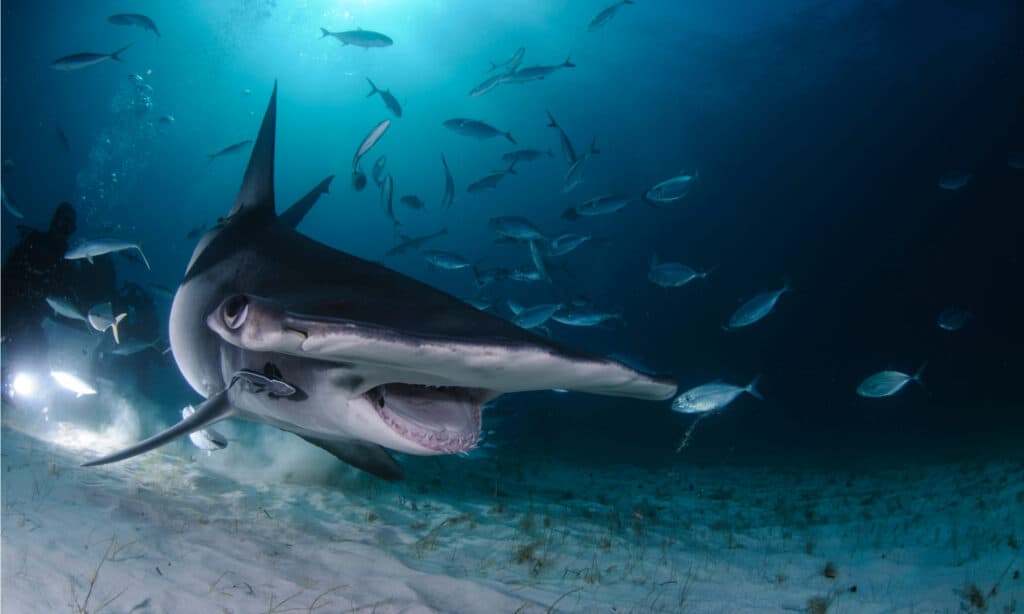
Manta rays dart below boats to escape sharks.
©Martin Voeller/Shutterstock.com
The only hope a ray has of escaping a hammerhead shark is to outrun it. The one in this video appears to be doing a good job, darting under the boat to fool the shark on its tail. While this one may have gotten away, that is not the case for many others of its kind. What makes this video so unique is that it shows off the predatory and evasive skills of each species. A ray’s natural aerobatics are its best defense against predators of the deep, but hammerhead sharks remain at the top of the food chain for a reason.