
Quick Take
- Hundreds of barracudas spinning together can do something no single fish can, and it has nothing to do with hunting. See the overview →
- One theory behind the tornado borrows a trick from professional cycling, and this connection changes how you see the formation entirely. Explore the energy theory →
- A school large enough to block sunlight from the ocean floor still can't guarantee safety. Here's what the tornado actually changes. See predator protection explained →
- Scientists still haven't agreed on why barracudas do this, and the leading theories have yet to reach a consensus. What those theories do reveal is something surprising about how prey fish outthink predators. Discover the competing theories →
Nature is full of strange and unique behaviors among different species of animals. While we often observe these behaviors on land, we rarely see those of ocean animals. One example is the barracuda. When schools of these fish form, they can move around like a tornado. This YouTube video by Real Freedom Productions shows a school of barracuda forming one of these tornadoes. Read on to learn more.
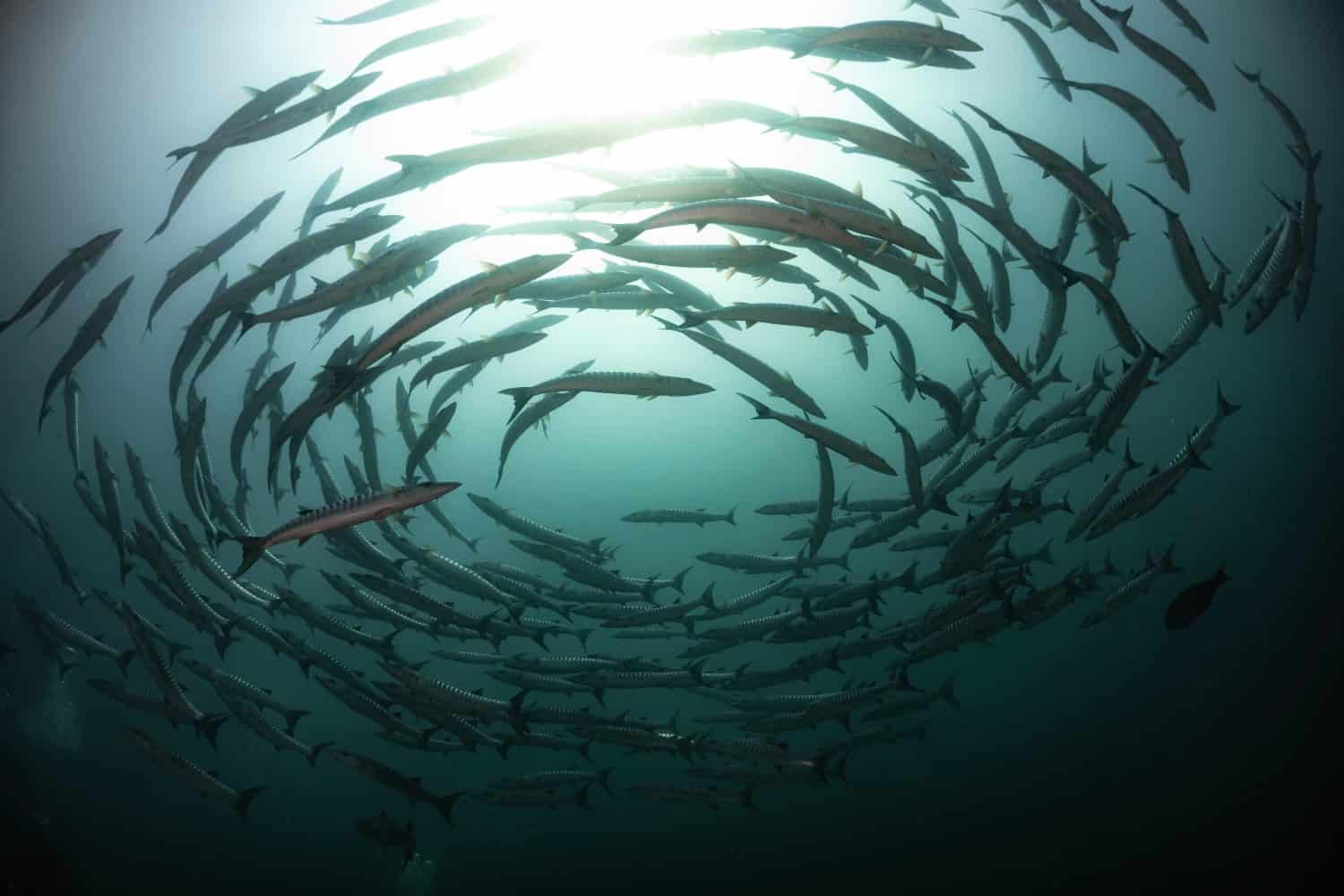
The exact reason barracudas form tornadoes is not well understood, but some theories suggest it helps protect them from predators.
©WASOK/Shutterstock.com
Why Barracudas Form Tornadoes
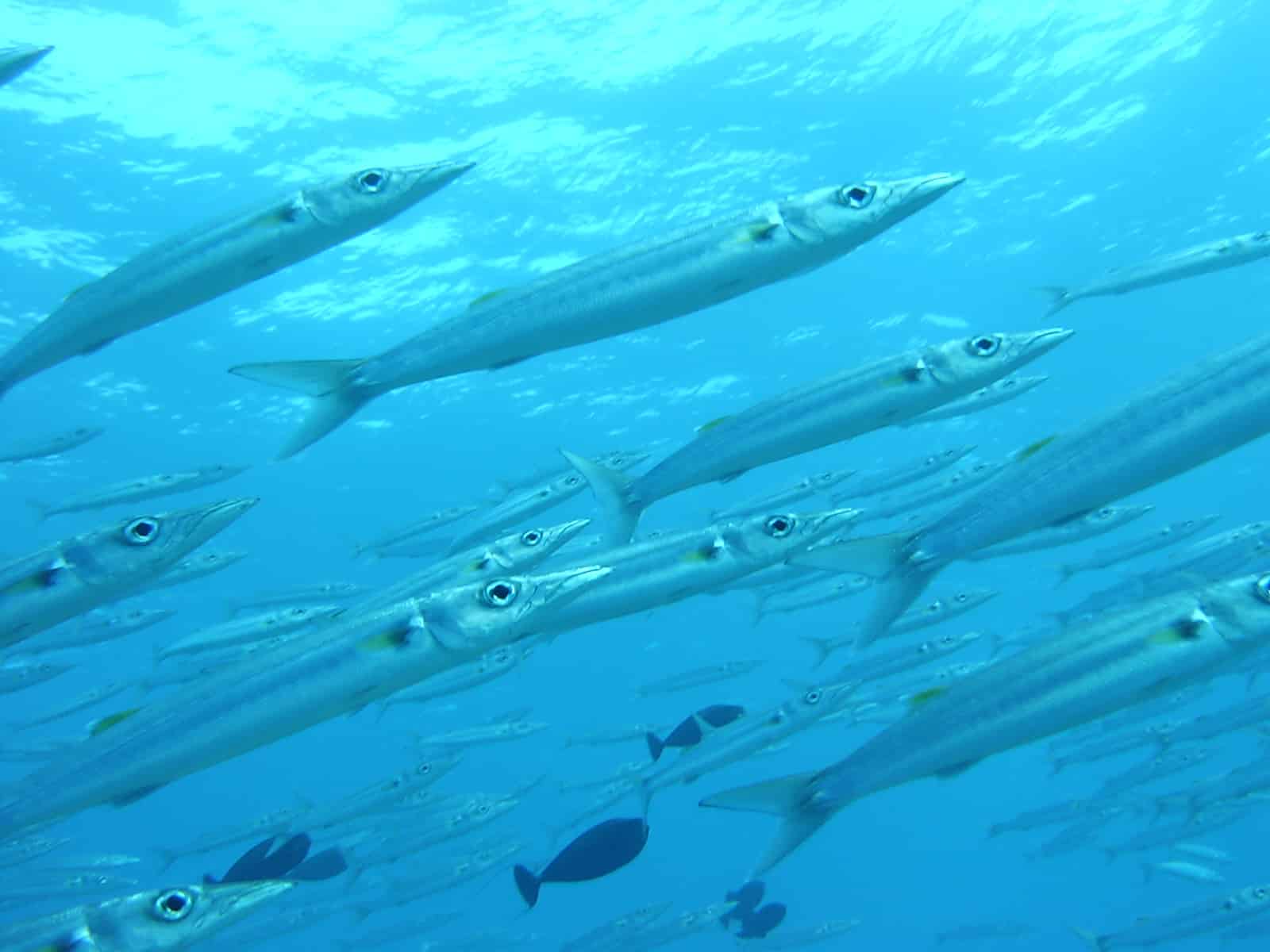
There are roughly 26 recognized species of barracuda, with the great barracuda being the most famous. The great barracuda is also the most common species known to form these tornadoes. These fish inhabit tropical oceans near Florida and in the Caribbean. Globally, they are found in Southeast Asia, the Indo-Pacific Ocean, and northern Australia. These tropical oceans are home to their ideal habitats, such as coral reefs and seagrass beds. Most great barracudas grow to about two to three feet long, and when hundreds gather together, they can practically block out sunlight from reaching the ocean floor. So why do they form these tornadoes?
Scientists have not yet determined exactly why barracudas form these swirling schools. One theory is protection from predators. When a school of barracuda spins in a tornado-like formation, as shown in the video above, it makes it difficult for predators to single out individual fish. This helps disorient potential predators and demonstrates the benefits of staying in a group.
Another theory, similar to the first, is that it gives the fish better awareness of predators. With so many eyes in one spot, there is a higher chance of noticing danger. Some theories suggest that it is simply a social behavior. However, other theories offer different perspectives. For example, some believe that it helps the fish conserve energy when swimming. Just as cyclists conserve energy by riding closely behind one another, barracudas swimming in formation can reduce the energy each fish expends. Regardless of the reason, the tornadoes formed by barracudas are incredible to witness.