
Quick Take
- Sea cucumbers look completely defenseless, yet their actual survival strategy is more extreme than anything else in the ocean. See the defense strategy →
- The organs a sea cucumber launches at predators don't just surprise them. On contact, they do something far stranger. See what the organs do →
- After gutting itself to survive, the sea cucumber pulls off something that seems biologically impossible. See how regeneration works →
- There's a limit to how many times a sea cucumber can eviscerate itself. Or is there? Find out the limit →
Sea cucumbers have few predators. The ones they do have are often avoided by camouflage, blending into or burrowing into the seafloor. But there are times when this defensive approach is not enough. When this occurs, the sea cucumber employs its most extreme explosive organ-spilling defense to escape predation.
Sea Cucumbers Defend Against Predators By Exploding
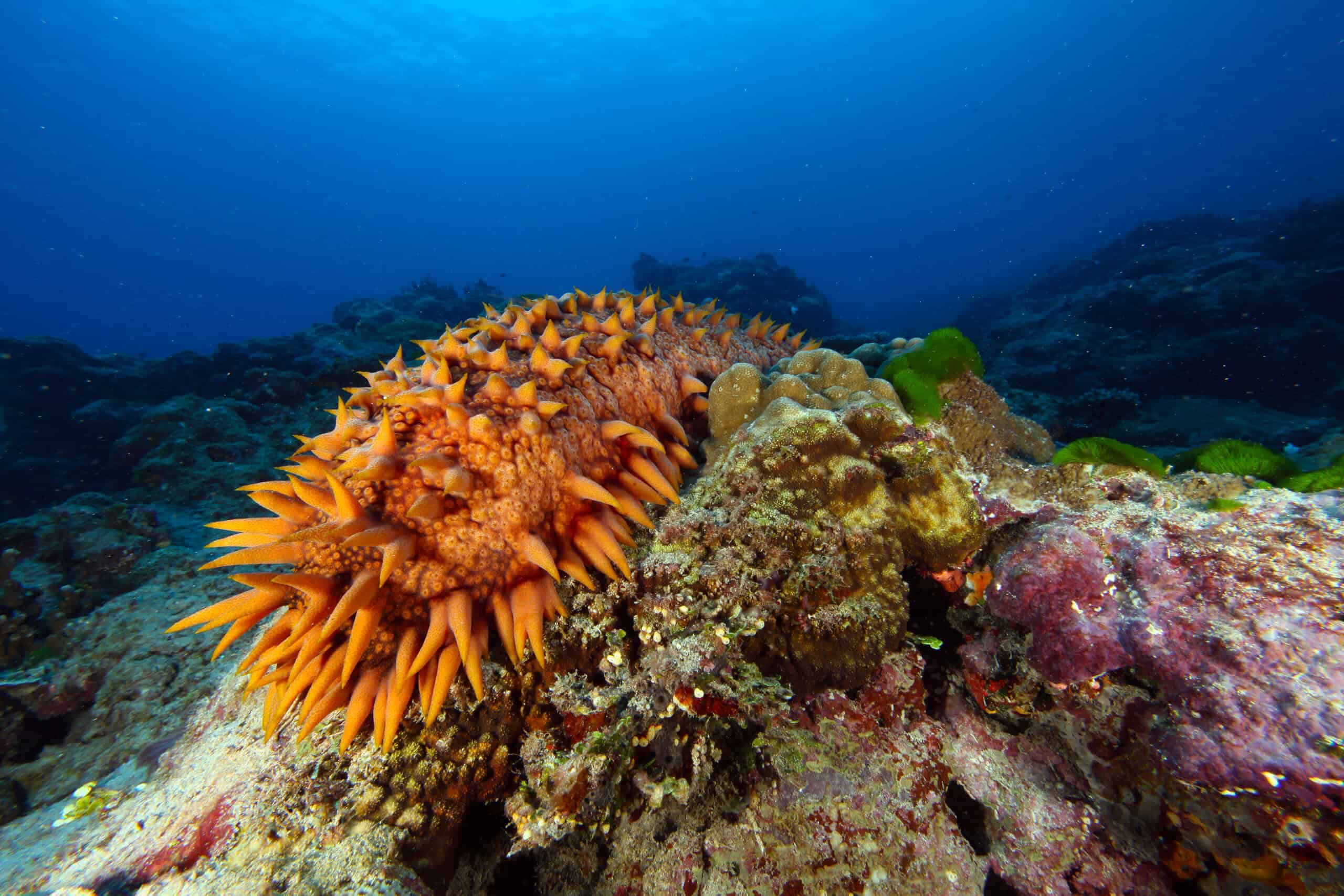
Based on observation alone, sea cucumbers are slow-moving sea creatures. They also appear to have no defensive skills. While the former is true, the latter is not. Sea cucumbers defend themselves in a way unlike any other sea creature.
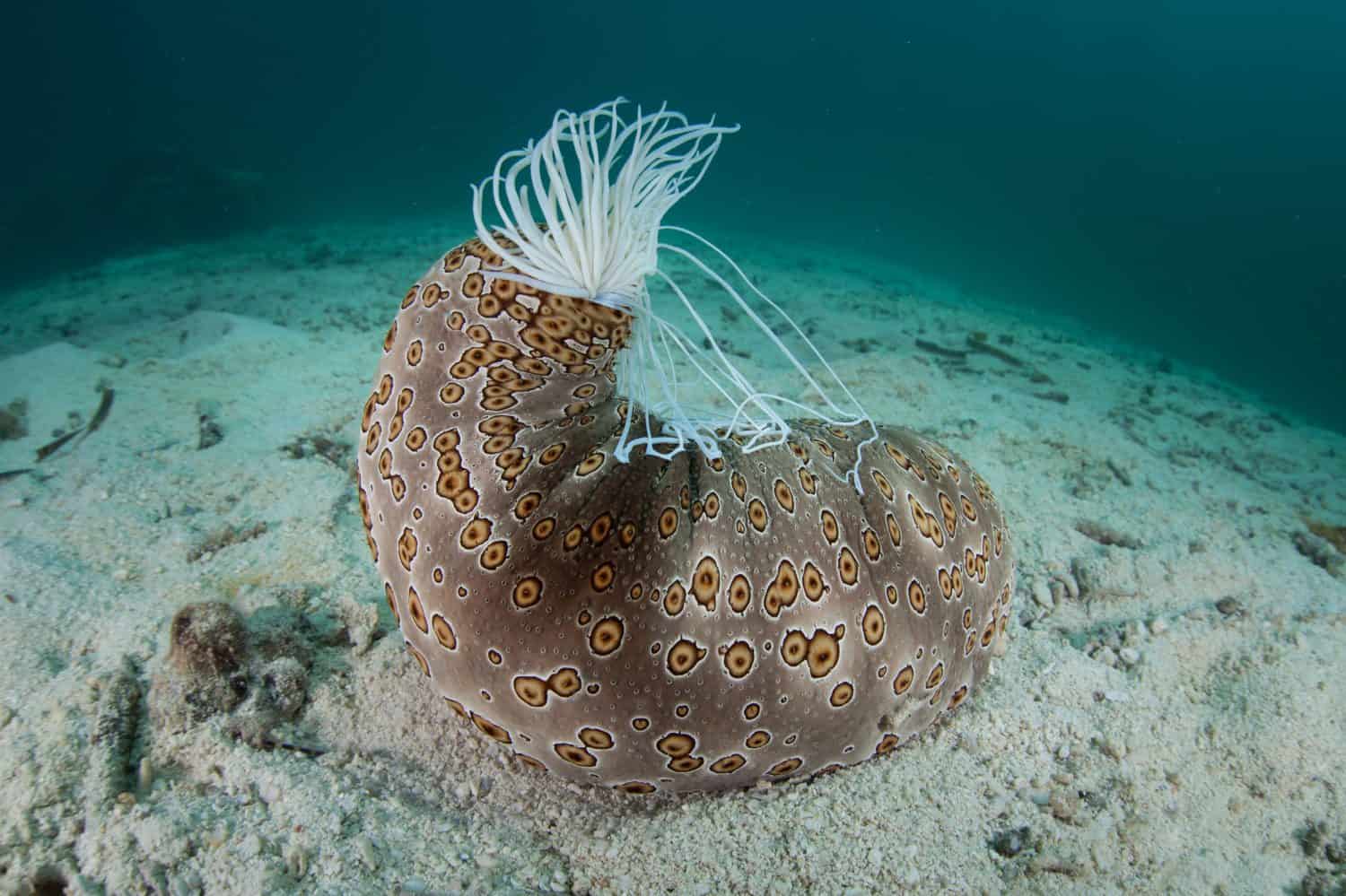
Sea cucumbers have one of the most unusual ways of defending themselves against predators. They will literally explode. This process is called evisceration.
Sea cucumbers can expel their internal organs when under attack by predators.
©Ethan Daniels/Shutterstock.com
During evisceration, sea cucumbers expel their internal organs through their rear ends or through a purposeful tear in their back. The specific organs that are expelled from the sea cucumber include:
- Digestive tract
- Respiratory trees
- Reproductive organs
This expulsion is caused by the muscles at the front of the sea cucumber contracting while the tissues holding the organs in place soften. The contraction creates immense pressure, pushing the organs directly into the predator’s face. This both confuses the predator and can cause it to become entangled in the sticky organs, giving the sea cucumber time to escape.
How Sea Cucumbers Regenerate Internal Organs
After the sea cucumber has eviscerated itself, it immediately begins the process of healing. This process is not something that happens overnight, but instead takes multiple weeks to regenerate.
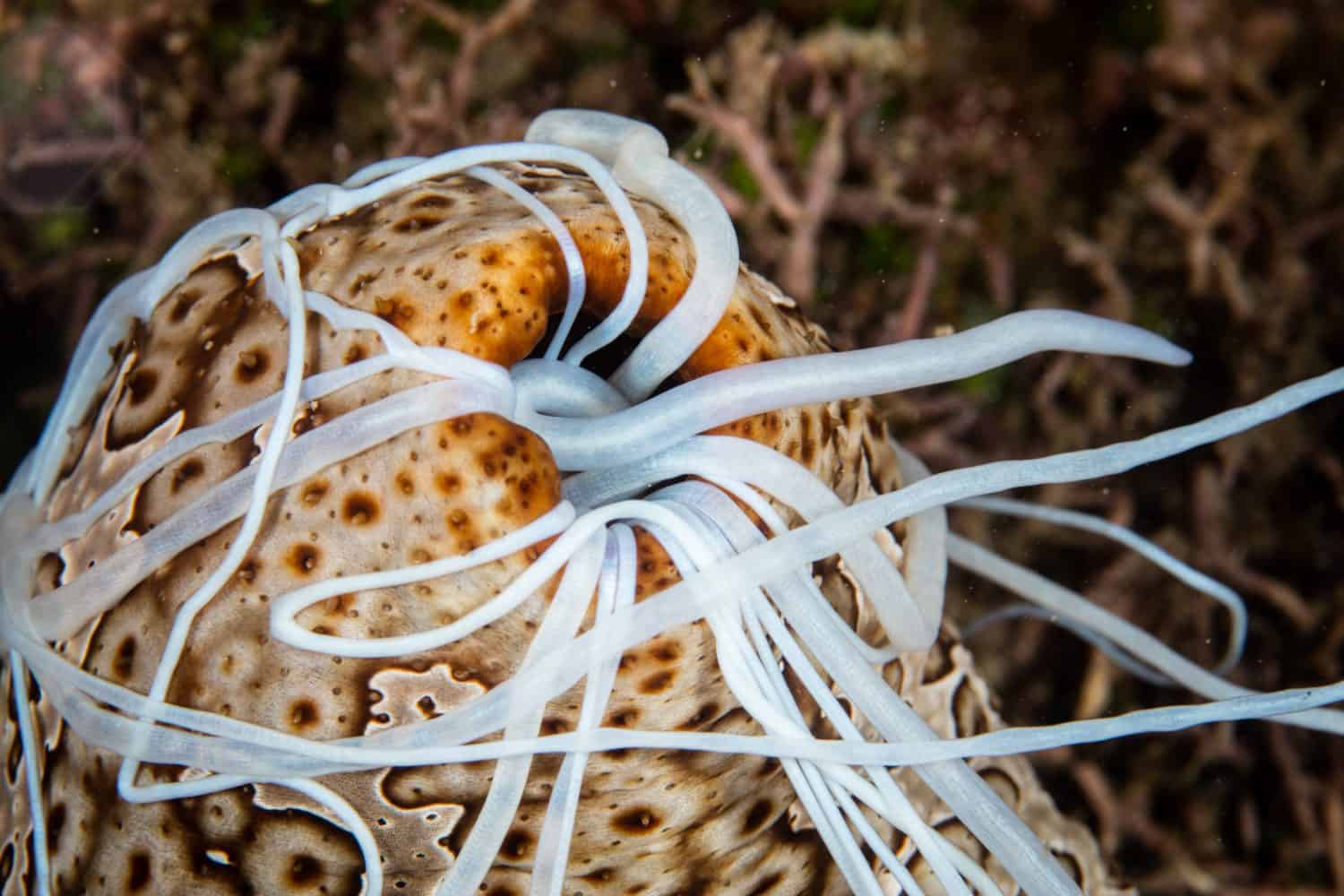
The sea cucumber undergoes a regeneration process that can take several weeks to complete after expelling its internal organs.
©Ethan Daniels/Shutterstock.com
The regeneration process goes through multiple stages. Those stages include:
- The rear of the sea cucumber is closed thanks to contraction of surrounding muscles
- Cells in the body lose their specialized functions and revert to a more basic state to help form new internal organs
- A blastema, which is a group of unspecialized cells, is formed
- Once the blastema is formed, its cells become specialized and begin creating new internal organs
- Over the course of several weeks, new internal organs will be complete and fully functioning again
A sea cucumber only eviscerates when it has no other option. It is a life-or-death situation, and this drastic measure helps it survive.
How Many Times Can Sea Cucumbers Regenerate Themselves?
When a sea cucumber eviscerates itself, it can take weeks to months for the internal organs to regenerate. Given the amount of energy this process requires, it might seem that a sea cucumber could only eviscerate a limited number of times. However, there is no specific known limit.
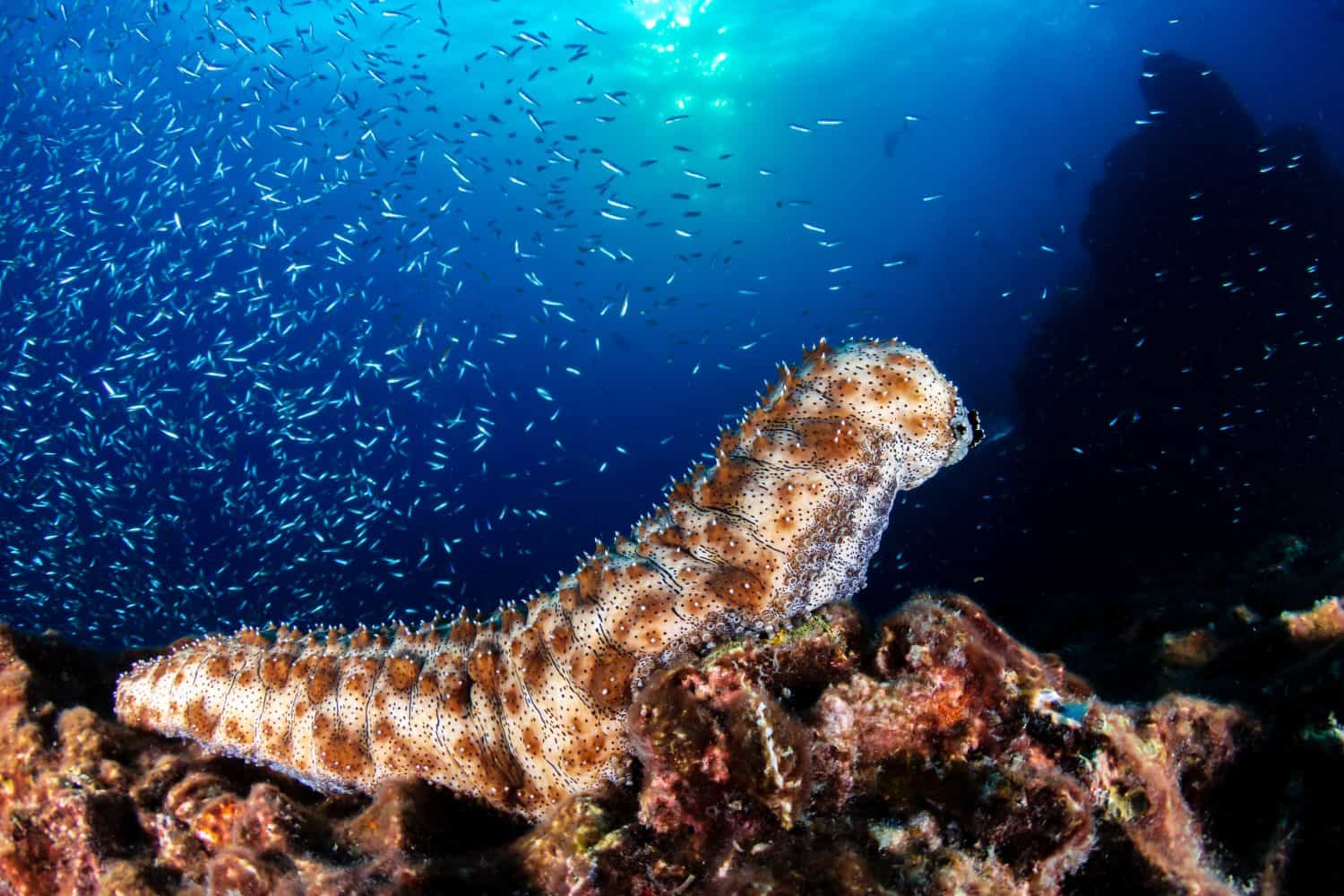
There is no finite number of times a sea cucumber can regenerate itself.
©Richard Whitcombe/Shutterstock.com
Whether a sea cucumber can regenerate depends on its age and the conditions in which it lives. Each time that evisceration occurs, it takes longer for the cells to regenerate the expelled internal organs and other tissues. Over time, the sea cucumber may become less healthy and robust, making regeneration more difficult.
Each species of sea cucumber is capable of regeneration. However, the rate at which it occurs and the condition of the sea cucumber after the process vary by species.