
As autumn descends and temperatures drop, North America’s amphibians and reptiles, also known as herpetofauna, scramble to make their final moves. Unlike warm-blooded animals, these creatures don’t generate their own heat, so they must rely on clever physiological and behavioral strategies. From frogs that nearly freeze solid to turtles that remain submerged in mud for months, these animals’ late-autumn rituals allow them to survive the winter and thrive again when spring returns. Read on to learn where different species go before winter, how they survive freezing or near-freezing conditions, and why their seasonal behavior is vital for healthy ecosystems.
Preparing for Winter

Painted turtles spend months at the bottoms of ponds during the winter… without oxygen!
©Ethan Daniels/Shutterstock.com
Turtles: Sinking into the Pond Floor
As the waters chill, many pond-dwelling turtles, painted turtles for example, stop basking at the surface. Instead, they sink to the muddy bottoms of ponds, lakes, and marshes, often into depths where barely any oxygen penetrates. Adult painted turtles will then spend the entire winter at the bottom of the lake, surviving for months with no oxygen at all. Sarah Alderman, an adjunct professor in the Department of Integrative Biology at the University of Guelph states: “Painted turtles are champions among vertebrates in their ability to live without oxygen.” Incredible. But how do they do it? Why don’t they suffocate? How do their hearts continue to beat? Well, Alderman and her team have done exhaustive research on this and let’s just say… it’s very sciency and complicated.
In simple terms: they’re able to drastically suppress their metabolism by up to 90%, resulting in their energy needs dropping to tiny fractions of their summer demands. Instead of using oxygen, their cells switch to low-output energy pathways that don’t require oxygen. This “anaerobic metabolism” produces lactic acid, which is the same naturally occurring chemical that causes your muscles to burn during intense exercise. In most animals, too much lactic acid is lethal. But painted turtles prevent overdose by buffering the acid with minerals stored in their shells and bones. Their shells literally absorb the acid like a sponge. All of this results in painted turtles being among the most anoxia-tolerant (anoxia being a complete lack of oxygen) vertebrates known to man, a truly remarkable adaptation.
And what benefits the painted turtle may one day come to benefit humans. “Understanding how a turtle’s heart can cycle in and out of these anoxic environments between seasons might offer new clues about what limits anoxia tolerance in human hearts,” says Alderman. “We might someday be able to apply this knowledge to help heart attack patients recover more effectively.”
That touch of ice immediately sets off signals inside the frog that pulls water away from the center of its body, so the frog’s internal organs are now wrapped in a puddle of water that then turns to solid ice.
Jon Costanzo, a professor at the University of Miami at Ohio
Frogs: Freeze Tolerance and Cryoprotectants
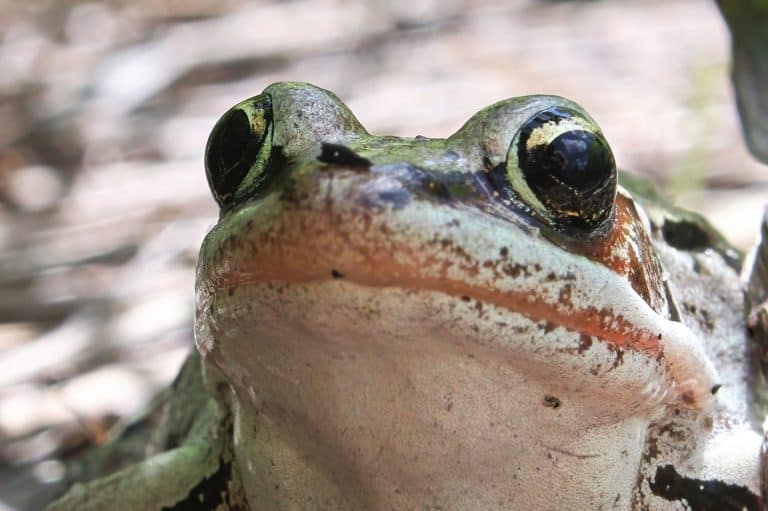
Perhaps the most astonishing winter trick among herps belongs to the wood frog. Rather than avoiding freezing, wood frogs embrace it. As the saying goes: “If you can’t beat ‘em, join ‘em.”
At the first touch of ice, their livers rapidly convert stored glycogen into glucose, flooding the bloodstream with high levels of sugar that act like natural antifreeze. Simultaneously, they accumulate other cryoprotectants such as urea, which helps prevent damage from ice crystallization. To put it in laymen’s terms: they essentially freeze solid, and their bodies are just a-okay with it.
In an incredible feat of biological adaptation, wood frogs can survive with 65–70 percent of their body water frozen. During this time, their heart stops beating, they stop breathing, and they seem entirely lifeless. Yet when spring arrives, they thaw, revive, and go on as though nothing happened. Isn’t nature just wild?
At the first sign of ice, usually in late-fall or early-winter, the frog begins to freeze and is soon solid as an ice cube. According to Jon Costanzo, a professor at the University of Miami at Ohio that studies amphibians that live in harsh climates, “That touch of ice immediately sets off signals inside the frog that pulls water away from the center of its body, so the frog’s internal organs are now wrapped in a puddle of water that then turns to solid ice.”
One study of Alaskan wood frogs recorded up to an astounding 193 consecutive days frozen, enduring average temperatures of around 20 degrees Fahrenheit (which is 12 degrees below freezing) and reaching minimums that dipped below zero. Despite these extreme temperatures, the frogs in the study achieved 100% survival. The researchers also found that in these naturally freezing frogs, glucose concentrations (the “anti-freeze”) were far higher than in lab-frozen frogs, which suggests that field conditions lead to a more robust freeze-tolerance response than in a controlled experiment. One reason for this might be that in nature, frogs often go through freeze-thaw cycles before a long-term freeze sets in, which may help maximize their cryoprotectant stores and enhance survival, a process that’s difficult to replicate in a lab.
Once thawing begins in spring, organs with the highest glucose concentrations—such as the heart, liver, and kidneys—revive first, restoring metabolic activity in a carefully orchestrated sequence, until the frog hops away as if it hadn’t just spent the last several months as a living ice sculpture.
Snakes: Migrating to Communal Dens
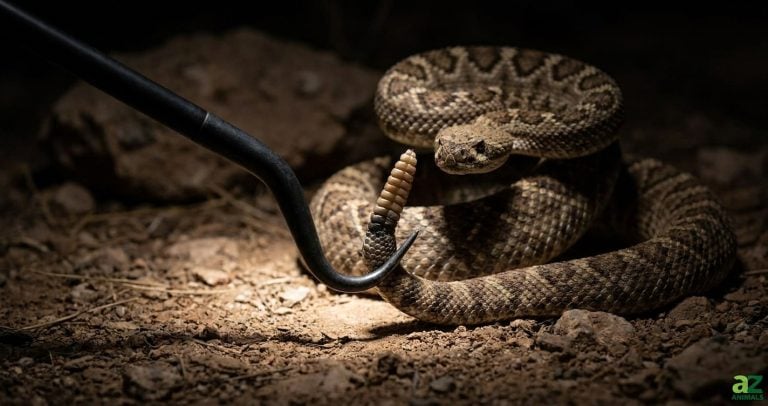
When the air grows cold, snakes across North America retreat to dens, also called hibernacula, where they can survive months of freezing temperatures. These dens may be natural crevices in rock, abandoned mammal burrows, sinkholes, deep root systems, or basically anywhere that stays above freezing throughout the winter. Dens are so vital that some sites are used for decades, even centuries, by multiple species.
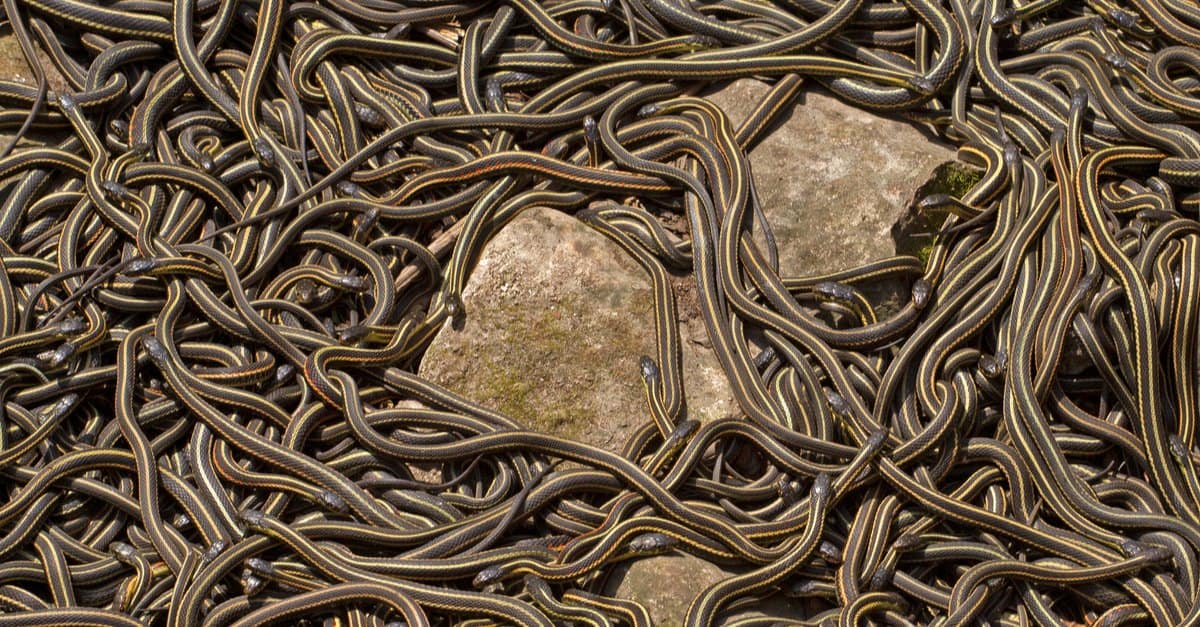
Once inside, snakes enter a state called brumation, similar to hibernation. Their metabolism slows dramatically, their heart and breathing rates drop, and they become mostly inactive. Some species, like garter snakes, gather in large communal groups, sometimes numbering in the hundreds, to share warmth. One of the world’s most famous sites is the Narcisse Snake Dens in Manitoba, Canada, where tens of thousands of red-sided garter cluster in limestone crevices formed by ancient water-worn rock.
Tens of thousands of garter snakes tangled together in a crevice. Yikes!
Snakes are masters of energy conservation; in a good hibernaculum, they can stay down for four to six months without food or significant weight loss. They don’t leave the den to hunt. Cold temperatures make digestion impossible, and prey is scarce anyway. Instead, they rely entirely on stored energy and water, occasionally moving within the den to find the warmest or most humid spots. In spring, as temperatures rise, snakes emerge to bask, rehydrate, and hunt—well rested and ready for the season ahead.
Salamanders: Hunkering in Leaf Litter and Burrows
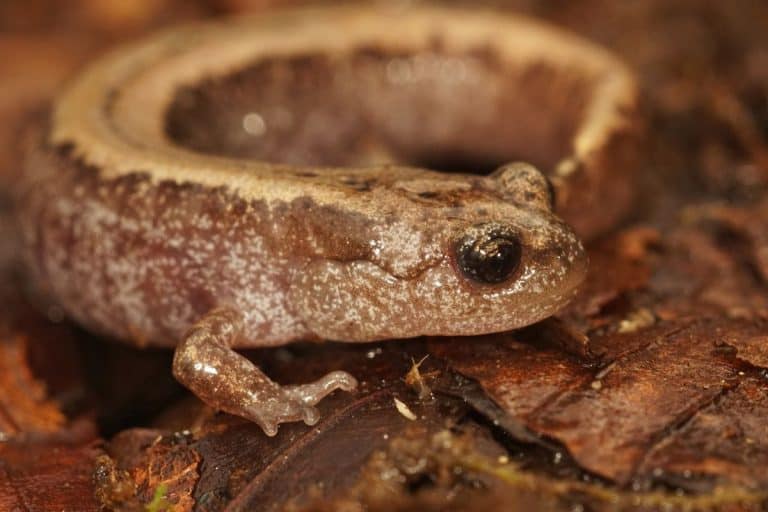
Salamanders employ a more understated strategy: they disappear under leaf litter, logs, and into underground crevices for the winter. For example, eastern red-backed salamanders will move downward in the soil or into decaying root systems, hiding in leaf litter, under rocks, or up to 15 inches below the ground in burrows.
Unlike freeze-tolerant frogs, most salamanders aren’t built to freeze solid. Instead, they reduce their metabolic rate (a state sometimes called brumation or torpor) and rely on insulation from leaf litter and soil to buffer them from subzero air temperatures.
For some species, such as mole salamanders, winter is spent in mammal burrows or other underground refuges. These deep shelters keep them safe from freezing and help maintain humidity, which is crucial, since many salamanders breathe through their hydrated skin.
Why These Seasonal Behaviors Matter for Ecosystems
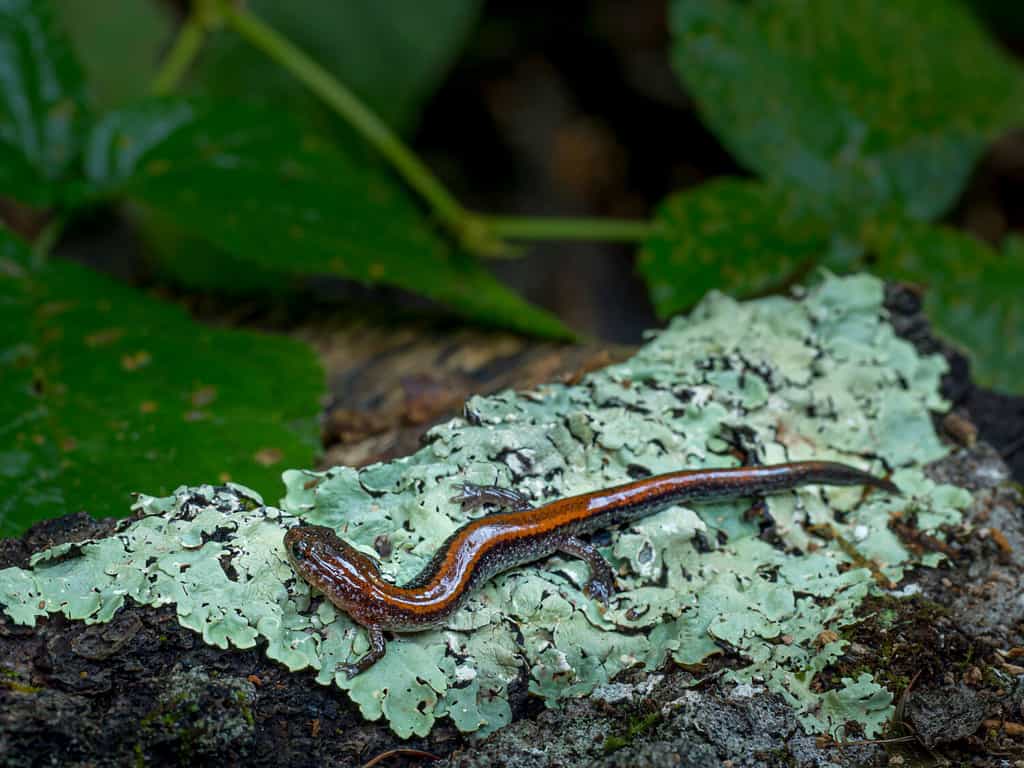
The eastern red-backed salamander, though small, is crucial to long-term forest stability.
©Danita Delimont/Shutterstock.com
These survival strategies aren’t just curious adaptations that help the individual species make it through the chillier months, they actually shape whole ecosystems, influencing nutrient cycles, predator-prey dynamics, and forest health.
Nutrient Cycling and Soil Health: As amphibians and reptiles move through an ecosystem and settle into their winter shelters, they quietly help keep the soil healthy. Their burrowing and tunneling loosen the ground, allowing air and water to move through it, which are conditions that plants rely on. Their waste adds natural fertilizer, and even after they die, their bodies return important nutrients back to the soil. Together, these small actions help maintain richer soil, stronger plant growth, and a more balanced ecosystem overall.
Timing and Food Web Dynamics: When amphibians like wood frogs thaw and become active in early spring, they are among the first predators to feed on insect larvae, helping regulate populations as aquatic ecosystems ramp up. Their emergence also triggers breeding events, which then support predators such as birds that depend on tadpoles and newly metamorphosed frogs. When snakes leave their dens in spring, they influence similar predator-prey interactions.
Habitat Stability and Conservation: Many herps return reliably to the same wintering sites (such as turtle mud spots, snake dens, salamander refuges). This site fidelity underscores the importance of conserving critical winter habitats. If ponds are drained, mud bottoms disturbed, or hibernacula blocked by roads or development, entire populations could be disrupted. At Narcisse, for example, the dens (where, again, tens of thousands of garter snakes are wrapped up in a cuddle ball!) are a protected area, but snake migrations cross highways, and mortality during migrations can still threaten population stability.
Hidden Biodiversity and Ecological Indicators: Because salamanders like the red-backed species are often hidden and small, they’re easily overlooked, yet their numbers and biomass make them essential components of forest ecosystems. The USGS calls them “hidden biodiversity”—small in stature, but foundational in function. Their health and population trends can act as early indicators of forest ecosystem health. In other words, conserving salamanders is conserving the integrity of the soil food web, carbon sequestration, and long-term forest stability.
Hidden Risks and Conservation Challenges
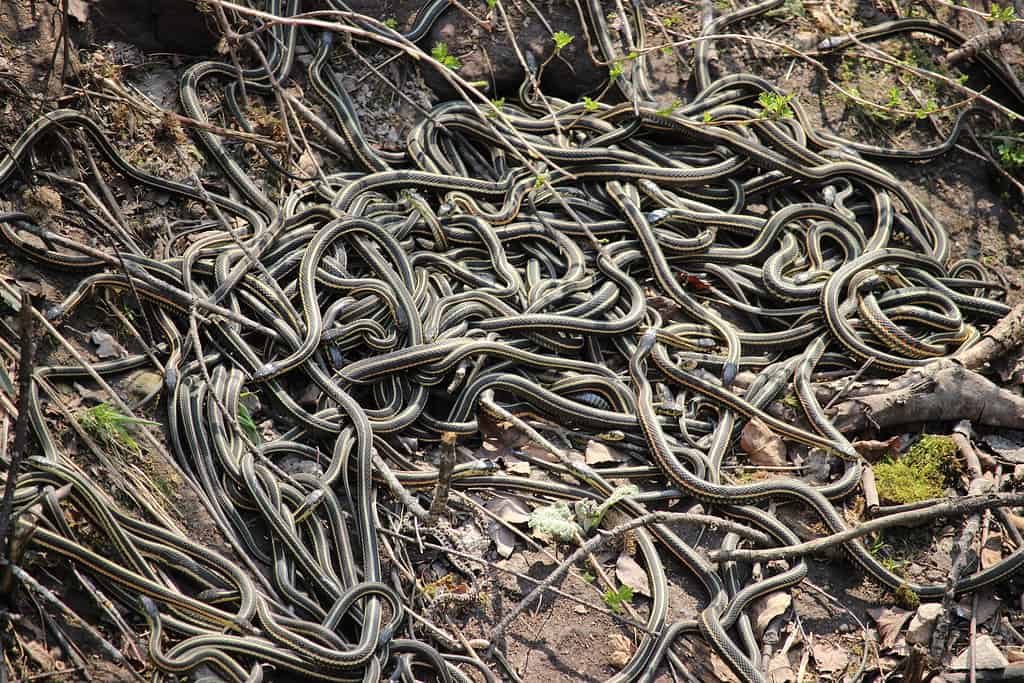
Roads are a major hazards for snakes heading to and from their hybernacula.
Despite their remarkable abilities to survive sub-freezing winters, herps face growing outside threats during this critical pre-winter stage:
Habitat Loss & Fragmentation. Draining wetlands, removing logs, or disrupting leaf litter can destroy overwintering shelters. Without safe dens, turtles, frogs, and salamanders may not survive winters.
Roads and Migration Barriers. Snakes migrating to their winter dens often cross roads, leading to fatal encounters with vehicles. Given their site fidelity, blocking those routes can have long-term impacts.
Pollution and Oxygen Stress. For pond turtles, water quality matters tremendously. If oxygen levels drop due to eutrophication (an overload of nutrients from fertilizer runoff, sewage, or decaying organic matter) or sedimentation, even anoxia-tolerant species may be pushed beyond their coping capacity.
Leaf-Litter Removal. Many salamanders overwinter in deep leaf litter. When leaves are raked or removed in yards or managed forests, these shelters are lost. This not only threatens salamander survival but also disrupts their dead-leaf insulation, which is vital for brumation.
Disease Risks. Amphibian diseases pose a particular threat, especially for salamanders with high biomass and central ecological roles.
What You Can Do to Help Herps Prepare and Survive Winter
Here are some conservation actions for people who care about amphibians and reptiles:
- Keep leaves and logs in your yard or garden. Resist raking up every last leaf. Leaf litter and fallen logs provide vital overwintering habitat for salamanders, frogs, and small reptiles.
- Avoid draining or filling in wetlands. Even small temporary ponds can be summer breeding or wintering sites.
- Advocate for or support the installation of road underpasses or mitigation measures where snake migrations occur (especially in known den areas).
- Reduce runoff, limit fertilizer use, and prevent sedimentation in water bodies to keep oxygen levels healthy for aquatic turtles.
- Avoid disturbing likely overwintering sites (logs, rock outcrops, dens) during fall and early winter.
Bundle Up!
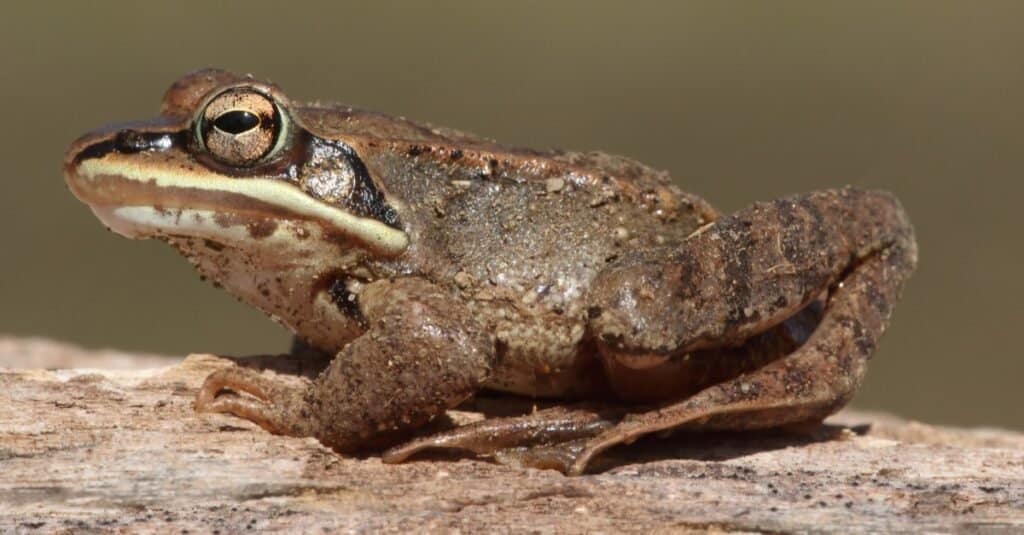
A wood frog can freeze solid during the winter and thaw back out in the spring and hop away like it never happened.
©Steve Byland/Shutterstock.com
As cold draws in across North America, herps embark on remarkable survival journeys. Painted turtles sink silently under mud, slowing their bodies nearly to a halt. Wood frogs freeze solid, their hearts pausing and body ice forming, only to thaw and hop away come spring. Garter snakes gather in cavernous dens, waiting under rock for warmer days. Salamanders disappear under leaf litter and logs, hidden but far from idle, quietly shaping the forest’s food web.
These seasonal behaviors, while amazing, are not mere curiosities, they are keystones of ecological resilience. The places they use (pond bottoms, winter dens, leaf litter) and how they use them (communal gatherings, metabolic suppression, cryoprotection) all contribute to nutrient cycling, carbon sequestration, and stability in forest and freshwater ecosystems. Preserving their overwintering habitats isn’t just about safeguarding individual species; it’s about protecting the hidden lifecycles that support healthy ecosystems year in and year out.