
Quick Take
- Maintaining 20 million hunters requires a lethal, synchronized strategy for total ecosystem dominance.
- The Dorylus ants move from one territory to another so they can take advantage of new prey.
- These blind predators communicate using pheromones.
- Smaller workers at the head of the raid column identify prey, and larger workers stand guard at the margins.
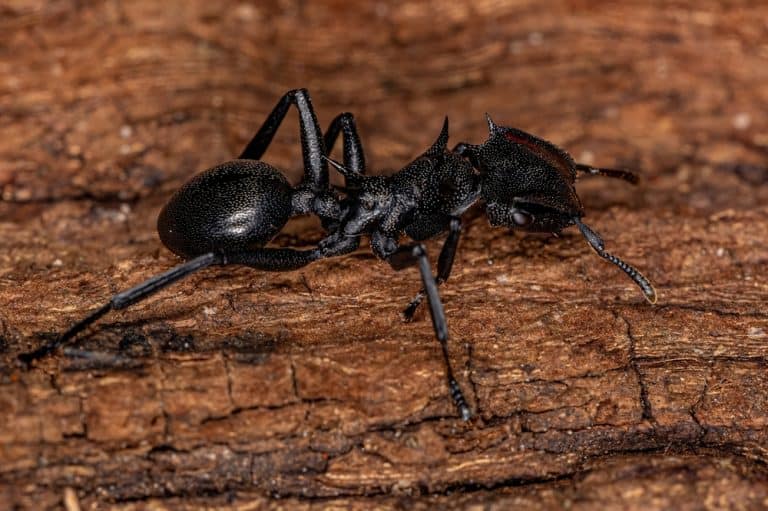
As individuals, driver ants are small and relatively insignificant creatures. But as a colony, they transform into a huge and ruthless killing machine. Their swarm raids move like a living force across the forest floor. The colony does not obliterate all living things in its path. These guys are surprisingly discerning when it comes to diet. Here you can find out how one of Africa’s most relentless hunters overwhelms and transports their prey.
Small Creatures Making a Big Impact
The general term ‘driver ants’ is used to describe surface-dwelling species of ants in the Anomma subgenus of the Dorylus genus. They are a type of army ant that is both nomadic and predatory. Rather than having a fixed nest, they move it around, excavating a new dwelling every time. However, we do not yet know what triggers them to move the nest at a particular time, and there is no fixed pattern to their movements. Their nomadic nature allows them to take advantage of new prey when the local prey becomes depleted.
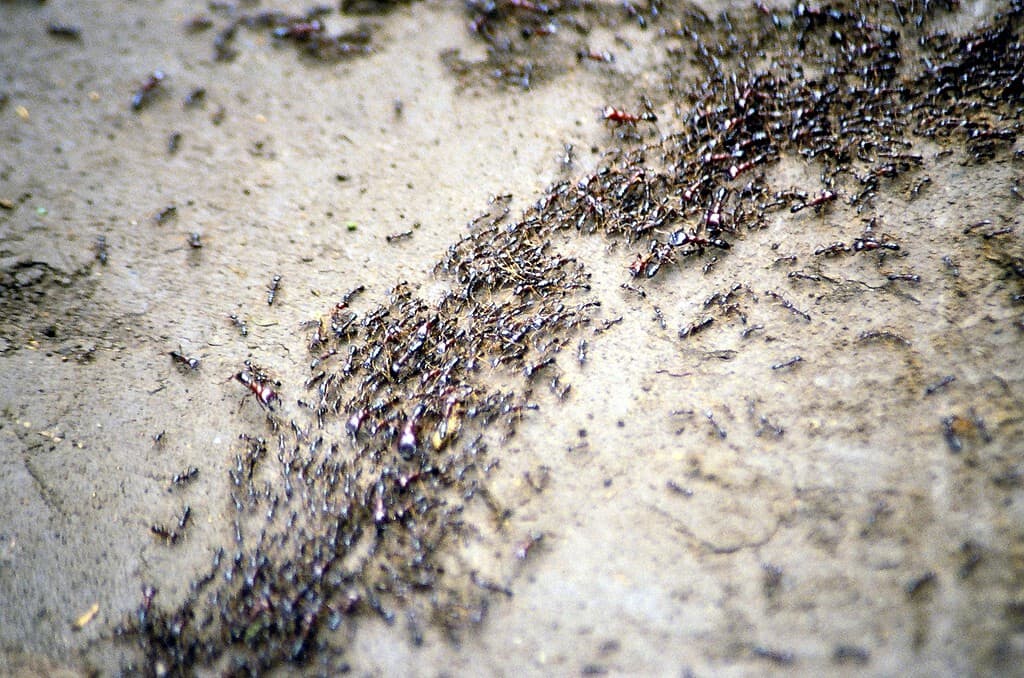
Driver ant colonies can reach 20 million individuals
They are endemic to Africa, where they typically live in forests, and there is a word for them in almost all sub-Saharan African languages. The name driver ant comes from their ability to drive anything that can move out of their way. Each ant may be small, but the colonies are enormous and are some of the largest animal colonies on Earth. There can be up to 20 million ants in a single colony.
Driver Ant Raids
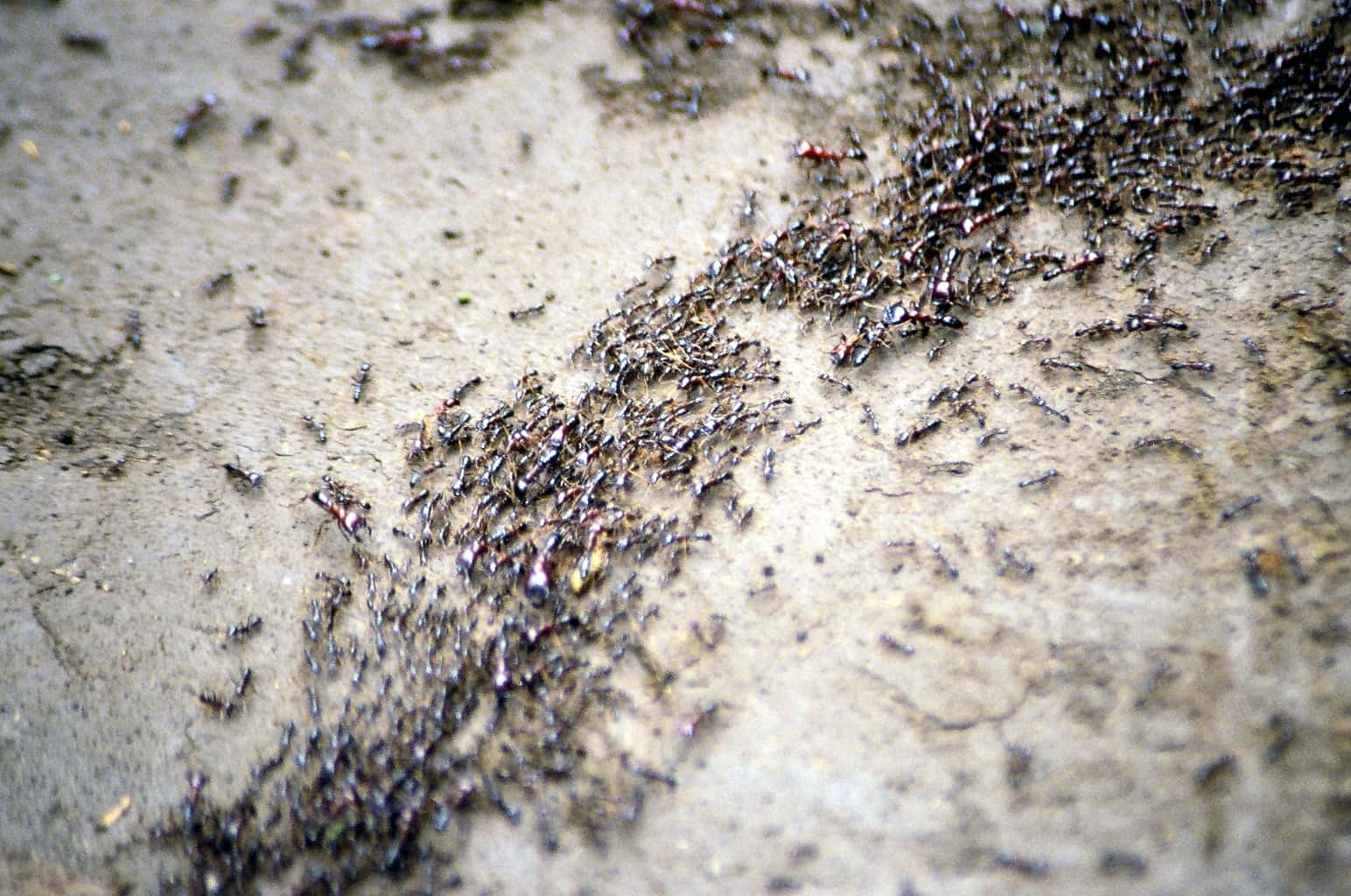
To fuel their huge colonies, driver ants need to find a lot of food, and they achieve this by launching spectacular raids! The first English-language descriptions of driver ants were made by Reverend Thomas Savage in 1847, when he was a missionary in central Africa. They raided his home several times and killed his chickens, his donkey, and his pig! He describes how, when they emerged from their shelter under a rock shelf, they literally blackened the surrounding grass and shrubbery. The huge number of ants creates a dense, black moving mat. Reverend Thomas was clearly shocked by the sight of these raids, and the same is true for others who have witnessed them, including modern scientific researchers.
The raids can take place at any time of day and occur almost every day. The ants radiate from the nest and can reach up to 650 feet from the starting point. The swarm of ants can be 98 feet wide, which makes the raid a significant ecological event in a given habitat.
At the start of the raid, they radiate from the nest in a couple of columns, moving across the forest floor. Some columns are densely packed, but others are more spread out. Sometimes, the ants even build themselves a canopy so that they can move in the blazing sun without drying out. Within the column, ants are moving in two directions. Some are moving away from the nest in search of food. Others are returning to the nest carrying food items.
Raid Dynamics
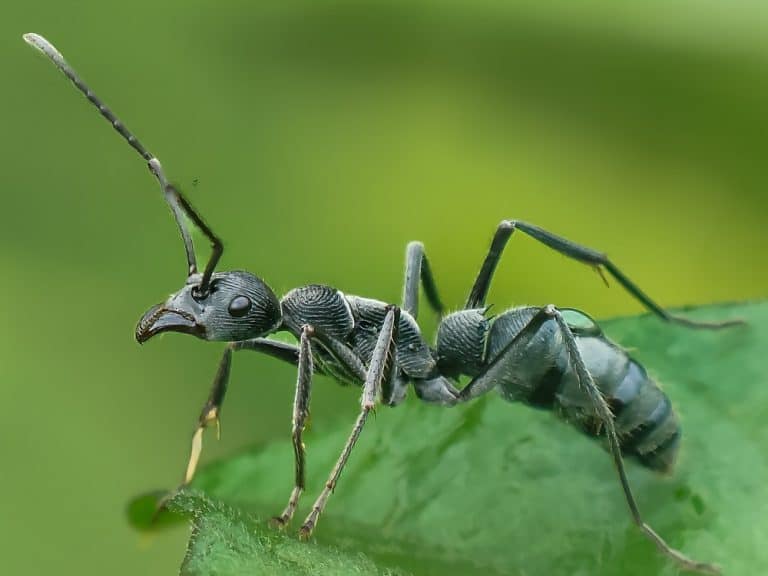
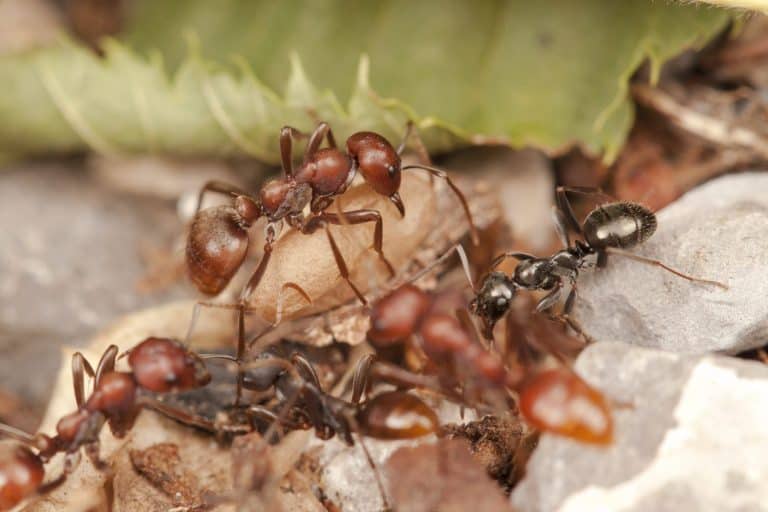
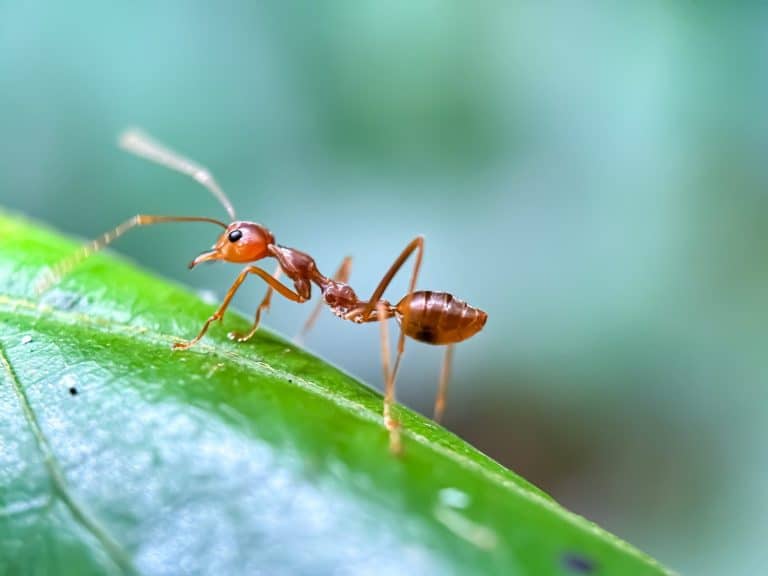
Dorylus ants are blind. Therefore, like most species of ants, they communicate primarily through pheromones (biological chemicals). Each ant follows a pheromone trail left by the ones in front. When the ants are raiding, they swarm around all nooks and crannies looking for all creatures that they can overpower. They do not limit themselves to the forest floor and can climb up to 6 feet off the ground.
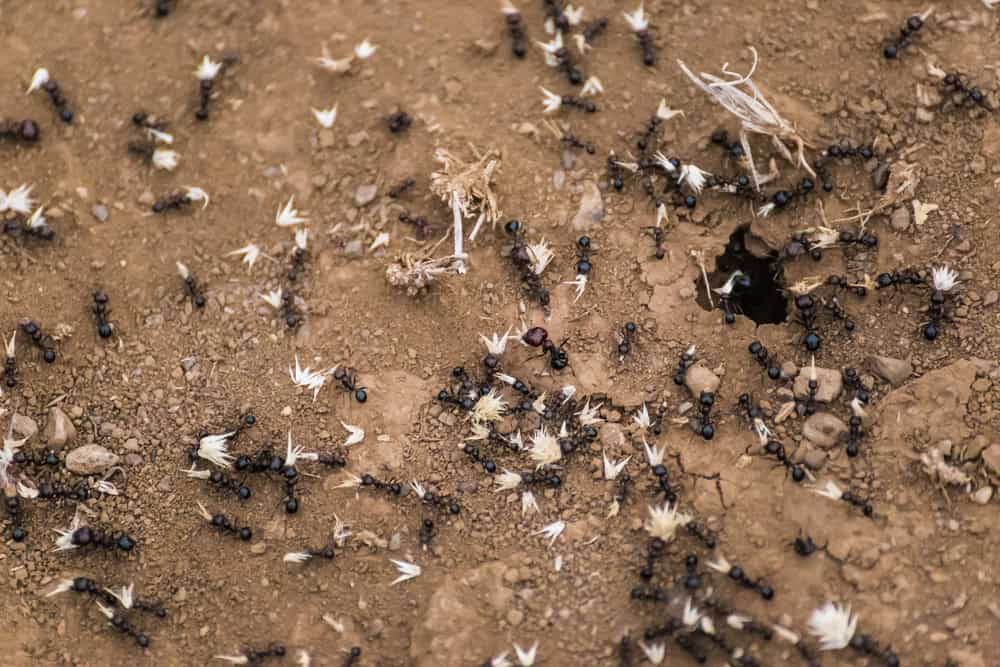
Ants follow pheromone trails.
©Aleksejs Cuckovs/Shutterstock.com
The ants primarily eat lepidoptera, cockroaches, orthoptera, spiders, and other ants. They do not, however, eat other dorylus ant species. Interestingly, there are some driver ant-associated species of beetles, flies, and springtails that seem to be able to pass amongst the colony unscathed! Scientists are planning research this year to try to discover more about this phenomenon.
Efficient Transportation
Prey items with long legs (such as spiders) have their limbs removed before they are transported. The body is more nutritious, and the legs just get in the way. The ants also press several different types of prey together into a sort of terrine arrangement! Presumably, this is also for ease of transport.
Even something as large as a huntsman spider can be overwhelmed and consumed. Vertebrates are not safe either, and geckos, lizards, and shrews have been overpowered and taken apart. Some early research suggests that their exact diet is governed by the driver ant species and by the type of forest but there is still a lot of work to do in this area.
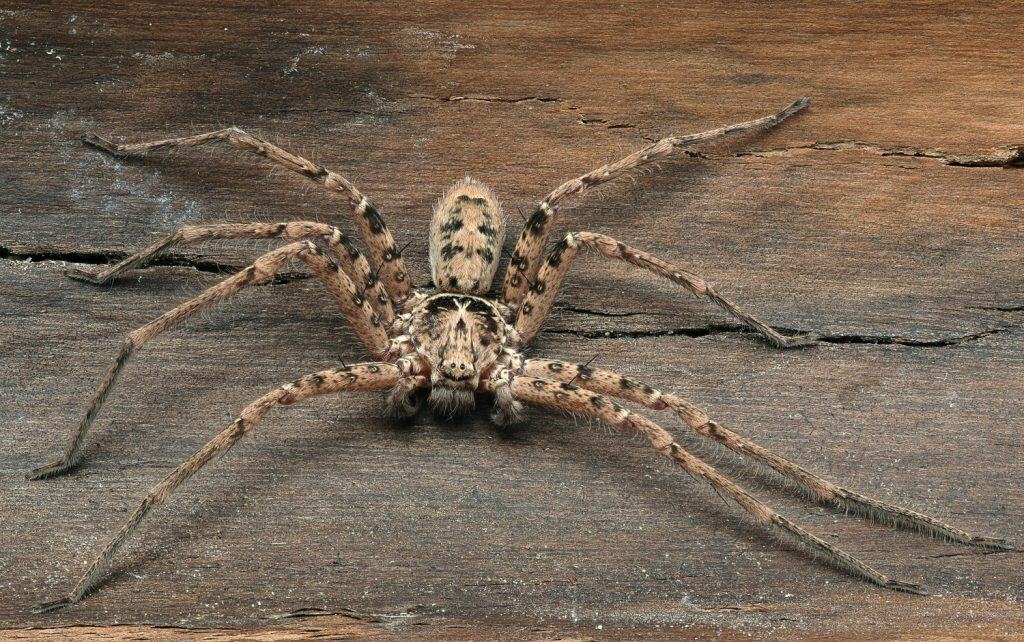
Huntsman spiders are overpowered by driver ant raids.
©iSKYDANCER/Shutterstock.com
As the raid reaches its end, the ants form several smaller columns heading back to the nest with either liquid or solid food. As they get close to the nest itself, the columns converge into one huge column.
Sometimes all of the ants come back at the same time, which is an extraordinary sight. This can be triggered by something like a heavy rain shower. Incredibly, the movement of the ants abides by the rules of fluid dynamics. The colony literally behaves like a liquid.
Do All the Driver Ants Do the Same Job?
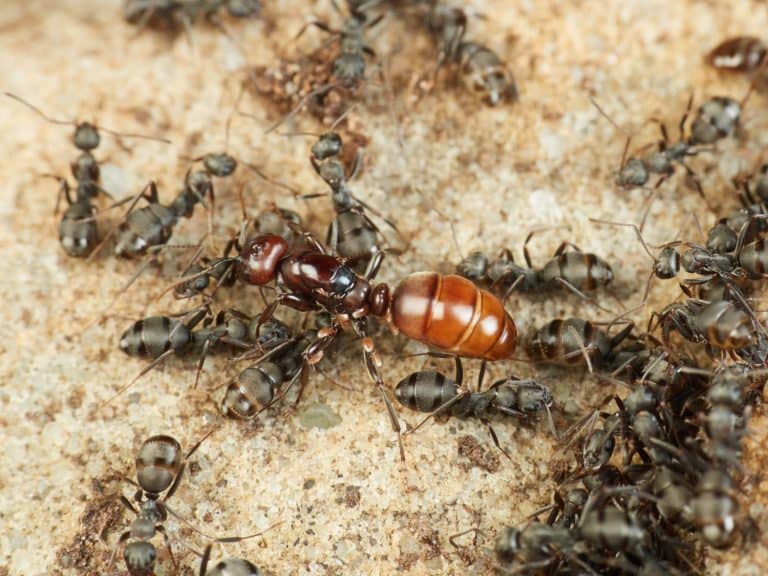
No, there are designated castes (roles) within the colony and during a raid. The worker ants can be in one of two or three ‘morphs’ (life stages), which are different sizes. The supermajors are the largest workers, and they have big heads and piercing mandibles. They position themselves along the margins of the raid column and protect the other ants as they collect food. The very smallest workers, called the minor workers, are at the front because they can fit into small gaps and flush out hiding prey. The key to the success of the swarm is organization and sheer numbers. Despite being such a small creature, driver ants create one of the most astonishing ecological events in the African forests.