
The process of being put into a state of suspended animation sounds like something from a science fiction film. However, Mother Nature is a mysterious and magical force that allows tiny creatures to participate in this process during the winter, emerging no worse for wear as spring finally makes its presence known.
What is even more fascinating is how creatures like frozen turtles come back to life after their body systems essentially stop. Everything from the heart pumping to blood flow ceases. The only thing that remains is limited brain function, which serves to let the hatchling painted turtles know when to awaken. Without this process, few of these tiny turtles would survive the cold, making it safer to undergo the freezing process than face the harsh winter elements for the painted turtle hatchlings.
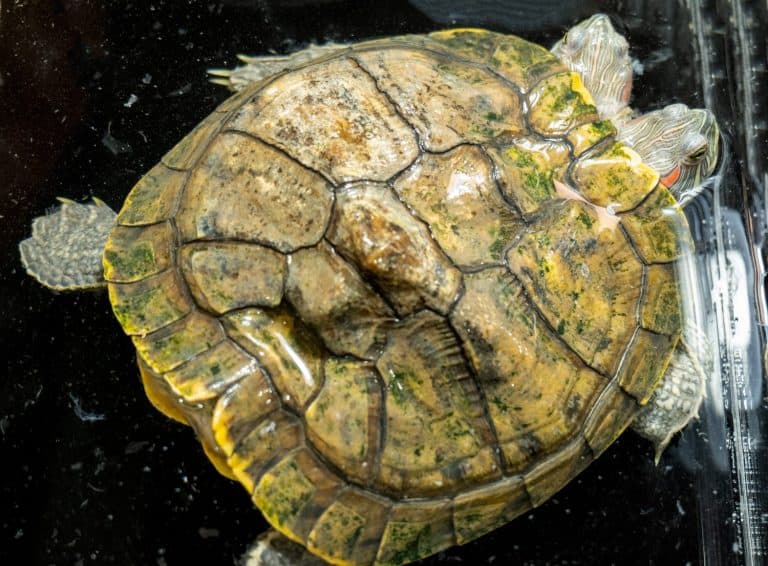
Hatchling Painted Turtles Freeze During The Winter
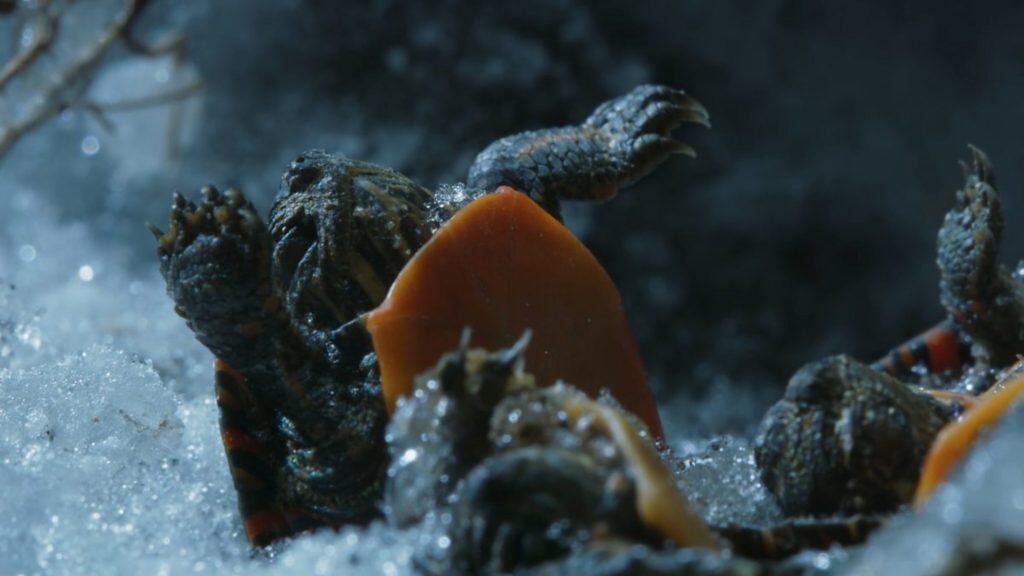
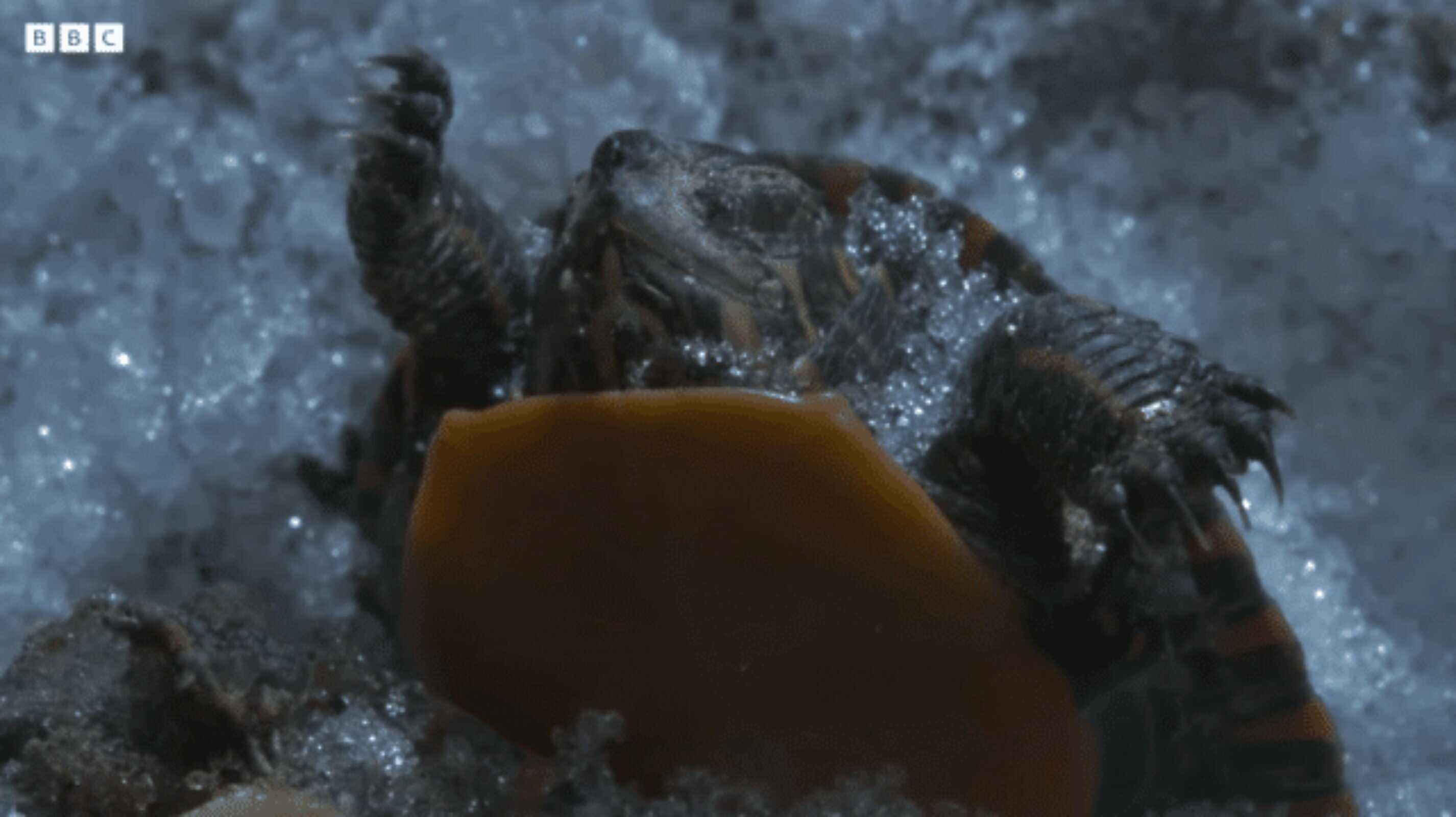
Painted turtle hatchlings freeze during the winter before they defrost in the spring.
© – Original
The winter can be brutal in parts of the United States and Canada. This is why many animals choose to participate in hibernation or brumation to slow their metabolism down in hopes of surviving the winter without having to emerge from their shelters.
However, the hatchling painted turtles take surviving the winter to a level that few other animals would be able to survive. The small turtles practice supercooling, which is literally freezing their bodies in a suspended state for weeks to months on end, until spring arrives, signaling the time to thaw.
Hatchling turtles have the option of leaving their nests when they hatch during the late summer and into early fall. While some do go in search of food to return to the nest later, others instinctively remain in their nests. As the winter months approach, the hatchlings become lethargic as their body systems begin to slow.
It is not only the metabolism that slows, however. As the weather gets colder, the body fluids of the hatchlings drop below the freezing point without freezing solid. Therefore, were it not for the limited brain function that occurs during this time, the hatchlings would be considered dead.
As the winter gives way to spring, the painted turtle hatchlings begin to thaw slowly. As this process occurs, the hatchlings will emerge from their nests, seeking refuge in the nearest body of water to hydrate and find food after a long winter of rest.
Adult Painted Turtles Practice Brumation During Winter
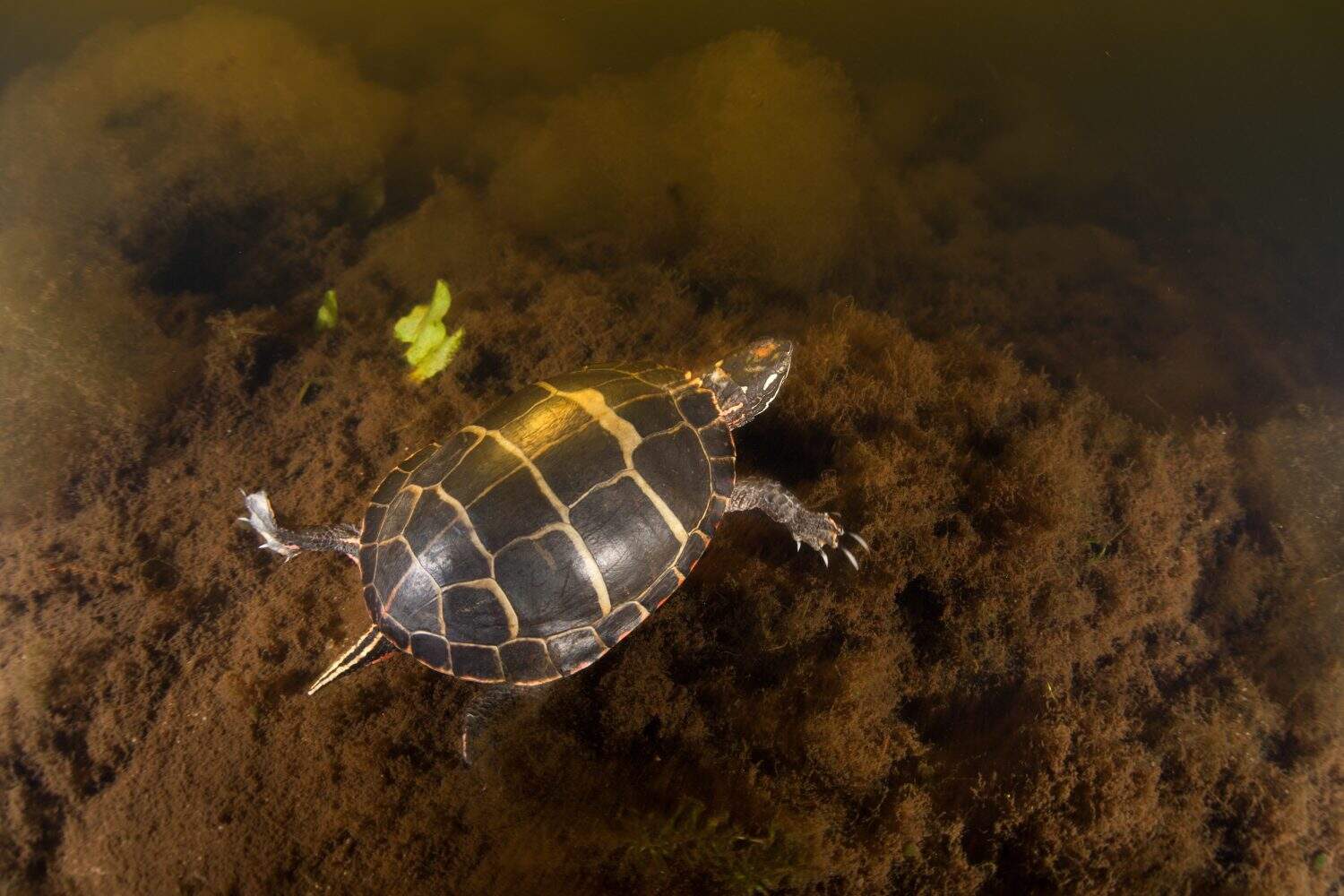
Painted turtles will look for mud to bury themselves in as winter approaches to participate in brumation.
©Ethan Daniels/Shutterstock.com
Once the hatchling phase is over for the painted turtles, they will not have the option of supercooling again during the winter. Instead, to survive the winter months, the adult painted turtles will practice brumation. Brumation is unlike supercooling in that the amphibians and reptiles that experience it do not freeze their bodies. Instead, the body systems slow to conserve energy when temperatures drop and food becomes scarcer.
Adult painted turtles turn to lakes during the winter and bury themselves in the mud. While the surface of the lake may freeze, the water below continues to circulate. During this time, the painted turtles can survive up to 100 days without food or oxygen. This is generally enough time for winter to pass and spring to emerge, when the brumation process will end and the adult painted turtles slowly begin the process of waking as their metabolic rate returns to normal.
How Hatchlings Survive the Cold
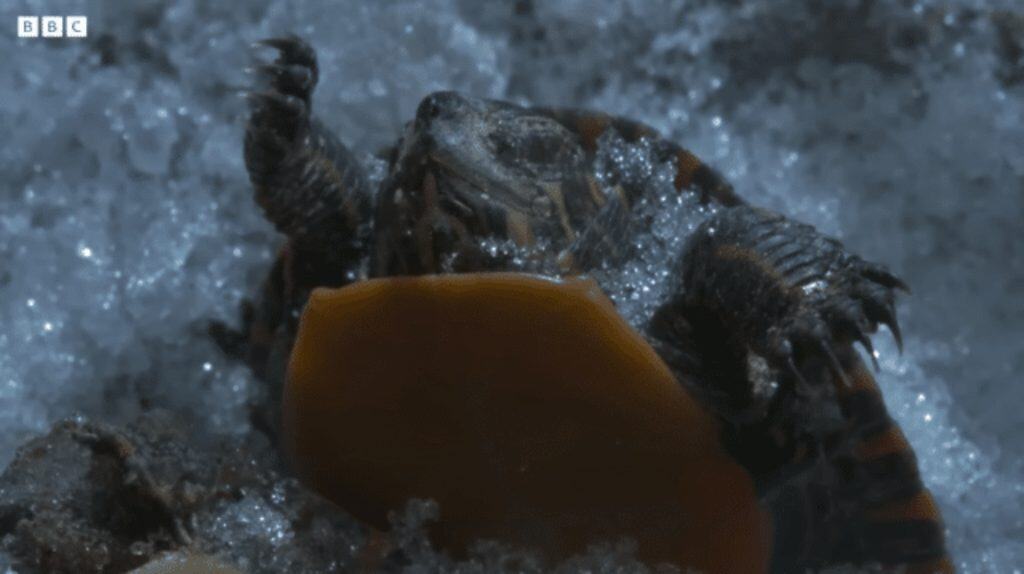
Painted turtle hatchlings are believed to have more glucose and glycerol in their systems, acting like an “antifreeze” during the winter.
© – Original
Painted turtle hatchlings survive through some of the harshest winters by freezing. The body of these young turtles will literally freeze, stopping the circulation of blood, body systems, including the heart, and generally all brain function, until warmer weather triggers the signal for the turtles to begin to thaw and emerge from their nests.
The nests the turtles live in during the winter are above the frost line, or the area where the soil begins to freeze. This is important because it keeps ice crystals from forming in the nest. The hatching painted turtles need to keep ice crystals from forming, as coming into contact with them decreases their chances of survival over the winter. The more ice crystals there are, the greater the contact, and the greater the likelihood of ice crystals forming in the body.
As the painted turtle hatchlings begin to freeze, their body functions slow to a standstill. This keeps energy reserves as high as possible until the painted turtles are ready to emerge when spring finally comes. The turtles are remarkably able to keep ice crystals from forming in the fluid in their bodies. It is believed the tiny turtles have glucose and glycerol in their systems at higher levels, acting as an “antifreeze.”
As the turtles thaw, the lack of crystals ensures that no internal damage happens to the painted turtles. Researchers have found that smaller hatchlings can fare better than larger ones during the freezing process, as less surface area is exposed, potentially leading to fewer chances of ice crystal contact while in the nest.
Other Animals That Practice Supercooling
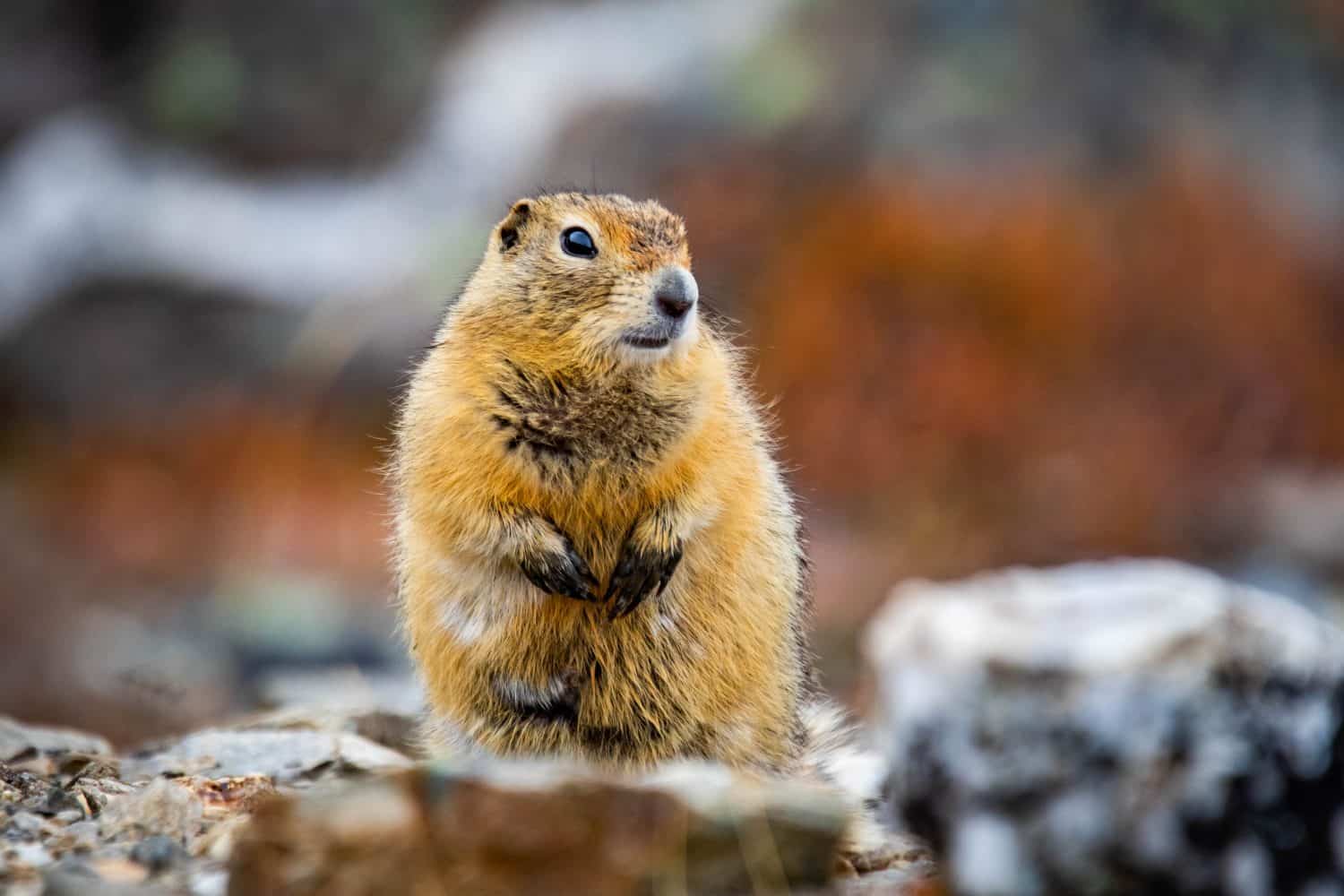
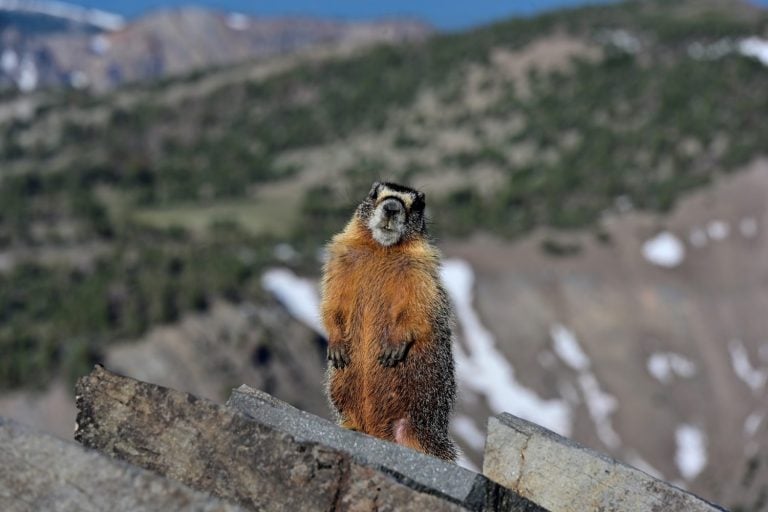
Arctic ground squirrels participate in supercooling like painted turtle hatchlings.
©Photo Spirit/Shutterstock.com
To survive the frigid winters, other animals participate in supercooling. Just like the hatchling painted turtles, they, too, bring their body temperatures to below freezing without causing permanent damage to their body systems. Two of the best examples of animals that participate in this process are the arctic ground squirrel and the wood frog.
Both the arctic ground squirrel and the wood frog have body systems that will stop as the body begins to cool. Despite there still being fluid in the body, the wood frog has adapted to keep ice crystals from forming as the creature freezes from the outside in. If ice crystals were to form in abundance, the frogs would perish after freezing.
The arctic ground squirrel is unique in that while it participates in supercooling, their blood and organs do not freeze. Instead, as the squirrel’s body temperature decreases to just over 26°F, it reduces the amount of energy that it uses to survive. By doing this, the arctic ground squirrels can survive in this frozen state for eight to 10 months, emerging when temperatures increase, completely healthy.
Climate Change May Make All Painted Turtles Female
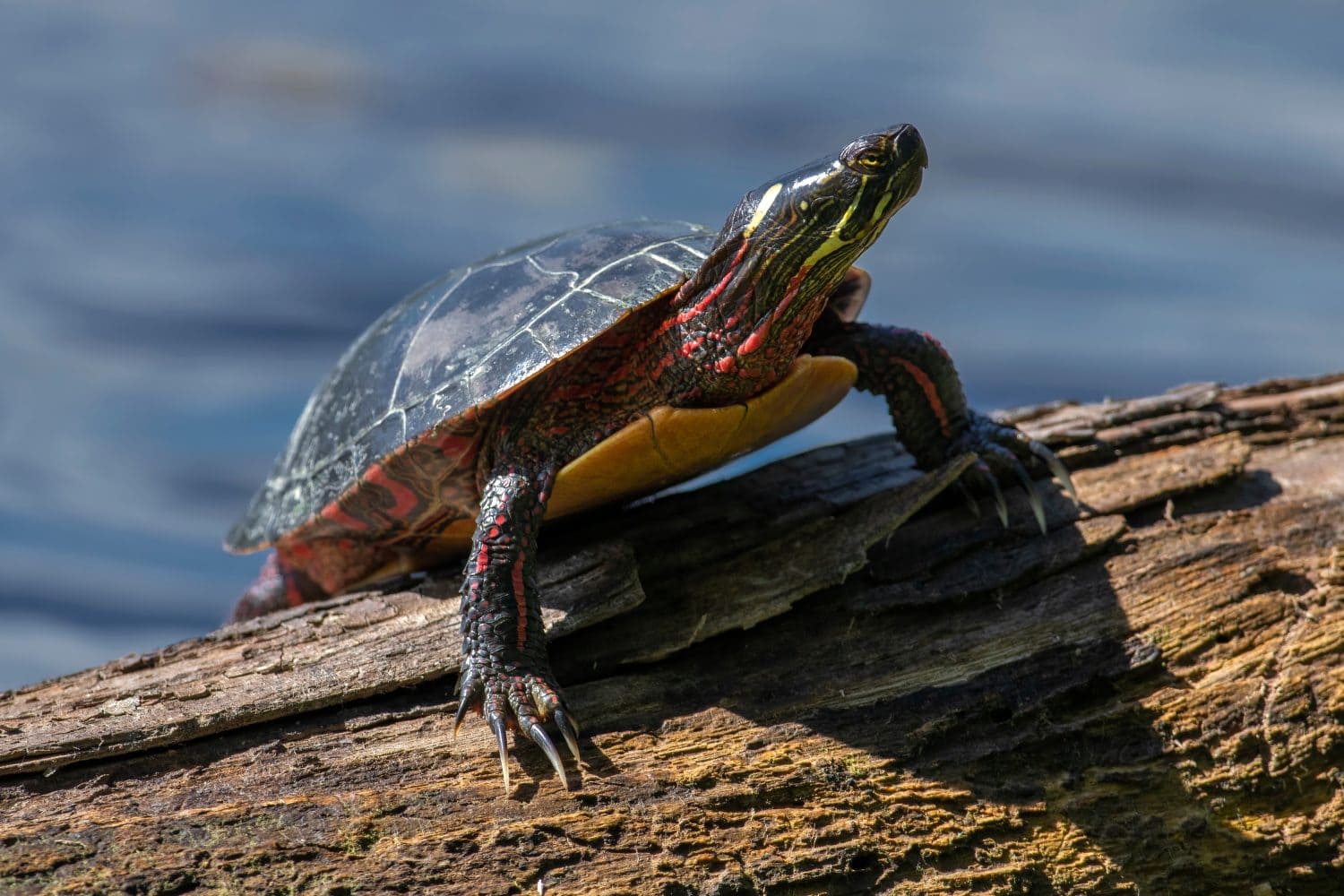
Warmer temperatures may make all painted turtle hatchlings females in the future.
©William Levesque/Shutterstock.com
While painted turtle hatchlings can survive the harsh winter conditions by essentially turning off all essential body functions, save for brain function, there is a threat to painted turtles that comes directly from climate change. This threat is that the hatchlings in the near future may be all female. After the painted turtle eggs are laid, they are covered by the mother turtle. The turtle will not return to check on the eggs. They are left to incubate and hatch on their own.
During the incubation period, the temperature determines whether the turtles that hatch will be male or female. The warmer the temperatures, the greater the likelihood that females will be born. The colder the temperatures, the more common it is for male turtle hatchlings to appear.
It used to be that the varied temperatures over the late summer and early fall would ensure that both male and female hatchlings would emerge from the nest. However, as temperatures have climbed due to climate change, more females are being born. By 2050, it is believed temperatures around the United States will be two to four degrees Fahrenheit warmer. This increase could severely threaten painted turtle populations by skewing sex ratios, potentially endangering their long-term survival. Consequently, conservationists are calling for change now more than ever so that creatures, such as the painted turtles, that rely on cooler temperatures have a chance of survival in the decades to come.