
Quick Take
- The term 'nest boil' sounds alarming, yet what's actually happening beneath the sand is far stranger and more coordinated than the name suggests. See what actually happens →
- Loggerhead hatchlings use a built-in timing signal to decide exactly when to burst through the surface, and getting it wrong can be fatal. Discover the timing signal →
- Filming the nest boil required rangers to solve a problem most people wouldn't expect: the cameras weren't the hard part. Find out the real challenge →
- Making it to the ocean is the easy part of a loggerhead's life. The survival odds afterward are almost unbelievably slim. See the survival odds →
One North Carolina beach in the Fort Fisher State Recreation Area was recently the scene of something extraordinary. Dozens of hatchling loggerhead turtles emerged from the sand and made their way to the Atlantic Ocean.
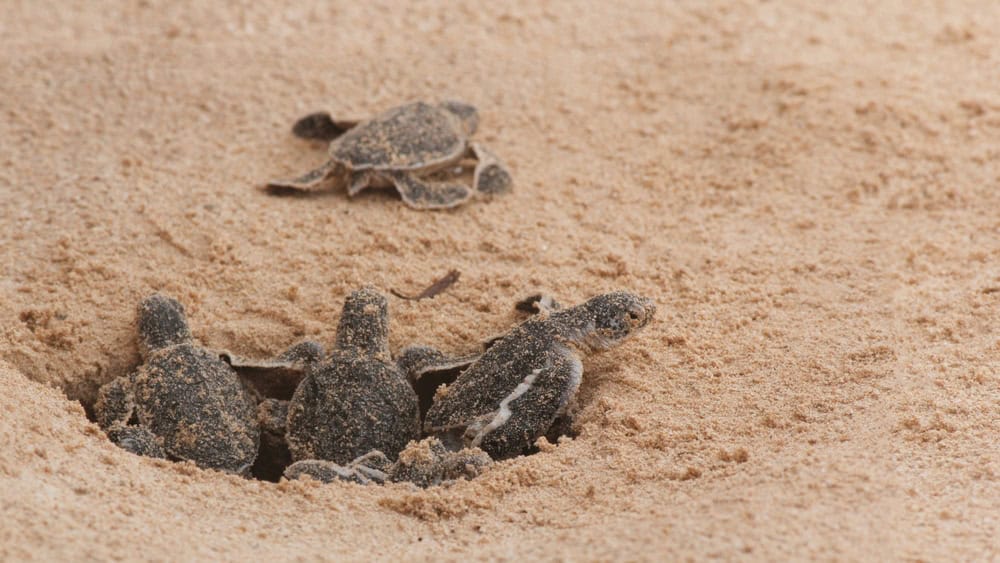
Locals and the state wildlife department call it a “nest boil,” but the name is far less ominous than it sounds. The name describes the process of the undisturbed sand turning into a churning mass as the hatchlings claw their way out of their underground nest.
It’s an annual phenomenon that draws state wildlife officials and turtle-lovers to the park in anticipation of watching the hatchlings start their new lives in the ocean – a process that usually happens after dark. The event was captured and shared on social media.
Continue reading
The Truth About a “Nest Boil”
Despite its alarming name, there’s no actual boiling at all. It’s simply a descriptive name that mirrors what the sand looks like as more and more hatchlings make their way to the surface from their buried nests.
Wildlife officials and turtle conservation groups mark known turtle nests to protect them from beach traffic. As hatching dates get closer, they monitor the sites looking for the telltale sign that a nest is about to hatch. The sign? A divot that begins to form above the nest.
Once the divot forms, it takes about one hour for the hatchlings to emerge en masse from their underground nest. A few early hatchlings might make their way out ahead of time, but the majority come out in unison, turning the sand into what looks like a pot of boiling water.
Why Do the Hatchlings Emerge Together?
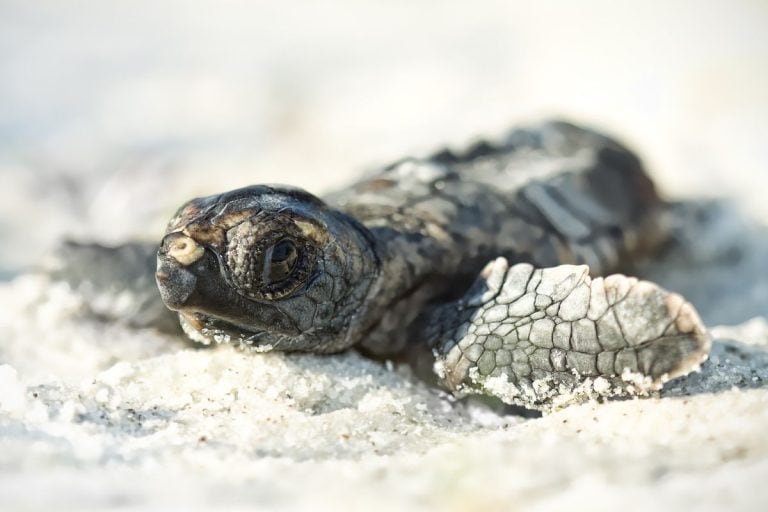
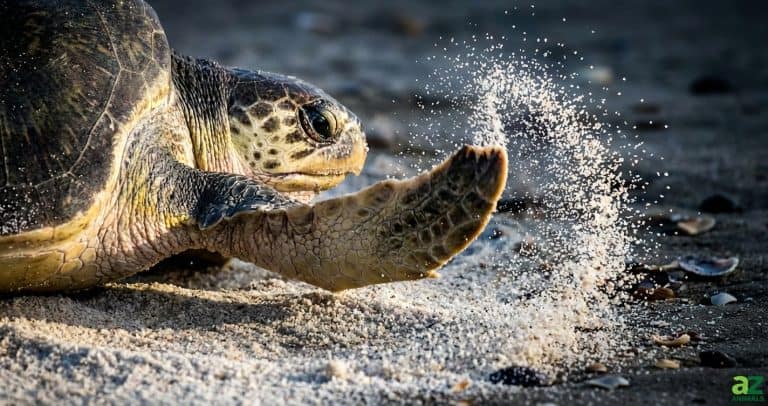
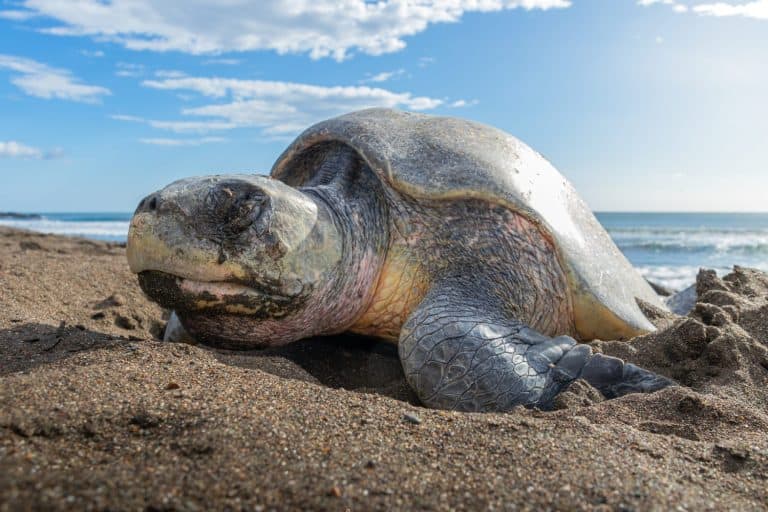
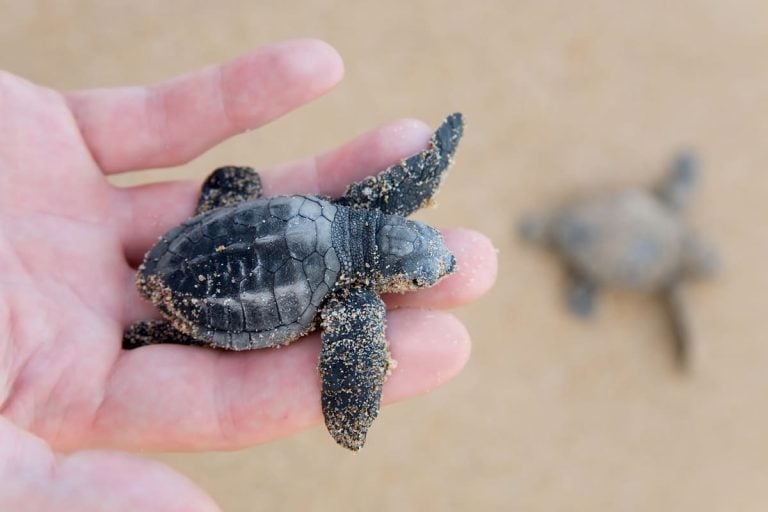
When a female turtle returns to the beach to lay her eggs, she typically digs a nest that’s around 1.5 to 2 feet deep. She lays her eggs, then buries them with sand. For a hatchling turtle, around two inches long, that’s a lot of sand to dig through to freedom.
Hatchlings near the top loosen sand and push it downward, while others below pack the sand beneath them. Together, they gradually raise the group toward the surface. As the process continues, the entire mass of hatchlings slowly gets pushed up toward the surface, like an elevator.
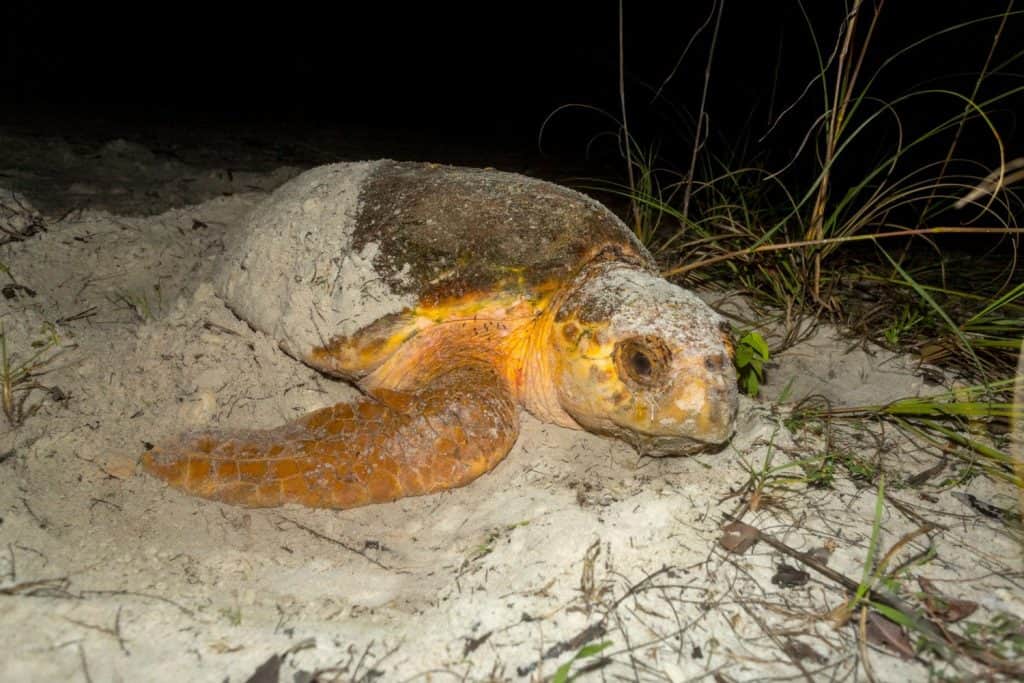
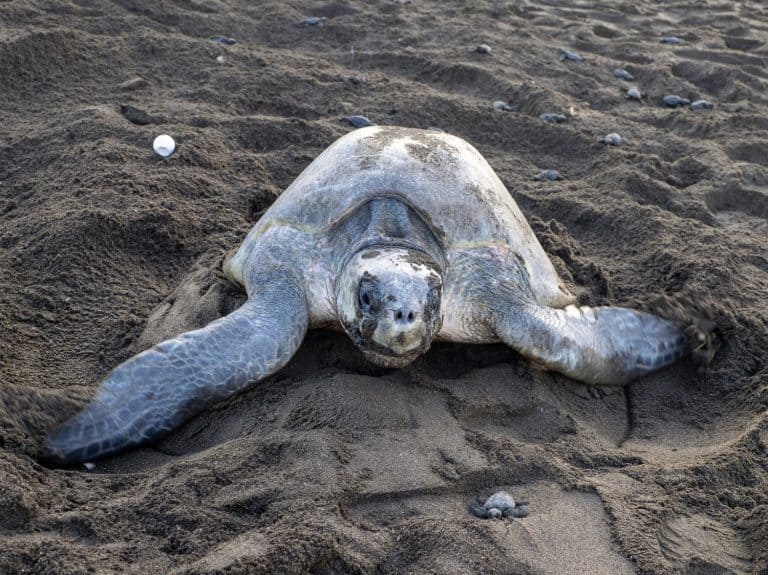
Female loggerhead turtles typically dig nests around 1.5 to 2 feet deep, then lay their eggs and bury them.
©Danita Delimont/Shutterstock.com
Once they are near the surface, they wait for the right moment to emerge. Their cue to come out is the temperature of the sand above them. When the sand cools, typically after sunset, they know it is safe to break through. For loggerheads specifically, hatchlings typically wait for the sand temperature to drop, usually after sunset, before emerging. A decrease in temperature signals that it is safer to come out.
There’s another reason the hatchlings emerge as a giant mass: there is safety in numbers. When the “boil” occurs and a large number of hatchlings come out together, predators get confused and find targeting a single hatchling more difficult.
Emerging after sunset, often in the dark, also helps the hatchlings avoid the watchful eyes of predators.
How Park Rangers Filmed the Nest Boil
One of the biggest risks to hatchlings is their instinct to follow the brightest light source. Typically, in uninhabited areas, that light comes from the ocean. However, in places where artificial light is present, hatchlings often head the wrong way – away from the ocean’s safety.
Keeping this in mind, park rangers filmed the entire nest boil without using any artificial lights. Instead, they relied on the light from the full moon and specific camera settings for low-light conditions.
By ensuring no artificial light was introduced to the hatching process, park rangers ensured the hatchlings were not disoriented and stayed focused on moving toward the ocean.
Why This Matters For an Endangered Species
Loggerhead turtles, especially the Northwest Atlantic population that nests on North Carolina beaches, are listed as threatened under the Endangered Species Act. The beach within Fort Fisher Park is a documented nesting habitat for loggerheads and protected accordingly.
Part of this protection is limiting who can interact with turtle nests and the hatching process. The North Carolina Wildlife Resources Commission’s Sea Turtle Project coordinates state and federal permits, and relies on a network of biologists and 1,000+ volunteers across the state. They work together to ensure loggerhead turtle nests are safe from the time a nest is laid until the hatchlings emerge, typically a process that takes around 60 days.
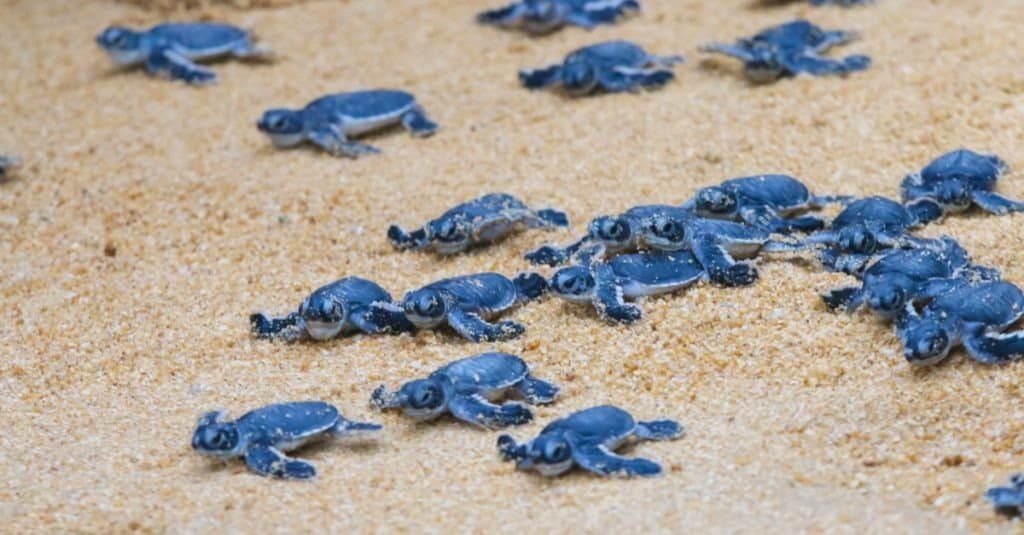
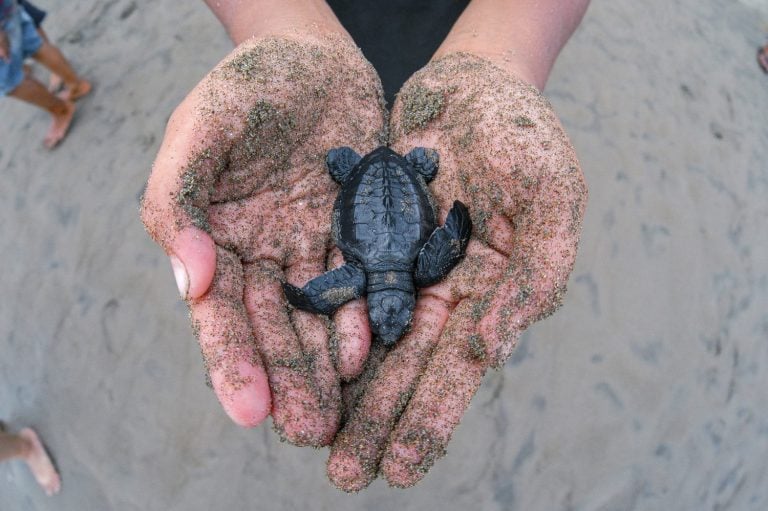
Sea turtle hatchlings on their way to the ocean.
©zulkamalober/Shutterstock.com
The group is also responsible for managing the nest after hatching. Once the initial wave of hatchlings has emerged, they wait three days before returning to excavate the nest and free any remaining hatchlings. They also count the eggs and record how many hatched and how many were not viable. Waiting a few days before excavation gives any late-emerging hatchlings a chance to leave the nest on their own.
This year has proven to be a robust year for North Carolina’s beaches. Nearly 2,000 nests have been reported by early September.
The Hatchlings’ Long Journey to Adulthood
Making it to the ocean is just the first step in a very long journey to adulthood. Most hatchlings don’t survive. The National Oceanic and Atmospheric Administration (NOAA) estimates that only about 1 in 1,000 to 1 in 10,000 hatchlings reach adulthood.
They face many obstacles along the way. On land, as they make their way into the sea, raccoons, foxes, and birds are waiting to grab the hatchlings on the sand. Once in the water, predatory fish pose the greatest threat to the hatchlings. Hatchlings and juvenile turtles often get caught in fishing gear, are struck by boats, and sometimes even swallow ocean trash, mistaking it for food.