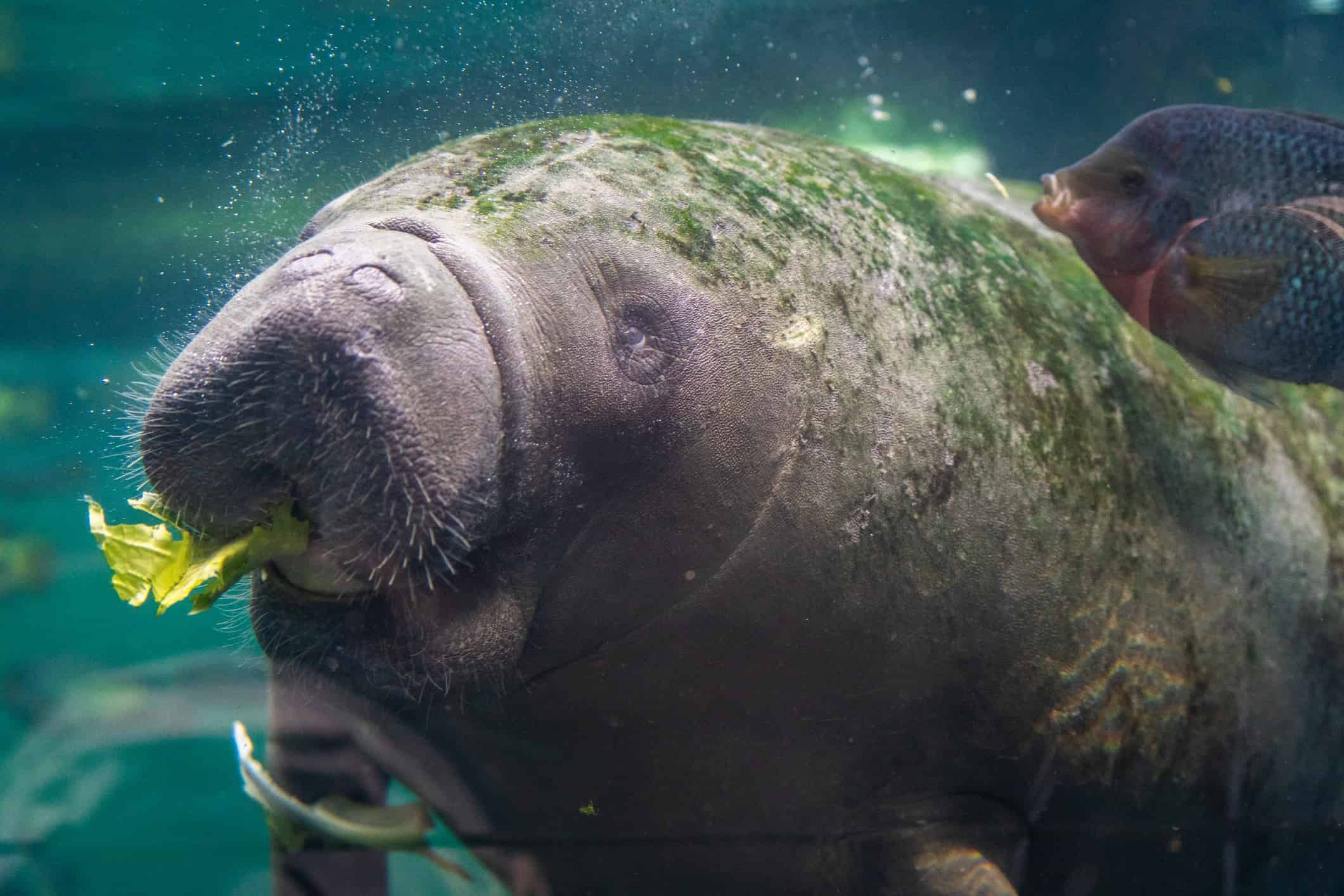

Similar to how cows munch on grass all day long, sea cows feed on seagrass, eating copious amounts each day. As seagrass is not a nutrient-dense food, sea cows spend the majority of their days eating as much as they can. This YouTube Short by @ABCScience talks about their seagrass-eating behavior and the surprising amount they eat each day. Read below to learn more about the sea cow’s diet.
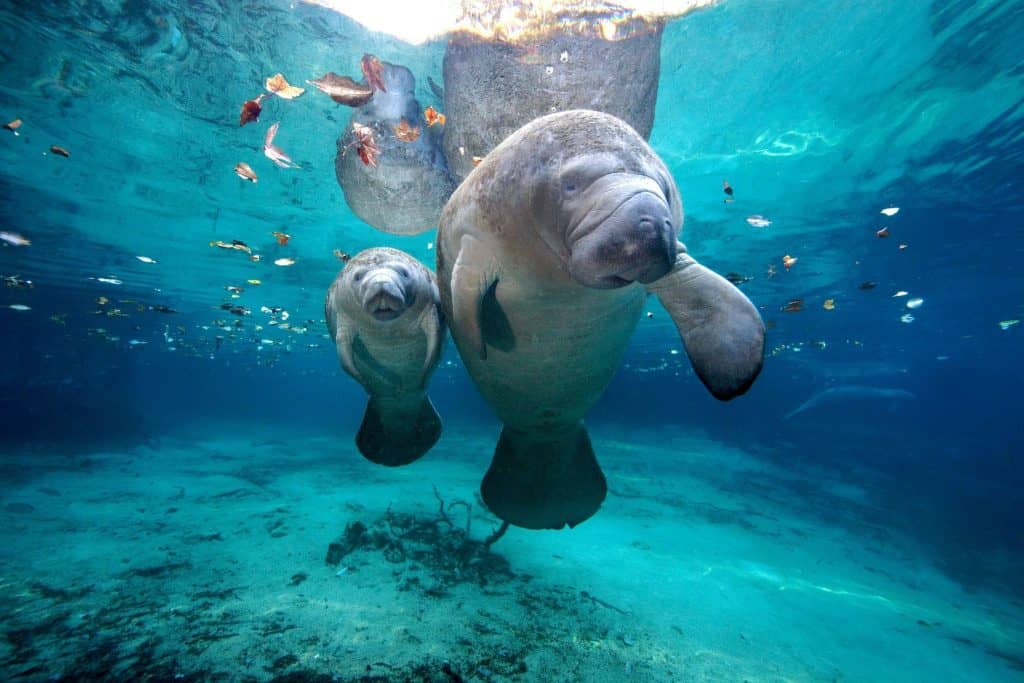
Sea cows, like their land counterparts, feed on grass (seagrass, that is).
©Facebook – Original
The Sea Cow Diet
The name “sea cow” refers to manatees or dugongs, large herbivores that feed on over 60 different types of sea plants. Inhabiting both fresh and saltwater, different species feed on a wide variety of plants in the ocean. Manatees in saltwater habitats feed on different types of seagrass, such as turtle grass, manatee grass, and shoal grass. In freshwater, they feed on muskgrass, water lettuce, and hydrilla. Because dugongs are closely related to manatees but have a more specialized diet, they feed exclusively on seagrass. This specialization has led to a unique adaptation: dugongs have strong snouts that allow them to dig up seagrass by the roots, rather than just taking bites, enabling them to extract the most nutrients from their meals. While most manatee species eat only seagrasses and other plants, the African manatee is unique because it also eats fish and crustaceans, making it an omnivore among primarily herbivorous sea cows.
Sea cows get a number of important nutrients from seagrass. Seagrass is rich in calcium and magnesium, which are important for the bone and muscle health of sea cows. The leaves of seagrass contain sugars, providing sea cows with the energy they need to get through the day. One of the unique adaptations sea cows have gone through for their diets revolves around fiber. Fiber from seagrass is difficult to digest, but manatees and dugongs are hindgut fermenters. This means they have large intestines—about 100 feet long—that help them break down and digest the fiber. This unique adaptation highlights how sea cows have evolved to maintain their diet. Sea cows graze for up to eight hours each day. Manatees typically eat 60 to 100 pounds of vegetation daily, while dugongs consume up to 66 pounds.