Kangaroos are formidable opponents in the animal kingdom. While they do have their predators, kangaroos typically can hold their own against many who would like to enjoy them as prey. However, there are times when even Mother Nature can reveal a surprise or two. In Australia, a kangaroo got caught in the crosshairs when a bird of prey decided the kangaroo looked like an animal that would be easy to make a meal out of. While it is hard to believe a kangaroo would be worried about a bird, this was not any bird that attacked. It was the wedge-tailed eagle, the largest and most fearsome of all the eagles found Down Under.
Kangaroo Gets Attacked By a Wedge-Tailed Eagle
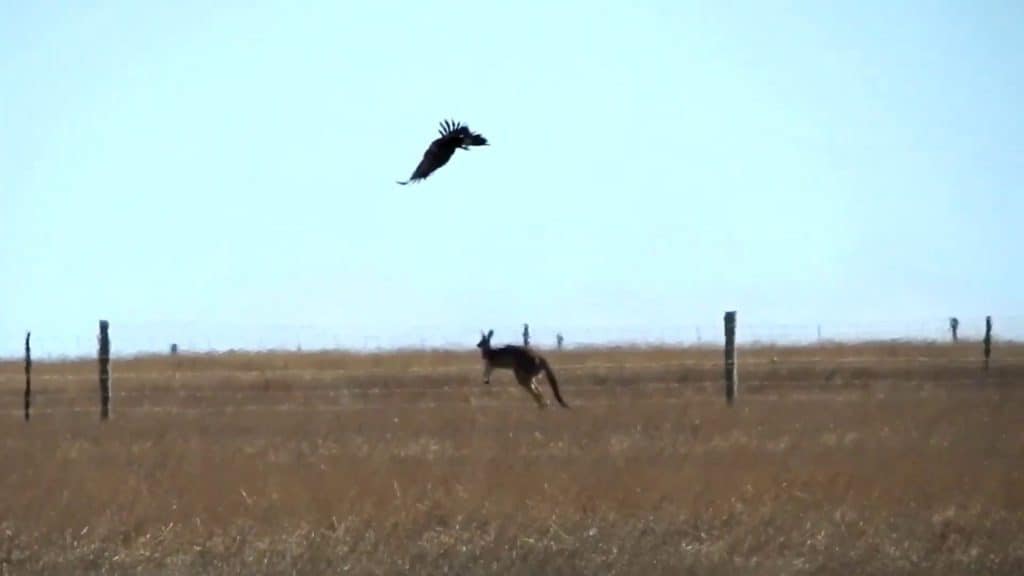
Wedge-tailed eagle attempts to attack a kangaroo from above in the countryside in Australia.
©https://www.youtube.com/watch?v=tiUSw5dPN8U
As videos of kangaroos showcasing their sheer strength and unwillingness to back down have gone viral, the perception of kangaroos has shifted from peaceful creatures to formidable foes. Knowing that kangaroos can more than hold their own, it was shocking for a photographer to capture a video of a large eastern grey kangaroo being attacked from the air by a wedge-tailed eagle. The video, posted to YouTube, went viral, with multiple outlets picking up and reposting the footage.
Eastern grey kangaroos are the second-largest kangaroo species in Australia, just behind the red kangaroo. They can reach up to nearly 150 pounds and stand more than 6.5 feet tall. But this stature did not appear to deter the massive wedge-tailed eagle from trying its luck to make the kangaroo its prey. The video clearly shows the wedge-tailed eagle coming in to attack the kangaroo’s head three times. In each attempted attack, the kangaroo is able to get out of the way of the wedge-tailed eagle quickly.
While it is not unheard of for wedge-tailed eagles to attack marsupials, one that was the size of this kangaroo was surprising. From the video, the kangaroo appeared to be in good health and larger than the eagle. This typically would keep the wedge-tailed eagle from attacking, but in this instance, the eagle decided to take a chance and see if it would be successful in its attempt to bring a kangaroo down. After successfully thwarting the wedge-tailed eagle’s plans, the kangaroo took a breather. While there is no knowing what the kangaroo was thinking, the look on its face was one of shock after the largest eagle in Australia attacked.
Adult Kangaroos Are Not Easy Prey for Wedge-Tailed Eagles

An eastern grey kangaroo makes a formidable opponent for a wedge-tailed eagle.
©Chris Watson/Shutterstock.com
As aggressive as the wedge-tailed eagle was toward the kangaroo, healthy adult kangaroos do not make easy prey for wedge-tailed eagles. This is likely why, after the third attempt to attack the kangaroo, the eagle decided to move on to a less formidable prey to get a meal.
Typically, wedge-tailed eagles will prey on smaller animals. Those animals include:
- Rabbits
- Hares
- Water birds
- Snakes
- Lizards
- Possums
- Foxes
- Feral cats
- Wallabies
Of these animals, the rabbits and hares make up a substantial portion of the diet for wedge-tailed eagles. The birds of prey will typically have 30% to 70% (in some cases, more) of their diet consisting of these animals.
For a wedge-tailed eagle to take on a kangaroo, there was something that the eagle noticed about the kangaroo that suggested it was in a weakened state. This is why the wedge-tailed eagle was attempting to attack the kangaroo’s head, which is the most vulnerable spot for the kangaroo. Had the wedge-tailed eagle succeeded, it would have had quite the meal.
If a wedge-tailed eagle is going after a kangaroo that is not in a weakened state, its targets are usually the smaller ones. This makes it easy for the bird of prey to attack, given that juvenile kangaroos are not as strong as their adult counterparts. It may seem strange that a bird of prey can hold its own against larger mammals, given that many are not massive. However, this is not the case for wedge-tailed eagles, which are the largest birds of prey in Australia.
Wedge-Tailed Eagles Are The Largest Birds Of Prey In Australia
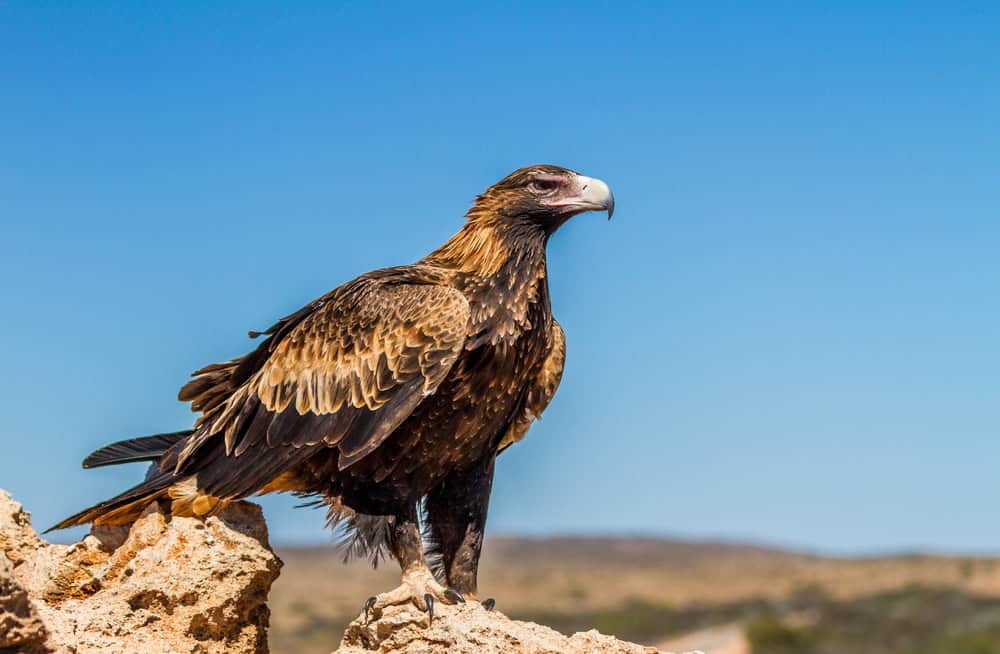
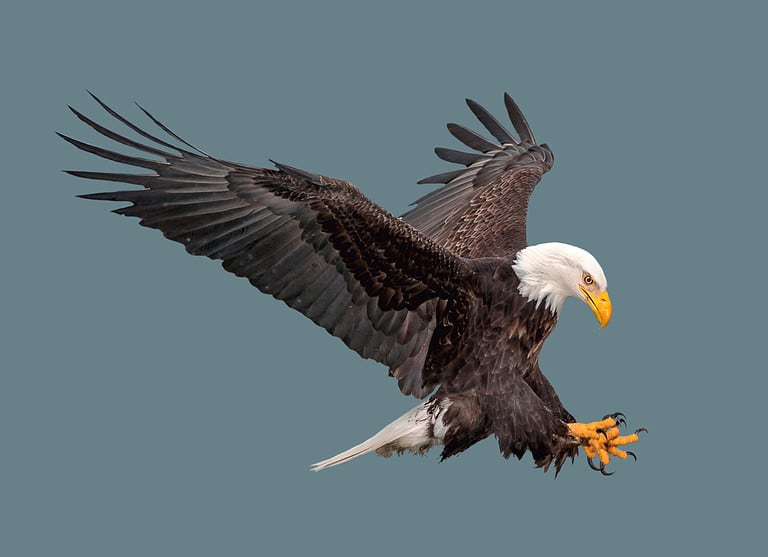
Wedge-tailed eagles can be up to three feet tall and have a wingspan of over nine feet, making them a massive bird of prey.
©JacobLoyacano/Shutterstock.com
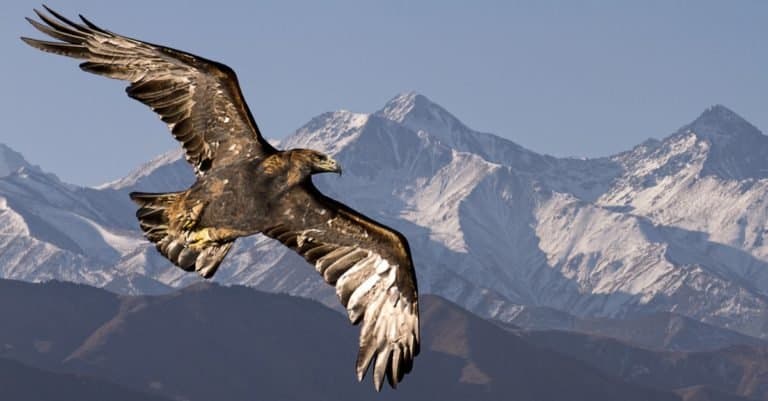
Australia has multiple birds of prey. But when it comes to the largest, the wedge-tailed eagle is larger than them all. The wedge-tailed eagle can be up to three feet tall and has an impressive wingspan of over nine feet. The females tend to be larger than males, weighing up to 11.5 pounds versus just under nine pounds.
The wedge-tailed eagle is distinguished from other eagles in Australia by its wedge-shaped tail, for which it is named, and by its dark brown plumage with slightly lighter feathers underneath. There are a total of four different types of eagles that live in Australia, including the wedge-tailed eagle. All look strikingly different from one another, making them fairly easy to tell apart. The two other eagles in Australia are the white-bellied sea eagle and little eagle. All of the eagles, including the wedge-tailed eagle, are birds of prey. However, not all of them are apex predators. The wedge-tailed eagle, however, is an apex predator.
Wedge-Tailed Eagles Are Apex Predators
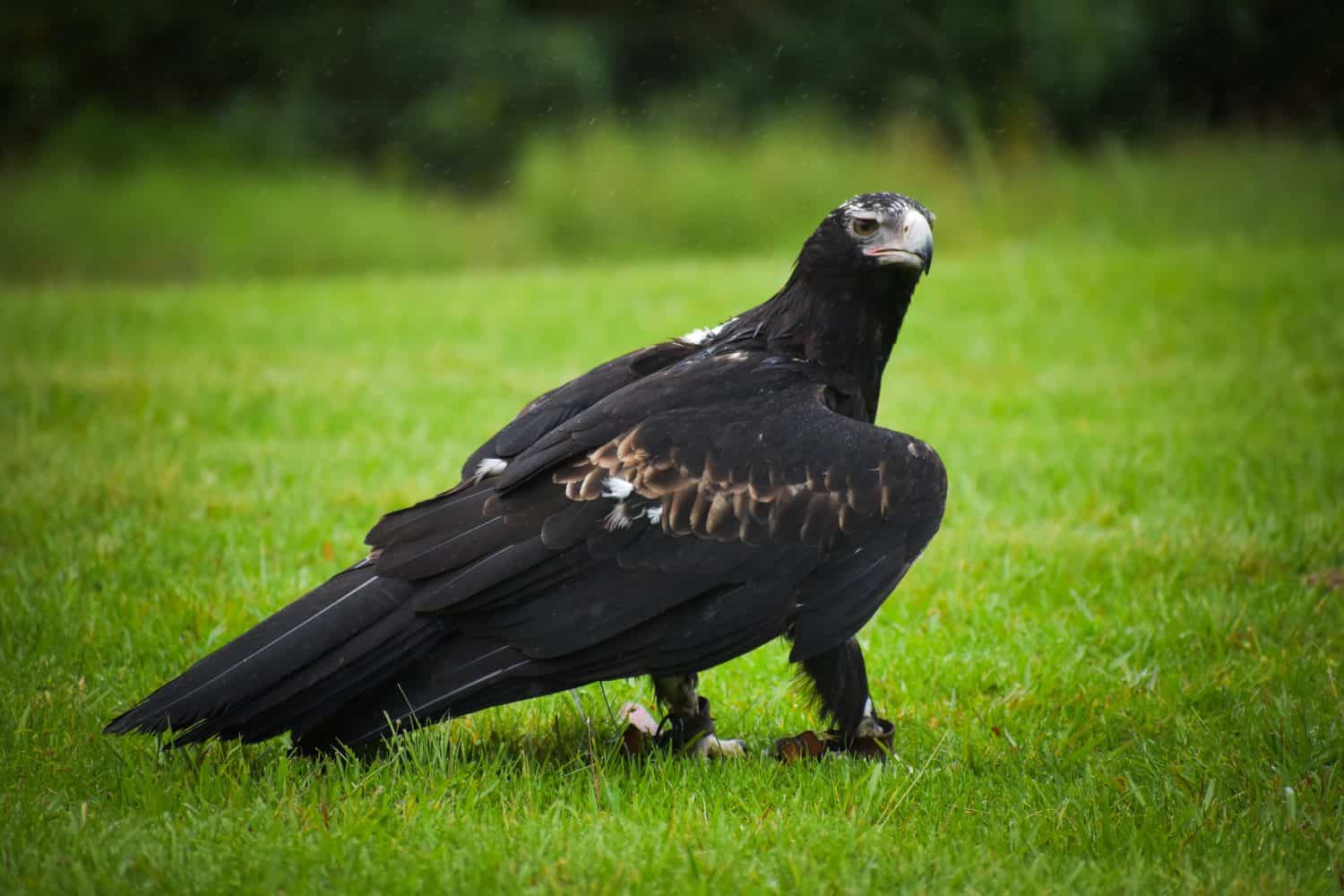
Wedge-tailed eagles’ biggest threat is humans.
©AusCroft/Shutterstock.com
Wedge-tailed eagles are apex predators. There are no wild animals that are a threat to the massive eagles. This is why the birds of prey are such formidable foes not only to smaller mammals but to larger ones, such as the kangaroo seen in the YouTube video.
The biggest threat to wedge-tailed eagles, like other apex predators, is people. The eagles are consistently misunderstood and blamed for being the culprits behind killing young livestock, when in reality, black eagles have been found to consume young livestock far more often. Even then, however, that only comprised 1.1% of the black eagle diet. What is interesting about the wedge-tailed eagle population is that they have been able to not only rebound their population numbers, but are still growing today. This is not often heard of in the apex predator world, making the wedge-tailed eagle something of an anomaly.
Wedge-Tailed Eagle Population Has Rebounded
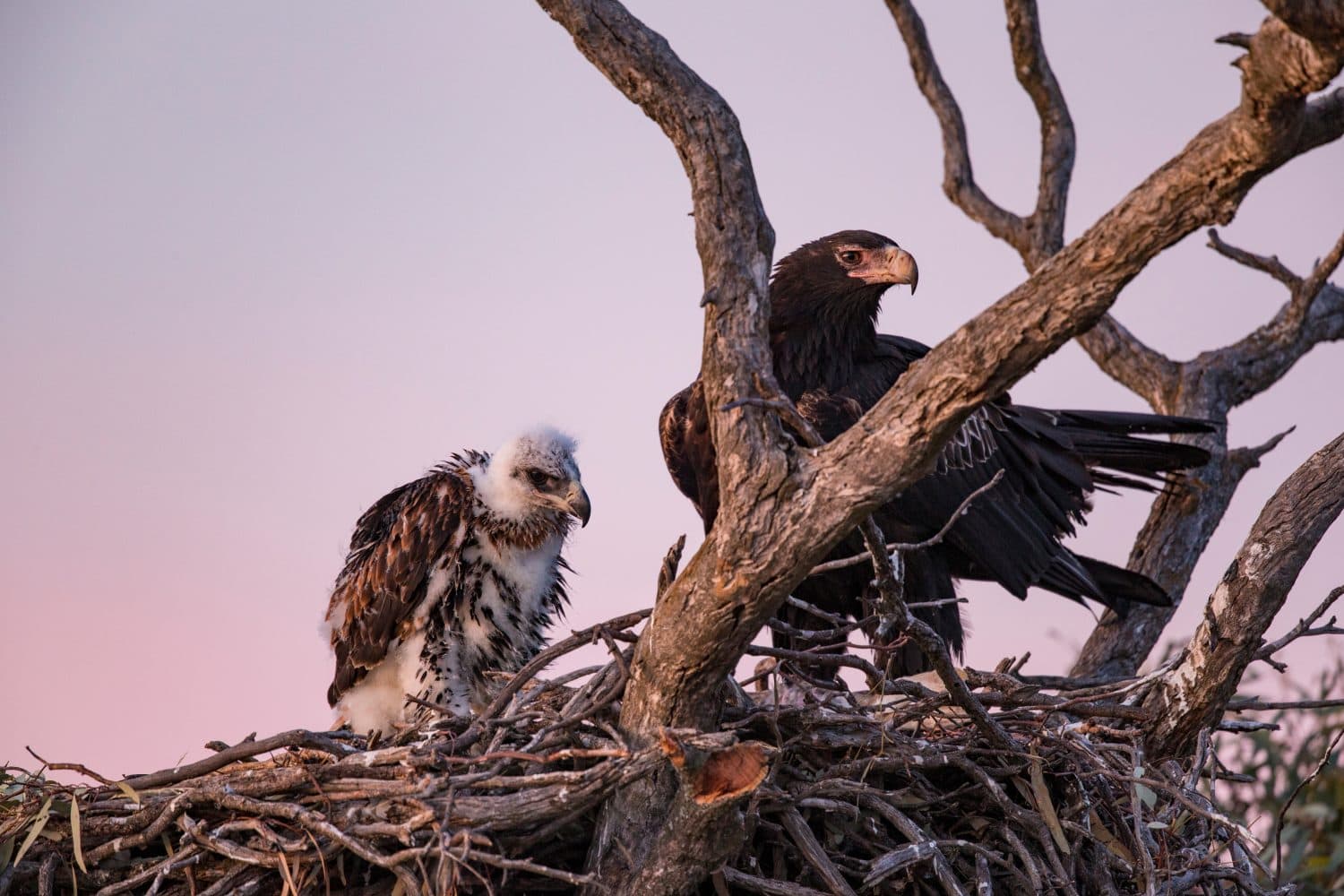
After tens of thousands of wedge-tailed eagles were killed decades ago, the protected bird of prey has made a substantial population comeback.
©Mickey Eric Mackwan/Shutterstock.com
People have long persecuted wedge-tailed eagles due to a belief that they are responsible for the deaths of young livestock, specifically sheep. Consequently, even though the birds were a protected species, a mass killing of these birds of prey occurred from 1928 to 1968, with 13,000 of the wedge-tailed eagles being killed annually in Queensland and Western Australia.
While many other bird populations would have suffered from such extermination, wedge-tailed eagles have proven to be resilient. As a result, the population has rebounded over the last several decades to the point where the IUCN considers the eagles to be a species of “least concern.”
It is indeed good news that the wedge-tailed eagle was able to overcome the human-led attack on their species. However, that does not mean the wedge-tailed eagle is free from threats within its environment. All of these threats are caused by humans, and while they may not currently impact the species, conservationists are concerned that if changes are not made, the effects could become detrimental to wedge-tailed eagles.
Some of the common threats that wedge-tailed eagles face today include:
- Habitat loss
- Habitat fragmentation
- Hit by vehicles
- Crashing into powerlines
- Second-hand poisoning
Conservationists believe that if areas where the wedge-tailed eagles build their nests were left alone and were not developed, it would immediately have a positive impact on the birds of prey. Additionally, by removing dingo traps with poison from the environment, the birds would fare better as well. Given that the wedge-tailed eagle is not currently under threat of extinction and is a protected species, little attention is paid to its conservation. However, this may not always be the case, and conservationists warn that change is needed now, while the population is stable, to prevent future problems.