
Emerald ash borers, also known as EAB, are an invasive beetle native to northeast Asia. These wood-boring insects have been in North America for more than 20 years, during which time they have unfortunately devastated America’s native ash trees. Let’s take a look at the signs of emerald ash borer infestations to watch for in your yard and how to protect your trees.
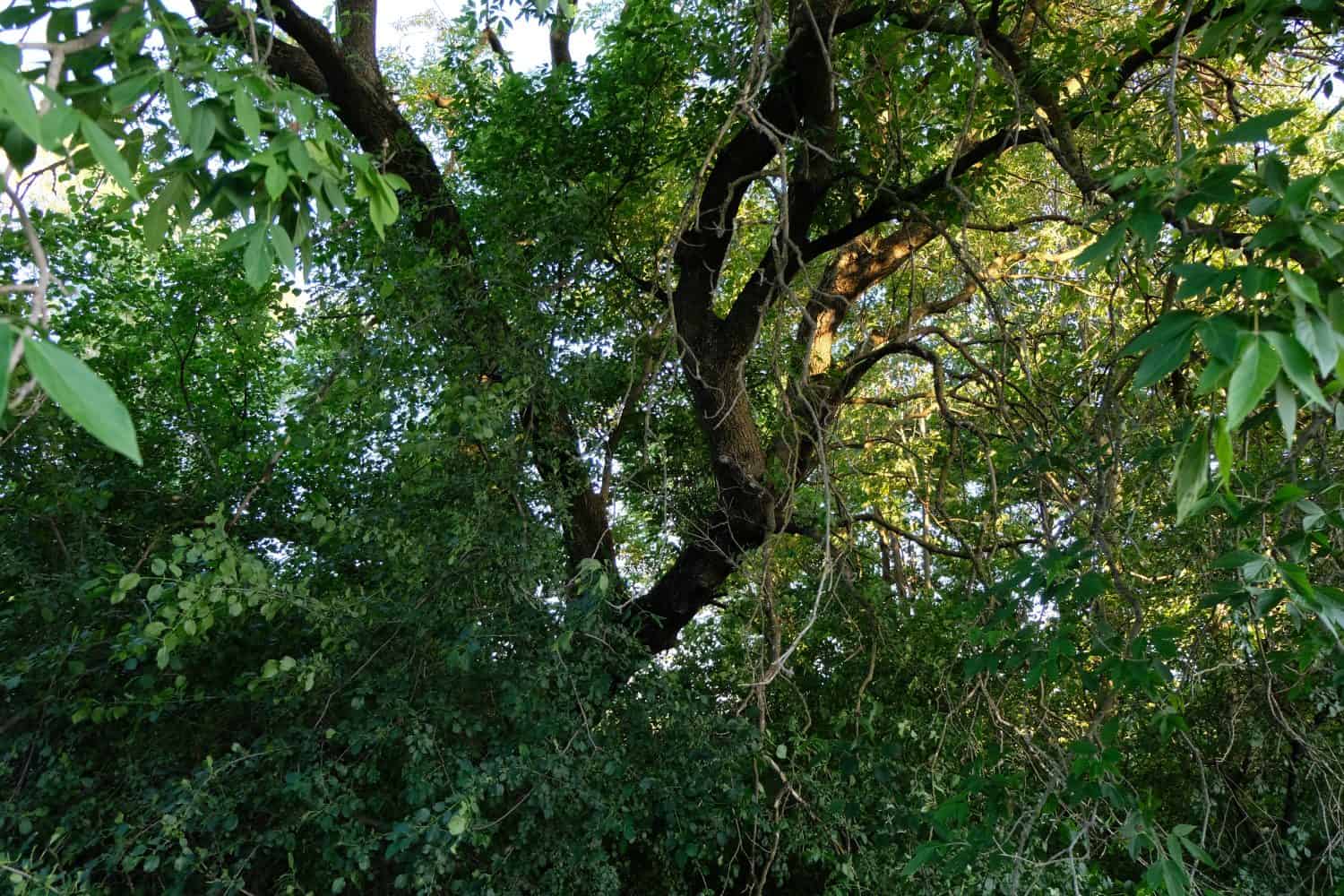
Ash trees, like the black ash tree, are vulnerable to infestations of emerald ash borers.
©TippyTortue/Shutterstock.com
What Is an Emerald Ash Borer?
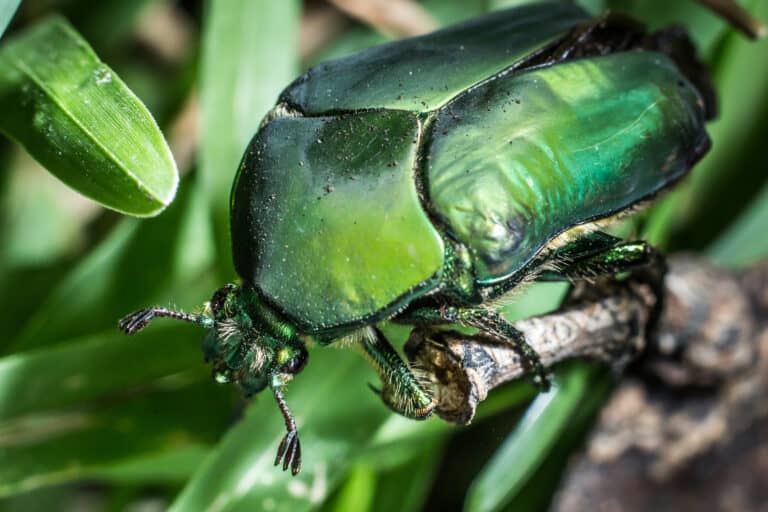
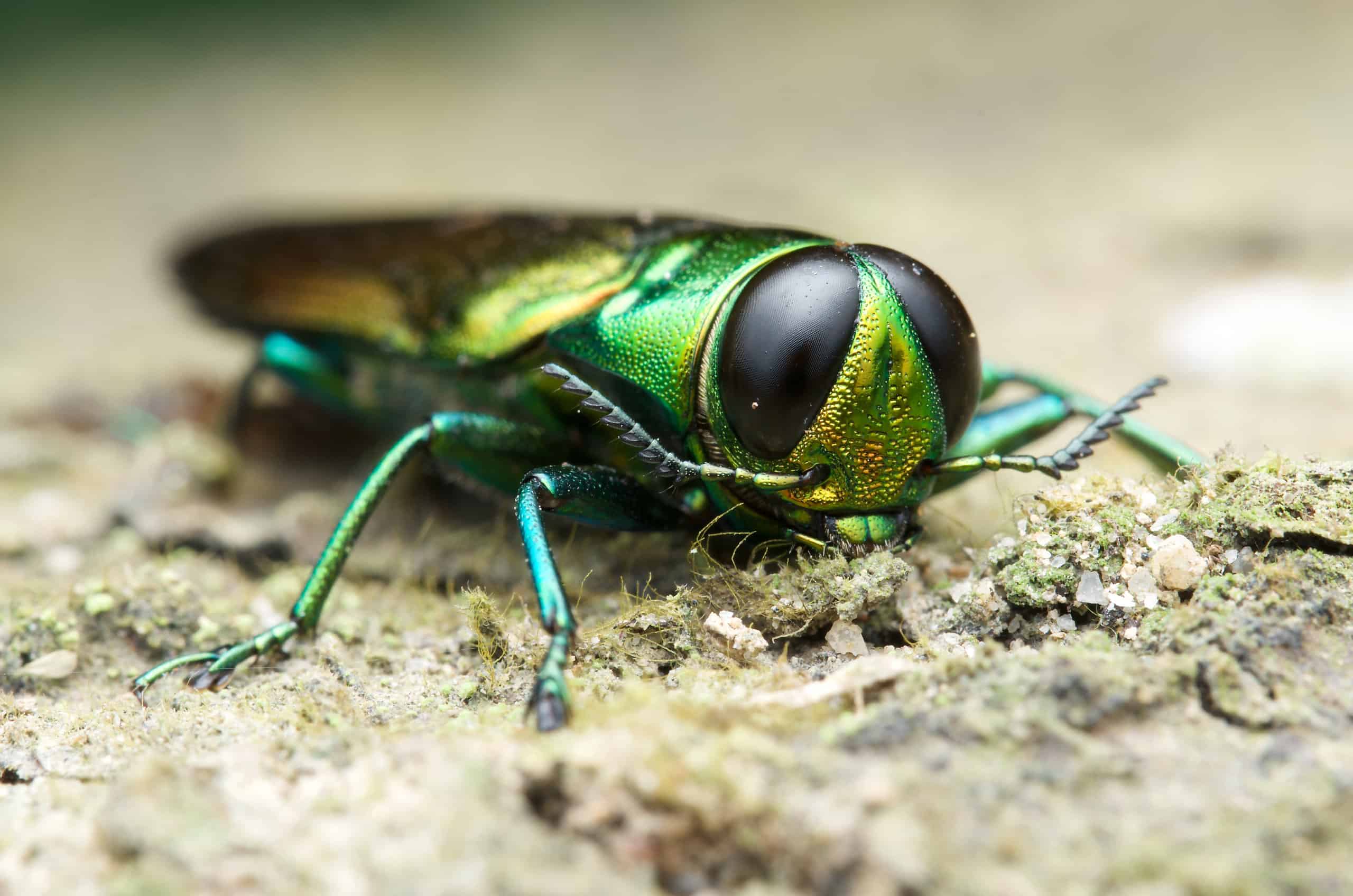
The emerald ash borer (Agrilus planipennis) is a wood-boring beetle in the family Buprestidae. It lays its eggs on ash trees, and only ash trees. In their adult stage, they are small flying insects with a shiny, metallic-green appearance. The beetles are around half an inch long, or about the size of a grain of cooked rice. Native wood-boring beetles are usually not harmful to forests, but are actually beneficial. They lay their eggs in dying or dead trees and contribute to the decomposition and recycling of nutrients.
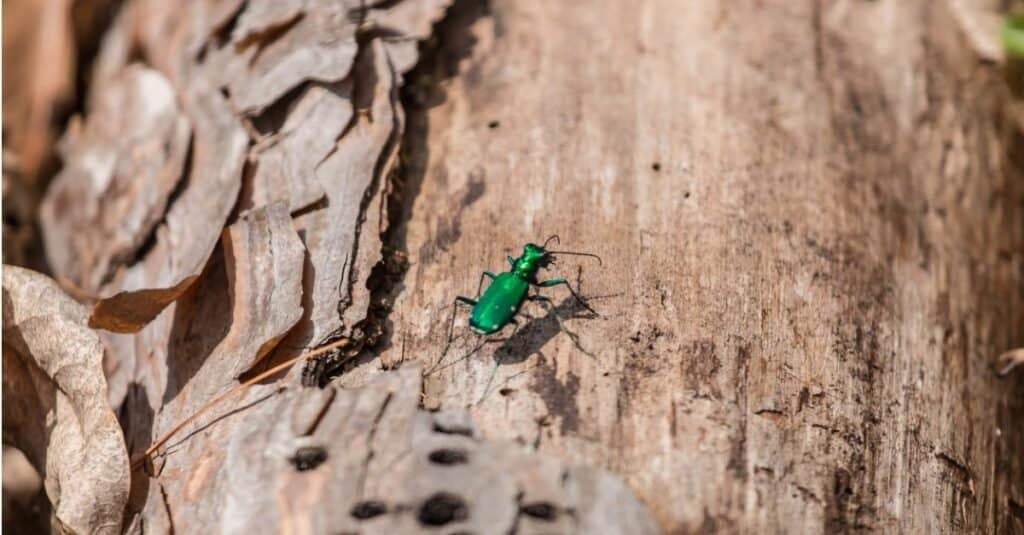
Emerald ash borers lay their eggs on healthy ash trees, causing severe damage.
©Don Bilski/Shutterstock.com
The emerald ash borer, on the other hand, lays its eggs in healthy ash trees. The adults fly around, mate, and lay eggs. While the adults feed on tree foliage, they don’t cause much damage. The real problem begins when the eggs hatch and the larvae burrow into the tree to feed. This disrupts the tree’s ability to transport nutrients, eventually causing it to die. A tree with a severe infestation will survive only about two to four years.
Where Did Emerald Ash Borers Come From?
In their native range, emerald ash borers do not cause widespread devastation. The insect feeds on native ash trees in Asia. However, the trees there have developed a resistance to the beetles. There are also several predators of the emerald ash borer in its native range that keep it in check.
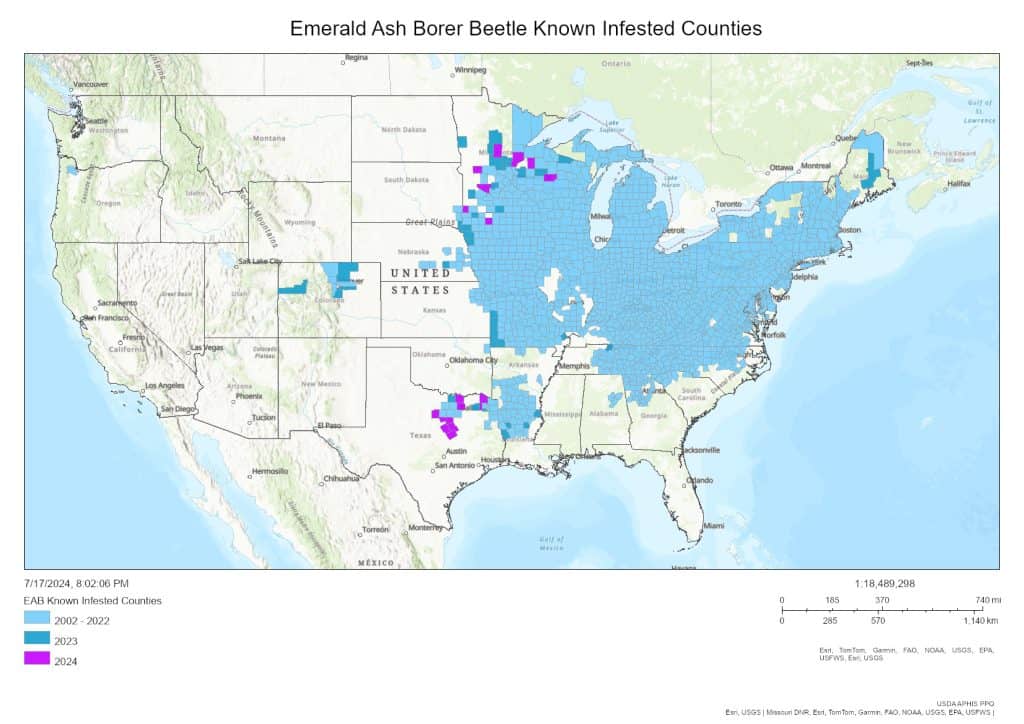
Map of US counties infested with emerald ash borer as of July 2024.
© USDA – APHIS, Public domain, via Wikimedia Commons – Original / License
While we don’t know for certain how or when emerald ash borers arrived in the U.S., they probably hitched a ride in a shipping container from Asia. From there, the first emerald ash borers detected in the country were found in ash trees near Detroit, Michigan, in 2002. According to a recent report from the USDA Animal and Plant Health Inspection Service, since that time, emerald ash borers have been found in 37 states and the District of Columbia.
Where Are Emerald Ash Borers Found?
Experts say that emerald ash borers were probably in the country since the 1990s, although they were not detected until 2002. The first sighting was limited to Michigan, but today, emerald ash borers have spread across the northeastern United States and into Canada.
Emerald ash borers attack native ash trees. There are around 16 native ash tree species in the U.S., and they are all vulnerable to the invasive beetle. According to the Cary Institute of Ecosystem Studies, the emerald ash borer has killed hundreds of millions of ash trees in North America. America’s remaining eight billion ash trees are currently still at risk.
How to Recognize Emerald Ash Borers on Your Ash Trees
It can be hard to notice an infestation until the tree is already stressed, and it’s too late to save it. The adult beetles spend the majority of their time in the tops of trees, and can be hard to spot. However, woodpeckers are a frequent predator. If you notice many woodpecker holes on your tree, you may have an emerald ash borer problem. You may also notice very small D-shaped holes where the adult beetles exit the bark, or S-shaped tunnels under the bark where the larvae develop.
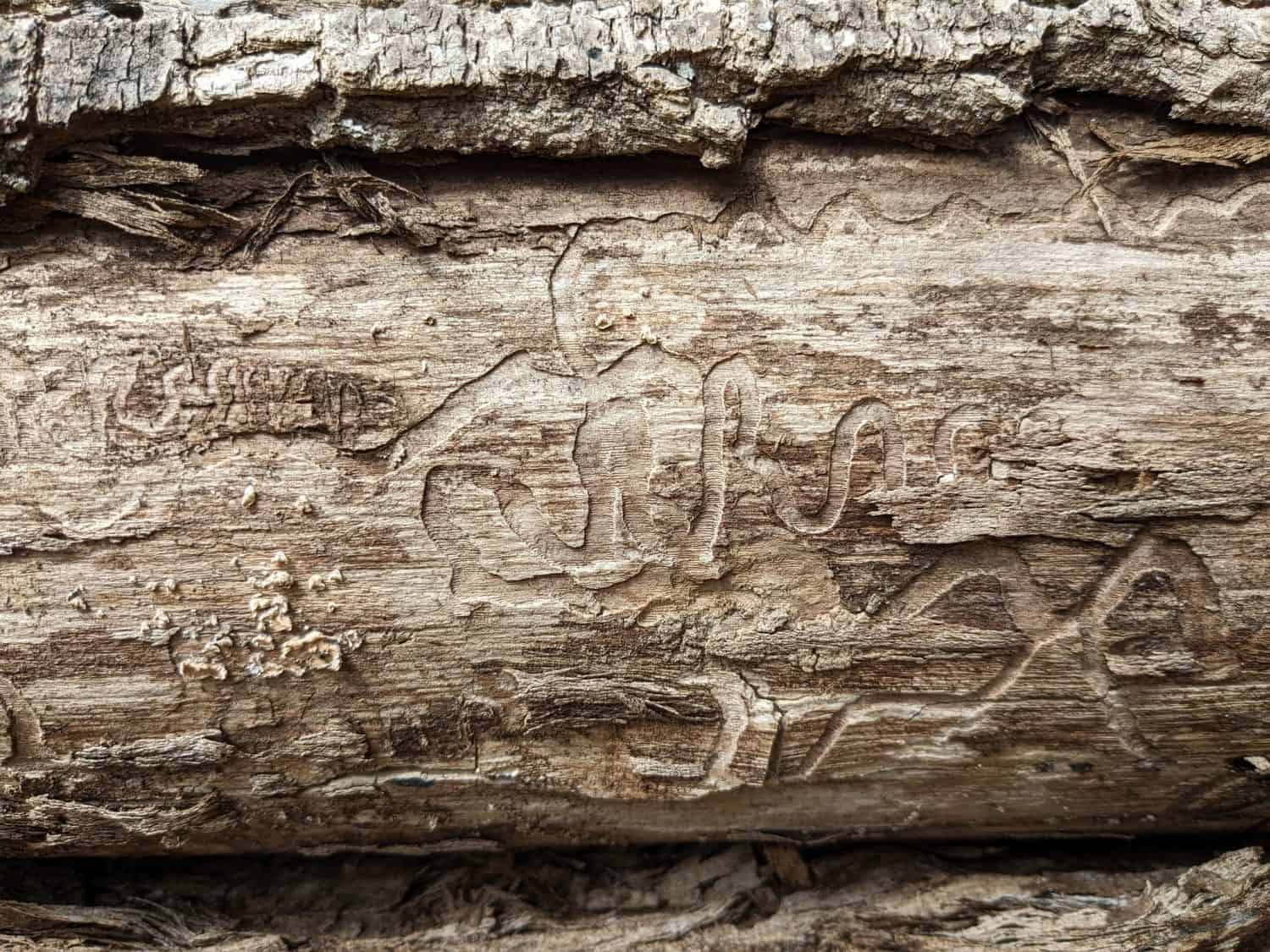
Emerald ash borer larvae make S-shaped tunnels on tree trunks.
©Michael LaMonica/Shutterstock.com
How to Get Rid of Emerald Ash Borers Safely and Effectively
The best way to prevent emerald ash borers is to stop their spread. Emerald ash borers are strong fliers and can fly up to half a mile away from their host tree. However, the main reason for their spread happens when people move infested firewood from place to place. You will see many signs in camping areas in infested states not to bring firewood with you or take it when you leave. Despite public awareness campaigns, the emerald ash borer has continued to spread.
If you’ve identified emerald ash borers in your yard, report your findings to your local wildlife government organization. There are insecticides that have been found to work against the insect, but they are generally most effective in the early stages of infestation. If the tree damage is severe, it’s likely too late to save it. The Colorado State University Extension recommends systemic insecticides that kill both the adults and the developing larvae under the bark.
Should I Treat My Tree Myself or Call a Professional?
According to the Wisconsin Horticulture Division of Extension, unless your tree has a trunk diameter of 47 inches or less at chest height, you should probably call an arborist for help. If you do decide to do your own treatment, you may want to check out Wisconsin’s Homeowner Guide to Emerald Ash Borer Insecticide Treatments.