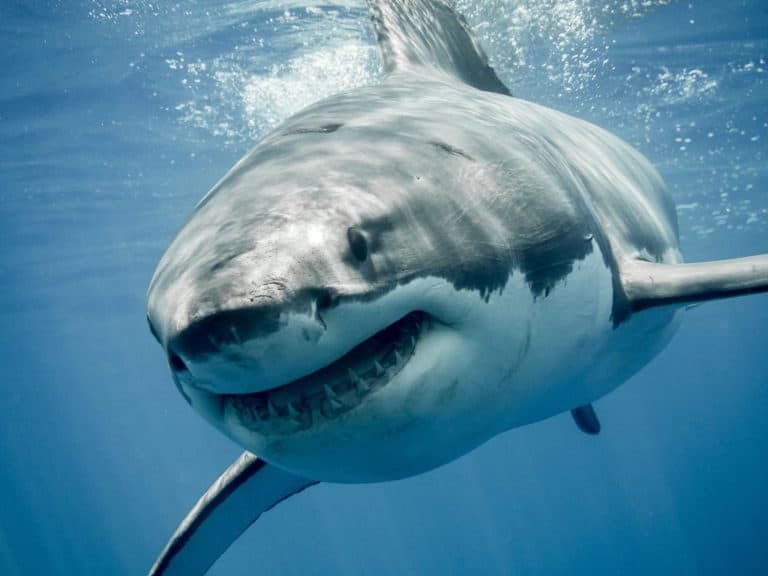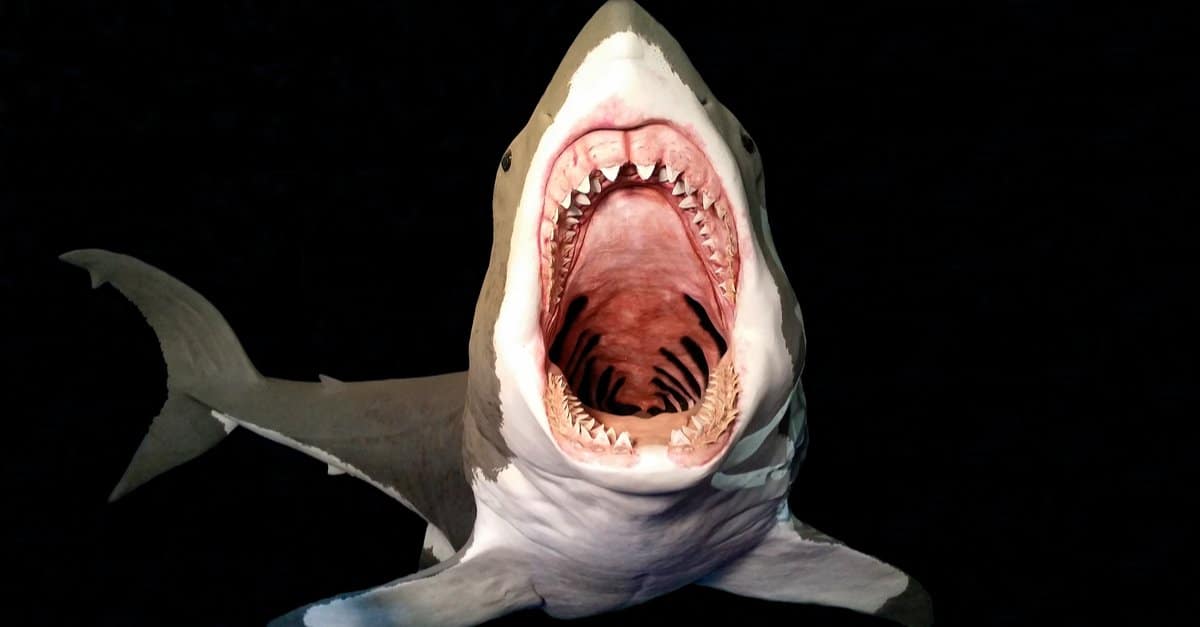

Megalodons are considered the largest sharks, and possibly the largest fish, to have ever roamed Earth’s oceans. They lived over 20 million years ago and were once thought to be related to the great white shark, which has been prowling Earth’s oceans for a relatively short 11 million years. While previously considered to be of the genus Carcharodon, which includes the great white shark, current scientific consensus places megalodons within Otodus, a genus of extinct mackerel sharks. How does the bite force of the extinct megalodon compare to the bite force of the great white shark? Grab your snorkel and goggles and let’s dive in!
Megalodon Bite Force
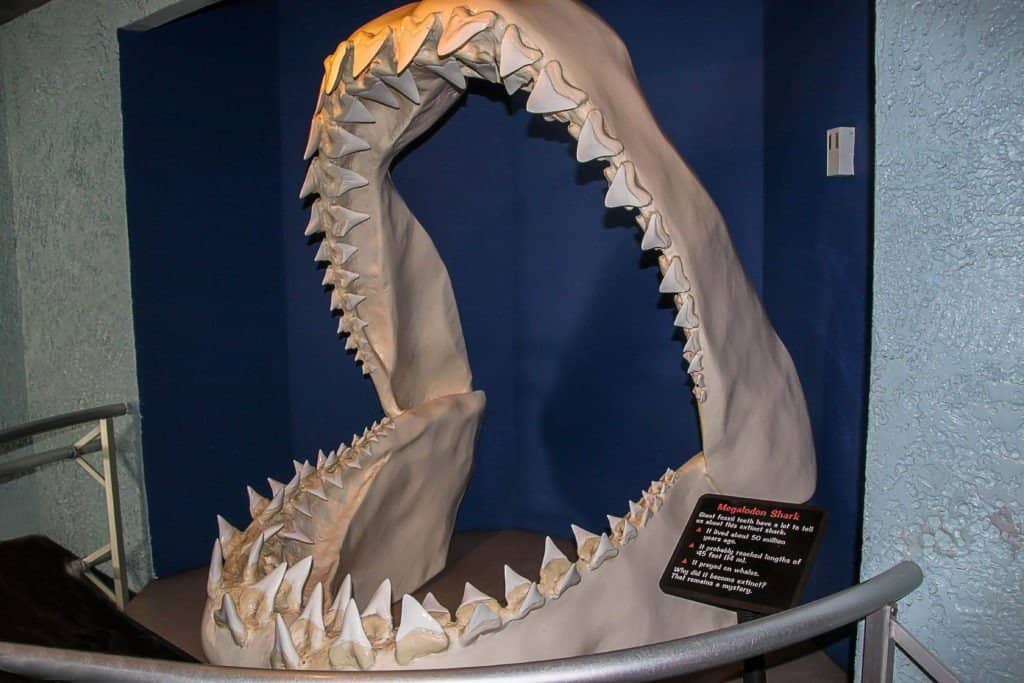
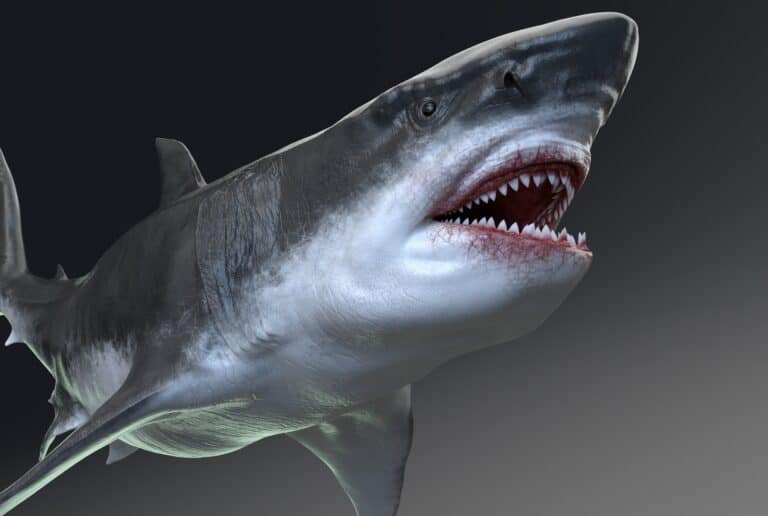
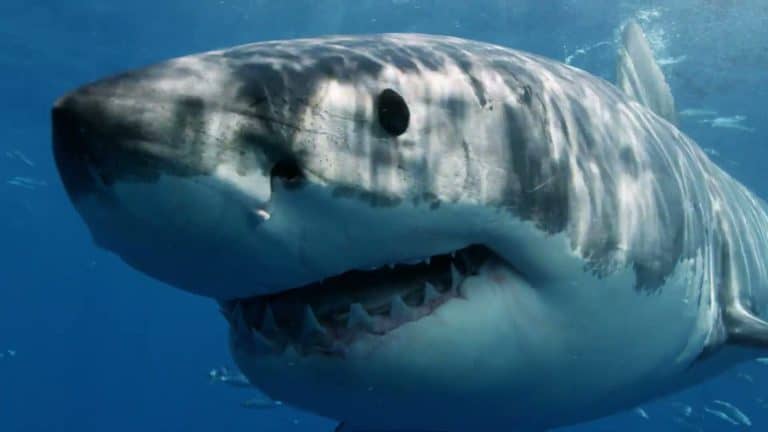
The jaws of megalodon!
©Mulevich/Shutterstock.com
Megalodon sharks were massive. Recent research suggests megalodon sharks may have reached lengths of up to 80 feet and weighed as much as 94 tons, making them among the largest predators to ever inhabit the Earth’s oceans. This means that megalodons were significantly larger than the largest great white sharks, which can reach up to 20 feet in length and weigh as much as 4,400 pounds.
Megalodons are considered the last species of the megatooth sharks, so it shouldn’t be too surprising that they have one of the most powerful bite forces in the history of the animal kingdom. Studies have determined that megalodon could produce a bite force between 108,000 and 182,000 Newtons, making it one of the most powerful bites in the animal kingdom. Using the more common pounds per square inch method of measuring bite force, the megalodon’s bite is estimated to be 40,000 pounds per square inch (PSI), which measures the pressure exerted by an animal’s jaws when biting
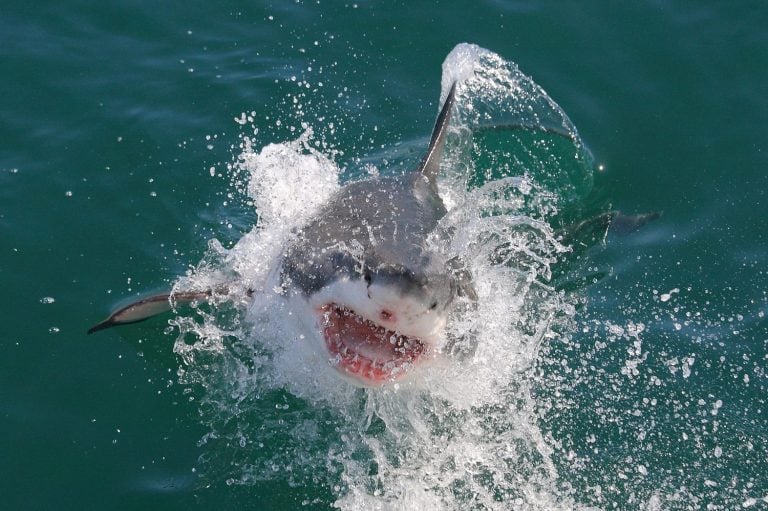
How are scientists able to figure out their bite force even though they have been extinct for millions of years? Great white shark studies have been indispensable for understanding megalodon biology. Using 3D modeling and X-rays, research placed the bite force of a great white shark at around 18,000 Newtons, or approximately 3,600 PSI. A computer-generated great white shark was used as a base and scaled to the size of a megalodon to estimate how powerful the megalodon’s bite may have been.
Megalodon Teeth
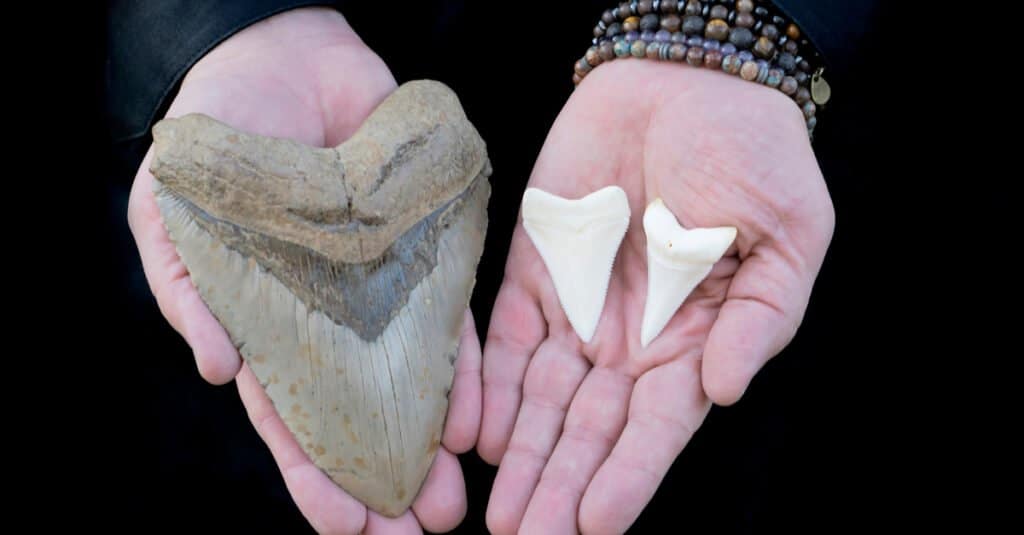
On the left is a single megalodon tooth; on the right are great white shark teeth. The difference is striking.
©Mark_Kostich/Shutterstock.com
Megalodons sported 276 sharp teeth with serrated edges designed to tear and rip flesh. On some fossils, bite marks have been found that are so large only a megalodon would have been able to produce them. Fossilized megalodon teeth help scientists understand how this creature lived.
Found on every continent but the Antarctic, their fossilized teeth have been useful in learning more about this species. The oldest megalodon fossil dates back 23 million years. Sharks belong to a group of fish called elasmobranchs, which means their skeletons are made of cartilage instead of bone, so their teeth have been one of the most important tools in understanding this prehistoric shark. Parts of their teeth have even been found in other animal fossils, giving us an idea of what they ate.