
Quick Take
- Captive butterfly breeding sounds straightforward, yet there is one step zookeepers still struggle to crack. Getting it wrong means no population at all. See the breeding challenges →
- The zoos bred thousands of butterflies but refused to release all of them, and the counterintuitive reason for withholding some may have made it the most critical decision of the entire rescue. Explore the release strategy →
- Habitat loss gets blamed for most species collapses, yet researchers found something far more specific lurking in the water that likely drove the skipperling to fewer than ten individuals. Discover the hidden threat →
- Saving this fingertip-sized butterfly turns out to benefit humans in ways that have nothing to do with butterflies. See the broader benefits →
For years, a tiny butterfly the size of your fingertip flitted and floated across prairies in the upper midwest of the United States. But by 2022, fewer than 10 Poweshiek skipperling butterflies were counted in the wild across the entire country.
On the verge of extinction, conservationists at two zoos stepped in to help rebuild and rewild this vulnerable butterfly population.
Discover the Poweshiek Skipperling
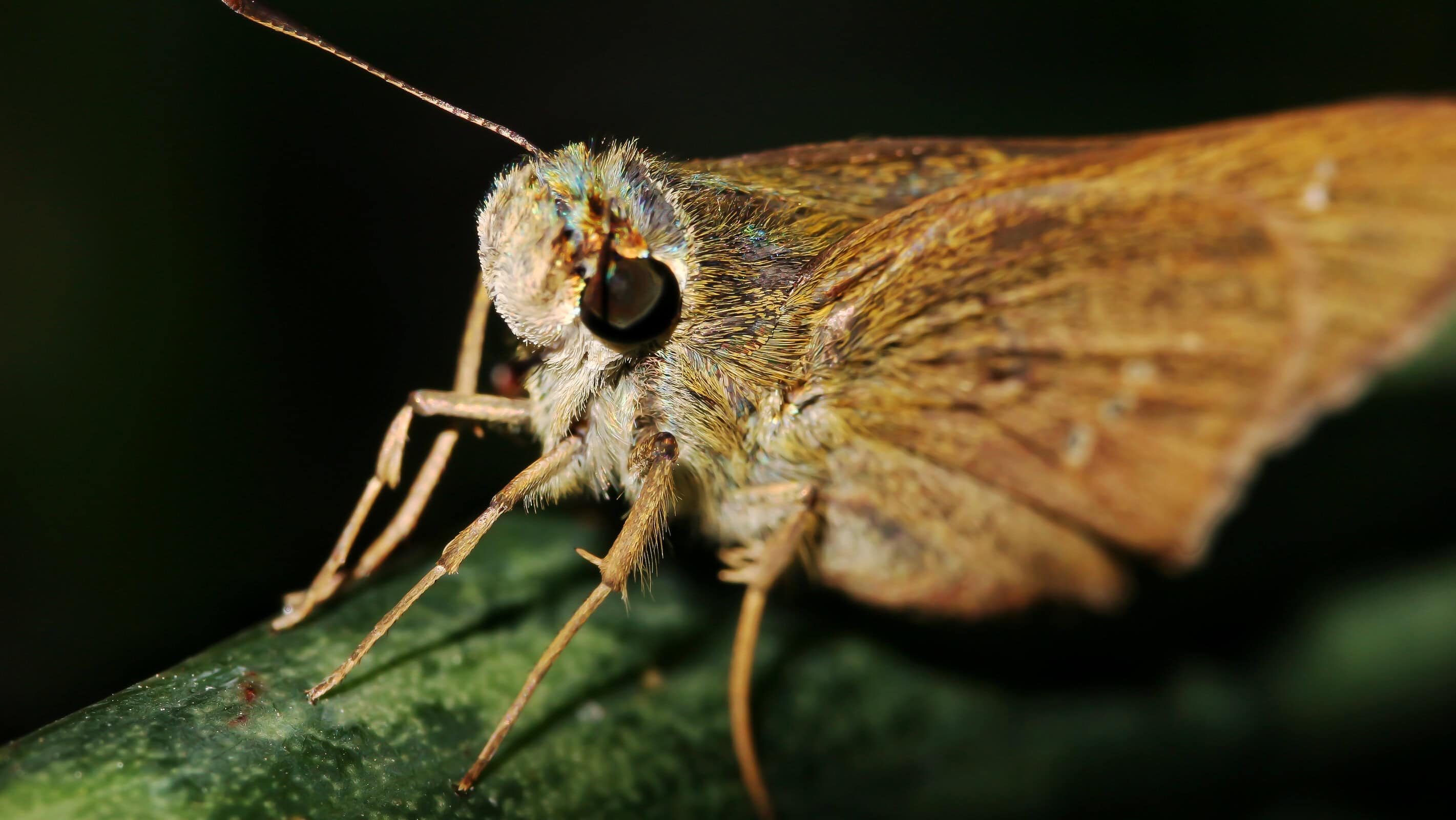
These butterflies are small, about an inch long, with brown and orange coloring. They’re so small, they’re easy to miss. The species was named after Poweshiek County, Iowa. That county was named in honor of Chief Poweshiek, who led the Meskwaki (Fox) tribe in the region that is present-day Iowa.
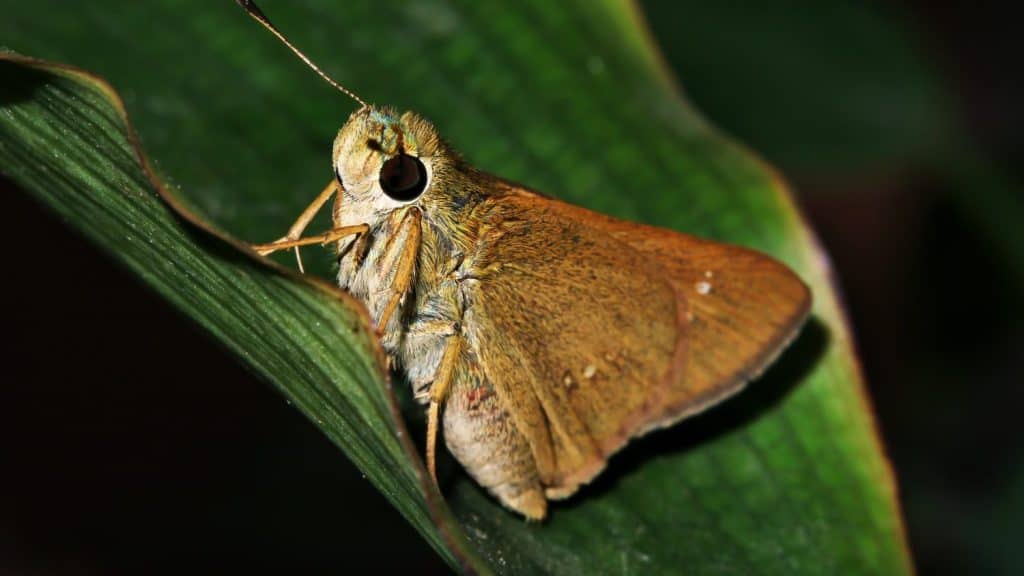
The tiny butterflies are named after both a county in Iowa and a Native American chief.
©Setiani Antari/Shutterstock.com
There used to be large populations of them in unplowed prairies across eight U.S. states and one Canadian province. If you looked closely, you could spot them in the Dakotas, Minnesota, Iowa, Wisconsin, Illinois, Indiana, Michigan, and Manitoba.
However, in recent decades the species disappeared from nearly that entire range. It was eventually placed on the endangered species list in 2014. Until the zoos stepped in, Poweshiek skipperlings were only seen in one Michigan county and a single prairie in Manitoba.
Down to Just Nine Butterflies
By 2022, researchers looking for these butterflies were shocked to find fewer than ten in the wild. It was the lowest number ever recorded. It also meant that more poweshieks lived in zoos than in the wild.
The population decline had started years earlier, and several captive breeding programs for the rare butterflies had already begun at three zoos – the Minnesota Zoo, Assiniboine Park Zoo in Canada, and John Ball Zoo in Grand Rapids, Michigan. Researchers from Michigan State University were also involved.
“Our work is to preserve, restore, and recover the species that have been in rapid decline,” Nick Haddad, a professor of integrative biology at Michigan State University’s Kellogg Biological Station told Michigan Public Radio. “As areas are restored where they used to be, we can release them back out.”
Federal wildlife officials, Michigan’s Department of Natural Resources, and other university researchers also joined the initiatives.
How Captive Breeding Programs Work
Researchers say breeding Poweshieks in captivity is not easy. Pairing males and females, then encouraging them to breed takes a skilled approach. However, once that happens, populations in captivity flourish, since they have no natural predators.
Haddad explained to Michigan Public Radio that a few dozen adults can multiply much faster than they would in the wild. At John Ball Zoo, where Haddad conducted his worked, the captive breeding program began with just 32 individuals.
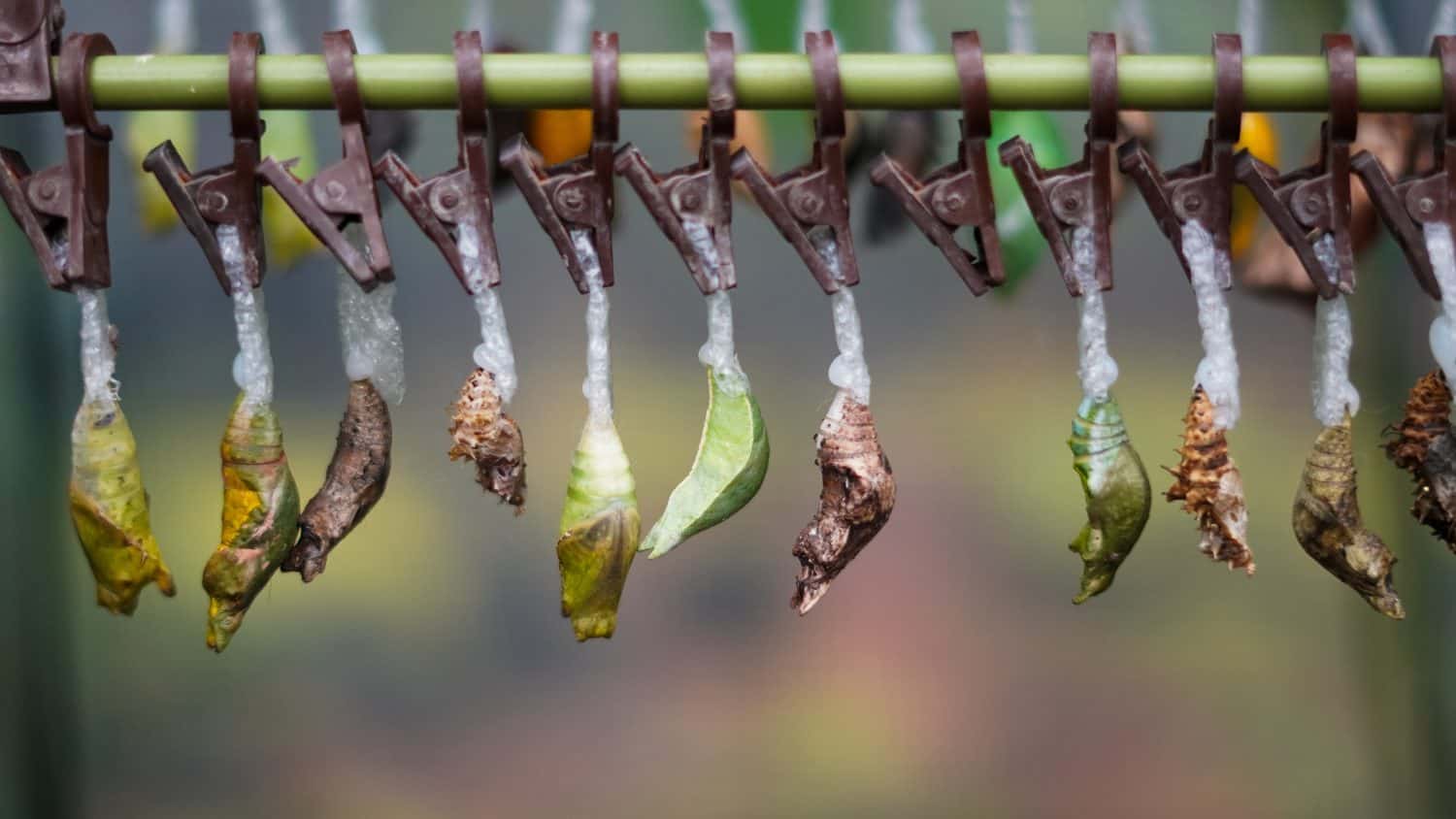
Captive breeding programs for butterflies often begin with caterpillars that transform into butterflies.
©Nata.dobrovolskaya/Shutterstock.com
Even though the zoos were rapidly building large captive populations, they didn’t release every single butterfly back into the wild. They kept some to ensure they had males and females available for additional breeding. If the rewilded populations crashed again, the zoos could ramp up their breeding efforts quickly.
Just before the Poweshieks were released back into the wild, each butterfly received a tiny colored mark so scientists could track their survival and movements in the future.
An Historic Release
The summer of 2026 marked the first big release of the captive-bred population. Roughly 1,500 zoo-raised Poweshieks were set free in restored prairie wetlands in Michigan and Manitoba. One release site marked a first – it was a Michigan location where the species had completely disappeared. It was the first time this had ever been done in the U.S.
Success came quickly. In 2024, more than 500 butterflies were released in Michigan, followed by more than 1,300 in 2025. In Canada, release numbers were smaller, but still significant. Most notably, for the first time in decades, the wild Poweshiek skipperling populations in both Canada and the U.S. are larger than the captive population.
Habitat Matters
Poweshiek skipperlings are quite particular about their habitat. The species prefers what is called a “prairie fen” – a rare type of wet grassland. According to a conservation specialist at the Minnesota Zoo, those wetlands support some of the most biologically diverse areas in the entire state of Michigan.
But prairie fens do more than provide a home for Poweshieks. These areas also benefit humans by controlling floods and filtering water. Conservationists believe the mass die-offs of the species were likely caused by toxic insecticides, traces of which were found in prairie fen water samples. Habitat loss is also a factor.
Overall butterfly populations have dropped 22 percent in the past 20 years. This is a strong signal that the crisis faced by Poweshiek skipperlings is also faced by many other butterfly species.
What’s Next?
While the rewilding efforts have been very successful, the Poweshiek skipperling is not out of the woods quite yet. It remains a critically endangered species and is thriving on only a handful of carefully targeted sites. The vast majority of the Poweshiek’s former range remains without the species.
Conservationists say that reduced pesticide use is necessary to help these repopulation efforts succeed. They also hope that the success they’ve had with the Poweshiek skipperling can be applied to other butterfly species elsewhere. One in particular that researchers want to focus on next is the Mitchell’s satyr butterfly, another struggling species.