
Quick Take
- A ranch dog accidentally stumbled onto the discovery that prevented an entire species from vanishing forever. Here's how it happened. Meet Shep the ranch dog →
- Saving black-footed ferrets isn't really about the ferrets. Their absence quietly unraveled an entire ecosystem in ways most people never considered. See the ecosystem impact →
- Every black-footed ferret alive today traces back to just 18 individuals, and the story of how that number got so low is more harrowing than you'd expect. How the population collapsed →
- Before captive-bred ferrets are released into the wild, they go through a preparation process most people would never guess is necessary. See the preparation process →
Black-footed ferrets were once so rare that they were thought extinct. Thanks to decades of work, the once-miniscule population has slowly rebounded. As a result, a group of endangered black-footed ferrets has recently been returned to the Northern Arizona wildlands, in hopes of increasing the population to the point where the ferrets’ survival is no longer threatened.
Endangered Black-Footed Ferrets Released in Northern Arizona Wildlands
A group of black-footed ferrets was recently released into the Northern Arizona wildlands, adding to hopes that the ferret, once thought extinct, may be on the road to recovery.
Last week, it was announced that 18 captive-bred black-footed ferrets were flown from the National Black-footed Ferret Conservation Center in Colorado to Arizona for release into a stable, hospitable environment. On September 14, the black-footed ferrets were released in Grand Prairie, Aubrey Valley, and Yavapai and Coconino counties.
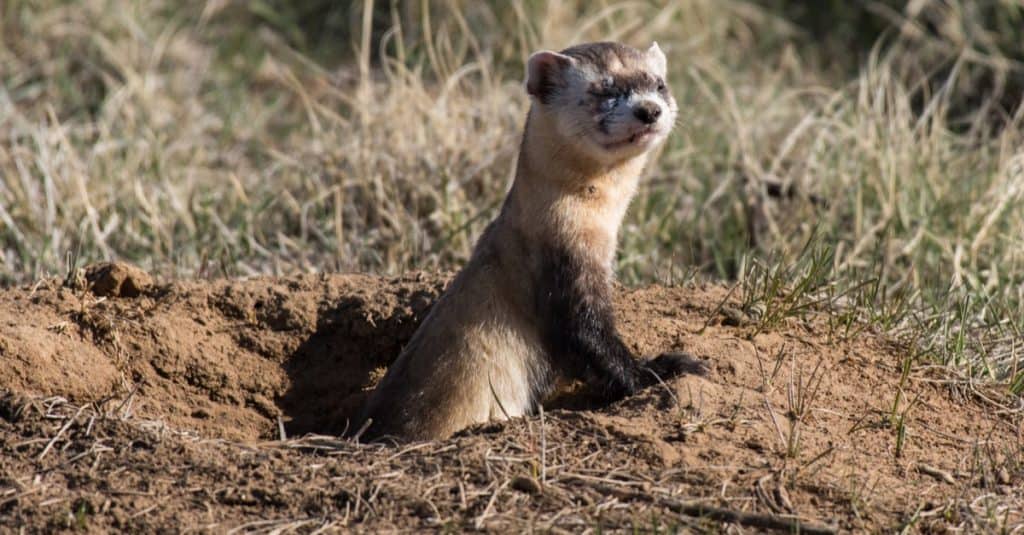
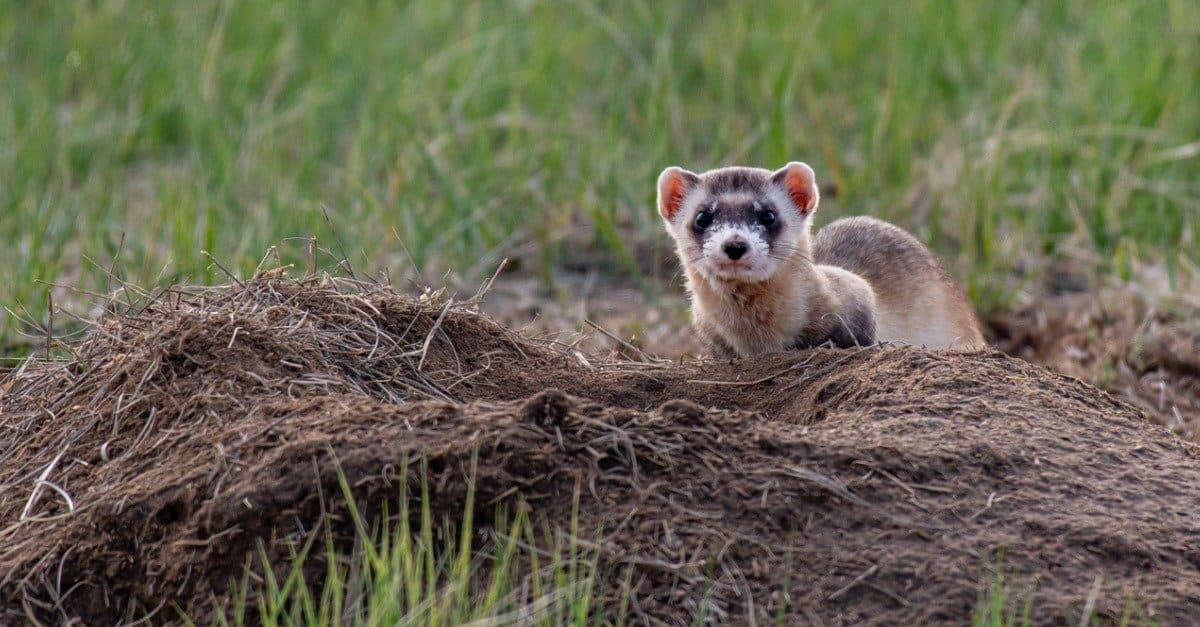
A group of 18 black-footed ferrets was recently released in Arizona.
©Kerry Hargrove/Shutterstock.com
The black-footed ferrets were not simply placed into new habitats and expected to survive. Instead, for 30 days before release, they were kept in outdoor pens. There, they learned to burrow and hunt prairie dogs. They also received vaccines to prevent and reduce the spread of canine distemper and plague.
The chosen release areas are both protected and have known, established prairie dog populations.
Biologists and volunteers will survey the population in the fall to count the individuals and the number of offspring.
What is the Goal of Releasing the Black-Footed Ferrets?
Releasing captive-bred black-footed ferrets into the wild aims to create a self-sustaining population. However, the end goal is much larger than just saving a rare species.
When humans eradicated black-footed ferrets from their habitats, their ecosystems collapsed. Black-footed ferrets are keystone predators that help to keep prairie dog populations under control. When they disappeared in the late 1970s and 1980s, the remaining prairie dog populations, despite habitat loss, became severely overpopulated. This led to degraded grasslands.
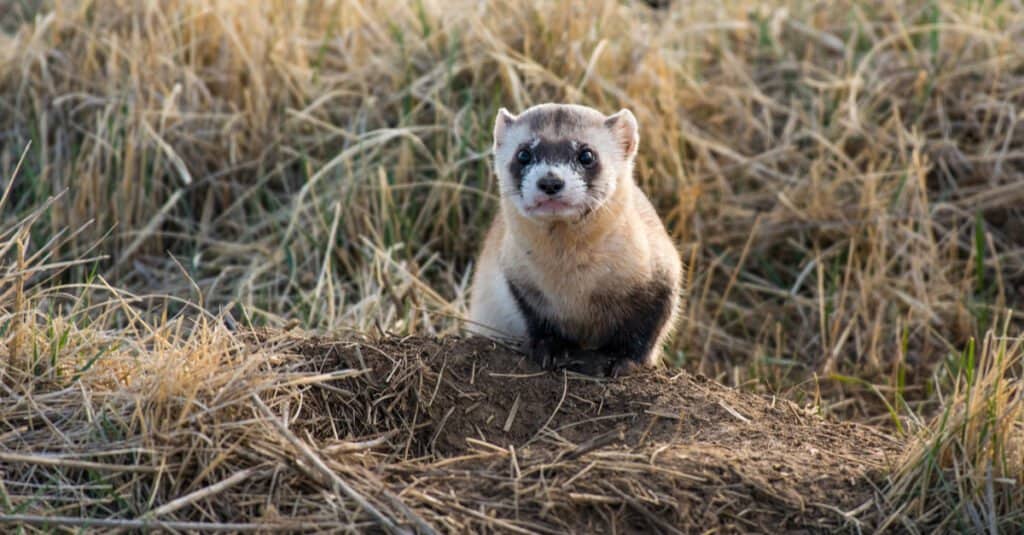
Black-footed ferrets returning to their natural habitats restore the ecosystem.
©Kerry Hargrove/Shutterstock.com
Additionally, with black-footed ferrets essentially gone, coyotes, foxes, and other predators began to prey on prairie dogs. This further threw the ecosystem out of whack, as the prey these animals would typically pursue became unbalanced.
Scavenging animals also suffered from the loss of black-footed ferrets. Black-footed ferrets left behind carcasses for scavengers to consume. Without their presence in the ecosystem, it became harder for scavengers to find their next meal.
While saving black-footed ferrets from extinction is important, returning an indicator and keystone predator to the ecosystem is equally important. It becomes clear just how valuable a species can be to an ecosystem’s health. Therefore, while the goal is to help the black-footed ferret species rebound, the surrounding flora and fauna will benefit as well.
Why Black-Footed Ferrets Are Endangered
It is believed that tens of thousands of black-footed ferrets once lived across the Great Plains. With a population so large, how did this member of the weasel family go from thriving to near-extinction?
Black-footed ferrets are prairie dog hunters. Because 90% of their diet consists of prairie dogs, black-footed ferrets decline when prairie dog populations decline.
Over the years, prairie dog habitat was converted into farmland and urbanized. As developers altered the land, prairie dogs were seen as a nuisance. They left poison out for prairie dogs, decimating their populations. In turn, without tunnels to use for shelter or to raise their young and without a food source, the black-footed ferret population declined dramatically as well.

A prairie dog population decline, in addition to habitat loss and disease, led to black-footed ferrets becoming endangered.
©Marie Dirgova/Shutterstock.com
The same land taken from the prairie dogs was also taken from the black-footed ferrets. With fewer places to hide from predators and the elements, the black-footed ferrets were left vulnerable.
Finally, according to the Institute for Environmental Research and Education, black-footed ferrets suffered from disease. Without proper nutrition or shelter, their immune systems weakened, making them susceptible to diseases like canine distemper and sylvatic plague. These diseases wiped out large numbers of black-footed ferrets, accelerating their decline from a thriving species to a critically endangered one.
How a Ranch Dog Helped Black-Footed Ferrets Turn the Tide on Extinction
Researchers and conservationists believed black-footed ferrets had gone extinct in 1979. With no sightings for several years and dwindling prairie dog populations, there was no evidence to the contrary. That changed in 1981, when researchers discovered a small population in Wyoming, which changed the species’ future forever.
In 1981, a dog named Shep brought his owner a dead animal he found on the ranch. The man had no idea what kind of animal it was, so he took it to a local taxidermist who recognized the animal as a black-footed ferret and contacted wildlife authorities.
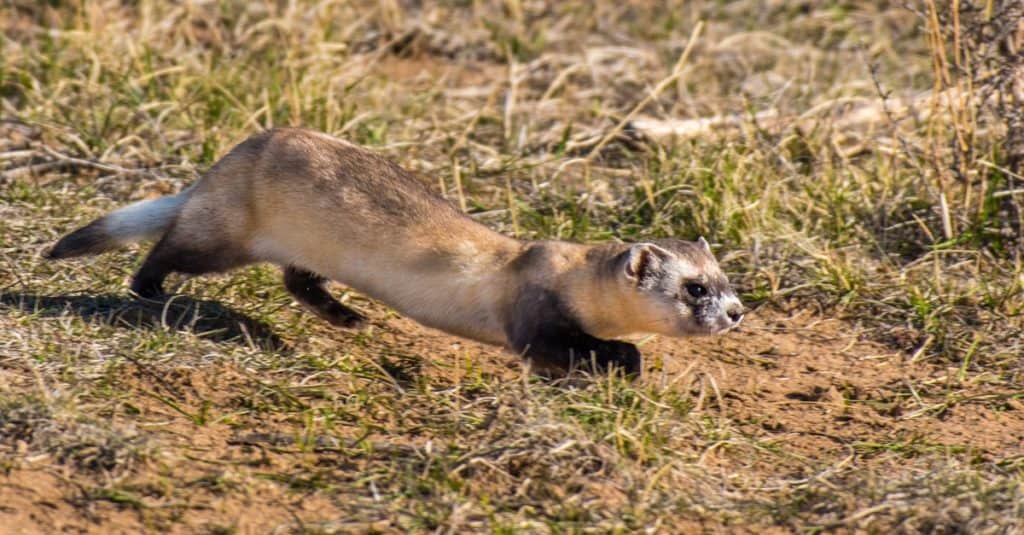
A ranch dog found a dead black-footed ferret on the property, leading to the discovery of a small black-footed ferret population.
©Kerry Hargrove/Shutterstock.com
Authorities came to the ranch and surveyed the area. They could not believe what they found: a small population of black-footed ferrets had settled on the land.
The discovery was not entirely positive, however. The ferret population was declining because of canine distemper and sylvatic plague. Consequently, biologists decided to bring the last 18 remaining black-footed ferrets into a captive breeding program to keep the species alive. As a result, all black-footed ferrets today are direct descendants of the remaining 18 Wyoming ferrets discovered four decades ago.
How Many Black-Footed Ferrets Are Released in North America Annually?
The last of the black-footed ferrets were brought into captivity in 1981. Since that time, many black-footed ferrets have been released back into the wild. However, how many have been released to date remains unclear.
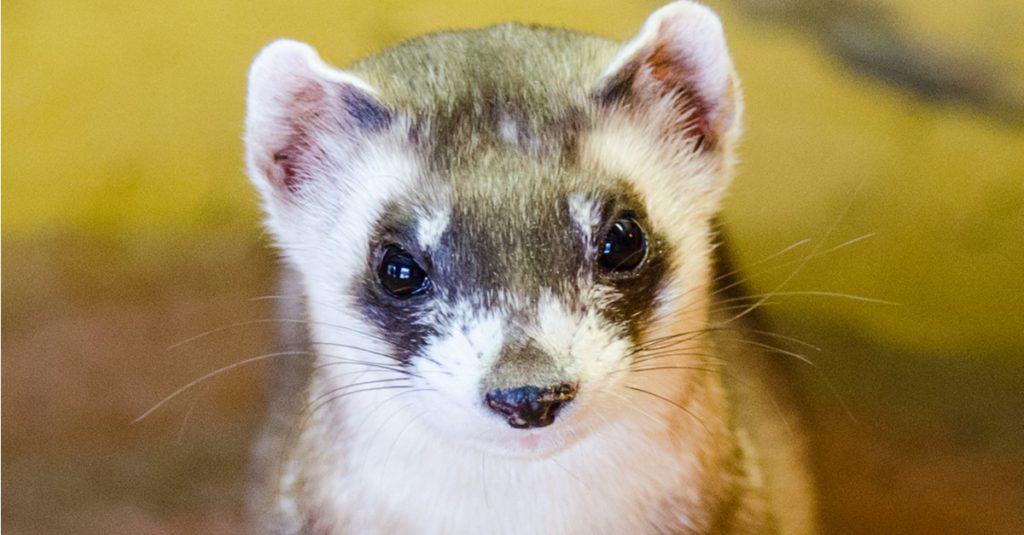
There are an estimated 150 to 200 black-footed ferrets released into North America annually.
©Sorayot Chinkanjanarot/Shutterstock.com
Estimates suggest that 150 to 200 black-footed ferrets are released into stable environments across North America annually. These locations include Canada, the United States, and Mexico. These figures suggest that thousands of black-footed ferrets have been released over the last several decades.
With approximately 300 to 400 black-footed ferrets in the wild and 1,600 in captivity, the population has grown dramatically since the species was last discovered in Wyoming. However, black-footed ferrets are still endangered. That is why conservation efforts have continued to keep North America’s only native ferret population from being declared extinct for a second time.