
Quick Take
- Chimpanzees appear to execute Rational Evidence-Weighing in complex decision-making tasks.
- The experiments conducted demonstrated that chimps changed their minds when presented with stronger evidence.
- Belief Revision occurs independently of language, which means other animals may change their minds as well.
- Researchers at Ngamba Island used Computational Modeling that separated Metacognition from Automatic Reactions.
A recent study performed on chimpanzees demonstrates that chimpanzees possess cognitive flexibility similar to that of humans. When circumstances or evidence change, chimps appear to do the thing people struggle to do: they update their beliefs and adapt, even if it means abandoning a choice they’ve already made.
This research comes from the Ngamba Island Chimpanzee Sanctuary in Uganda, in partnership with UC Berkeley and other international scientists. Researchers tested whether chimps can weigh conflicting clues and revise their decisions. The overwhelming evidence suggests that, yes, chimpanzees are capable of changing their minds, and the decisions they choose to make are often better informed and rational.
What does that tell us about chimps that we didn’t already know? Are chimpanzees more capable of altering their decision-making processes, even in the face of difficult changes? Today, we’ll look at the details of this study and discuss the cognitive flexibility of chimps, including how this ability helps them survive in the wild, where decisions must be made each and every single day.
What Is Belief Revision?
Also known as belief revision, the ability for an animal to change its mind may sound fantastical or even philosophical. The idea that animals can form an initial belief based on evidence, and then decide whether to stick with it or update it when presented with new evidence, may not seem like a process most animals go through. However, decision-making in this style is more than possible for certain animals (and humans, too).
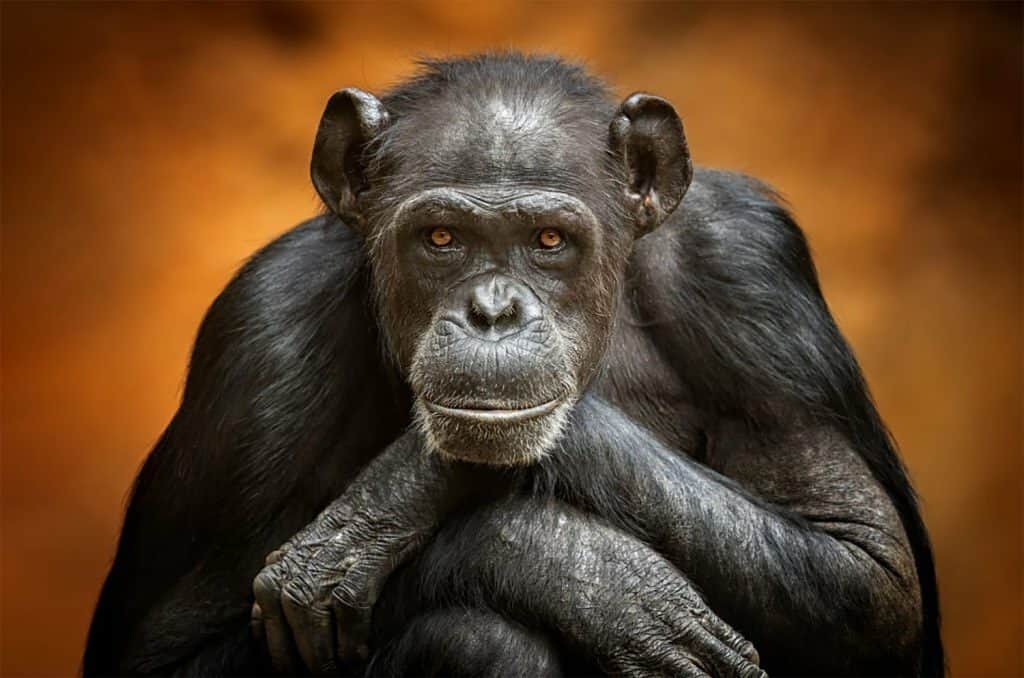
A recent study suggests that chimpanzees are capable of changing their minds when presented with more optimal decisions.
©KensCanning/Shutterstock.com
The study team involved in this fascinating chimpanzee research designed experiments that separated smart decision switching from automatic decision making, with belief revision labeled as a form of metacognition. This ability to reflect on reasons for beliefs and adjust them when reasons change was once thought to be a solely human endeavor. However, chimpanzees appear readily capable of it as well.
How These Experiments Worked
In the experiments performed at Ngamba Island, chimps were presented with containers with a hidden food reward. While they get an initial clue suggesting where the food is, they are also provided with a second clue that may either support or contradict the first clue. The clues differ in strength; here’s how.
In multiple versions of the experiment, a weak clue was along the lines of hearing a sound when a container is shaken, while a strong clue involved seeing what’s inside the container, making the evidence all the more undeniable. After the chimp made an initial choice, researchers provided new information and allowed the chimp to revise its decision or stick with it.
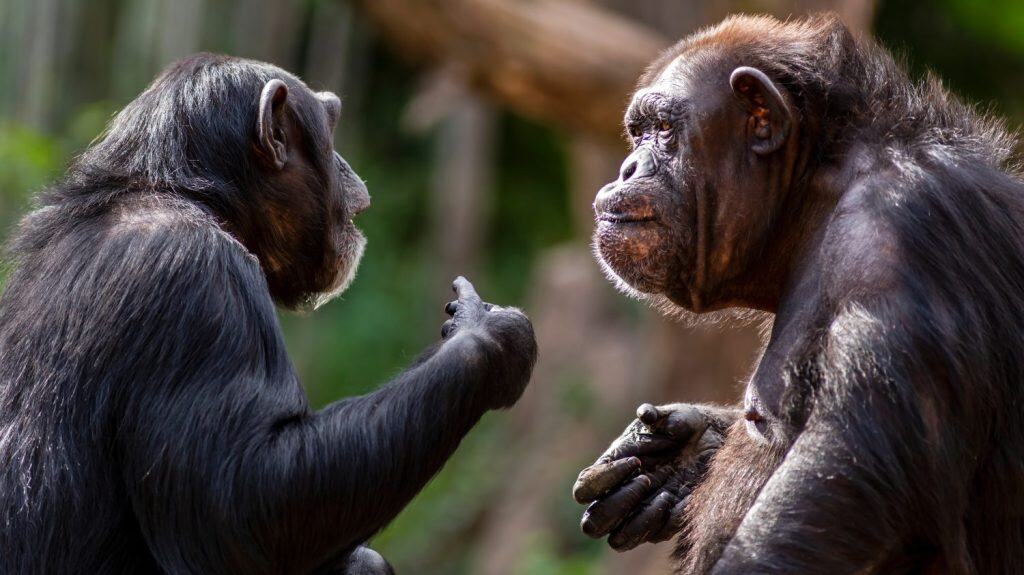
By presenting clues of varying strengths, chimpanzees were better able to make and adjust their decisions.
©Patrick Rolands/Shutterstock.com
If chimps are rationally revising their beliefs, patterns emerge; if the first clue is strong and the second is weaker, they stick with the first option. However, if the first clue is weak and the second is strong, they often change their minds. When new evidence proved more believable and true, the chimpanzees in the study understood the importance of remaining flexible.
Rational Versus Reactive Thinking in Chimps
Researchers involved in this study used tightly controlled conditions and computational modeling to test whether the chimps were following simpler shortcuts in order to get their reward faster. Ultimately, these analyses supported the idea that the chimps’ choices aligned with rational strategies rather than instinctual, simple reactions.
By design, the experiments also included scenarios meant to show whether the chimps understood when evidence presented to them was invalid. For example, researchers described presenting certain clues only to reveal them as misleading, such as offering a picture of a food reward as opposed to the physical food itself.
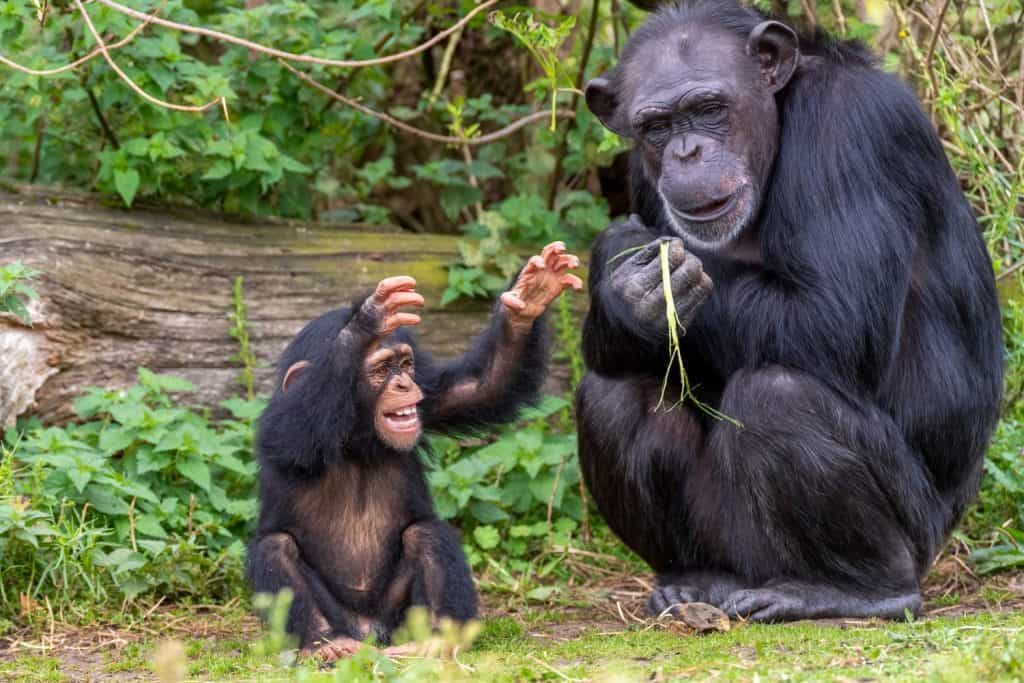
This research provided strong evidence that chimps are capable of making rational decisions.
©Wirestock Creators/Shutterstock.com
The chimps responded as if they understood that any previously presented evidence shouldn’t count anymore, ultimately learning that some clues can be untrustworthy in certain contexts. They accurately weighed evidence relative to what else was being offered, making a decision that best supported their needs.
What This Study Tells Us About Chimp Minds
Plenty of research already proves that chimps can plan, infer, deceive, cooperate, and learn socially. However, this study posits a strong claim that they can also revise beliefs in ways predicted by formal rational models, not solely using their own behavioral intuition.
This suggests that chimps won’t always get stuck in habits once they’ve made a particular choice. Their switching patterns are evidence-sensitive, proving chimps have initial beliefs and can consider reasons supporting or opposing them.
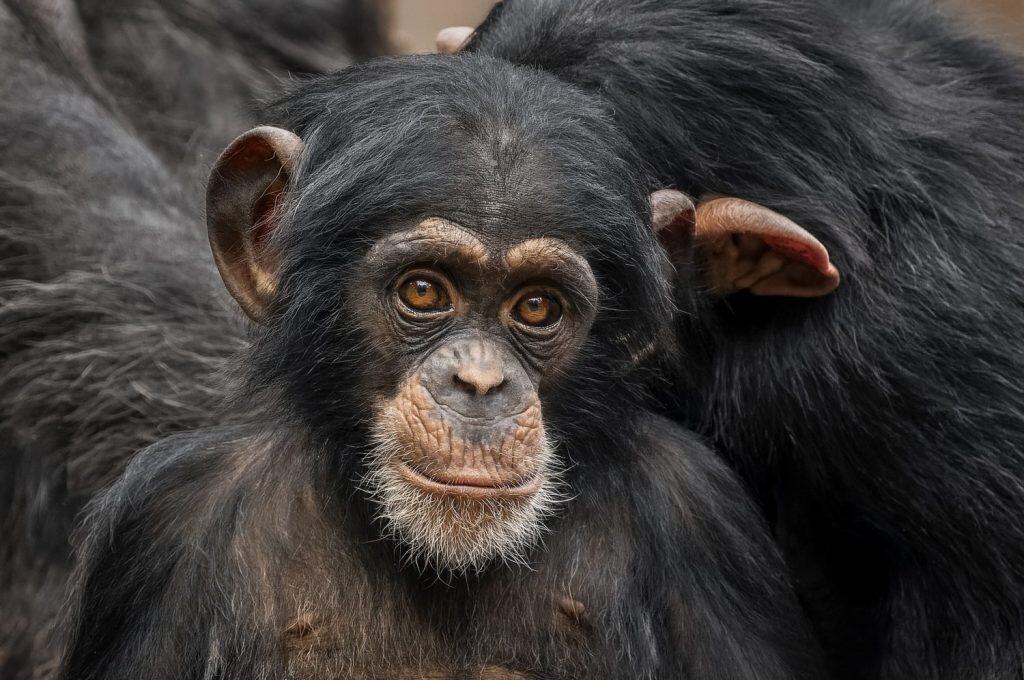
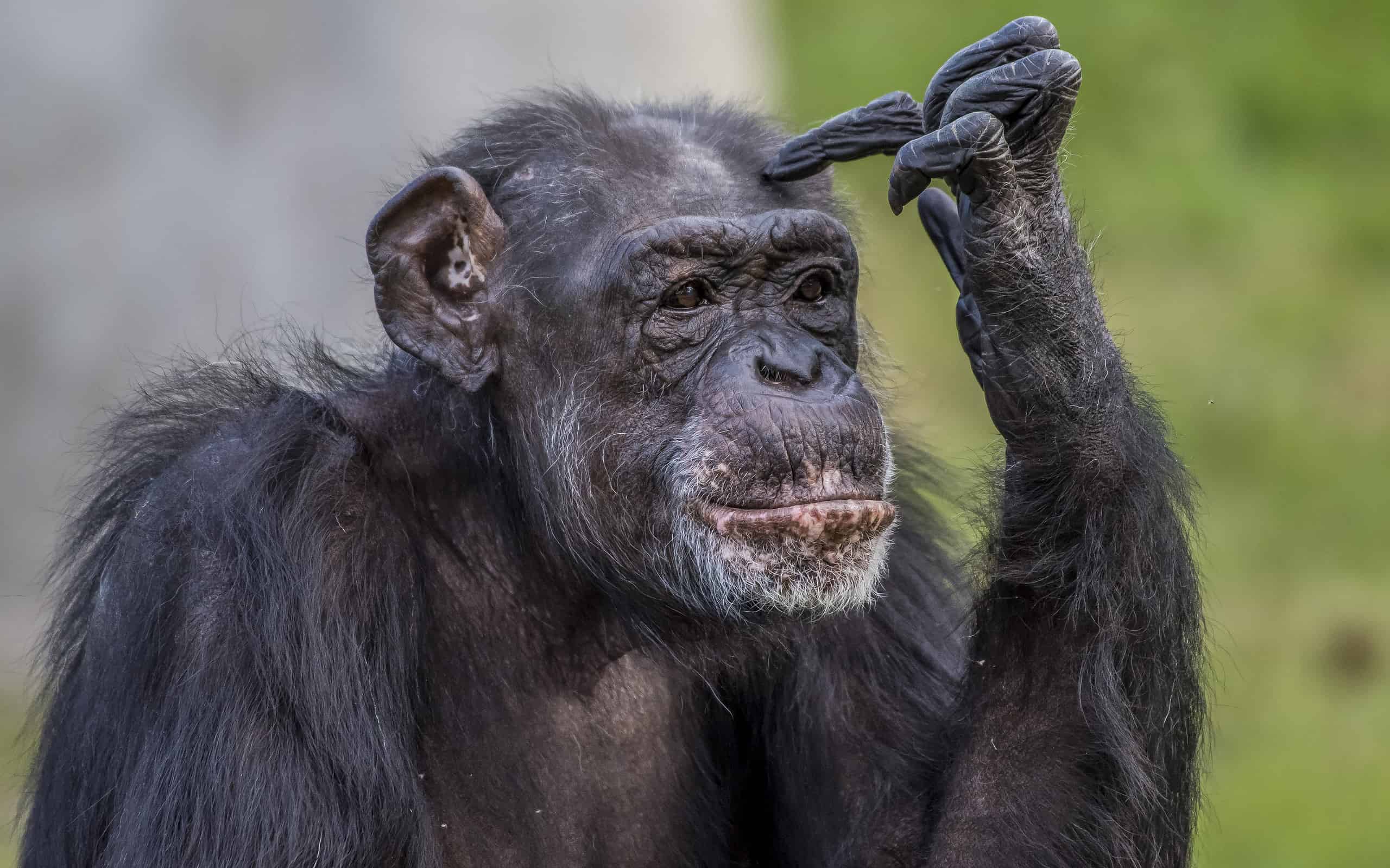
Chimpanzees appear to have flexible reasoning skills, similar to those associated with young human children.
©jindrich_pavelka/Shutterstock.com
It also implies that chimps can keep track of evidence quality, revising their beliefs when better evidence becomes available, much like the flexible reasoning we often associate with young children. We’ve always maintained a close genetic link to chimpanzees, and this study proves we may be more alike than previously thought.
How a Changing Mind Is a Survival Skill for Chimps
In the chimpanzee world, having a flexible, changing mind makes for an adaptable, competent animal.
Given that chimpanzees live in dynamic social landscapes, they experience shifts in everything from foraging habits to threat assessments. If a chimp can revise its belief when a better cue appears, it ultimately wastes less energy and takes fewer risks, especially in the long run.
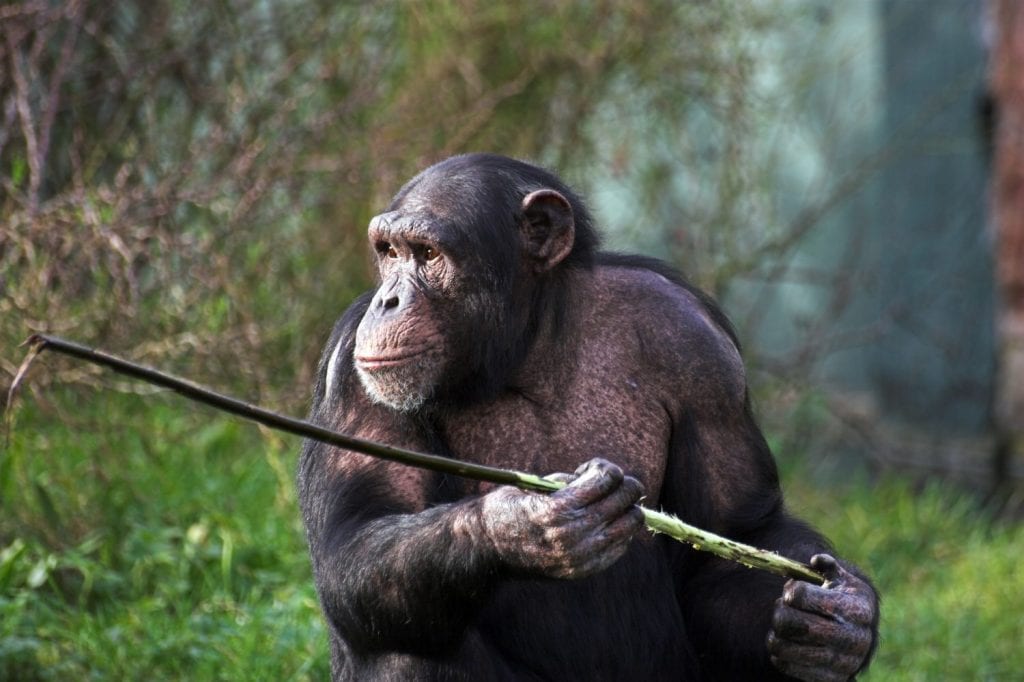
Better decision-making skills are ultimately a survival tool for chimpanzees.
©Norma Cornes/Shutterstock.com
Over evolutionary time, that flexibility can help in the following ways:
- Improved foraging efficiency by reducing commitment to low-quality information.
- Reduced conflict by letting an individual abandon a contested option when new information suggests it’s not worth it.
- Advanced social learning, as an individual can update beliefs based on what others reveal through their actions, not solely through personal experience.
How a Chimpanzee Study Informs Human Studies
By applying this study and unique insight to human-centered problems, we may learn a great deal about ourselves, as well as the chimps involved in the research process.
For example, this work could influence how we think about learning in children, as the cognitive operation involved is a building block of reasoning. Chimps are capable of doing this without language, so it may help researchers isolate what parts of belief revision depend on language and what parts can operate through other cognitive processes.

Through studying these chimpanzees, we may better understand human cognition, too.
©iStock.com/Prostock-Studio
This study may also help in designing better experiments for animals, and beyond chimpanzees. Some animals may appear irrational under the wrong test design, which can lead to an underestimation of their overall cognition. Researchers learned through this process that rationality isn’t uniquely human, and other animals may possess similar levels of decision-making when given properly designed experiments.
Finally, AI and decision modeling may benefit from this research. Cognitive scientists and AI researchers attempting to build systems that update beliefs appropriately instead of overreacting can look to this study for hope, and perhaps better identify how they might improve their code and structures.
Are Chimps Better Than Humans at Changing Their Minds?
While it may seem like this study is suggesting that chimps think the same as or even better than humans do, the safer interpretation is that chimps show a form of rational evidence-weighing that overlaps with human reasoning. They may possess decision-making that aligns with ours, but our brains are not the same.
In these Ngamba Island experiments, chimps showed patterns consistent with formal belief revision, ultimately proving that changing your mind isn’t a uniquely human virtue. Through this study, researchers have gained a better understanding of the roots of rationality, including forms of rationality that go beyond language and species boundaries.
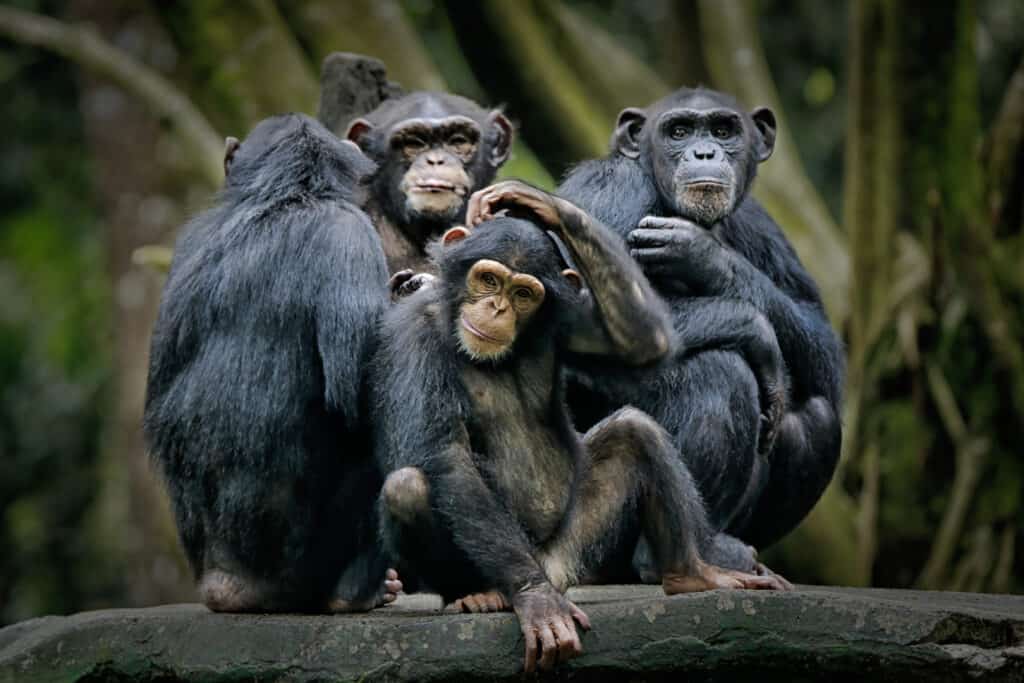
Chimpanzees are highly social animals, which can affect their decision-making, just like humans.
©Ari Wid/Shutterstock.com
While it is indeed possible that chimps are better at changing their minds compared to humans, it’s more accurate to say they possess many of the same cognitive skills we do. Thanks to these studies, we may yet uncover even more species capable of changing their minds when a better decision is presented to them!