
Quick Take
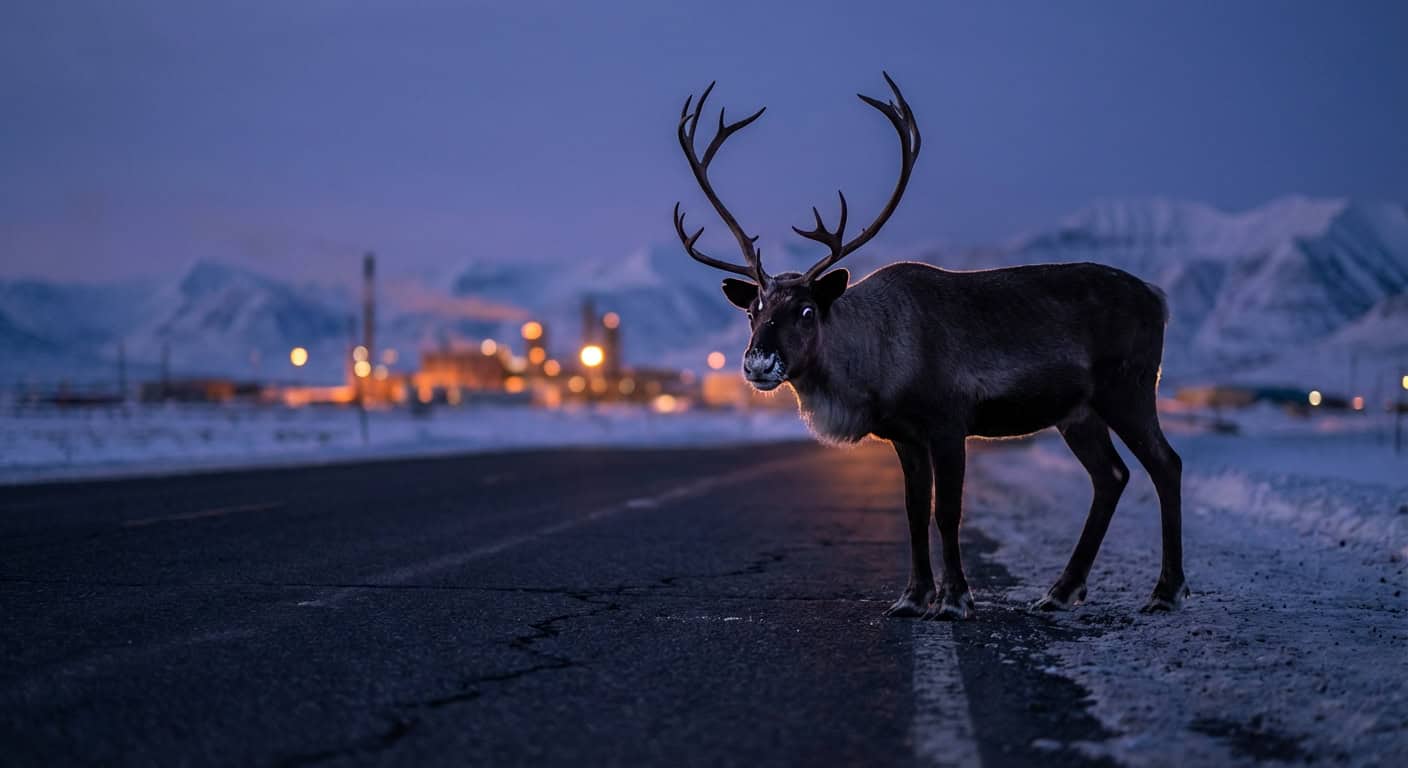
- Survival for migratory land animals is now tied to overcoming man-made obstacles such as roadways and railroads.
- Increasing road density may be a cause of population declines for Alaska caribou herds trying to navigate historical paths.
- A new study reports negative effects of the Delong Mountain Transportation System on the Western Arctic Caribou Herd’s southward migration to wintering grounds.
- Mortality rates of females before calving nearly doubled for the subset of caribou that failed to cross or circumvent the road and instead overwintered northward.
- The Wildlife Crossing Program Reauthorization Act of 2025 (H.R. 6078), if passed, could boost habitat connectivity for caribou and other migratory wildlife.
Migratory land mammals roam annually over large swaths of landscape to obtain seasonally available resources. For example, caribou (Rangifer tarandus) migrate southward in massive herds to their winter ranges as autumn days get colder and snow accumulates. During winter months, they depend mostly on lichens for food, which they find by using their shovel-like hooves to scoop away snow. Adaptations like puffy fur and long, warming nasal passages give caribou the cold resilience they need to make some of the longest land migrations in the world, totaling thousands of miles.
But, as barriers such as roads, railroads, and fences have increasingly crisscrossed caribou habitats, these animals have faced novel challenges in making migrations that are critical to their life history. One of the world’s largest caribou herds, the Western Arctic Herd, has been experiencing steep population declines, with the 2022 herd roughly a third of its peak size in 2003, according to Alaska Department of Fish and Game data. One of the causes may be the mounting barriers to migration. A study recently published in Scientific Reports found that even in remote areas like northwest Alaska, roads are altering the movements of caribou.
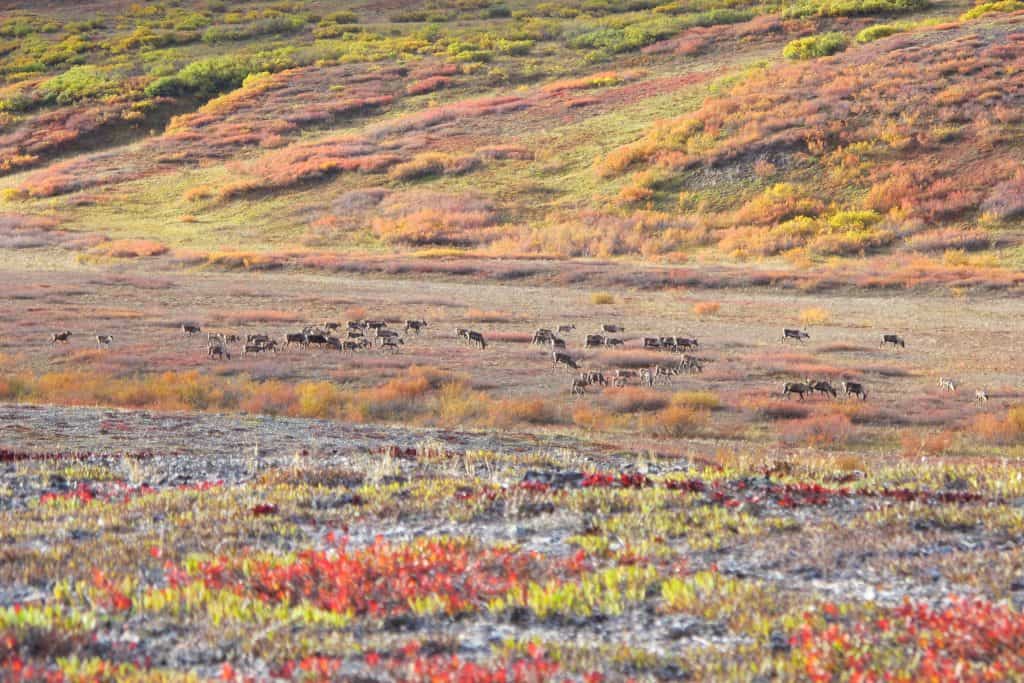
Caribou migrate south through the DeLong Mountains in the Noatak National Preserve.
©Western Arctic National Parklands/CC-BY-2.0 – Original / License
Environmental scientists studied an area with an 80-km-long industrial road, the Delong Mountain Transportation System, which was completed in 1989 to connect the Red Dog zinc and lead mine to the seaport. A team from the State University of New York, Syracuse, The Wilderness Society, and the Gates of the Arctic National Park and Preserve analyzed location and survival data from 366 adult female caribou wearing tracking collars.
The data, which spanned 2010 to 2023, was used to compare survival rates of caribou whose movements were altered by the road with those that weren’t affected by it. The risks imposed by roads ranged from adding substantial distances to circumvent them, which can cost metabolic energy, to getting hit by cars while trying to directly cross them. Wildlife biologist Jim Dau, retired from the Alaska Department of Fish and Game, expressed concern about the road effects in 2023 after observing that “Some of those caribou had to have walked two or 300 miles by the time they zigged and zagged, and tried and failed, and finally got across before they crossed the road.”
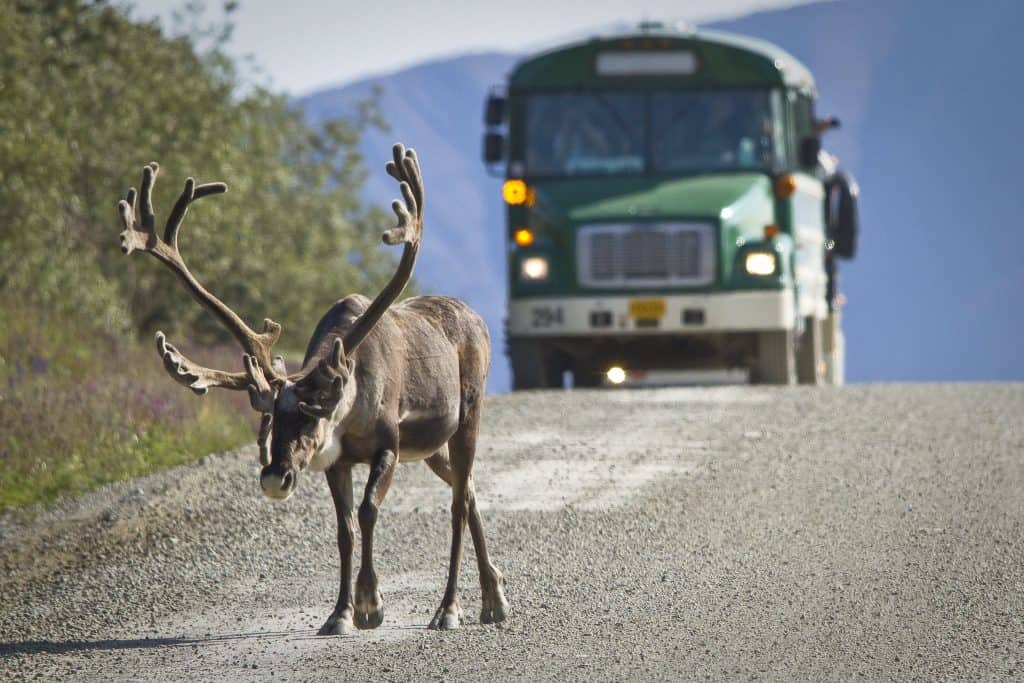
Caribou face hazards of when they cross roads to reach the resources they need.
The results of the recent study did not uncover a statistically significant difference in survival rates between caribou who changed their movements in response to the Delong Road and those who didn’t, with both groups experiencing similar mortality rates before calving (about 21.5 percent). What stood out, however, was that caribou that managed to either cross or go around the road to access southern wintering grounds had significantly higher survival rates than caribou that treated it as a barrier by migrating north. About 42 percent of the caribou who overwintered northwest of it died before calving.
The study authors conclude that, even in an otherwise isolated area, a road that acts as an impermeable barrier to migration can negatively impact fitness. The mortality rates nearly doubled for the subset of caribou that failed to cross or circumvent the road. If the road had been permeable to those caribou, they might have experienced higher survival rates on the southwestern wintering grounds.
Other migratory species are likely to suffer fitness declines from barriers to their historic migrations. The researchers assert that “Unimpeded flow of migratory species will allow them to utilize the landscape in the most efficient manner and respond to the dynamic environmental conditions they experience.” They recommend that management plans for migratory species prioritize safeguarding and improving connectivity of animal habitats.
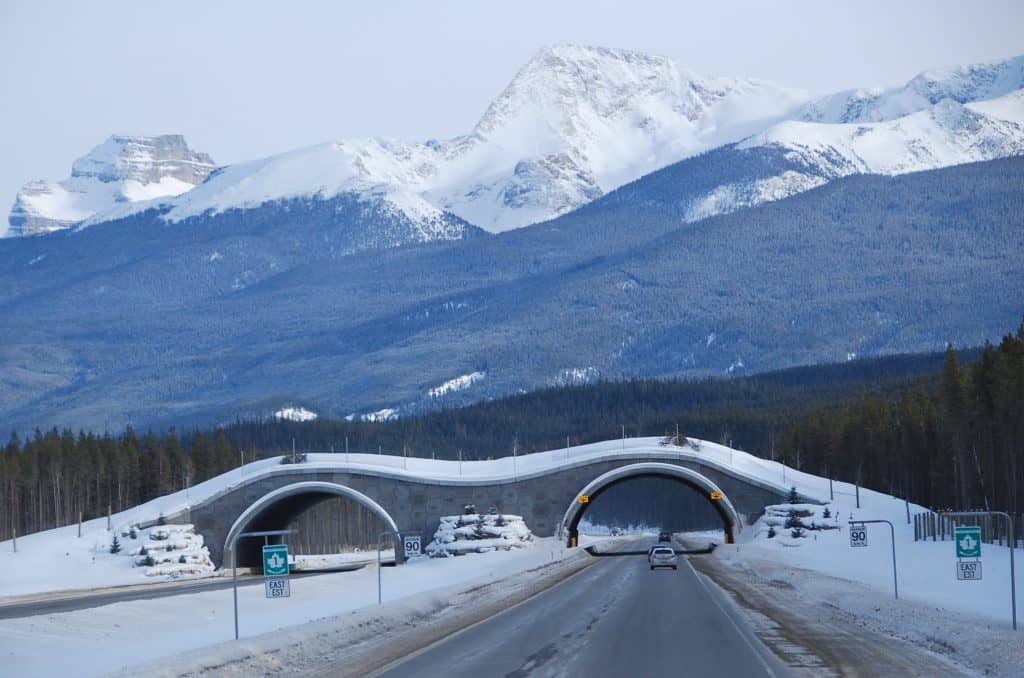
Structures like this one along the Trans-Canada Highway from Lake Louise to Banff, Canada, are designed to encourage wildlife to cross over roadways safely.
One aspect of connectivity is improving road permeability in areas that are safe for wildlife crossings. In 2022, the U.S. Department of Transportation launched a grant program—The Wildlife Crossings Pilot Program—to fund solutions to improve habitat connectivity for animals by getting them safely across roads. Bearing in mind that animals walking across roads also pose a hazard to motorists, the federal funding was used to pay for innovations such as the construction of wildlife overpasses, environmental permitting for wildlife crossings, and adaptations of culverts and bridges to provide crossing points.
A Wildlife Crossing Program Reauthorization Act of 2025 (H.R. 6078) was recently introduced to the House by Representative Donald Beyer of the Transportation and Infrastructure subcommittee. Its passage, along with the equivalent Senate bill (S. 3503), may give caribou and other migratory wildlife a leg up in survival as they increasingly come into contact with human activities and development.