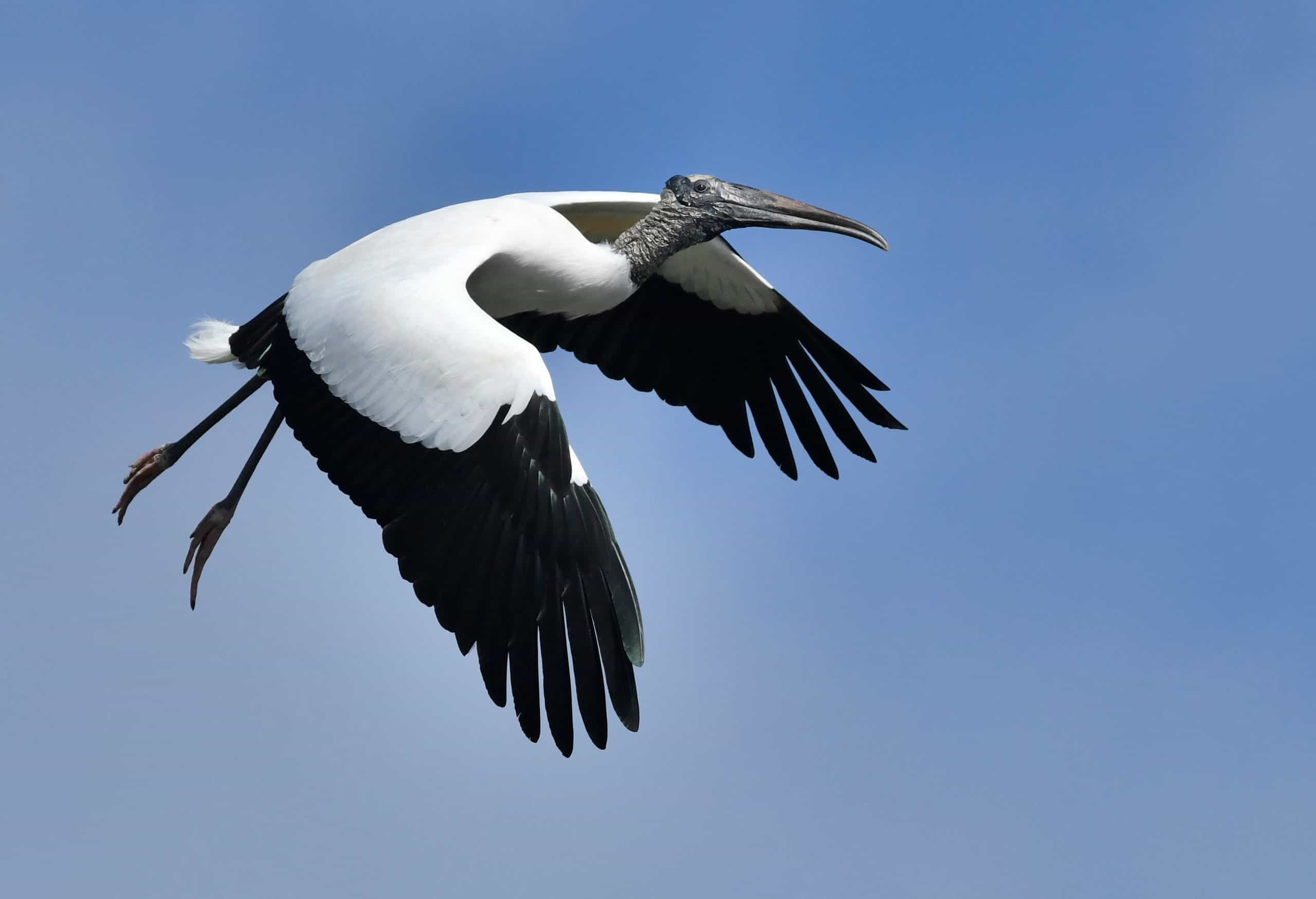

Every so often, nature delivers a surprise that turns ordinary days into extraordinary ones. That’s what happened in Wisconsin this summer, when a deer hunter stumbled upon a sight more suited to Florida swamps than Midwestern marshes: a wood stork. This tall, bald-headed wader is a familiar resident of the southern United States, but its sudden appearance in Columbia County raised eyebrows, cameras, and plenty of questions. What was it doing here, and what does this unusual visit tell us about the wood stork itself?
A Surprising Sighting in Wisconsin
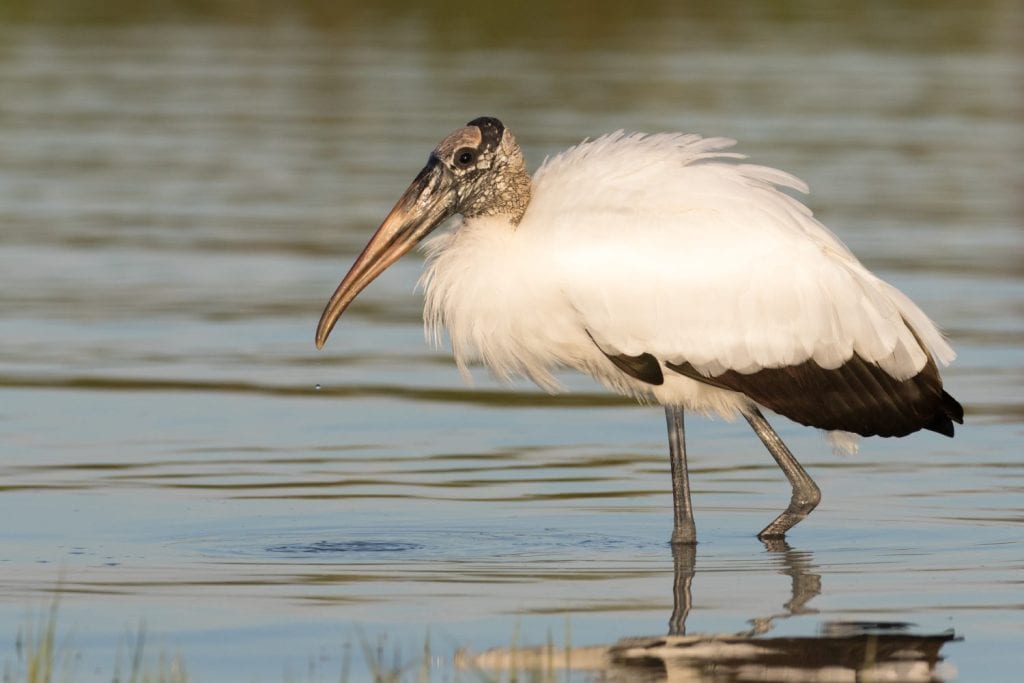
The discovery of an out-of-place wood stork in Wisconsin was a sensation for bird enthusiasts.
©Kristin Howell/Shutterstock.com
The encounter took place in mid-August at Mud Lake Wildlife Area, about 35 miles northeast of Madison. A hunter scouting for deer noticed a strikingly large, white bird with a naked head—odd enough to snap a few quick photos. Those pictures soon landed with Jeff Bahls, President of the Horicon Marsh Bird Club and wildlife technician for the Wisconsin Department of Natural Resources. Bahls confirmed what birders could hardly believe: it was a wood stork (Mycteria americana), and a juvenile at that, judging from its pale bill, which would darken as the bird aged.
Word traveled fast, and within hours, hikers and birders were trying their luck at catching a glimpse. For a few fortunate people, the rare visitor revealed itself before disappearing, last seen heading northeast with a flock of pelicans.
Where Wood Storks Usually Live
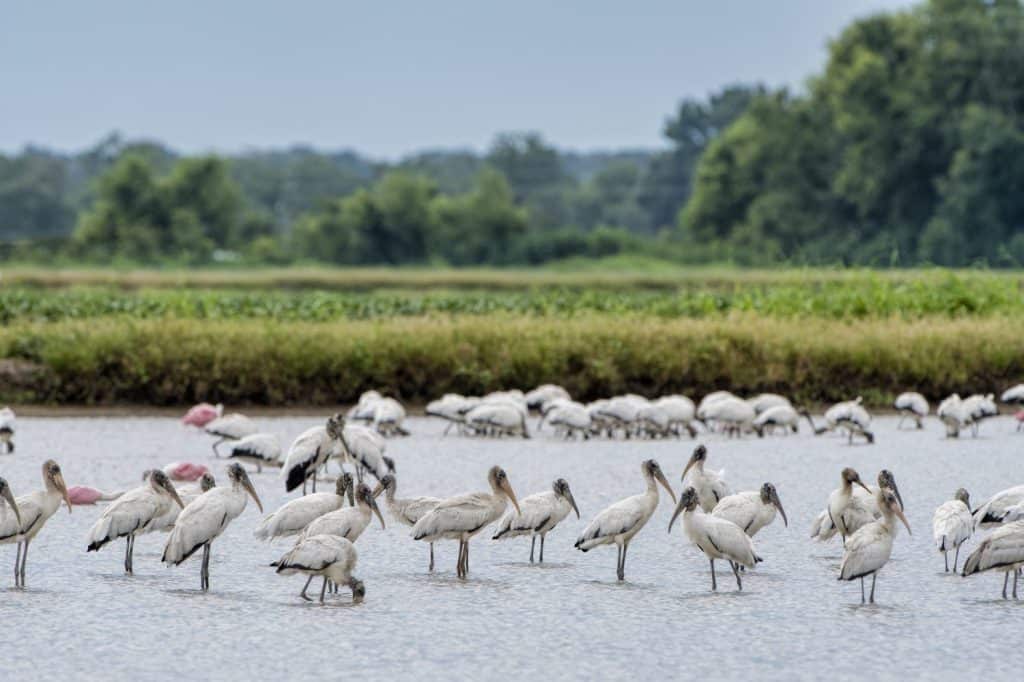
Wood storks normally hang out in warm climates, like this rice field in Louisiana.
©Bonnie Taylor Barry/Shutterstock.com
Spotting a wood stork in Wisconsin is like seeing a penguin stroll through Phoenix. It simply doesn’t fit. Wood storks are native to warm, humid wetlands in the southeastern United States. They breed in Florida, Georgia, South Carolina, and Texas, and their full range extends through the Caribbean and down into South America as far as northern Argentina.
They are the only stork species that breeds in the U.S., nesting in flooded forests and mangroves. Their lifestyle depends on cycles of flooding and drying in subtropical wetlands—conditions a northern state like Wisconsin simply doesn’t provide.
How Rare Is This Bird in Wisconsin?
A wood stork in Wisconsin brought amateur ornithologists out of the woodwork.
©tm_zml/Shutterstock.com
In the Midwest, a wood stork is the definition of a rarity. Ornithologists classify it as a “vagrant”—a bird far outside its normal range. Occasionally, young birds after fledging will wander in seemingly random directions, testing their wings and instincts. But Wisconsin is more than a thousand miles from the nearest breeding grounds. The odds of encountering one there are so slim that many birders spend their entire lives without such a sighting. For Wisconsin’s birding community, this was the equivalent of striking gold.
Physical Traits: What Makes the Wood Stork Stand Out?
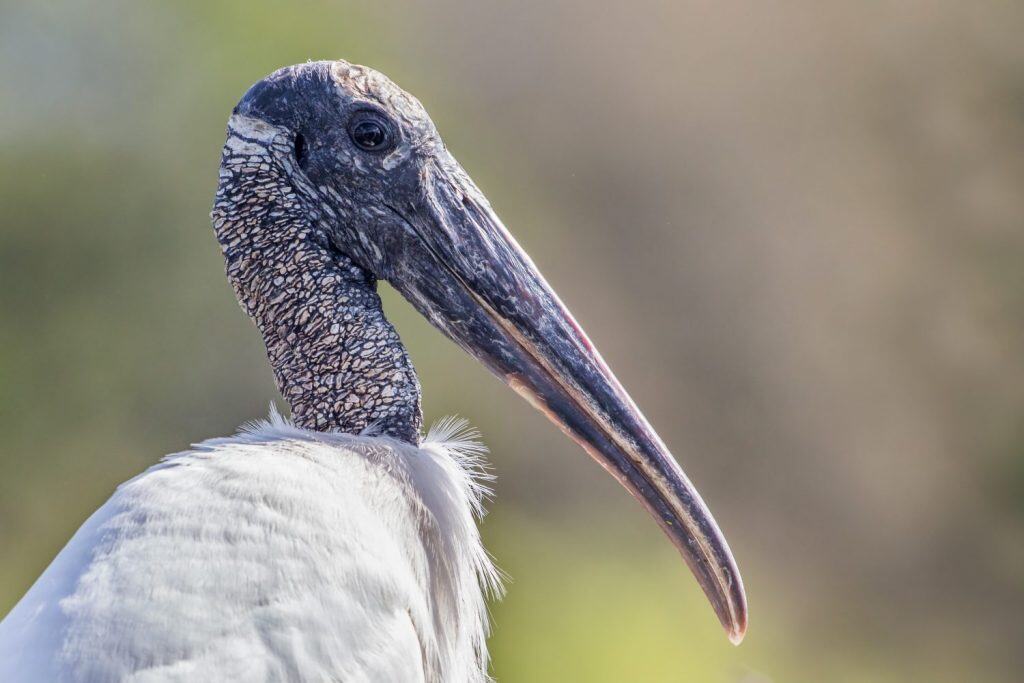
The wood stork’s scaly head is reminiscent of a dinosaur.
©Luca Nichetti/Shutterstock.com
The wood stork (Mycteria americana) is a large wading bird native to the southeastern United States, Central America, and South America, easily recognized by its stark contrast of white body feathers, glossy black wing tips, and bald, scaly gray head. Standing over three feet tall with a wingspan that can reach five and a half feet, it uses its long, thick bill to forage in shallow wetlands, snapping shut on fish, frogs, and other aquatic prey with lightning speed.
The most unforgettable feature, though, is the head. Adults have a bald, scaly, dark gray crown and neck that lend them a prehistoric, almost dinosaur-like appearance. Juveniles have a softer appearance, featuring a feathery yellowish head and a pale or pinkish bill. Compared to herons or egrets, which look more stately and elegant, the wood stork is stockier, heavier, and distinctly more imposing.
What Do Wood Storks Eat—and What Eats Them?
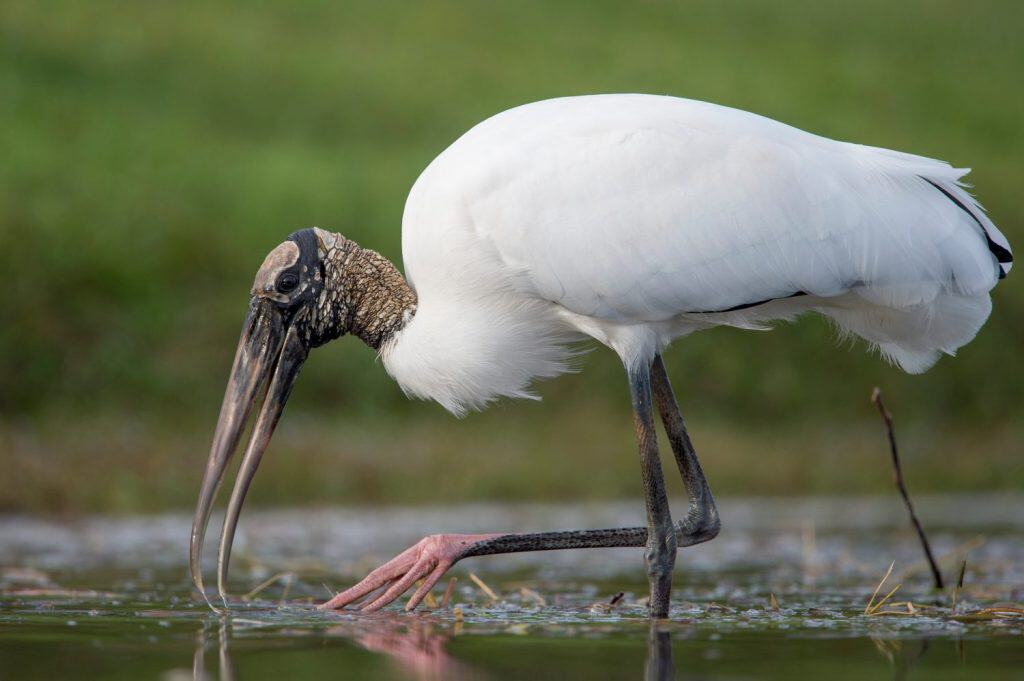
Wood storks locate small fish and other prey by touch.
©Ray Hennessy/Shutterstock.com
The wood stork has one of the fastest reflexes in the bird world. Instead of sight-hunting, it relies on touch. This method, called “tacto-location,” involves sweeping its partially open bill through shallow water until it brushes against a fish or frog. The moment contact is made, the bill snaps shut in less than 25 milliseconds—faster than most people can blink.
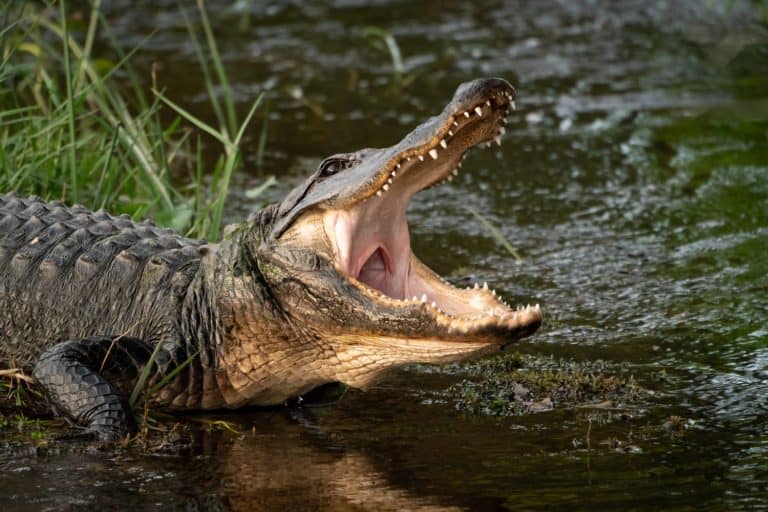
Their menu is dominated by small fish, but they readily take frogs, crayfish, and large insects when available. Due to their size, adult wood storks have few predators. The real dangers occur earlier in life, as eggs and chicks often fall prey to raccoons, vultures, or alligators in their southern wetland habitats.
Why Did This Wood Stork Come to Wisconsin?
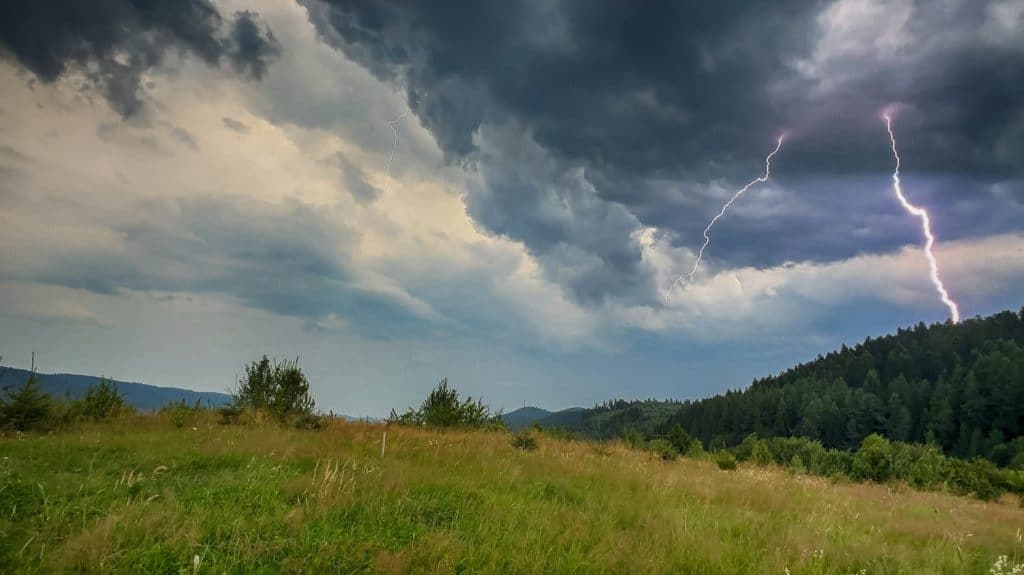
A storm was the likely culprit in bringing a wood stork all the way to Wisconsin.
©Yuriy_Semak/Shutterstock.com
The most likely explanation is youthful inexperience mixed with weather conditions. Young birds frequently wander after leaving the nest, and summer is prime time for “strays.” Add in strong wind patterns or storms, and a bird can end up hundreds—or even thousands—of miles from where it belongs. In this case, experts suggest the Wisconsin stork simply got turned around. Its departure with a group of pelicans hints at another common behavior: following the lead of other large, white waterbirds in an attempt to stay oriented.
Are Wood Storks Threatened?
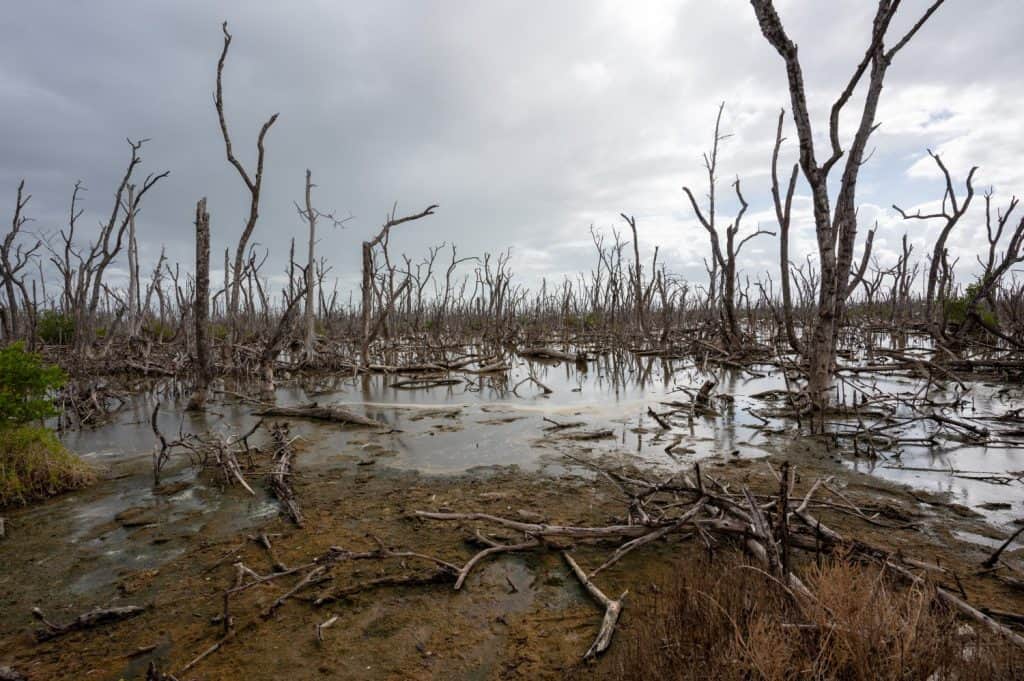
Loss of wetland habitat is one of the threats facing the wood stork. This is a dead zone in the Everglades created by hurricane damage.
©Francisco Blanco/Shutterstock.com
In the United States, the wood stork was reclassified from endangered to threatened after significant population recovery, but as of August 2025, it remains listed as threatened under the Endangered Species Act. The health of this species is tightly bound to the ecological balance of southern wetlands.
The greatest threat to their continued recovery lies in the loss of wetlands. When natural flood-and-drought cycles are disrupted by development or water management practices, the fish populations that storks depend on collapse. In places like Florida’s Everglades, drainage projects have stripped away critical habitat, leaving fewer safe nesting and feeding areas. Rising sea levels now make the situation worse: the EPA confirms that saltwater intrusion is already occurring, pushing saltwater inland into freshwater marshes and killing the plants and animals that sustain wood storks and countless other species.
The Threat of Invasive Species
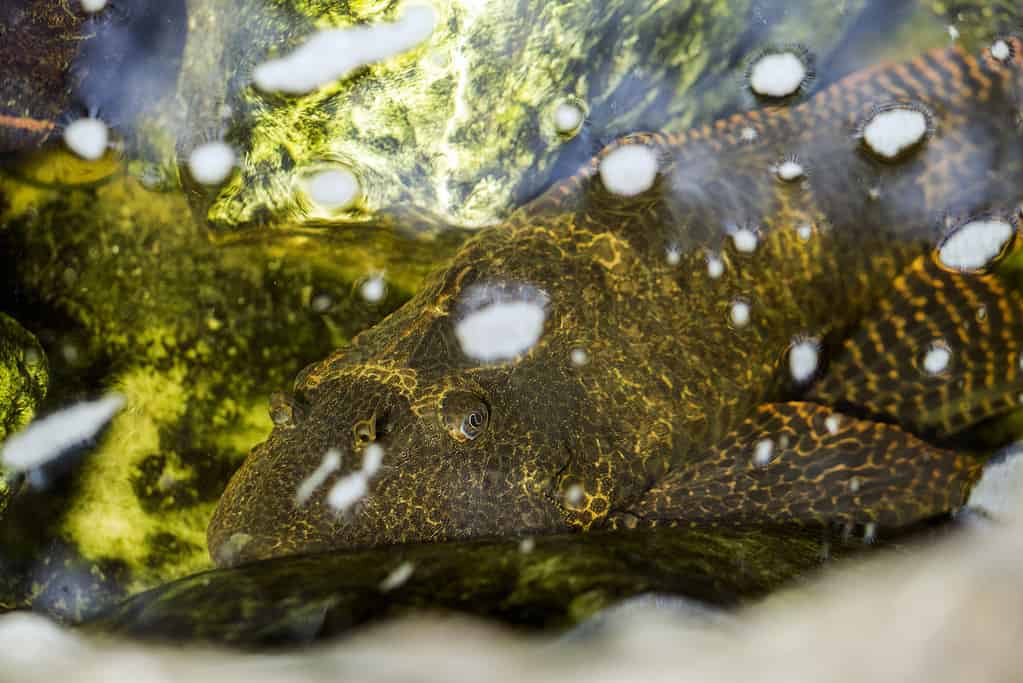
The armored catfish is an invasive species that competes with the wood stork for the same food sources.
©membio/iStock via Getty Images
While habitat loss is the biggest challenge wood storks face, invasive species create additional pressures that chip away at their survival. Non-native plants such as melaleuca and Brazilian pepper have overrun parts of Florida’s wetlands. In the process, they replace shallow, fish-filled pools with dense thickets. This crowds out native vegetation and alters water flow, leaving fewer foraging sites for storks.
Aquatic invaders like armored catfish and tilapia also compete with native fish. In turn, this reduces the food supply that wood storks rely on to feed their chicks. In some areas, invasive predators such as Burmese pythons have even been documented raiding wading bird colonies.
On land, feral pigs wreak havoc by rooting through wetlands, tearing up vegetation, and wallowing in shallow pools. This destroys both stork feeding areas and the watery buffers that normally protect nesting colonies from predators. Feral cats, though too small to threaten adult storks, prey heavily on the chicks of smaller wading birds that often share colonies with wood storks. When these nesting communities are disrupted, storks lose important protection and the cohesion of their colonies.
Environmental Role of the Wood Stork
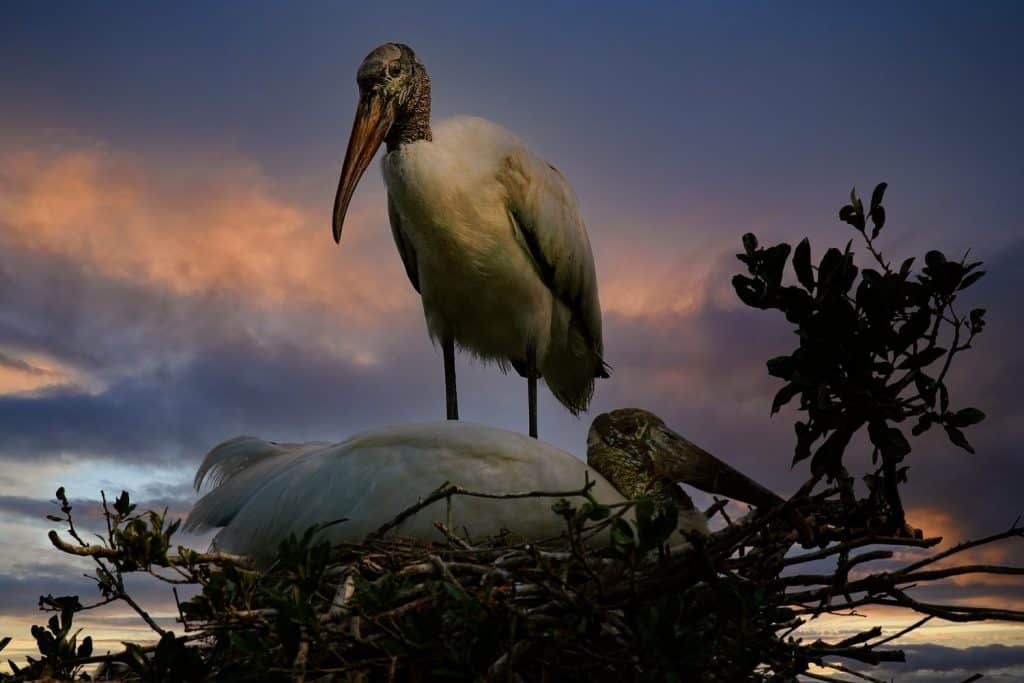
Wood storks play a significant role in wildlife ecosystems.
©Ruth Peterkin/Shutterstock.com
Wood storks are more than curiosities—they’re indicators of wetland health. Because they feed in shallow, fish-rich pools, their nesting success rises and falls with seasonal water cycles. If wetlands dry too soon or flood too deeply, storks often fail to breed, signaling stress in the ecosystem.
Their hunting also shapes aquatic life. By sweeping up fish, frogs, and insects, storks help regulate populations and keep wetlands balanced. Nesting colonies add another layer: guano enriches soils, and abandoned nests provide shelter for other birds. When wood storks do well, the wetlands around them usually do too.
A Bird That Inspires Awe
Even if this individual stork has long since moved on, its appearance left a lasting impression. Birders, hunters, and hikers alike were reminded of how unpredictable wild creatures can be—and how their movements connect distant ecosystems. And while most people will only see one in the southern swamps where it belongs, this wandering juvenile proved that even in the quiet corners of Wisconsin, nature still holds the power to surprise.