
Walruses make some silly sounds. Whether it’s a strange grunt or a fart-like noise, they make a variety of sounds, each conveying a different meaning. This video by Point Defiance Zoo & Aquarium shows a zookeeper playing with some walruses and the noises they make in response. Read on to learn more about the different noises walruses make and why they make them.

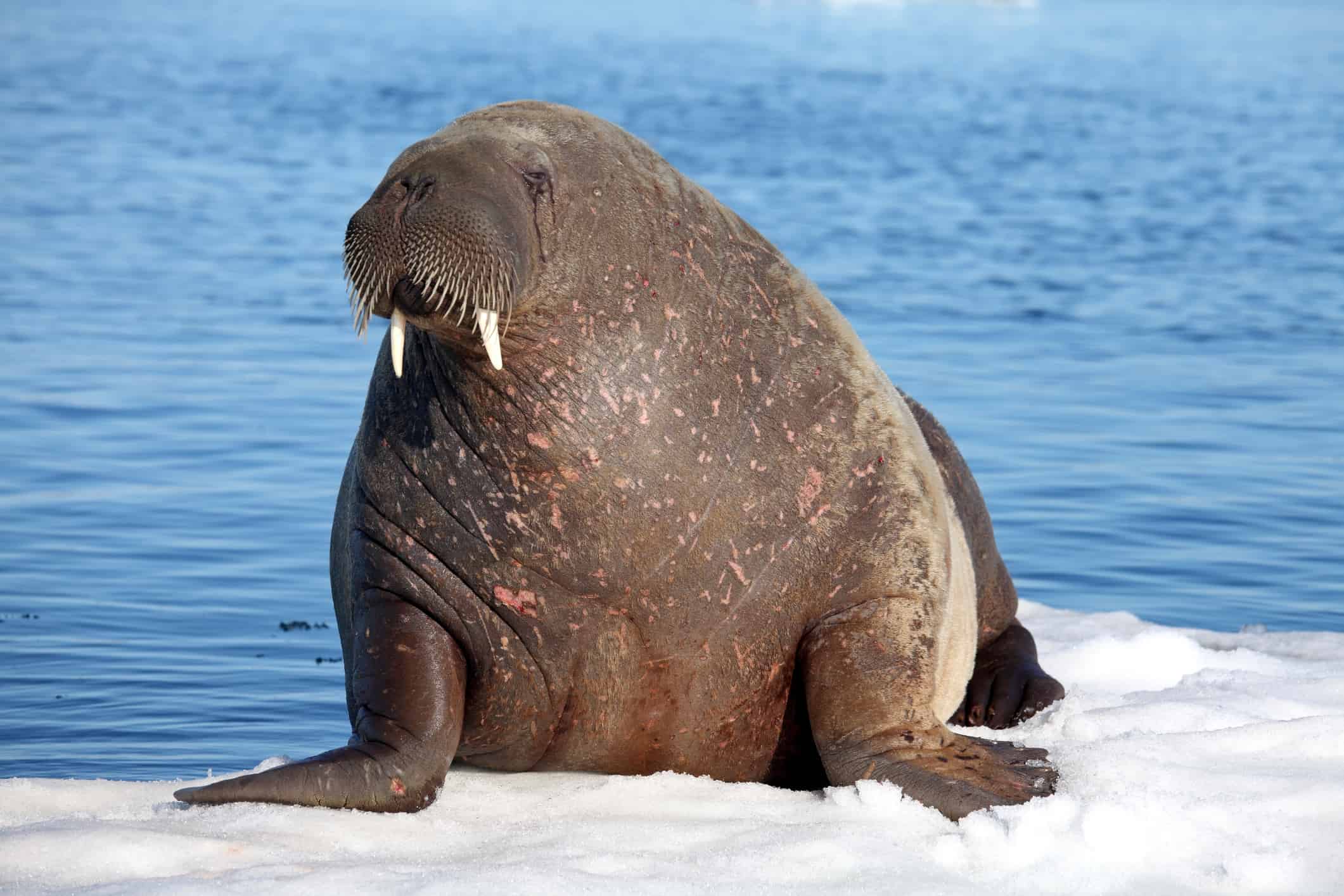
Walruses are social creatures.
©Jiri Soural/Shutterstock.com
Walrus Sounds
Walruses make different sounds for a variety of reasons. As social creatures, it is important for them to communicate throughout the different aspects of their lives. Whether on land or in the water, walruses have a multitude of ways to communicate. They bark, growl, whistle, and more as a way to interact with each other. Let’s break down the main reasons walruses communicate.
Parental Bonding
Like other animals, mother walruses bond with their calves as they raise them. This makes communication essential for forming a connection with their babies from day one. Part of this bond is vocal recognition to identify each other. Walruses can recognize each other’s vocalizations, which helps them identify individuals even in large groups. A mother walrus will often vocalize with soft grunts and bellows out of affection for her calf. Even after reaching adulthood, walruses can recognize their mothers’ calls, which is important for differentiating members of a group.
Courtship
Male walruses are especially vocal during mating season, particularly underwater. They use a mix of clicks and pulsing tones, comparable to bell sounds, to communicate during mating. A strong vocalization demonstrates a male’s strength and fitness to females and also helps intimidate rival males, making these unique calls essential during mating season. While some walrus noises, especially those made during mating, may sound strange or aggressive to the human ear, they are actually part of a language of courtship and attraction.
Social Communication
One of the most obvious reasons for vocalization is social communication within group settings. Since they gather in the thousands on beaches, coordination is important for their well-being and safety. On land, they grunt and snort as a form of background chatter. While it may seem random, these noises reinforce social cohesion and help identify members of the group. Similarly, in the water, walruses whistle to each other while they swim. This ensures that no one is separated, which is important for their safety. Vocalizing distress when a predator is nearby is another important aspect of social communication, highlighting their strong group bonds.
Resting
Sometimes, walruses make noises that don’t seem to have any specific meaning. Exhaling or heavy breathing, for example, is often observed when walruses are in relaxed or playful states. When there is no sign of a threat, walruses enjoy playing with each other and expressing their joy in fascinating ways. Like humans, who sigh or hum without much thought, walruses seem to do the same. These are some of the ways and reasons walruses communicate, reflecting their strong social bonds and playful nature.