
Quick Take
- While shelter animals seem to warm up to women faster than men, urban birds seem to find the former more threatening. See the study findings →
- Researchers dressed participants identically and matched their heights, yet birds still reacted differently. This suggests the birds are detecting something humans cannot even see. See how controls failed →
- Both skittish and people-friendly bird species showed the exact same response, which suggests something far more fundamental is at play than learned behavior. Explore the species data →
Women are often perceived as more approachable than men. Studies have shown that shelter animals are more at ease around women than around men, even when they are nervous and scared. Researchers wondered whether similar patterns might apply to wild animals.
A recent study has shown that this is not the case. Instead, city birds appear to fly away sooner when approached by women than by men.
Study Finds Urban Birds Retreat Earlier From Women Than Men
Birds are frequently preyed upon by other animals, so their survival depends on how quickly they respond to perceived threats. Often, these threats include humans. As a result, birds tend to scatter when people get too close.
According to a new study published in People and Nature, while birds flee when people approach, they fly away faster when approached by one sex than the other. In every encounter, birds flew away sooner when women drew nearer, allowing men to get closer before the birds retreated.
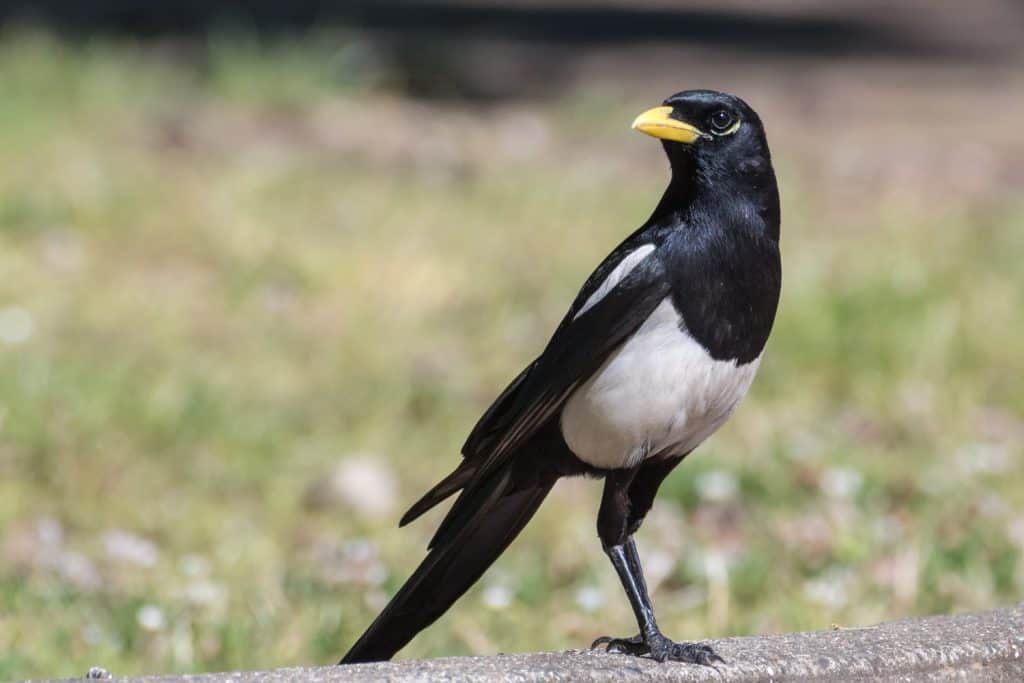
Magpies, along with other species in the study, seemed to feel more threatened by women than men when approached.
©Hayley Crews/Shutterstock.com
The researchers observed 37 bird species across five different countries:
- Czechia
- France
- Germany
- Poland
- Spain.
Over 2,700 observations were made of the birds and their responses to the presence of men and women. The same experiment was conducted each time, in which a man and a woman would walk in a straight line toward a bird in a green space or park. Every time, men were able to get an average of 3.2 feet closer to the birds than women were. Just why this occurred has baffled researchers. Consequently, future observations are planned to determine whether a reason can be identified for why women are perceived as a greater threat to birds than men.
Bird Species Did Not Change the Results
Some bird species are typically cautious, while other species more greatly tolerate the presence of humans. Therefore, researchers included both species that flee early and those that flee late in the study. Surprisingly, there was no difference between the reactions. All birds still flew away from women sooner than they did from men.
The bird species in the study included pigeons, which are typically comfortable around people, and magpies, which tend to be leery of people. Other species, according to the study, include:
- Housesparrow
- Hooded crows
- Blackbirds
No one was more surprised by the findings than Dr. Yanina Benedetti from the Czech University of Life Sciences Prague. According to Dr. Benedetti, the birds’ reaction shows that “a human observer” is not “neutral.”
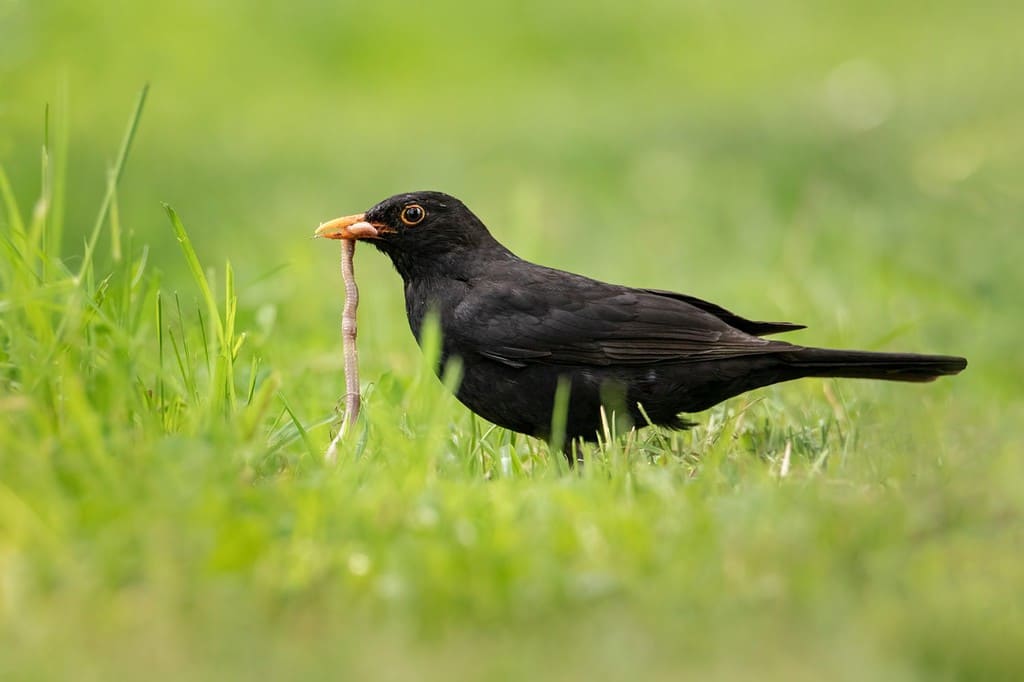
Blackbirds reacted the same as all other species of birds in the study, responding more cautiously to women than men.
©Catleesi/Shutterstock.com
“As a woman in the field, I was surprised that birds reacted to us differently,” Dr. Benedetti explained in a press release. “This study highlights how animals in cities ‘see’ humans, which has implications for urban ecology and equality in science.”
Interestingly, researchers ensured that participants looked and acted the same when approaching the birds. This raises the question of whether birds can recognize a person’s sex based on appearance alone.
How Do Urban Birds Distinguish Between Male and Female Approachers?
To answer whether birds were determining a person’s sex based on looks alone, researchers ensured that the males and females approaching the birds were the same height and wore the same clothing. Each time, the birds flew away from the women more quickly.
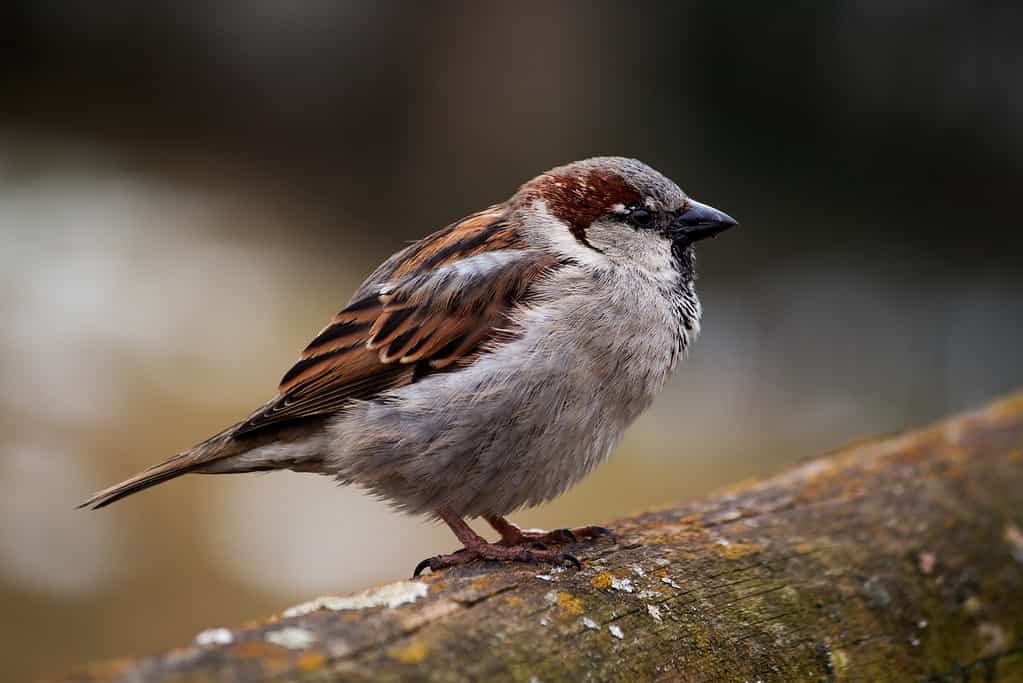
Sparrows, along with other bird species, could recognize whether a person was male or female, despite participants wearing the same clothing and being the same height.
©iStock.com/Vronja_Photon
According to a co-author of the study, Daniel Blumstein, a professor at the University of California, Los Angeles, the research shows that birds are identifying a person’s sex not based on looks but on something else entirely.
“I fully believe our results, that urban birds react differently based on the sex of the person approaching them, but I can’t explain them right now,” Blumstein explained in a press release. “We used bleeding-edge comparative analysis techniques that showed our findings were consistent across cities and species, but we simply don’t have a conclusive explanation yet.”
Theories Abound as to Why Birds Fear Women More Than Men
Currently, researchers are stumped about why birds appear significantly more fearful of women than of men when approached. However, some early hypotheses have gained traction since the study’s release and warrant consideration. Some of the leading hypotheses are related to pheromones, a person’s body shape, and their gait.
Professor Emeritus in Ecology at the University of Washington, John Marzluff, believes a person’s gait is likely the cause of birds’ fear. However, even he cannot explain why this may cause more fear toward women than men.

It is hypothesized that pigeons, and the other birds in the study, could differentiate gait between men and women.
©Jossfoto/Shutterstock.com
“If I had to guess, I would agree with the supposition that gait is an important cue the birds are using,” Marzluff explained to Live Science. “What I find puzzling is that one would expect such effects to be learned by a bird’s experience with various humans in their environment. If so, then there would be no reason for birds to have only experienced more threatening women.”
Instead, according to Marzluff, it would be expected that birds experienced more “threatening” actions from men. “Therefore, the overall response should be no difference in response to sex.”
Identifying ‘Specific Cues’ in Future Studies
Given how many questions remain unanswered, plans are in place to expand the study in the future. Instead of grouping participants only by sex, future studies will use more specific groupings, which will hopefully help determine why birds fear women more than men.
According to Dr. Benedetti, who also co-authored the study, a more specific grouping of participants is required so that the “specific cues” the birds pick up on can become clear to researchers.
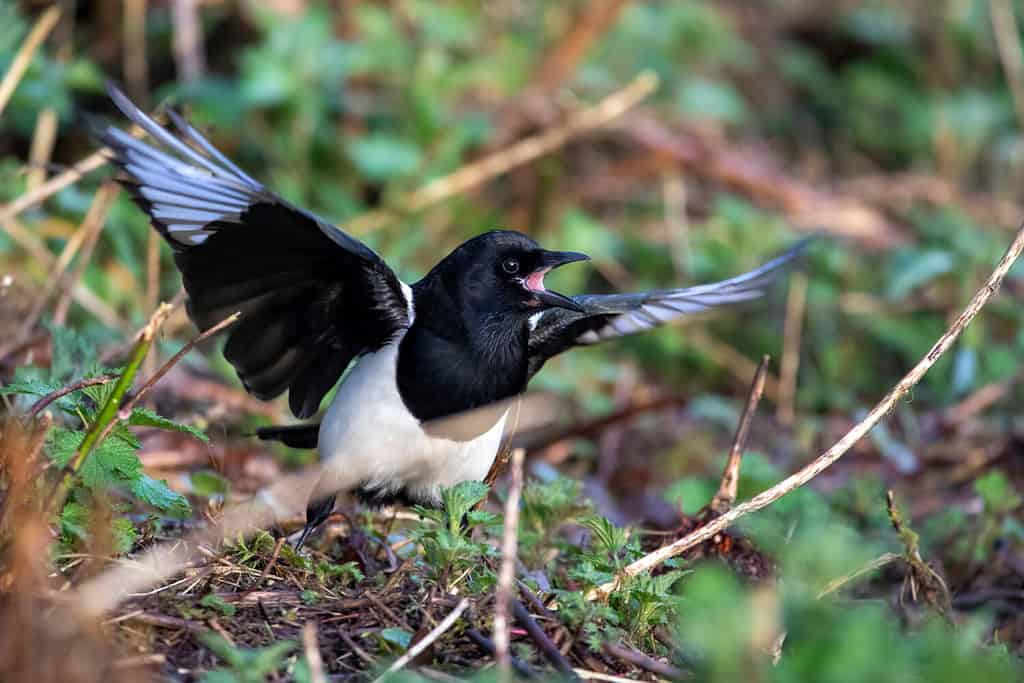
Future studies are already being planned to determine just how birds recognize men from women and what characteristics influence the birds’ responses.
©Anthony King Nature/Shutterstock.com
“Urban birds clearly react to subtle cues that humans do not easily notice,” Dr. Benedetti stated in a press release. “Follow up studies could focus on individual factors such as movement patterns, scent cues, or physical traits, testing them separately rather than grouping them under observer sex. This approach would help identify the specific cues birds detect.”