
Quick Take
- A newly discovered pit viper in Myanmar somehow manages to appear like two completely different snakes at once, a puzzle baffling to scientists. Meet this puzzling viper →
- Researchers initially dismissed this snake as a hybrid, but field work deep in the Myanmar jungle told a stranger story. See what field work revealed →
- The Ayeyarwady pit viper isn't the only animal quietly breaking the rules of species classification. The Amazon's leaf-litter frogs may actually be an even more jaw-dropping example. Compare the Amazon frogs →
scientists have uncovered a profound truth: nature seeks novelty over categorization. In every era, humans seek new ways to classify organisms that elude easy classification. And every once in a while, nature provides a challenge to this desire of ours. A recently discovered pit viper found in the jungles of Myanmar provides a perfect example. At times, the snake looks like one species, before later seeming to morph into a completely separate species. Thanks to close study, scientists have discovered that it is actually a species all its own.
Meet the Ayeyarwady pit viper, a newly identified species that defies easy classification. Scientists often distinguish species based primarily on physical characteristics. “Cryptic species” are two distinct animals that appear nearly identical, while others show so much physical variation that they can resemble multiple different species. So where does the Ayeyarwady pit viper fit in? Well, it seems this snake exhibits both patterns at once.
Wheat from the Chaff
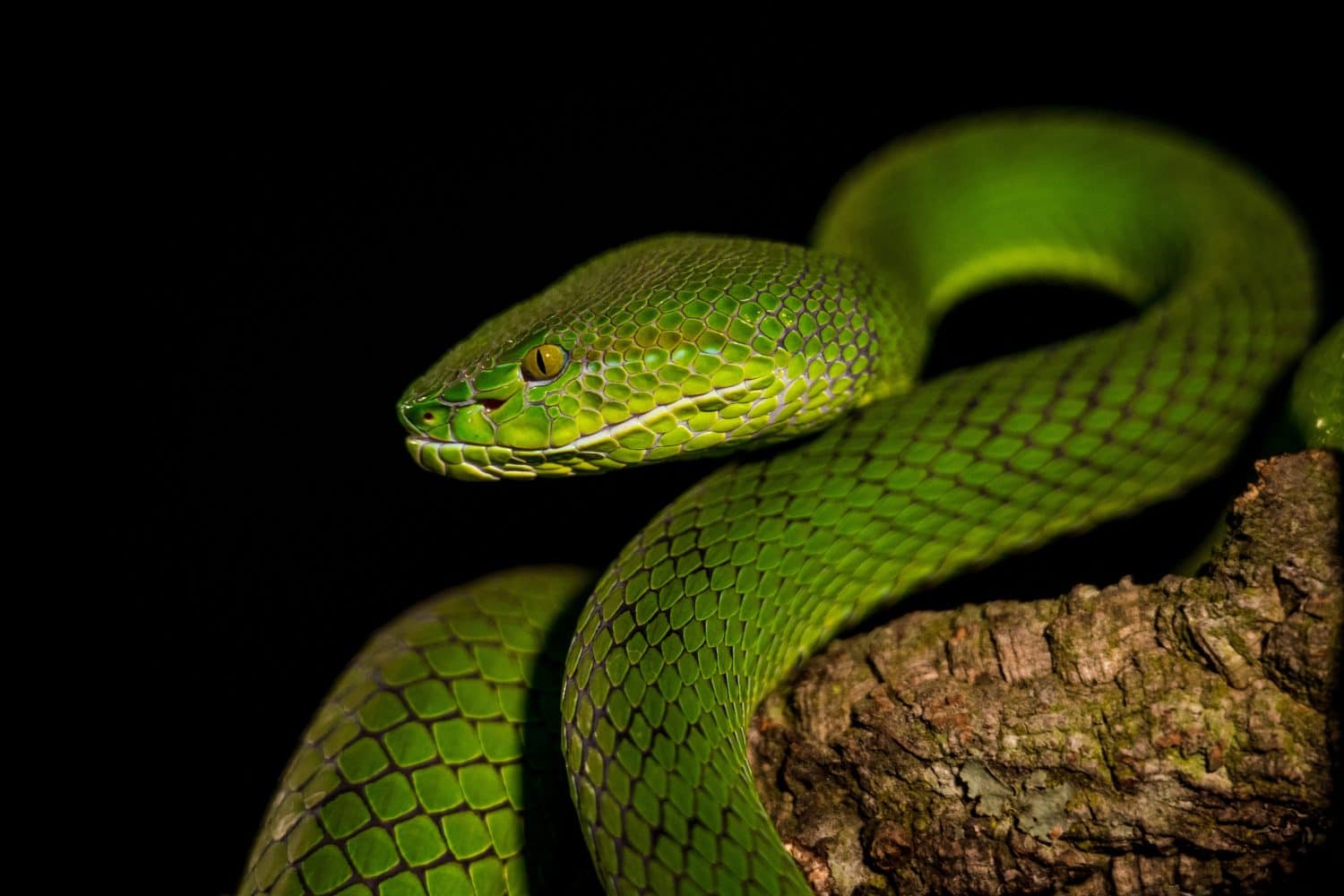
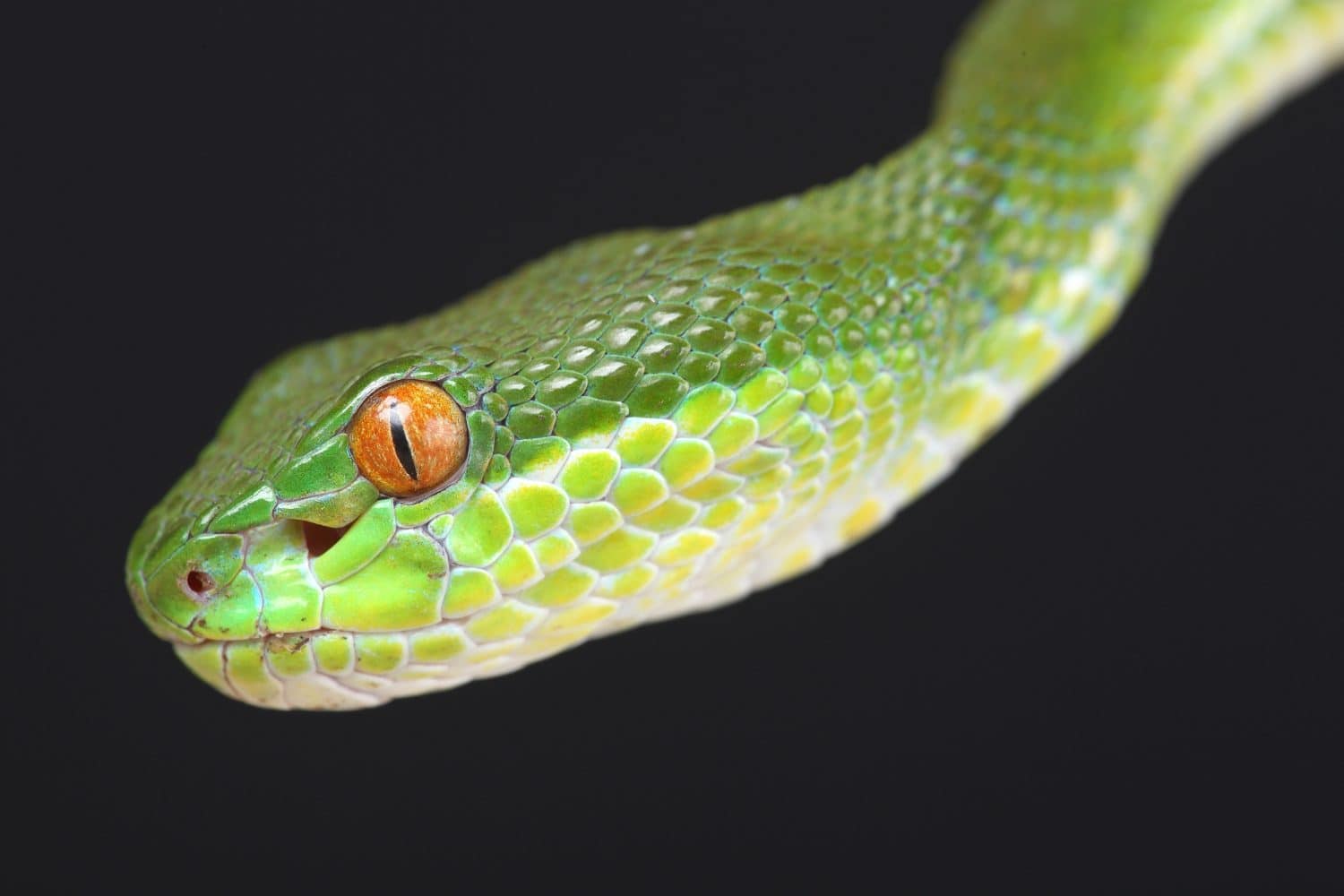
While pit vipers in southern Myanmar feature several color variations, only redtail pit vipers found along Myanmar’s northern coast have bright green bodies.
©jurra8/Shutterstock.com
Scientists have long studied Asian pit vipers (which belong to the genus Trimeresurus). The redtail pit viper lives along Myanmar’s northern coast and features a bright green body with no discernible markings. It’s southern relative, the mangrove pit viper, has blotches along its back and can manifest in different colors, including gray, yellow, brown, and black. But it never appears with green coloring.
In the jungles between these regions lives another pit viper. Though green like the redtail pit viper, it also has varying amounts of dark blotches on its scales, similar to the mangrove pit viper. The researchers told Science Daily, “This mysterious population in central Myanmar baffled us, and we initially thought that it could be a hybrid population.”
To learn more about this curious hybrid viper, herpetologist Dr. Chan Kin Onn led a research team deep into the Myanmar jungle. Upon closer inspection, they discovered that the green pit viper with curious blotches on its back was actually a completely separate, distinct lineage from either of the two previously known species.
Taxonomic Confusion
As published in the open-access journal ZooKeys, the research team described even more fascinating findings. Entitled, “A new species of pit-viper from the Ayeyarwady and Yangon regions in Myanmar,” the study details the team’s findings. Their work was built on an early genomic study suggesting the snake was a distinct species. The research showed that these Ayeyarwady pit vipers have very different appearances, depending on the individual.
Some of these newly classified Ayeyarwady pit vipers feature dark green scales with distinct blotches. As such, researchers were only able to tell them apart from their redtail pit viper relatives because redtails feature bright green scales and lack overlayed markings. Confusingly, other populations of this newly classified pit viper feature bright green scales without dark blotches, making them practically indistinguishable from redtail pit vipers, despite being a completely separate species. The researchers believe these variations are the result of gene exchanges sometime in the past. Dr. Chan Kin Onn argued as much when speaking to Science Daily.
In the article, Kin Onn said, “This is an interesting phenomenon, where one species is simultaneously similar and different from its closest relative (the redtail pit viper). We think that at some point in the past, the new species may have exchanged genes with the redtail pit viper from the north and the mangrove pit viper from the south.”
What’s a Species, Anyway?
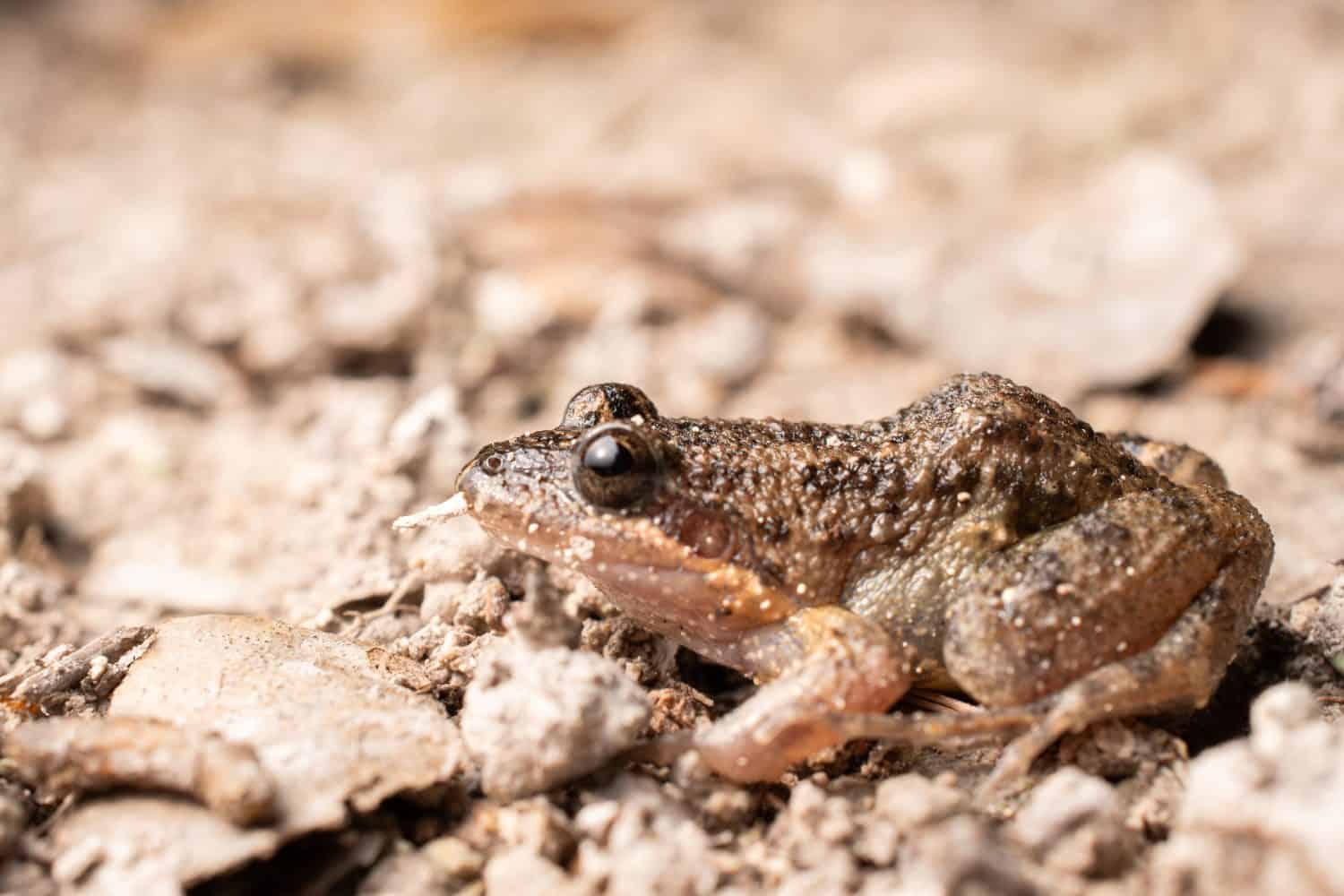
What was thought to be just two species turned out to be 18 distinct species of leaf-litter frogs.
©Claudia Luna Mtz/Shutterstock.com
Researchers named the new species the Ayeyarwady pit viper (Trimeresurus ayeyarwadyensis) after one of Myanmar’s largest rivers. Helpfully, the Ayeyarwady delta lies between two river systems, serving as a marker for the distribution limits of the newly classified pit viper.
The Ayeyarwady pit viper isn’t the only creature out there that displays these curious, species-defying characteristics. Perhaps the most striking example of this phenomenon is the umbrella of leaf-litter frogs in the Amazon rainforest. Once classified as a maximum of two species, genomic testing later revealed that what scientists believed to be just one of those leaf-litter frog species was actually 18 distinct species! Remarkably, these frogs ensure they are mating with their own species through the use of distinct vocalizations, the likes of which humans can’t easily tell apart. It raises the question of what cues the Ayeyarwady pit viper uses to ensure it mates with its own species.