
Quick Take
- Asian elephants have more cerebral cortex volume than any other land animal, yet one cognitive ability was only just proven for the first time. Explore elephant brain science →
- A fruit-and-box experiment revealed something unexpected about how elephants handle a task when the rules suddenly change. See the experiment details →
- One age-related pattern in the elephants' behavior could quietly reshape how scientists approach human-elephant conflict. Discover the conservation impact →
- Understanding how elephants suppress impulses might be the key to preventing violent encounters between elephants and people. See how impulse control helps →
Despite their unique appearance and standout size, there is something oddly human about elephants. Maybe it’s the twinkle in their eyes, or the care they take in their movements around much smaller creatures. Whatever the case, elephants are undoubtedly intelligent. Asian elephants, in particular, have a greater volume of cerebral cortex than any other land animal. This alone is significant, and researchers at the CUNY Graduate Center and Hunter College have helped demonstrate this intelligence. A recent study authored by these researchers found that Asian elephants can suppress impulsive behaviors and adjust their actions in changing circumstances.
The study, led by longtime elephant intelligence researcher and Hunter College Associate Professor of Psychology Joshua Plotnik, tested how elephants reacted to certain tests involving fruit. This not only yielded remarkable results regarding impulsivity and decision-making, but also offered the first evidence that Asian elephants possess some form of inhibitory control. Below, we explore the incredible intelligence of Asian elephants, how researchers uncovered more about their decision-making abilities, and how these findings could contribute to new conservation strategies.
Continue reading
Elephant Intelligence
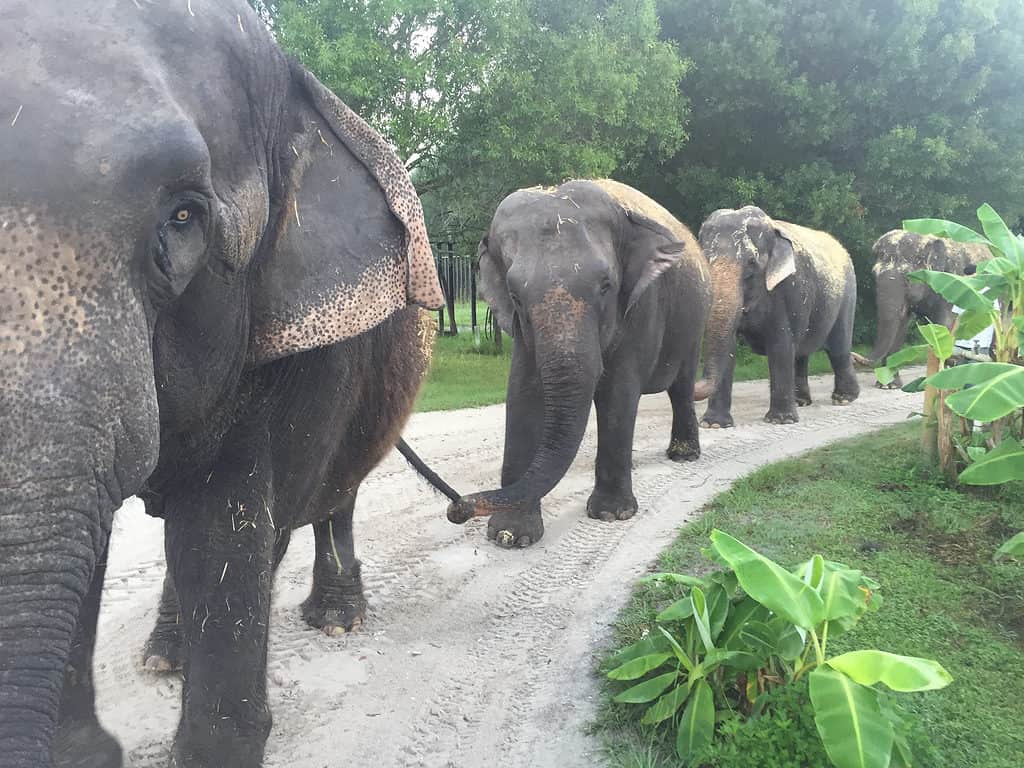
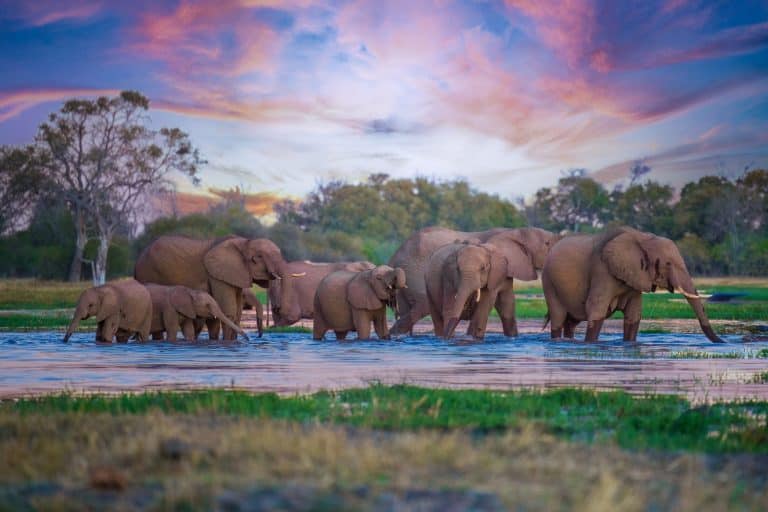
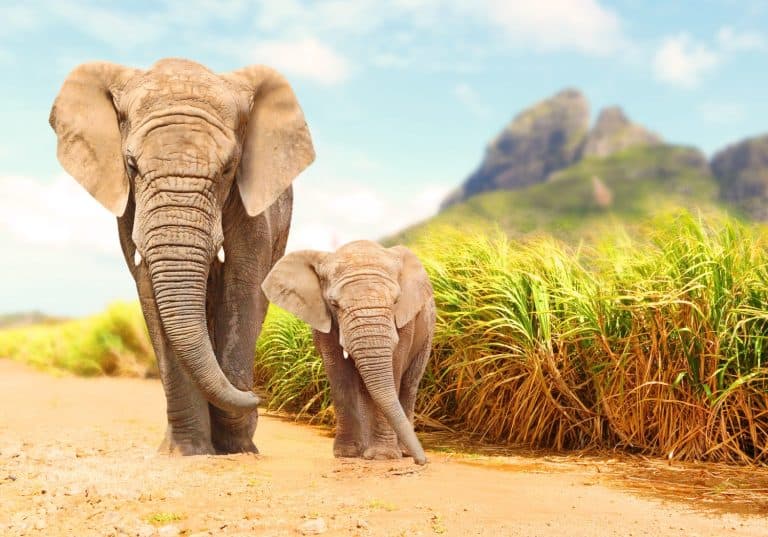
Asian elephants have the largest brains of any living land mammal, leading to profound displays of intelligence, compassion, and social cohesion.
©ElephantErik/Shutterstock.com
We like to think of ourselves as the smartest creatures on Earth, and one look around at our accomplishments illustrates why. But what if intelligence were not just the crafting of technology and production, but something more subtle, emotional, and holistic? Intelligence is, by all accounts, cognition, and only a few creatures on Earth have as much neocortex volume as humans. There are dolphins, great apes, and Asian elephants.
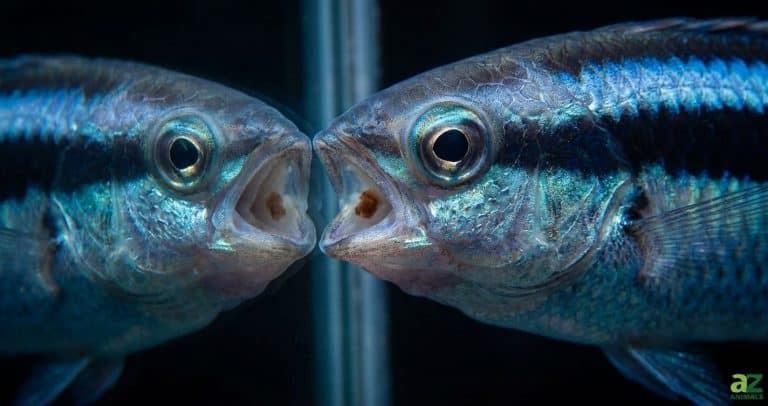
Asian elephants, though smaller than African elephants, have the largest brains of any land mammal. Their cerebral cortex is roughly as complex as that of great apes. Their cognitive abilities are reflected in a range of behaviors and tendencies. Asian elephants engage in complex social relationships, show a sense of self-awareness via the mirror test, and exhibit keen emotional intelligence. When a member of the herd dies, Asian elephants perform complex burial-like rituals and subsequently engage in mourning behaviors.
Tool-making is another sign of intelligence, and Asian elephants exhibit this, too. They are known to use branches as improvised fly swatters or back scratchers. Furthermore, they keep a sort of running cognitive system of herd members and the location of water sources across large expanses of land. But what about making a decision and then changing it in response to shifting circumstances? Researchers at CUNY Graduate Center and Hunter College set out to see just how restrained Asian elephants could be.
Changing Course
Professor Joshua Plotnik has been fascinated with elephant intelligence for nearly two decades. His research with collaborators has produced evidence that elephants can console distressed companions, recognize themselves in mirrors, and solve complex problems. His latest research tested whether elephants could alter their actions after making a choice if circumstances changed.
To do so, the research team observed the actions of 16 Asian elephants at the National Elephant Institute in Thailand. First, the researchers presented the elephant subjects with a transparent box containing fruit. This setup allowed the elephants to smell and see the fruit, but not easily reach it, since access was on the side of the box. This taught the elephants to resist the urge to reach directly for the fruit. Then, researchers rotated the box, which changed the placement of the opening. At first, the elephants reached for the old opening. However, they soon began suppressing that impulse and instead grabbed the fruit through the new opening.
Older elephants generally took more time to adjust to the changes. While this suggests that age-related changes may affect cognitive adaptability, the researchers believe further tests are needed to confirm whether cognitive decline is responsible. Co-author of the study Sydney Hope told Eureka Alert, “We found that, when elephants were faced with a situation in which they needed to suppress an impulsive behavior, whether it was the impulse to reach directly toward a food reward behind a transparent barrier or the impulse to continue using a previously effective technique, they were generally able to suppress the impulse.”
Conservation Strategies
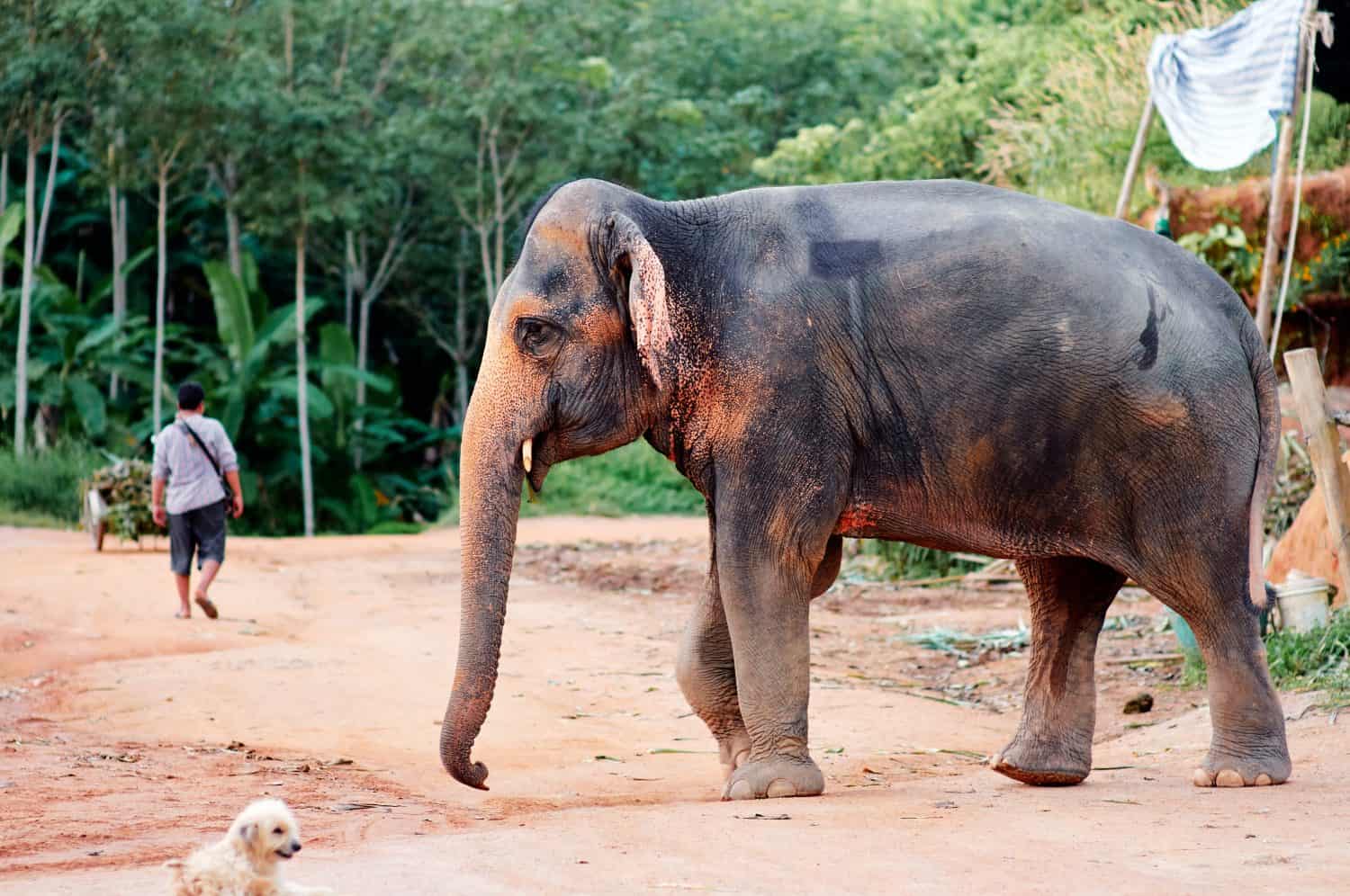
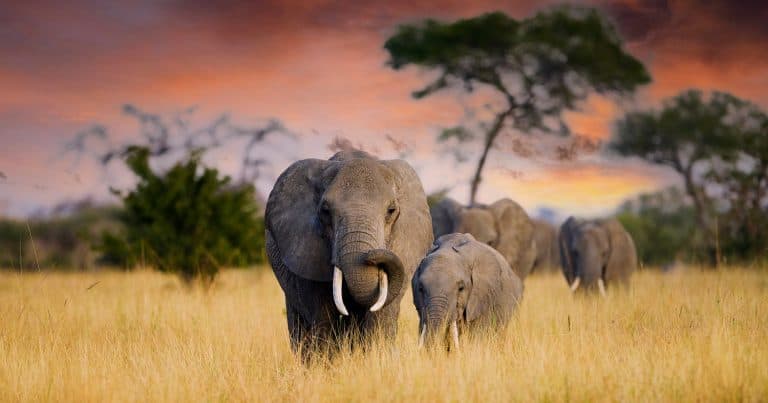
Research like this could help inform conservation strategies centered on reducing elephant-human conflict.
©kudla/Shutterstock.com
The study, recently published in PLOS One, provides the first evidence that Asian elephants can restrain their actions and adjust to changing circumstances. When elephants live in close proximity to human beings, they seem more willing to take risks. This research helps explain how Asian elephants respond to conflicts, make on-the-fly decisions, and adapt to human-dominated environments. Such research could help develop conservation strategies focused on human-elephant interaction and potentially help prevent violent incidents.
As a long-time elephant researcher and lead author of the study, Joshua Plotnik explained that these findings help better predict elephant actions in dynamic environments. He said, “The more we understand about how elephants think, make decisions about risk, and adapt to human-driven environmental change, the better we can predict ‘what they’ll do next’ and the better designed our strategies for human-elephant coexistence can be.”