
Quick Take
- Nevada designated the desert bighorn sheep as its state animal in 1973, citing its toughness and ability to survive extreme desert conditions.
- After dropping to about 2,000 animals in the 1960s, Nevada’s desert bighorn sheep population has rebounded to roughly 14,000.
- The sheep’s powerful horns, specialized hooves, and efficient digestion allow it to navigate steep mountains and survive with limited water.
- Despite population gains, desert bighorn sheep continue to face threats from disease, habitat loss, climate change, and urban development.
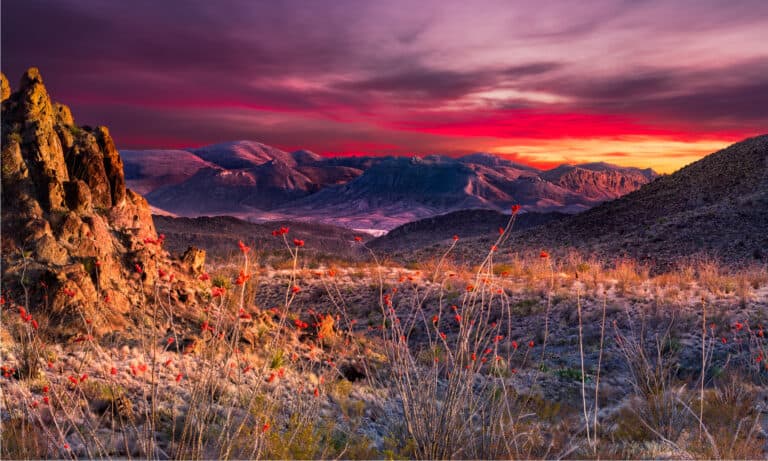
It’s no surprise that a state as unique and fascinating as Nevada chose an equally exceptional animal as its symbol. Nevada, known for its unusual mix of rugged outdoor landscapes and one of America’s most glitzy cities, is the driest state in the nation, and also the most mountainous. Anyone who can adapt to its harsh desert environment, whether animal or person, embodies resilience. And this resilience is what the state legislatures had in mind in 1973 when they chose the desert bighorn sheep as the official state animal.
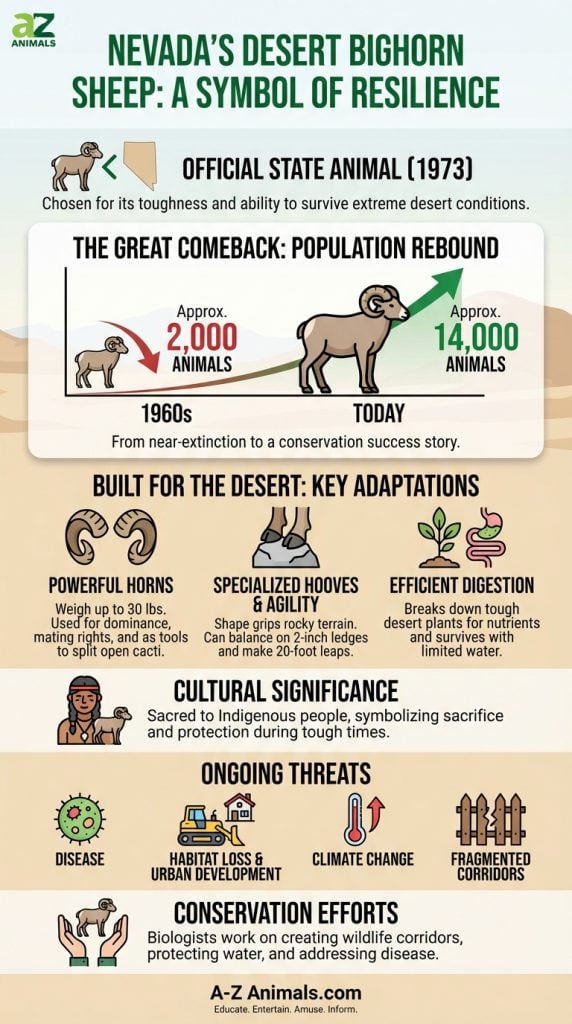
From near-extinction to the ultimate comeback, discover how Nevada’s toughest survivor uses 30-pound horns and 20-foot leaps to defy the desert.
©FWP
Doug Nielsen, a spokesman for the Nevada Division of Wildlife, told the Reno Gazette Journal, “The bighorn is representative of everything about Nevada. It’s rugged. It lives in a rugged landscape. It makes its life in a harsh environment. It has had its ups and downs like the human residents of Nevada, but it continues to fight and hang in there.”
By the 1960s, only around 2,000 desert bighorn sheep remained in Nevada, down from tens of thousands before settlers arrived. It was during this time that conservation movements to save the sheep began to grow in support. Thanks to organizations such as the Fraternity of the Desert Bighorn and Nevada Bighorns Unlimited, populations have rebounded to around 14,000.
Around the same time as concern grew for the dwindling desert sheep, the state legislature began looking for an animal to make its state symbol. In 1973, lawmakers introduced AB 139 to designate the desert bighorn sheep as the official state animal. Previous attempts to designate a state animal had failed. Those were the mule deer in 1963 and the mustang in 1971.
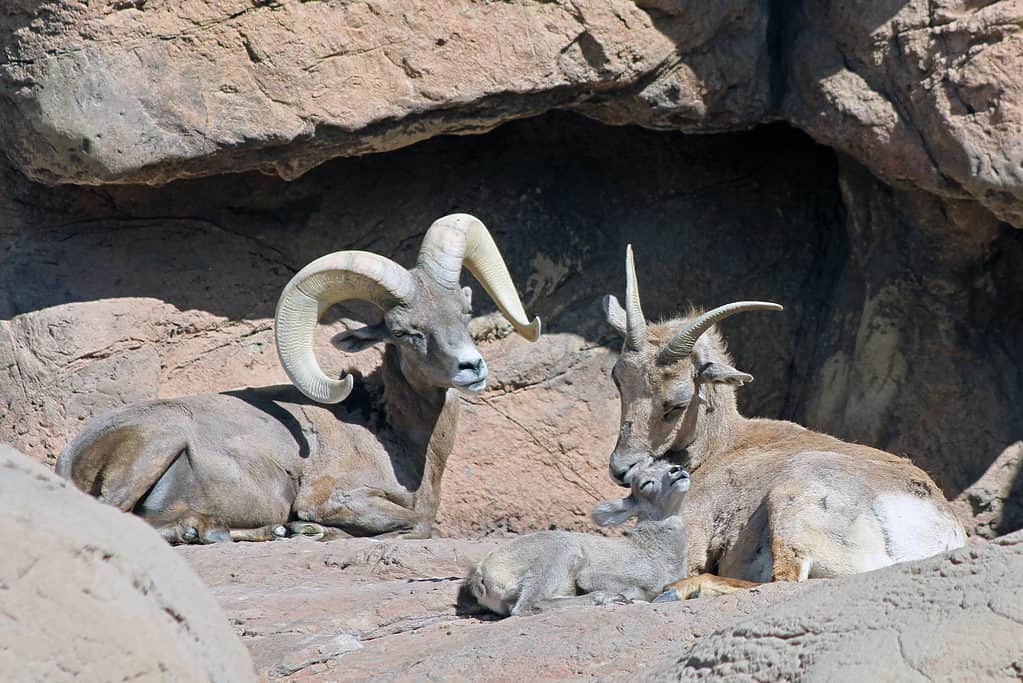
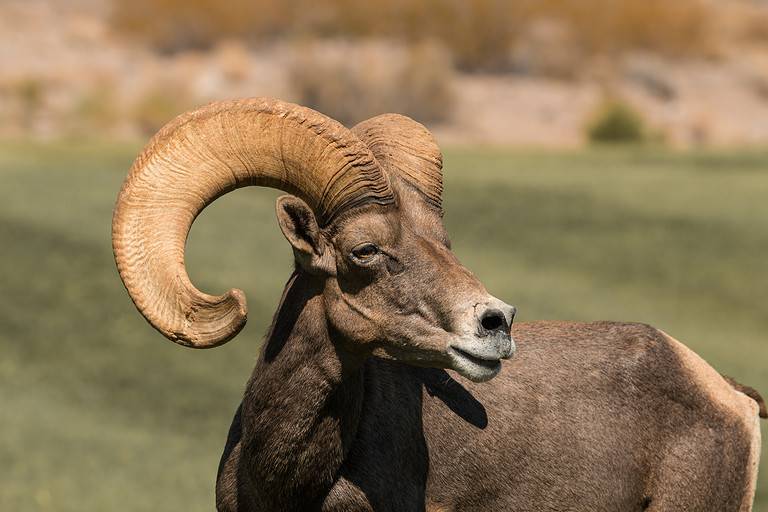
Desert bighorn sheep horns can weigh up to 30 pounds.
©iStock.com/Rainbohm
There are three subspecies of bighorn sheep (Ovis canadensis): Sierra Nevada bighorn sheep (Ovis canadensis sierrae), Rocky Mountain bighorn sheep, and desert bighorn sheep (Ovis canadensis nelsoni). Scientists believe that Siberian snow sheep, an ancestor of bighorn sheep, crossed the Bering Land Bridge into North America around 75,000 to one million years ago. (The Bering Land Bridge once connected Asia with North America.)
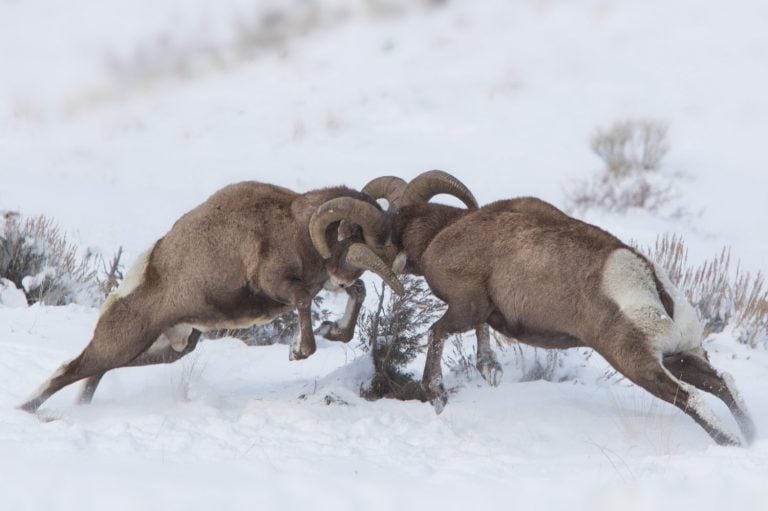
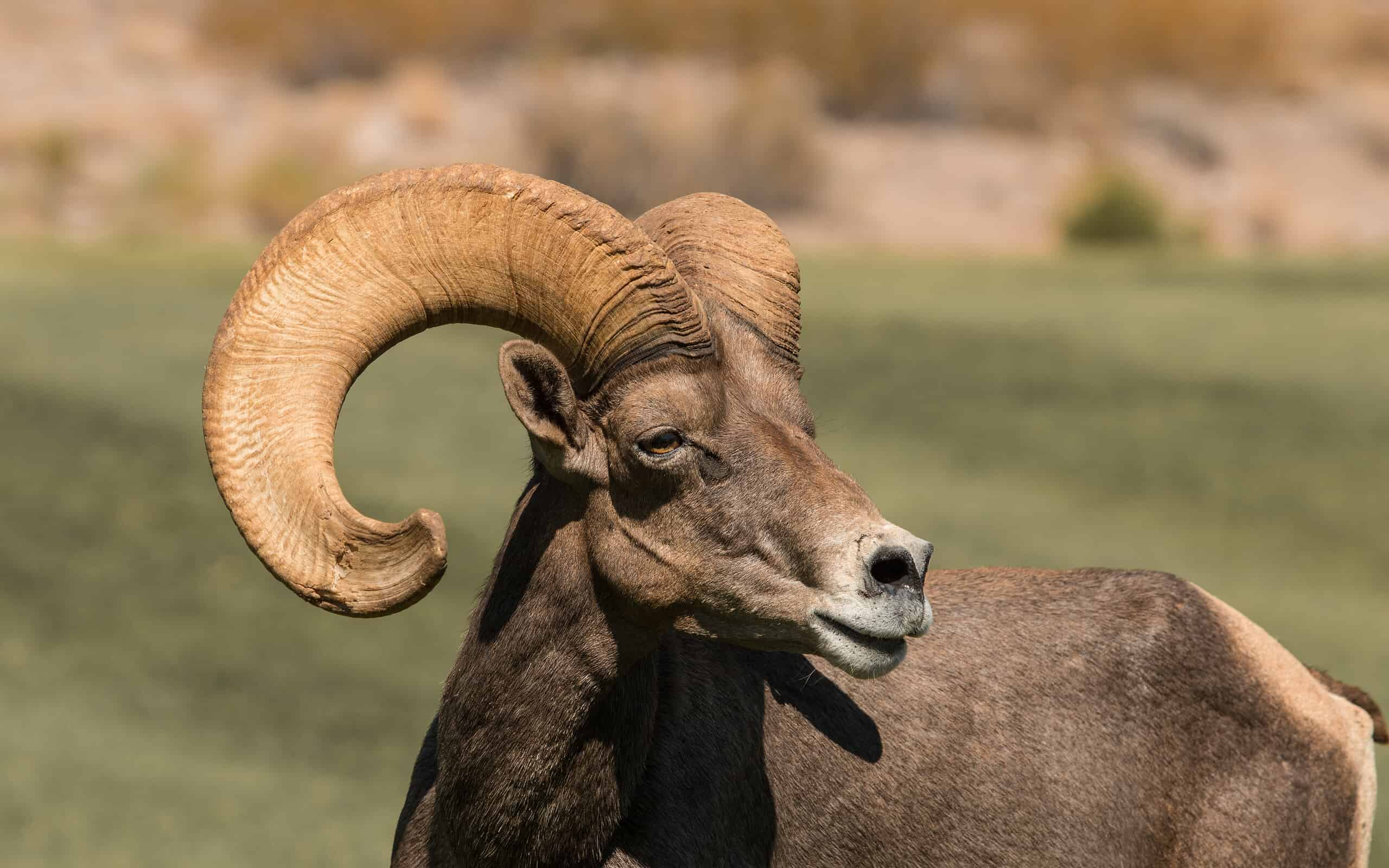
Desert bighorn sheep are a little smaller than the Rocky Mountain subspecies. Desert bighorns weigh around 90 to 180 pounds. Both the rams and ewes have horns, but ewe horns are smaller and thinner. Ram horns are distinct in that they are curved, heavy, and thick. The horns can grow very long as they curl back over the ears of the ram. They may weigh as much as 30 pounds. Rams use their horns to establish dominance and determine mating rights. People have observed ram clashes lasting up to 24 hours. Both ewes and rams use their horns as tools to split open cactus to get to the fleshy pulp on the inside.
Desert bighorn sheep are well adapted to Nevada’s desert environment. Not only can they split open hard plants to access moisture, but their digestive systems also break down tough desert plants to obtain nutrients. They have cloven hooves that are specially shaped to grip the rocky terrain as they climb up and down the mountainsides. The agile sheep can balance on a mere 2-inch ledge and make 20-foot leaps to cross overhangs, which makes climbing to higher elevations during spring and summer in search a vegetation a cinch. These adaptations also help them quickly and easily evade predators like mountain lions and coyotes.
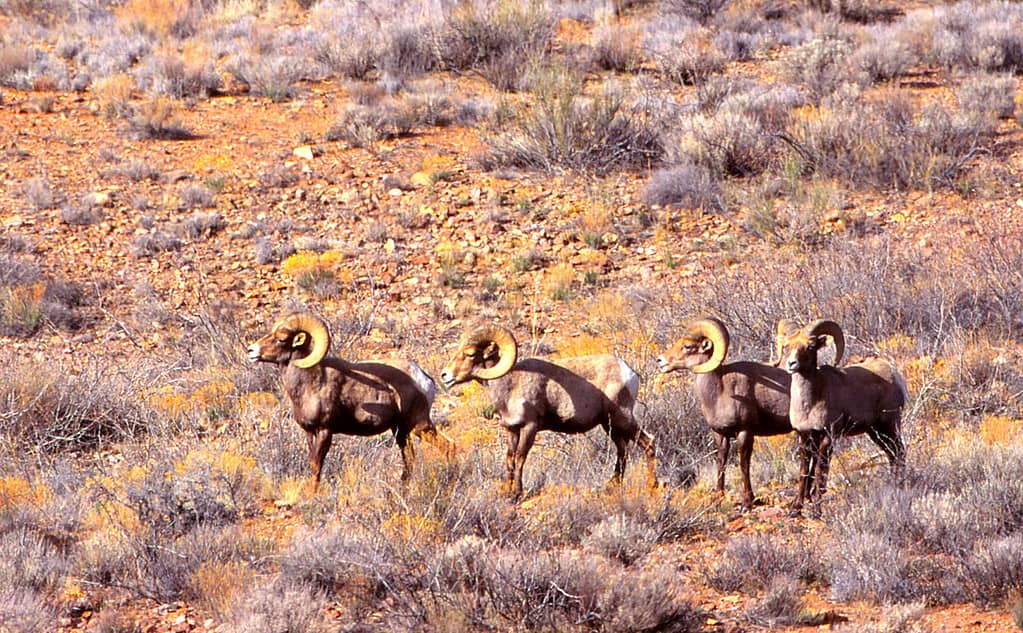
Bighorn sheep are rugged and resilient, able to survive harsh desert conditions.
©Richard Jackson/iStock via Getty Images
Before European settlers arrived in Nevada, millions of bighorn sheep, including all three subspecies, roamed North America. The wild sheep were very important both spiritually and culturally to the indigenous people. Moapa Band of Paiutes Chairman, Greg Anderson, told Friends of Nevada Wilderness just how special the sheep are to the Nuwuvi or Nuwu (Southern Paiute People). “One of our most sacred animals is the Nah’gah (mountain sheep). Legend tells us that they stepped forward to sacrifice their lives so we could survive when times were tough and food was scarce. They were one of the main food sources for the Nuwu. They are our protectors who watch over us through sickness, droughts, and the beauty of song they have gifted us through their power and energy.”
Although desert bighorn sheep numbers are up from their lowest during the 1960s, they still face a number of threats, including disease, climate change, habitat loss, and loss of wildlife corridors due to development. To keep their gene pool healthy, bighorn sheep need to be able to travel far during mating season. But when wildlife corridors are cut off by development, the sheep can get isolated. Bighorn lambs are particularly vulnerable to a type of bacterial pneumonia that can be transmitted from domestic sheep.
Wildlife biologists continue to study wild sheep and their behaviors to help them overcome these threats. Some strategies include creating new wildlife corridors, protecting water supplies, and addressing pneumonia outbreaks.