

B
Species Profile

Bighorn Sheep

Ovis canadensis

Built for cliffs. Crowned with horns.
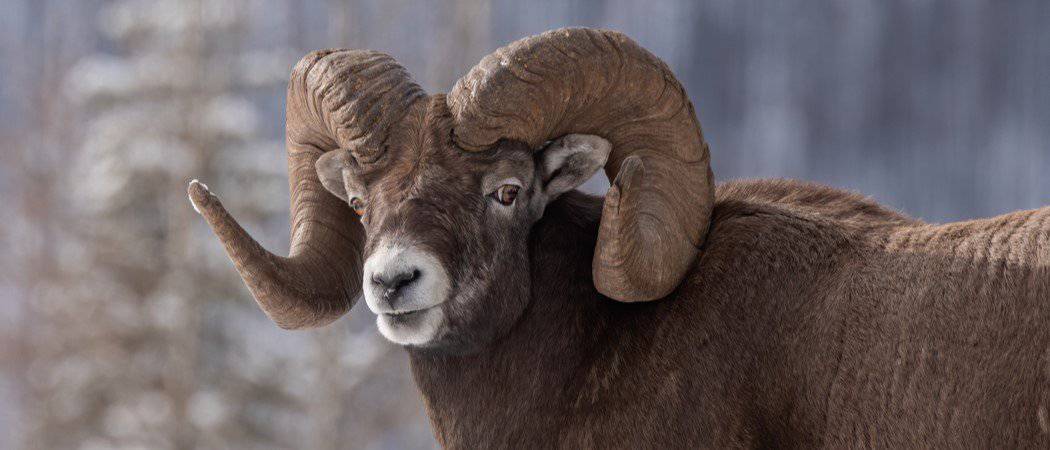
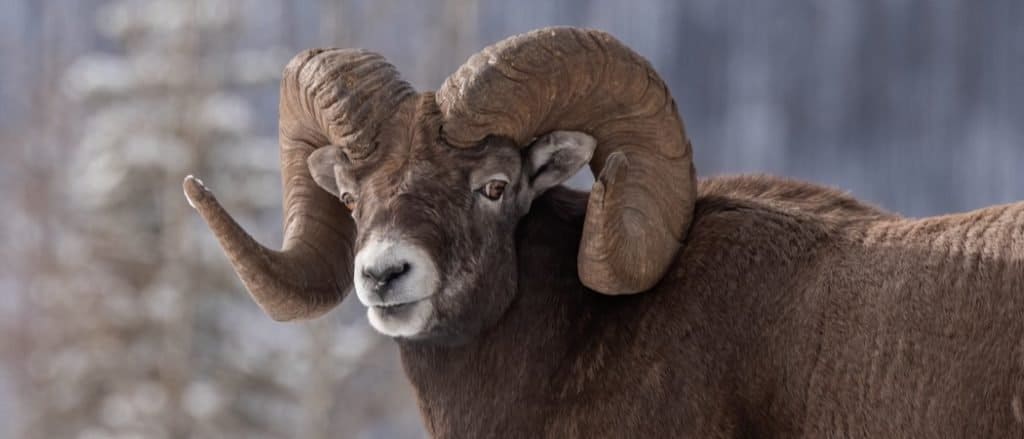
Harry Collins Photography/Shutterstock.com
Bighorn Sheep in Jasper National Park Canada

At a Glance

Wild Species
Also Known As Bighorns, Mountain sheep, Wild sheep
Diet Herbivore
Activity Diurnal+
Lifespan 12 years
Weight 143 lbs
Status Least Concern
Did You Know?

Adult rams typically weigh 58-143 kg; ewes about 34-91 kg, showing strong sexual dimorphism.

Scientific Classification

The bighorn sheep is a large wild caprine native to western North America, known for strong sexual dimorphism and the massive, curling horns of rams. It inhabits rugged mountainous and canyon terrain and is adapted for climbing and escape on steep rock faces.

Kingdom
Animalia
Phylum
Chordata
Class
Mammalia
Order
Artiodactyla
Family
Bovidae
Genus
Ovis
Species
Ovis canadensis

Distinguishing Features

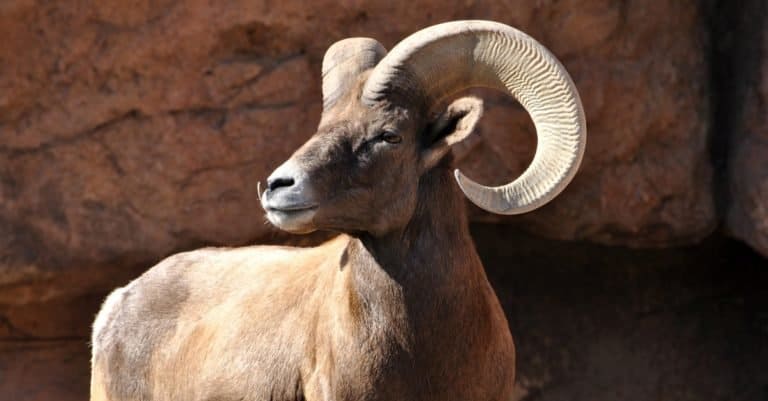
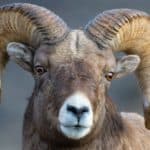
  • Rams with very large, tightly curling horns; ewes with shorter, less-curved horns
  • Stocky build, short tail, cloven hooves adapted for rocky footing
  • Coat usually brown/tan with lighter rump patch; coloration varies by region
  • Behavioral use of steep cliffs and talus slopes as escape terrain

Physical Measurements

Males and females differ in size

Height
♂ 3 ft 2 in (2 ft 11 in – 3 ft 5 in)
♀ 2 ft 8 in (2 ft 6 in – 2 ft 11 in)
Length
♂ 5 ft 9 in (4 ft 11 in – 6 ft 7 in)
♀ 4 ft 11 in (4 ft 7 in – 5 ft 3 in)
Weight
♂ 198 lbs (128 lbs – 315 lbs)
♀ 137 lbs (99 lbs – 170 lbs)
Tail Length
♂ 5 in (4 in – 6 in)
♀ 5 in (4 in – 6 in)
Top Speed
24 mph
32 km/h; runs and climbs

Appearance

Primary Colors
Secondary Colors
Skin Type Bighorn sheep (Ovis canadensis) have mammal skin with thick underfur and longer guard hairs that shed seasonally. Horns are permanent keratin over bone (Bovidae). Cloven hooves have hard walls and rubbery pads for rocky grip.
Distinctive Features
  • Large, stocky caprine built for steep, rocky terrain; compact body and relatively short, strong legs suited to climbing and rapid direction changes on cliffs.
  • Cloven hooves with rough, high-traction pads and a hard rim that 'grips' irregular rock surfaces; dewclaws assist stability on steep/loose terrain.
  • Diagnostic white rump patch visible at distance; tail short (~10-15 cm).
  • Adult Bighorn Sheep (Ovis canadensis) are about 140–200 cm long, 75–105 cm tall at the shoulder; females weigh about 34–91 kg, males about 58–143 kg.
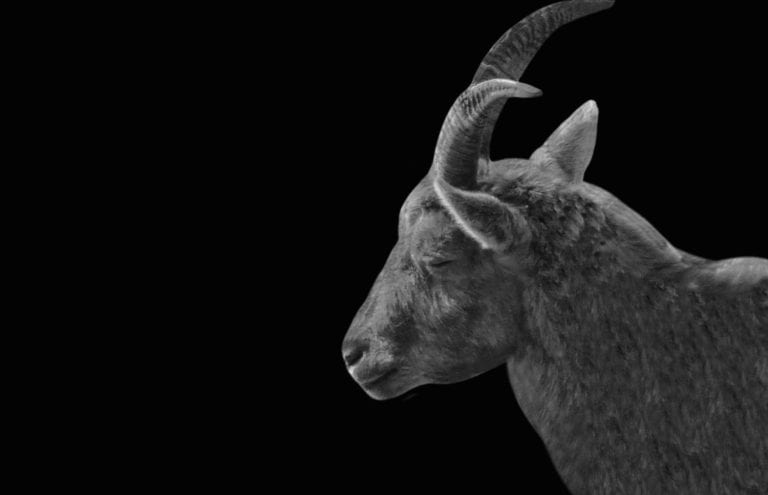
  • Massive permanent horns (both sexes) used in social dominance; rams engage in ritualized head-butting contests, especially during the rut; horn growth forms annual rings that can be used for age estimation in the field.
  • Bighorn Sheep (Ovis canadensis) can get respiratory diseases, especially pneumonia. Risk rises when near or touching domestic sheep or goats; keeping them apart is a common management step.

Sexual Dimorphism

Strong sexual dimorphism in body size and especially horn size/shape. Rams are substantially larger and carry massive, tightly curled horns; ewes are smaller with short, only slightly curved horns.

♂
  • Body mass typically ~58-143 kg (adult rams); heavier neck/shoulders and more robust head.
  • Horns very large and strongly curled; outside curve commonly approaches ~1 m in length in mature rams, with heavy horn bases; used in high-impact head-butting dominance contests during rut.
  • Often darker facial/neck shading in some populations/seasonal coats (variable), accentuating the heavier forequarters.
♀
  • Body mass typically ~34-91 kg (adult ewes).
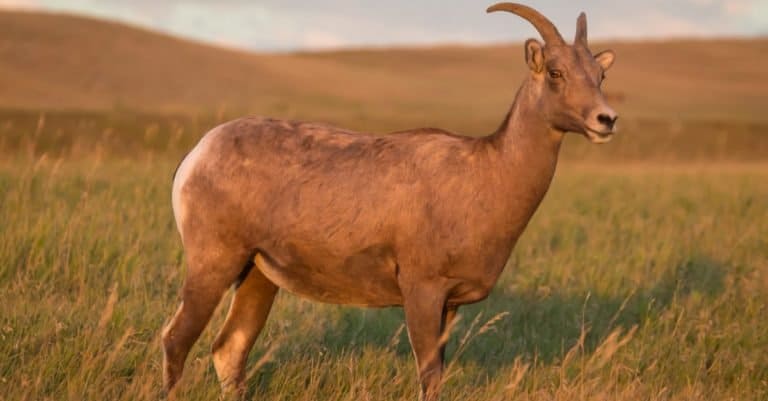
  • Horns much shorter and only slightly curved (typically not forming a full curl); overall head profile more slender.
  • More gracile neck/shoulders; ewes commonly form nursery groups with lambs outside the rut.

Did You Know?

Adult rams typically weigh 58-143 kg; ewes about 34-91 kg, showing strong sexual dimorphism.

Rams' horns can exceed ~1 m along the outer curve; ewes have shorter, thinner, slightly curved horns.

Gestation is ~175-180 days, and ewes usually give birth to a single lamb in late spring.

Hoof structure includes a hard outer rim and a grippy, textured pad that helps them "stick" to steep rock.

Horn growth leaves visible annual rings (annuli) that can be used to estimate age.

Many die-offs are linked to respiratory disease (notably involving Mycoplasma ovipneumoniae), often associated with contact with domestic sheep/goats.

They rely on "escape terrain"-steep, broken cliffs-more than speed to avoid predators.

Unique Adaptations

  • Specialized hooves for rock: a stiff outer hoof wall plus a deformable, high-friction pad improves purchase on small ledges and slanted rock.
  • Massive cervical (neck) musculature and robust skull architecture support heavy horns and reduce injury risk during clashes.
  • Keratin horn sheath over a bony core; horns grow throughout life and record yearly growth rings, aiding age estimation in field studies.
  • Wide-set eyes and strong vision support early predator detection in open, rugged terrain where sightlines matter.
  • Digestive adaptation as ruminants: a four-chambered stomach enables efficient use of variable, often low-quality alpine/desert forage.
  • Behavioral adaptation-escape strategy: rather than outrunning predators on open ground, they specialize in rapid, agile climbing on steep, broken terrain.

Interesting Behaviors

  • Rutting dominance contests: rams assess rivals (posturing, parallel walks) and may escalate to high-impact horn clashes; winners gain mating access.
  • Sex- and age-segregated groups for much of the year: rams often form bachelor bands; ewes and lambs form nursery groups.
  • Escape-terrain selection: individuals preferentially feed near steep slopes and retreat upslope when alarmed, trading forage quality for safety.
  • Seasonal movements: many herds shift elevation and aspect (sunny vs. shaded slopes) to track forage availability and snow conditions.
  • Salt/mineral seeking: bighorns visit natural mineral licks and anthropogenic sources (e.g., road cuts), sometimes increasing human-wildlife conflict risk.
  • Vigilance and "sentinel" scanning: group members alternate feeding with scanning; alarm responses commonly trigger rapid uphill movement to rock faces.
  • Allogrooming and social spacing: grooming and low-level horn contact help maintain social bonds and reduce tension within groups.

Cultural Significance

Bighorn sheep (Ovis canadensis) are a symbol of the American West. Indigenous peoples used them for food, horn, and bone and painted them in petroglyphs and pictographs. Today, conservation focuses on diseases from domestic sheep and goats and on restoring and protecting herds.

Myths & Legends

Across the Great Basin and Southwest, Coyote-and-Bighorn Sheep (Ovis canadensis) stories show Coyote trying to trick or catch the good-climbing sheep, which flee to cliffs he cannot follow, teaching not to be too proud.

In many Western Indigenous stories, Bighorn Sheep (Ovis canadensis) stands for quick feet and ability to keep trying, living on cliffs and talus and teaching people to use terrain and skill, not force, to survive.

Bighorn sheep (Ovis canadensis) pictures in Southwest and Great Basin rock art are linked to hunting luck, rules of respect for game, and stories tying sheep to people, water, seasons, and survival in dry lands.

Naturalists and hunters called the ram "bighorn" for its large curled horns. The scientific name Ovis canadensis became standard after early descriptions, fixing its place in North American natural history stories.

Conservation Status

LC Least Concern

Widespread and abundant in the wild.

Population Increasing

Protected Under

  • CITES Appendix II (international trade regulated, including trophies/specimens where applicable)
  • Managed as a regulated game species under U.S. state and Canadian provincial/territorial wildlife laws (license/season/quotas vary by jurisdiction)
  • Some populations occur within protected areas (e.g., U.S. National Parks/Monuments, National Wildlife Refuges, Canadian National/Provincial Parks), which can limit habitat conversion and reduce disturbance locally
  • U.S. Endangered Species Act protections apply to certain subspecies/distinct population segments (e.g., Sierra Nevada bighorn sheep; Peninsular bighorn sheep DPS), even though Ovis canadensis is not listed rangewide

Life Cycle

Birth 1 lamb
Lifespan 12 years

Lifespan

In the Wild
9–19 years
In Captivity
12–20 years

Reproduction

Mating System Polygyny
Social Structure Aggregation Group
Breeding Pattern Seasonal
Fertilization Internal Fertilization
Birth Type Internal_fertilization

Bighorn sheep (Ovis canadensis) are strongly polygynous. During the rut (usually Nov–Dec) older, larger rams win mates by fighting and guarding ewes. Estrus lasts about 24–36 hours. Gestation ~175 days; spring single lambs. Females breed at 2–3 years; males mostly at 5–7.

Behavior & Ecology

Social Herd Group: 10
Activity Diurnal, Crepuscular
Diet Herbivore New green grasses (early-season graminoids) when available

Temperament

Highly vigilant and risk-averse; strong preference for steep, rugged escape terrain and rapid flight response to perceived threats (Geist 1971).
Gregarious with pronounced sexual segregation outside the rut; social cohesion supports predator detection and coordinated use of escape terrain (Shackleton et al. 1999).
Rams show structured dominance and ritualized aggression; escalated combat (horn clashes) peaks during rut, while outside rut interactions are often threat displays/submission to maintain hierarchy (Geist 1971; Shackleton et al. 1999).
Habituation can occur in some protected/park settings, but overall temperament remains wary; disturbance can increase movement and reduce foraging time (widely reported in bighorn behavioral ecology summaries, e.g., Shackleton et al. 1999).

Communication

Bleats/contact calls Ewes and lambs) used for cohesion and mother-young localization (Geist 1971
Snorts/blows associated with alarm and sudden detection of threats, often triggering group vigilance or flight Geist 1971
Low grunts during close interactions Common in caprines; described for Ovis behavior in Geist 1971; Shackleton et al. 1999
Visual signals: head/neck postures, horn presentation, lateral displays, and approach-retreat movements used to negotiate dominance and reduce the need for full combat Geist 1971
Tactile/agonistic: horn butting/clashing during rut; sparring also occurs at lower intensity, especially among younger rams Geist 1971; Shackleton et al. 1999
Olfactory: scent investigation and flehmen-like responses around estrus; close-range olfactory assessment during rut Typical of caprines; described for wild sheep behavior in Geist 1971; Shackleton et al. 1999
Group movement cues: individuals often follow leaders to bed sites/escape terrain; rapid, coordinated movement acts as a non-vocal communication channel in rugged habitats Geist 1971

Habitat

Mountain Cliff/Rocky Outcrop Alpine Meadow Shrubland Grassland Desert Woodland Coniferous Forest Deciduous Forest +3
Biomes:
Alpine Temperate Forest Temperate Grassland Desert Hot Desert Cold Mediterranean Boreal Forest (Taiga) +1
Terrain:
Mountainous Hilly Plateau Valley Rocky
Elevation: Up to 14107 ft 7 in

Ecological Role

Large-bodied native ungulate primary consumer (mixed grazer-browser) in montane, canyon, and desert mountain ecosystems; important prey base for large carnivores (e.g., Puma concolor) and a driver of vegetation structure through selective grazing/browsing.

Regulates plant community composition via selective grazing and seasonal browsing Contributes to nutrient cycling through dung deposition and localized soil enrichment Provides prey biomass supporting native predators and scavengers Creates/maintains disturbance mosaics (patchy grazing) that can increase small-scale habitat heterogeneity

Diet Details

Other Foods:
Grasses Sedges Forbs Browse Lichens and mosses

Human Interaction

Domestication Status

Wild

Bighorn sheep (Ovis canadensis) are fully wild with no domestication history, unlike farm sheep. People interact through Indigenous use, regulated hunting, wildlife viewing, conservation actions (translocations, habitat protection), research, and limited zoo care. A main issue is disease spillover from domestic sheep and goats (e.g., Mycoplasma ovipneumoniae).

Danger Level

Moderate
  • Trauma from rams or ewes when approached too closely (head-butting, horn punctures/blunt-force injuries), especially during rut or when protecting lambs.
  • Vehicle collisions in canyon/road corridors where sheep cross or salt on roads; risk primarily to motorists rather than intentional aggression.
  • Zoonotic risk is generally low, but wild ungulates can carry pathogens/parasites; handling/carcass processing without proper precautions can pose risk (e.g., bacterial exposure).
  • Indirect public-safety risk from habituation in high-visitation areas leading to close-contact incidents.

As a Pet

Not Suitable as Pet

Legality: Bighorn Sheep (Ovis canadensis) are usually not legal as private pets in most U.S. states and Canadian provinces. You need special wildlife permits; ownership is limited to zoos or strict facilities with secure fencing, vet care, disease-control plans, and inspections.

Care Level: Expert Only

Purchase Cost:
Lifetime Cost: $50,000 - $250,000

Economic Value

Uses:
Regulated trophy hunting/permit revenue Wildlife viewing/ecotourism Conservation funding (auction/raffle tags in some jurisdictions) Cultural value (Indigenous cultural heritage) Research and conservation management employment/services
Products:
  • hunting permits/tags and guided-hunt services (where legal)
  • taxidermy trophies (horns, cape) from legally harvested animals
  • tourism services (park entry, guiding, photography)
  • conservation services (capture/translocation contracts, monitoring programs)

Relationships

Related Species 9

Dall sheep Ovis dalli Shared Genus
Snow sheep Ovis nivicola Shared Genus
Domestic sheep
Domestic sheep Ovis aries Shared Genus
Mouflon Ovis gmelini Shared Genus
Argali Ovis ammon Shared Genus
Urial
Urial Ovis vignei Shared Genus
Goat
Goat Capra hircus Shared Family
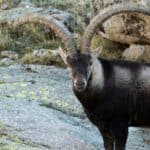
Alpine ibex Capra ibex Shared Family
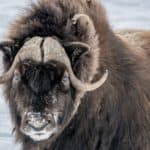
Muskox
Muskox Ovibos moschatus Shared Family

Ecological Equivalents 5

Animals that fill a similar ecological role in their ecosystem

Mountain goat
Mountain goat Oreamnos americanus Bighorn sheep (Ovis canadensis) and mountain goats both use steep alpine and subalpine cliffs to escape predators; males and females exhibit sexual dimorphism and form separate groups. They are similar in size and have overlapping diets, feeding on grasses, forbs, and seasonal browse.
Alpine ibex Capra ibex Old World, cliff-dwelling goat (caprine) inhabiting steep mountains; exhibits strong sexual dimorphism with male–male fights. Performs seasonal altitudinal movements, uses steep escape terrain to avoid predators, and primarily grazes but shifts to woody plants (browse) when grasses are scarce.
Barbary sheep Ammotragus lervia Rocky desert/mountain caprine occupying arid, rugged terrain (canyons, escarpments), using cliffs for predator evasion—functionally similar to desert-adapted bighorn populations. Exhibits a mixed-feeding strategy (grasses and forbs plus browse) and uses sparse water sources.
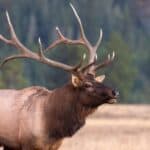
Rocky Mountain elk
Rocky Mountain elk Cervus canadensis Shares western North American mountain landscapes and seasonal migrations between winter ranges and higher summer ranges; overlaps as a large herbivore (grazer/browser) that can compete for forage in some systems, although elk use less extreme escape terrain than bighorn sheep.
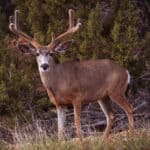
Mule deer
Mule deer Odocoileus hemionus Common co-occupant of western canyon and mountain ecosystems; both rely on rugged topography for predator avoidance and exhibit seasonal diet shifts between forbs and shrubs. Mule deer are more browse-oriented and use a broader range of habitats than bighorn sheep.

Bighorn sheep live in the United States, Canada, and Mexico.

There are different subspecies of bighorn sheep, but they all have big horns. Some live in the desert while others live in the mountains. The facts are that at least two populations of bighorn sheep may soon be extinct.

5 Incredible Facts About Bighorn Sheep!

  • These sheep live in the Rocky Mountains and the Sierra Nevada ranges of the United States, Canada, and Mexico.
  • Bighorn sheep rams use their horns to ram each other to determine dominance, but they seldom hurt each other.
  • They live in same-sex herds.
  • Bighorn sheep put on a second coat over their summer coats to stay warm in the winter.
  • Dall sheep have the same scientific name as bighorn sheep.
Scientific Name

The scientific name of these sheep is Ovis canadensis. They belong to the Artiodactyla order, including pigs, sheep, goats, cattle, deer. These sheep belong to the Bovidae family and the Caprinae subfamily.

This scientific name covers two species. The Bighorn sheep and the Dall sheep whi live in Alaska and northern Canada.

Evolution

About 750,000 years ago, during the Pleistocene period, the ancestors of bighorn sheep wandered away from  their pastures in Siberia. Reaching the Bering Land Bridge, they crossed it entering North America. The newcomers continued their journey until at last their range extended to Mexico’s northwest.

One hundred and fifty thousand years later, the bovids became a separate entity from those left behind in Siberia, snow sheep. They went on to further separate into two groups, one which lived in northern Canada and Alaska, otherwise known as Dall sheep, and their relatives to the south which extended from Southern Canada to Northwestern Mexico, bighorn sheep.

However, it is worth noting that the demarcation between both groups has since blurred since both populations have mixed with each other throughout history.

Types

Bighorn sheep can be divided into three subspecies:

  • Ovis canadensis sierrae – This subspecies lives in California’s Sierra Mountain range.
  • Ovis canadensis nelsoni – This subspecies lives in the desert in the Southwestern United States and Northwestern Mexico
  • Ovis canadensis canadensis – This subspecies lives in the Rocky Mountains in Canada and throughout the Northwestern United States.

Appearance
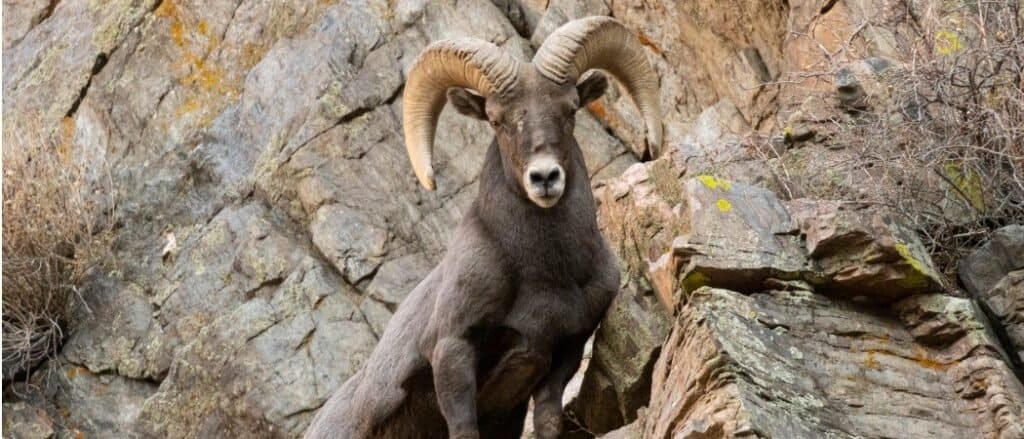
Animals in Colorado

Bighorn sheep are the same height as a kindergartener at the shoulder

These sheep vary a little by subspecies. Rocky Mountain sheep are the biggest wild sheep in North America. Males weigh about 300 pounds. These animals stand about 42 inches tall at their shoulders or about the same height as a typical kindergartener. They grow to be about 5.5 feet long.

Females are smaller than males. They generally stand about 33 inches tall, which is about the same size as an average 2-year-old. Ewes typically weigh around 135 pounds, or almost as much as a small English Mastiff bitch.

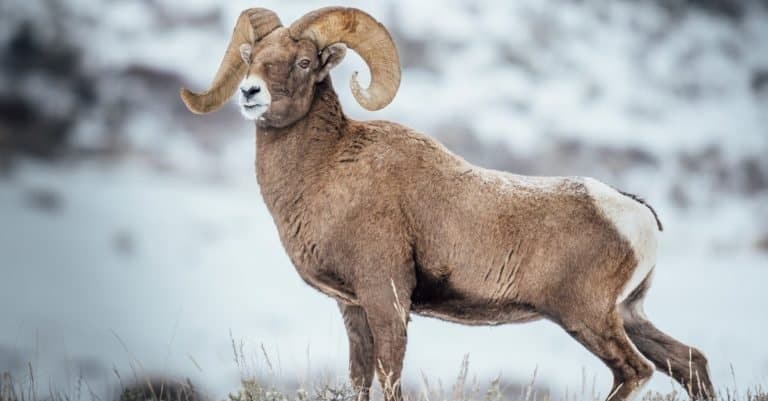
Rocky Mountain sheep have a greyish-brown coat that turns darker in the summer. Additionally, Rocky Mountain sheep which live in Canada usually have a darker coat than those who live in the United States. These animals have a white patch on their rump and their inner legs and muzzle.

These animals have several adaptations that help them survive. They develop a thick winter coat over their summer coat. Their hooves are made in two parts, which allows them to keep their footing in mountainous terrain. Each part contains a soft inner material helping them walk on uneven ground. Their eyes are broad set, and they can see up to 1 mile, which can help them spot a predator while it is far away.

Desert sheep are usually smaller than Rocky Mountain bighorn sheep. Rams typically weigh about 220 pounds and stand about 40 inches tall. The coat on these animals is tan as opposed to brown.

Like Rocky Mountain sheep, they have cloven hooves so that they can climb in rough terrain. They have a complex digestive tract designed to get all nutrients possible out of the plants that they eat.

Generally, Sierra Nevada bighorn sheep have a large variation in their coloring. In the summer, they may appear dark brown while they appear almost white in the winter. This is because the sun bounces off the snow, fading their coats. Rams usually weigh about 180 pounds while ewes weigh about 125 pounds.

Sierra Nevada sheep have different adaptations helping them survive. These sheep migrate to higher elevations as the temperatures warm to get the best nutrition from the plants they eat. The rump muscles are very well developed, which helps them climb steep terrain better.

Horns
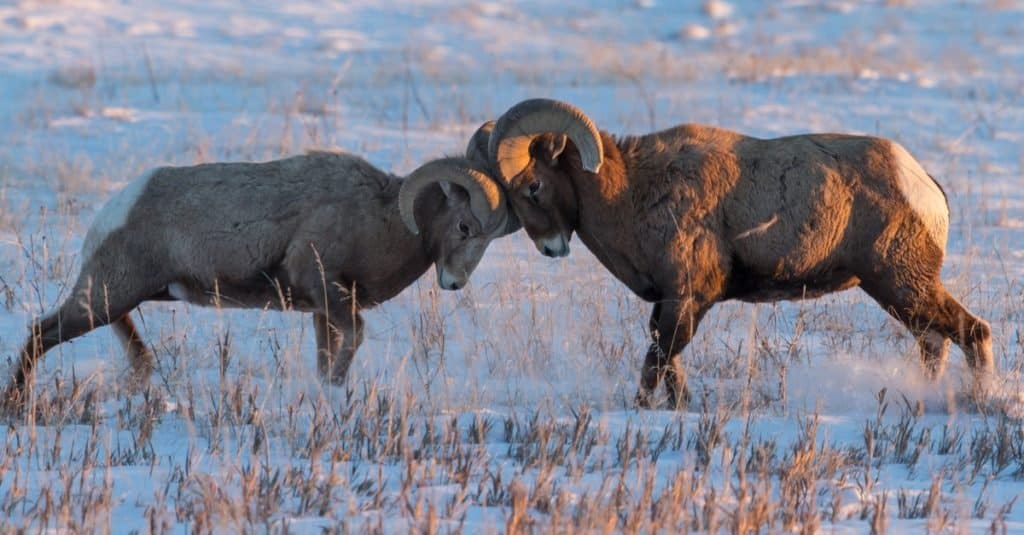
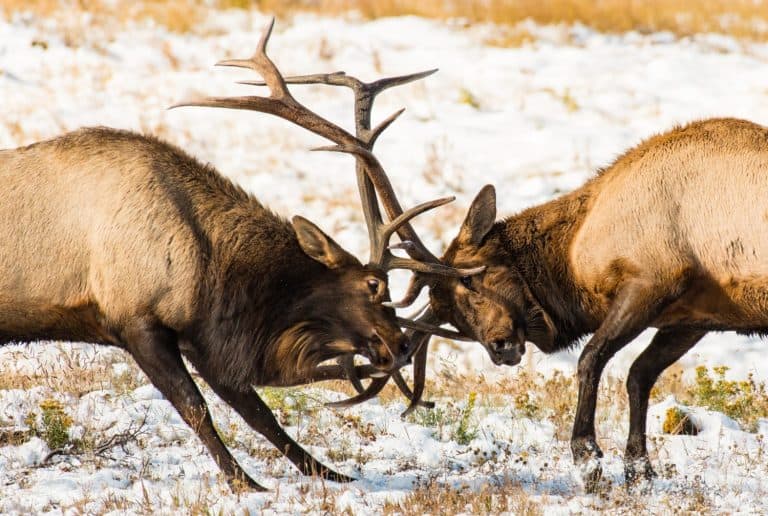
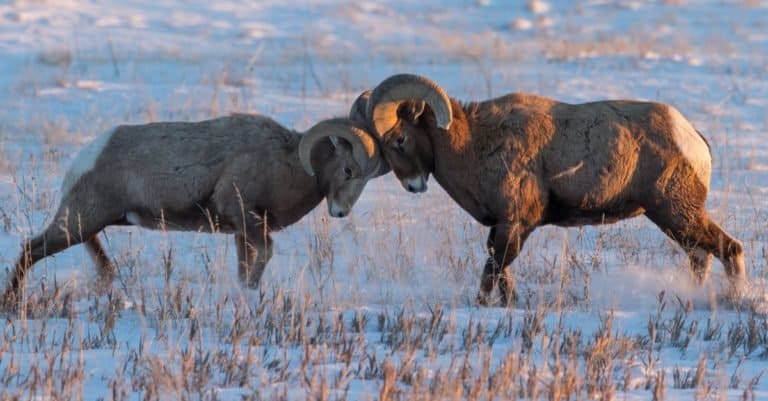
Two Bighorn sheep rams battling during the mating season on a snow-covered prairie.

The horns of bighorn sheep can weigh as much as 30 lbs

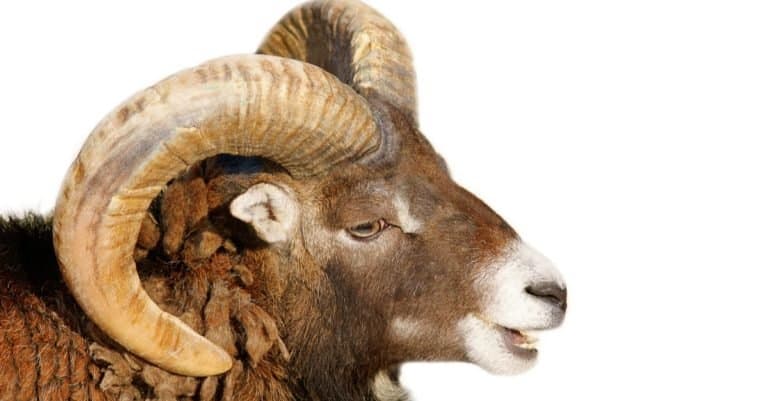
One of the most notable features of these sheep is their horns. Both rams and ewes have horns that grow throughout their lives. Horns are made up of bone covered by keratin, which is the same substance found in human hair and fingernails.

Rams usually have bigger horns than ewes. Researchers believe that the horns can weigh up to 30 pounds. Animals with bigger horns are generally older, and they are usually the dominant ones in their herd.

Desert sheep horns are smaller and have a tighter curl than those of the other species.

Behavior
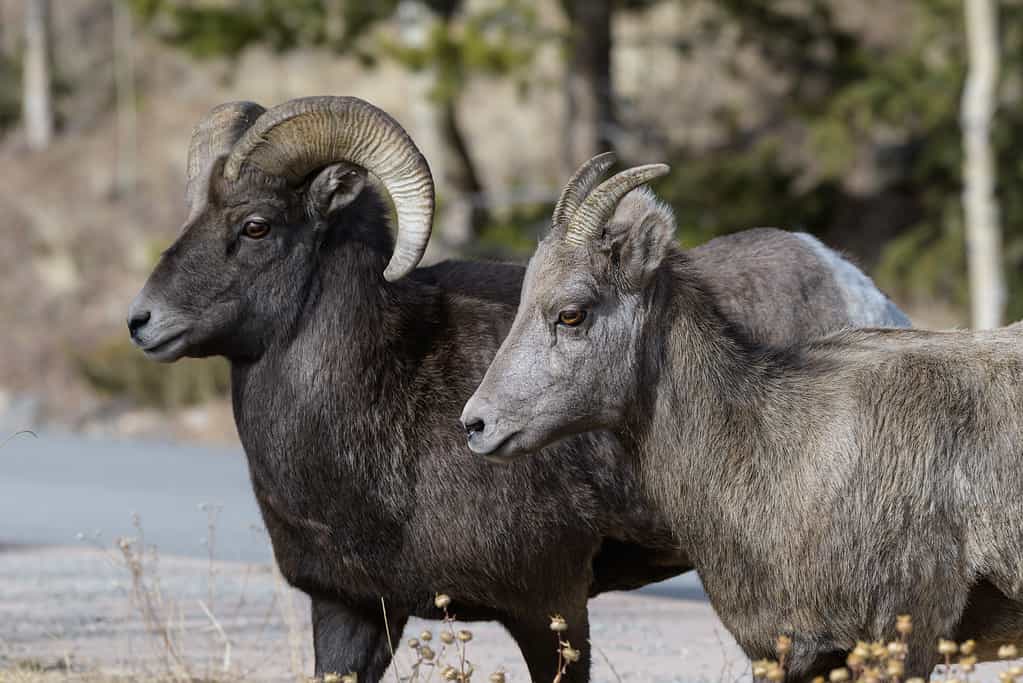
Wild Bighorn Sheep in the Rocky

Bighorn sheep are diurnal and each same-sex herd is ruled by a dominant male or female

These sheep live in same-sex herds. While herds of up to 100 individuals have been reported, it is more common to have eight-to-10 individuals in a herd. Each herd has a dominant member who makes decisions for the entire herd, like a queen or a king. While young rams go off to find their male herd, usually before their first birthdays, most ewes stay and become members of their mother’s herd.

Rams butt horns with each other for domination. When they are fighting, they may charge at each other at speeds up to 40 miles an hour, although 20 miles per hour is more common. This fighting may continue for up to 24 hours, but usually, neither bighorn sheep is hurt.

These sheep are diurnal animals that are most active at sunrise and sunset. This tends to be particularly true of desert bighorn sheep who tend to try to escape the heat of the day.

Habitat
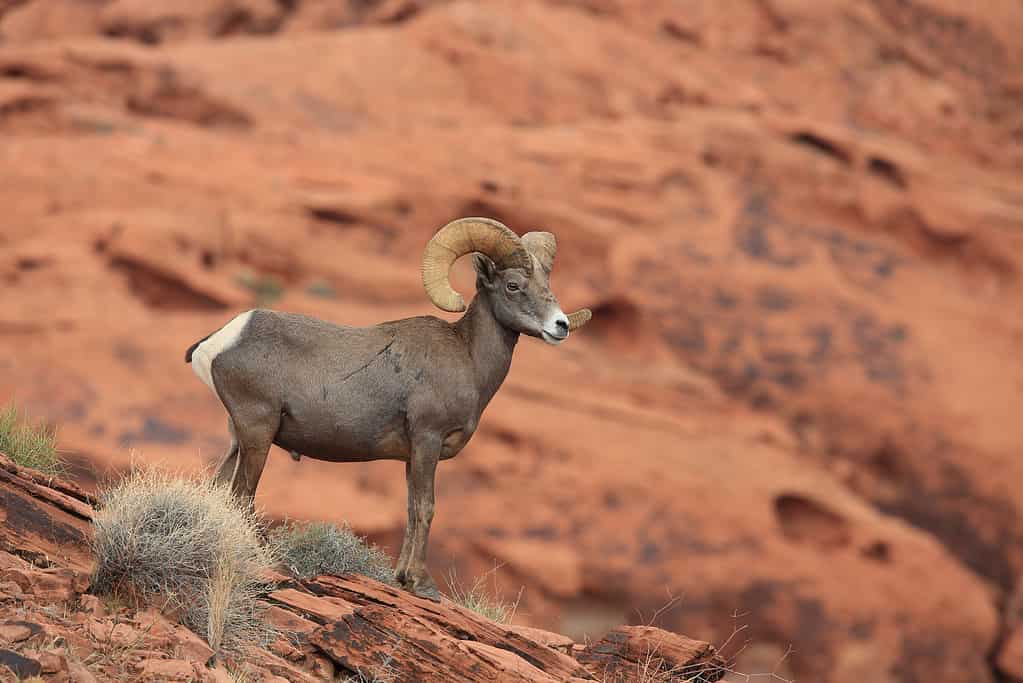
Bighorn sheep Valley of Fire Nevada

Bighorn sheep are pretty versatile in terms of their choice of habitat and may live in desert, prairie, or alpine meadows

The habitat of these sheep varies by subspecies. Rocky Mountain bighorn sheep live in the Rocky Mountain range. You can see them in alpine meadows, woodlands, mixed-grass prairies, and shrub-bunchgrass. They primarily live near bodies of water with high salt content.

Desert sheep ranges across the Mojave Desert, Sonoran Desert, Great Basin Desert, Chihuahua Desert, and the Colorado Plateau.

Sierra Nevada bighorn sheep live in upland, montane, and alpine habitats with rocky areas along the eastern slope of the Sierra Nevada Mountain range. They prefer to live in elevations from about 4,000 feet to approximately 14,500 feet. They tend to live at higher elevations during the summer months and lower elevations during the winter months.

Diet
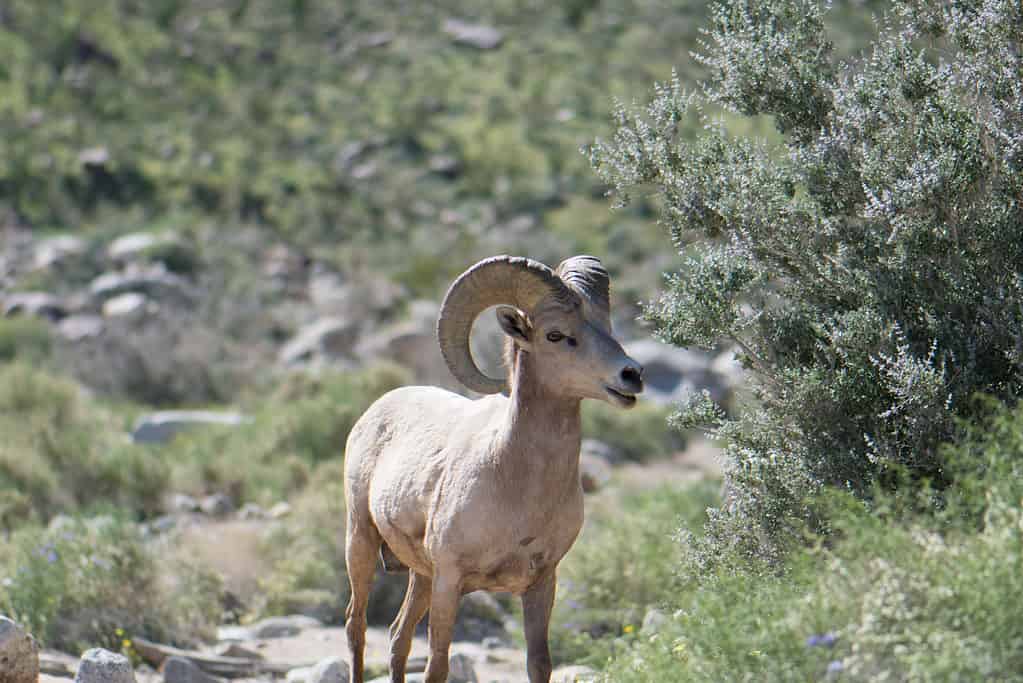
Desert bighorn sheep (Ovis canadensis nelsoni) in California

The diet of bighorn sheep depends on their habitat and the season of the year

All of these sheep eat plants. Rocky Mountain and Sierra Nevada bighorn sheep dine on grasses, clover, and sedges during the summer months. When the weather turns colder, their diet consists of more woody plants, like willow and sage.

Desert sheep eat plants throughout the year. They have been observed eating holly and cactus.

Predators and Threats

Coyotes, golden eagles, mountain lions, bears, and Canada lynx are predators of bighorn goats. This is especially true of lambs. Ewes often give birth to their young on narrow mountain ledges to try to protect them in mountainous areas.

One of the biggest threats to these sheep is domestic sheep raising. When domestic sheep are allowed to graze on the same land, it cuts down on available food. Furthermore, herds of domestic sheep have introduced bacteria to bighorn sheep that their system cannot handle. Therefore, whole herds have been wiped out.

While there are not many of these sheep living in Washington, this is mainly a problem in that state. Sick domesticated sheep carry the Mycoplasma bacteria. When the bighorn sheep get the bacteria, then it causes them to get pneumonia.

Reproduction and Life Cycle
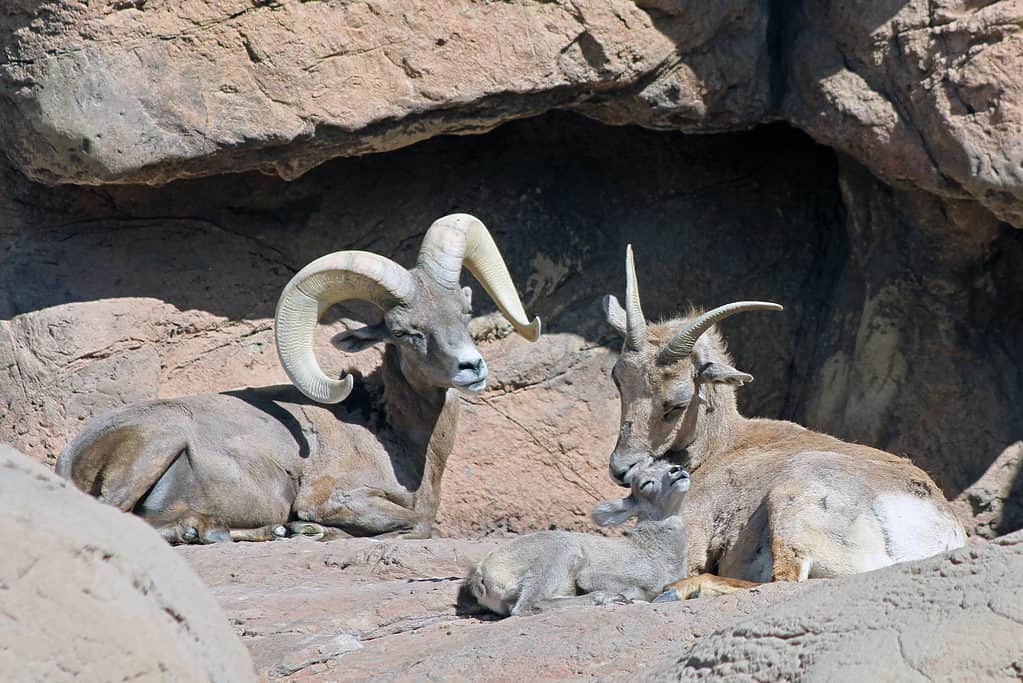
Desert bighorn sheep (Ovis canadensis nelsoni) family

Bighorn sheep are capable of eating grass by the time they are two weeks old

The gestation period is 5.5-to-6 months in these sheep. Most lambs are born to Rocky Mountain and Sierra Nevada sheep from late April to late June. In desert bighorn sheep, most lambs are born between January and April, but they may give birth throughout the year.

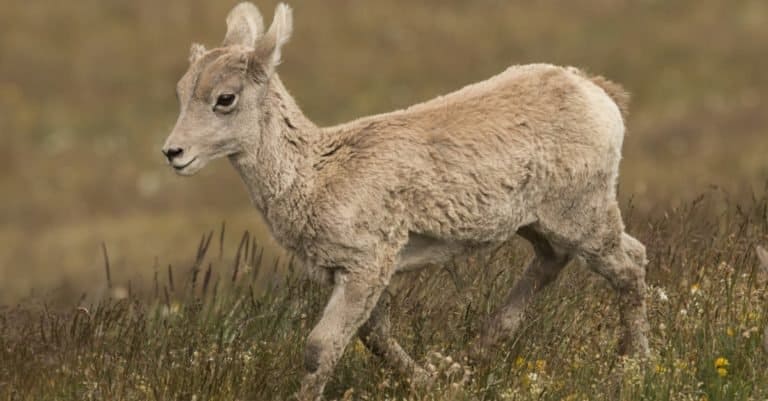
Baby lambs can climb almost as well as their mothers when they are just two days old. They are eating grass and other plants by the time they are two weeks old. From 1-to-7 months, bighorn sheep are weaned. Ewes do not reach their full size until they are about 5.5 years old while rams do not reach their full size until they are about 6.5 years old.

The oldest Sierra Nevada bighorn sheep was 17 years old when officials saw it for the last time. Generally, the Sierra Nevada and Rocky Mountain bighorn sheep live to be about 15 years old while desert bighorn sheep live to be about 10 years old.

Population
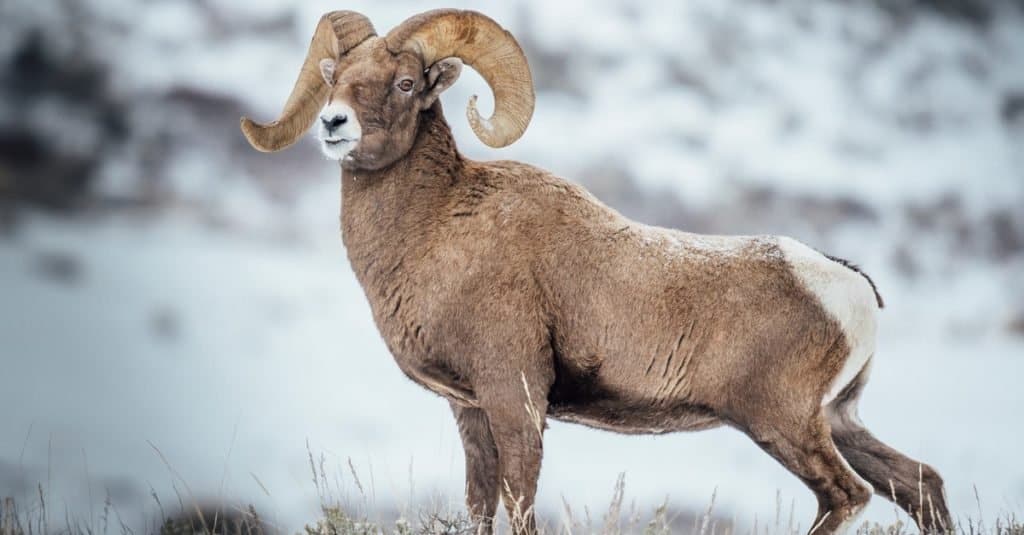
Beautiful rocky mountain bighorn sheep ram in the snow.

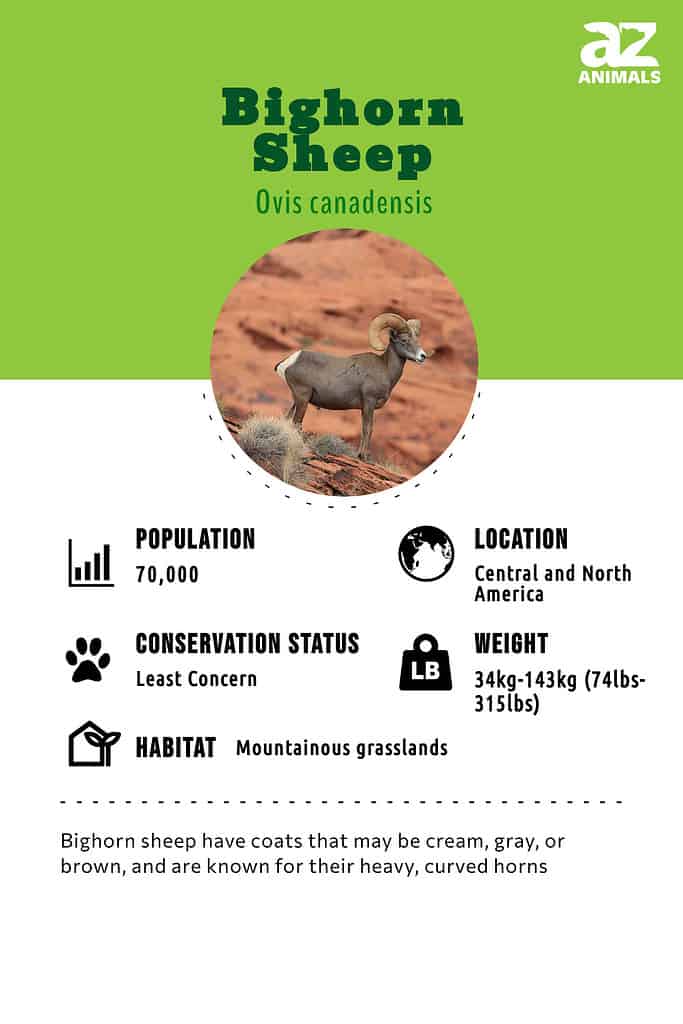
Bighorn sheep are considered to be of “Least Concern” by the IUCN

There are approximately 70,000 bighorn sheep in the world. The vast majority of those are Rocky Mountain bighorn sheep. Officials fear there are less than 800 Sierra Nevada bighorn sheep.

They think that there are even fewer Peninsula bighorn sheep. This group of desert sheep lives in San Diego, Riverside, and Imperial Counties in California.

View all 453 animals that start with B

Sources

  1. Rocky Mountain National Park / Accessed June 21, 2021
  2. Center for Biological Diversity / Accessed June 21, 2021
  3. Animalia / Accessed June 21, 2021
  4. San Diego Zoo / Accessed June 21, 2021
  5. Bighorn Institute / Accessed June 21, 2021
  6. Bioweb / Accessed June 21, 2021
  7. National Park Service / Accessed June 21, 2021
  8. U.S. Fish & Wildlife Service / Accessed June 21, 2021
  9. National Wildlife Federation / Accessed June 21, 2021
  10. California Department of Fish & Wildlife / Accessed June 21, 2021
  11. Defenders of Wildlife / Accessed June 21, 2021
  12. Northwest Sportsman / Accessed June 21, 2021
  13. The National Wildlife Federation / Accessed June 21, 2021
Dana Mayor

About the Author

Dana Mayor

I love good books and the occasional cartoon. I am also endlessly intrigued with the beauty of nature and find hummingbirds, puppies, and marine wildlife to be the most magical creatures of all.
Connect:

Thank you for reading! Have some feedback for us?


Bighorn Sheep FAQs (Frequently Asked Questions)

Bighorn sheep have several special characteristics, but they are best known for the big horns that they grow throughout their lives. These horns can weigh up to 30 pounds.

These animals also have special hooves. Their hooves are made in two parts, allowing them to walk on thin ledges better. Additionally, the middle of the hoof is soft to walk on the uneven ground better.

Bighorn sheep who live in cold climates have a unique coat. When it starts to get out, they grow a second coat over their summer coat. The dense winter coat helps to keep them warmer, and they will lose it in the spring.