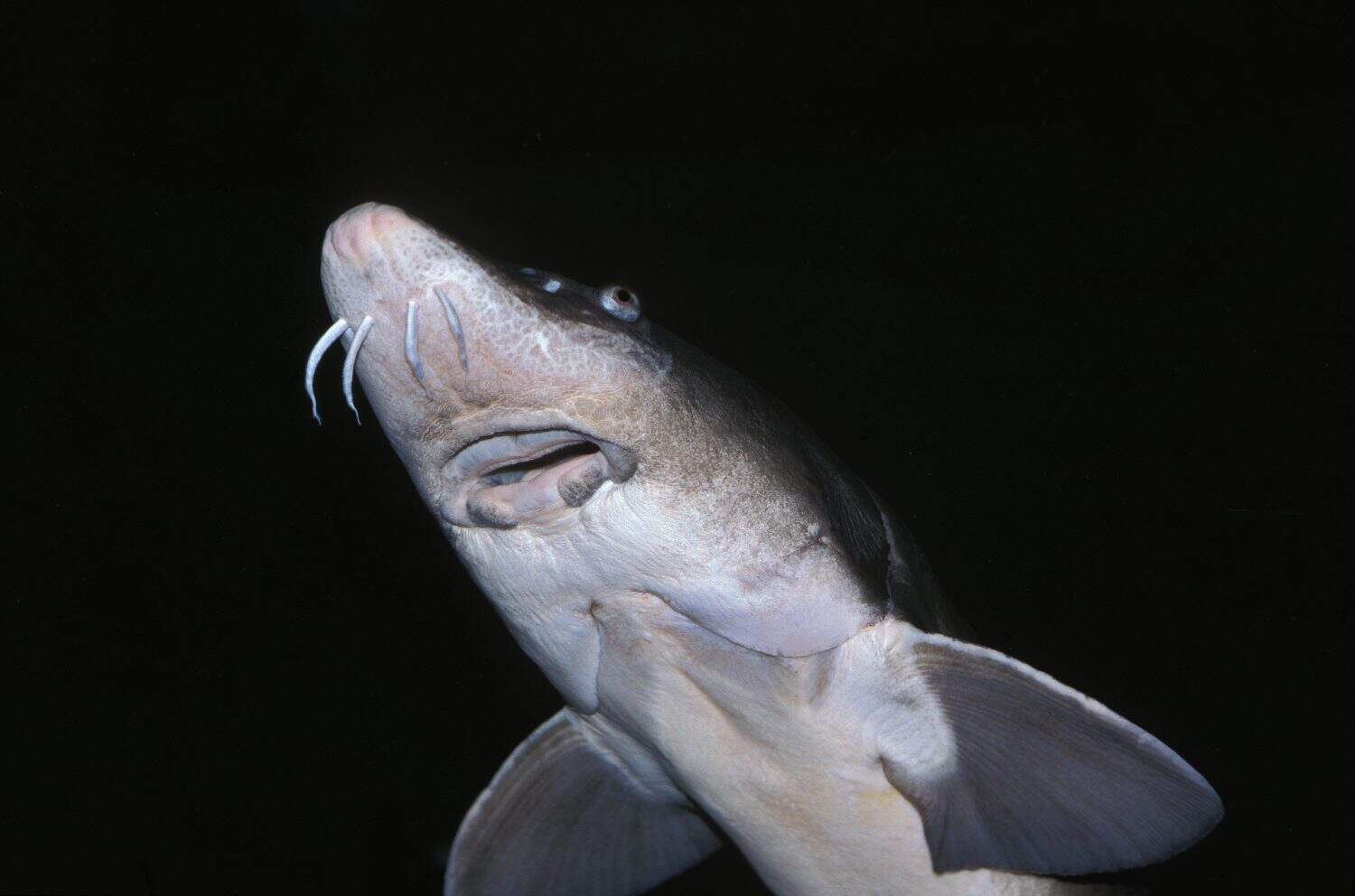

Twenty-five years ago, the Tennessee Aquarium embarked on a conservation program to help bring back a locally extinct freshwater fish. Lake sturgeon had been extirpated (locally extinct) in Tennessee since the 1970s. Conservation programs have been working for decades to reintroduce the fish to Tennessee’s freshwater lakes and rivers.
Today, after a 25-year program of restocking sturgeon to the Tennessee River, organized by the Tennessee Aquarium, the conservation status of the fish is no longer endangered. The classification has been changed to threatened. “I’m positive the downgrading is a result of the Southeast Lake Sturgeon Working Group’s effort,” Dr. Anna George, the Aquarium’s vice president of conservation science and education, said in a press release.
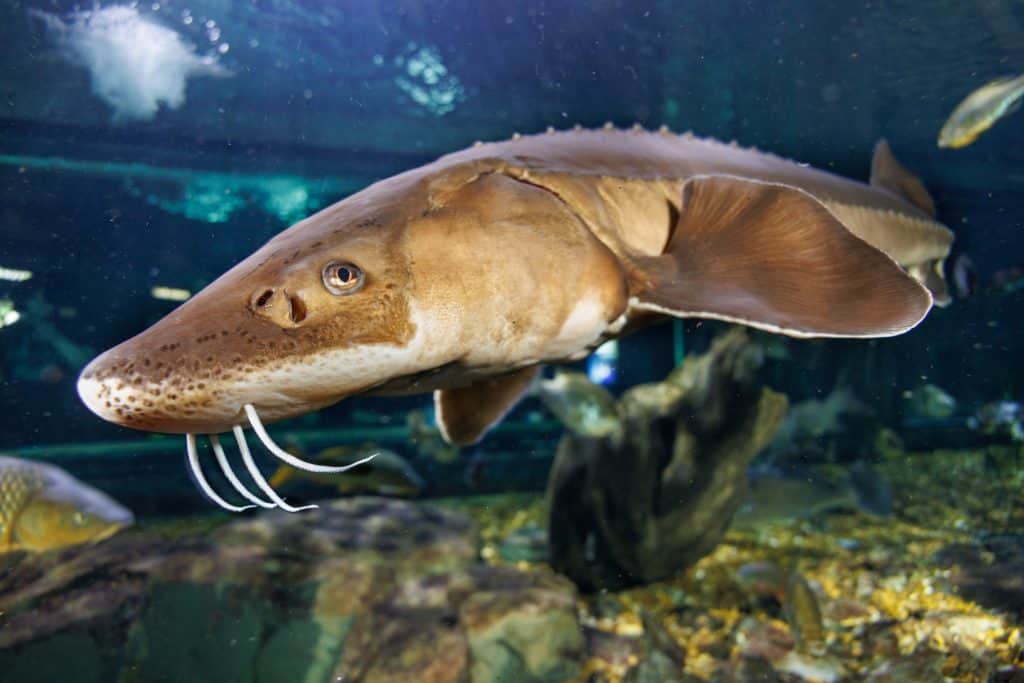
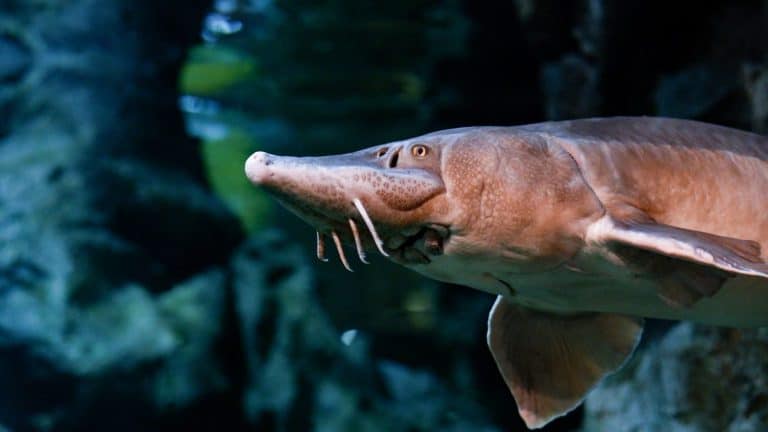
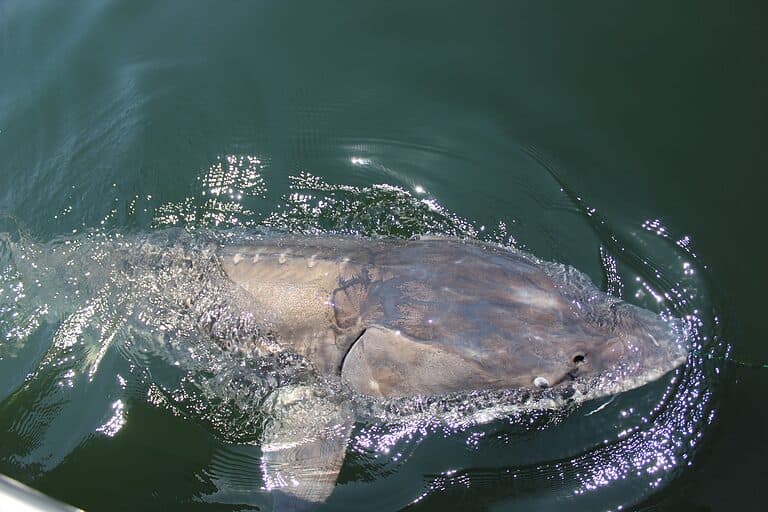
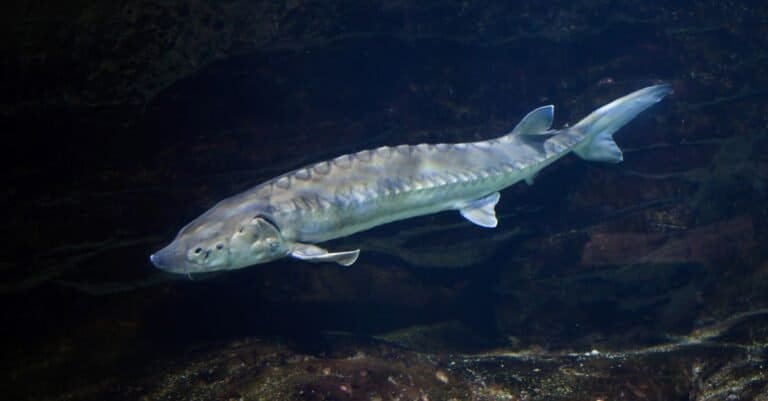
Lake sturgeon are one of the largest freshwater fish in North America.
©Doug Strickland/Tennessee Aquarium
500 Juvenile Lake Sturgeon Were Released in the Tennessee River in Downtown Chattanooga
The Tennessee River is 652 miles long and is the largest tributary of the Ohio River. The Tennessee Aquarium has released juvenile lake sturgeon into the waterway for the past 25 years. On October 23, 2025, in honor of the 25th anniversary of the program, the aquarium held a public event to release 500 juvenile lake sturgeon. The little fish were only about 6 to 12 inches long.

Students from Hixson High School helped release juvenile lake sturgeon into the Tennessee River from Coolidge Park in Chattanooga, Tennessee.
©Doug Strickland/Tennessee Aquarium
Community leaders and invited guests, including 46 students from Hixson High School, gathered at the water’s edge to release the fish into the river. “Sturgeon releases are really, really exciting days,” Dr. George said in a statement. “One of the joys of working at the Tennessee Aquarium is we get to invite a lot of the public to come with us.”
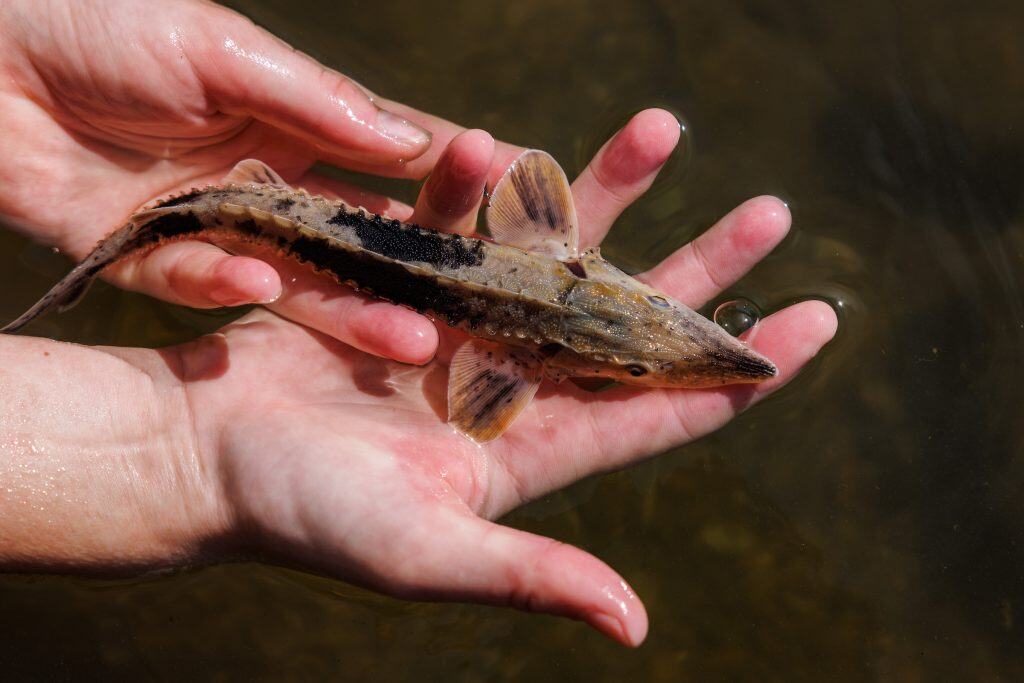
The juvenile lake sturgeon that are released into the river are about 6 to 12 inches long.
©Doug Strickland/Tennessee Aquarium
About Lake Sturgeon
Lake sturgeon (Acipenser fulvescens) is one of the largest freshwater fish in North America. This ancient-looking fish evolved at least 150 million years ago during the Jurassic period. They typically grow to around 4 to 6 feet long, weighing around 30 to 80 pounds. However, the largest and oldest lake sturgeons we know about can reach up to 7 feet long and weigh 200 to 300 pounds. Amazingly, some lake sturgeons are known to live up to 150 years of age.
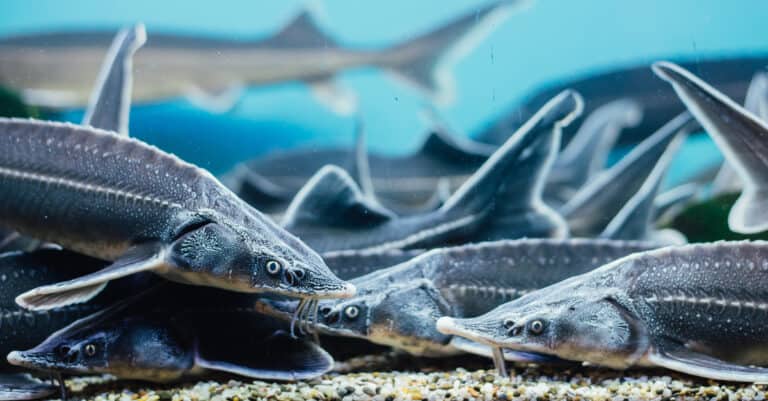
The lake sturgeon can be identified by its long body and paddle-like snout. At the end of its snout are sensitive barbels which help it find food. They don’t have teeth to chew their food, but suck it up with large, extendable mouths. Lake sturgeon eat a varied diet of small aquatic animals such as snails, mussels, crayfish, insects, other small fish, and fish eggs.
Where Do Lake Sturgeon Live?
Lake sturgeon live in Canada and across 24 states, including Tennessee. Although they are named lake sturgeon, these fish can be found in both rivers and lakes. They spend most of their lives in lakes and coastal systems. But when it’s time to reproduce, they swim to rivers and lay their eggs. After the fish hatch, they will stay in the river for around one year until they migrate back out into the lake. Once there, they remain in the lake until it’s time for them to make their river journey for reproduction.
Why Were Lake Sturgeon Endangered in Tennessee?
Lake sturgeon do not reproduce until they are at least 10 to 30 years old. Because their reproductive cycle can take decades, replenishing diminished populations is a challenging and lengthy process. Lake sturgeon were overfished during the late 1800s and early 1900s. By the late 1900s, the harvest was regulated, but the damage had been done, and the fish was considered locally extinct in some regions. Lake sturgeon had been locally extinct in Tennessee since the 1970s. In 1998, the Southeast Lake Sturgeon Working Group was formed to help re-establish the fish in the state.
How Can This Conservation Program Help Other Endangered Animals?
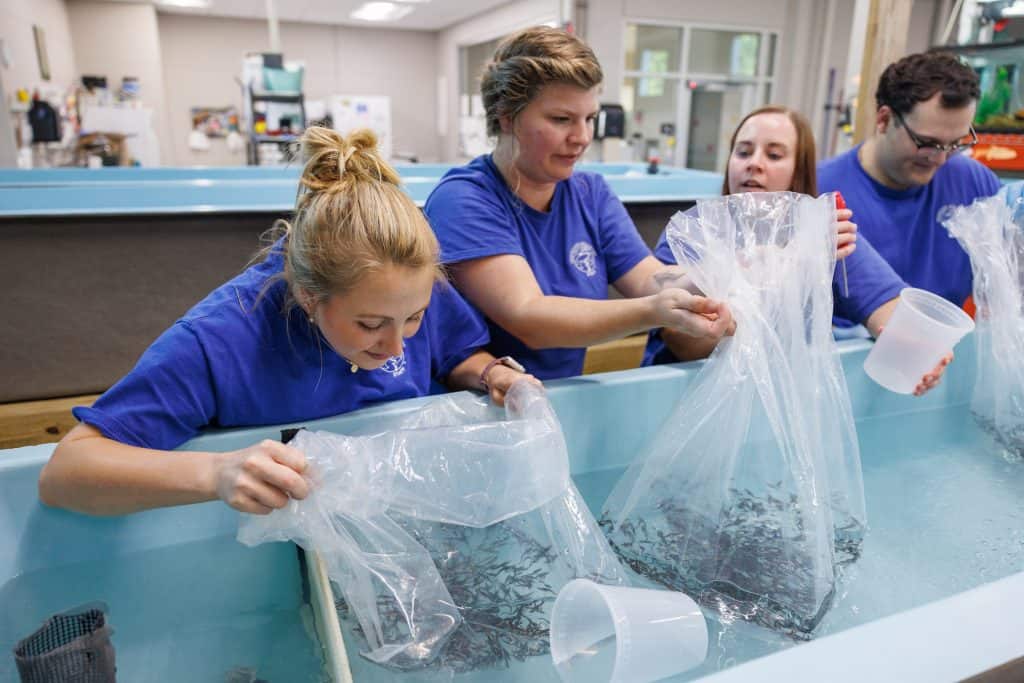
The baby lake sturgeon arrive at the Tennessee Aquarium Conservation Institute, where they are well cared for until they are big enough to be released to the river.
©Doug Strickland/Tennessee Aquarium
The end goal for the program is for the lake sturgeon population to become self-sustaining. Dr. George explained, “When that happens and we have an appropriately managed recreational fishery, we’ll have this recipe for success that we can apply to other animals that we might have lost through carelessness.” She continued, “That’s what’s really so great to me about the Lake Sturgeon. It’s not just about the fish; it’s about everything.”
Watch the Tennessee Aquarium’s Lake Sturgeon Live Stream
Want to see this ancient fish in action? Check out the Tennessee Aquarium’s Lake Sturgeon Cam for a live view of lake sturgeon swimming around their tank.