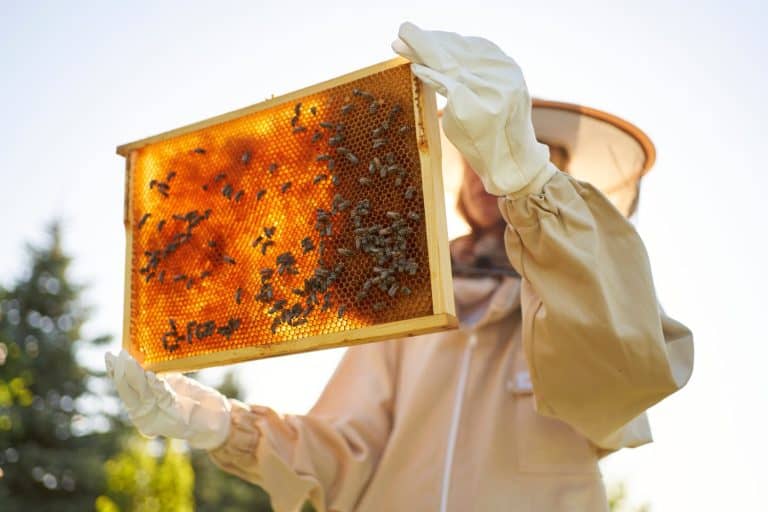

There are between 115,000 and 125,000 beekeepers in the U.S. during any given year. According to the National Honey Board, most of these keep less than 25 hives as a hobby. Commercial beekeepers typically have upwards of 300 hives, which is enough to produce honey on a massive scale. When it comes to the hives that house honey, it’s not a one-size-fits-all practice. There are many hives that beekeepers might choose, and each serves a different purpose for the bees that inhabit it. They come in all shapes and sizes, and this is your complete guide to using each one.
The Incredible History of Beekeeping
The practice of beekeeping originated in ancient Egypt. The earliest records date back to around 2400 BC, when the Egyptians worshipped bees as messengers from the gods. They were the first to learn how to keep bees domestically and built hives from clay and straw. In return, they received honey that was used in rituals, baking, and even embalming. However, early Egyptian hives were problematic and detrimental to the bees. To reach the honeycomb, the hives needed to be destroyed, which effectively killed the colony at the same time.
As beekeeping evolved, so did the makeshift hives from each culture. Instead of sticking with clay or hollowed-out logs, the Ancient Romans created a crude wooden hive. This was not only more efficient regarding raising bees, but also made the practice slightly more ethical.

©Martin Pelanek/Shutterstock.com
Medieval Europe witnessed the rise of straw hives, commonly referred to as straw skeps. These were used primarily by monasteries, where monks used the honey for desserts and mead. While effective, these cone-shaped hives would not be the final result of centuries of beekeeping. During the Renaissance, the beehive underwent further refinement, but it was not yet perfected. The 19th century gave way to the Langstroth hive, a model that’s still used today. This featured sturdy walls with wooden layers in between, mimicking a wild beehive and making it easy to reach the honeycomb.
Langstroth: Layers of a Beehive
What makes a beehive so effective is its structure. Each layer mimics the levels of a real beehive, where honeycomb is formed. A classic hive, the Langstroth, is laid out in these sections from top to bottom:
- Outer and Inner Cover: This is the “roof” of the hive, which keeps it protected from the elements.
- Honey Supers: These two box sections hold hollow mesh frames, which are what beekeepers remove to collect honey.
- Queen Excluder: This is an optional hive part, and keeps the queen and drones away from the honey, allowing only worker bees to pass through.
- Deep Super or Hive Body: This section of the hive is where bees are raised and where honey production begins.
- Bottom Board: This is where the bees enter the hive, working upward toward the supers.
- Stand: The piece of wood on which the hive sits for stability.
This is a fundamental layout and doesn’t include things such as straps and weights, which protect the hive from predators. Some hives also feature an entrance reducer, which prevents intruders from entering the hive. This build is specifically designed for the Langstroth hive and is the most popular type used by both professional and hobbyist beekeepers in North America.
Top Bar Hive
The top bar hive is simple and does not feature a vertical build like the Langstroth. Ancient beekeeping methods inspired it, but the modern top bar hive design was developed in the 20th century. Its design is still used around the world today. In some ways, this hive is easier to maintain because it’s not stacked. Therefore, beekeepers only need to take off the cover and lift out each hexagon-shaped frame to harvest honey.
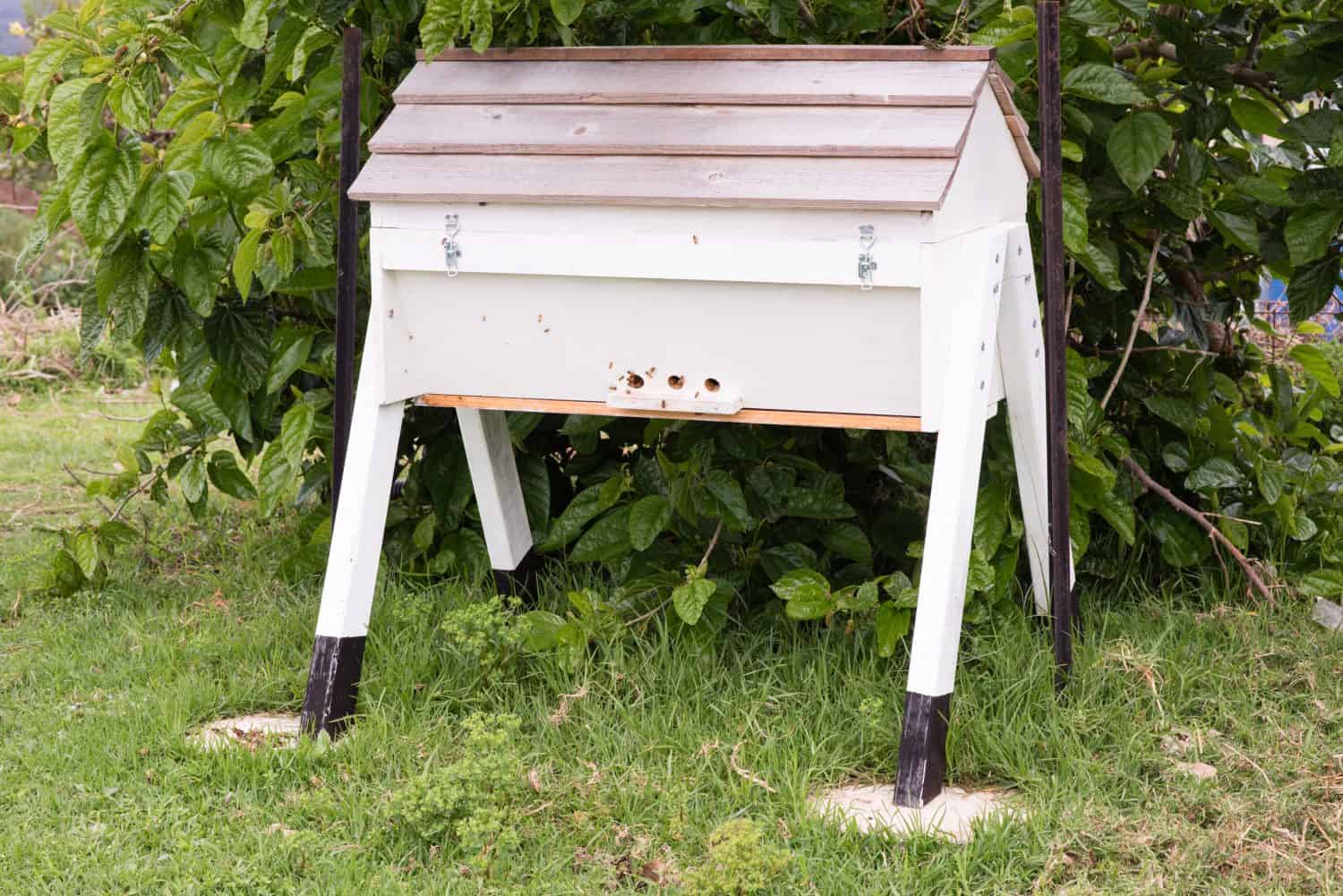
Pictured is a handmade Kenyan top bar beehive.
©Natalie Board/Shutterstock.com
The pro of this hive is that it doesn’t disturb the colony as much as a box (Langstroth)-style would. Harvesting honey is a less intrusive process and does not require lifting multiple levels and pulling them apart. This hive also doesn’t need extra parts, unlike the Langstroth, but that means routine maintenance and upkeep from beekeepers to maintain production. It’s a simplistic design, but it takes more work in the long run.
Warré Hive
Émile Warré developed this hive in the early twentieth century, and it remains in use today. Its design is somewhere between the Langstroth and the top bar, with a vertical design and easy-to-remove frames. It features a roof and stackable boxes beneath, each with square-shaped frames that are fixed in place. The bottom features a base similar to the Langstroth, which allows bees to enter the hive. The hive works from the top down, with the uppermost box, known as the “quilt,” holding wood shavings and other insulating materials.
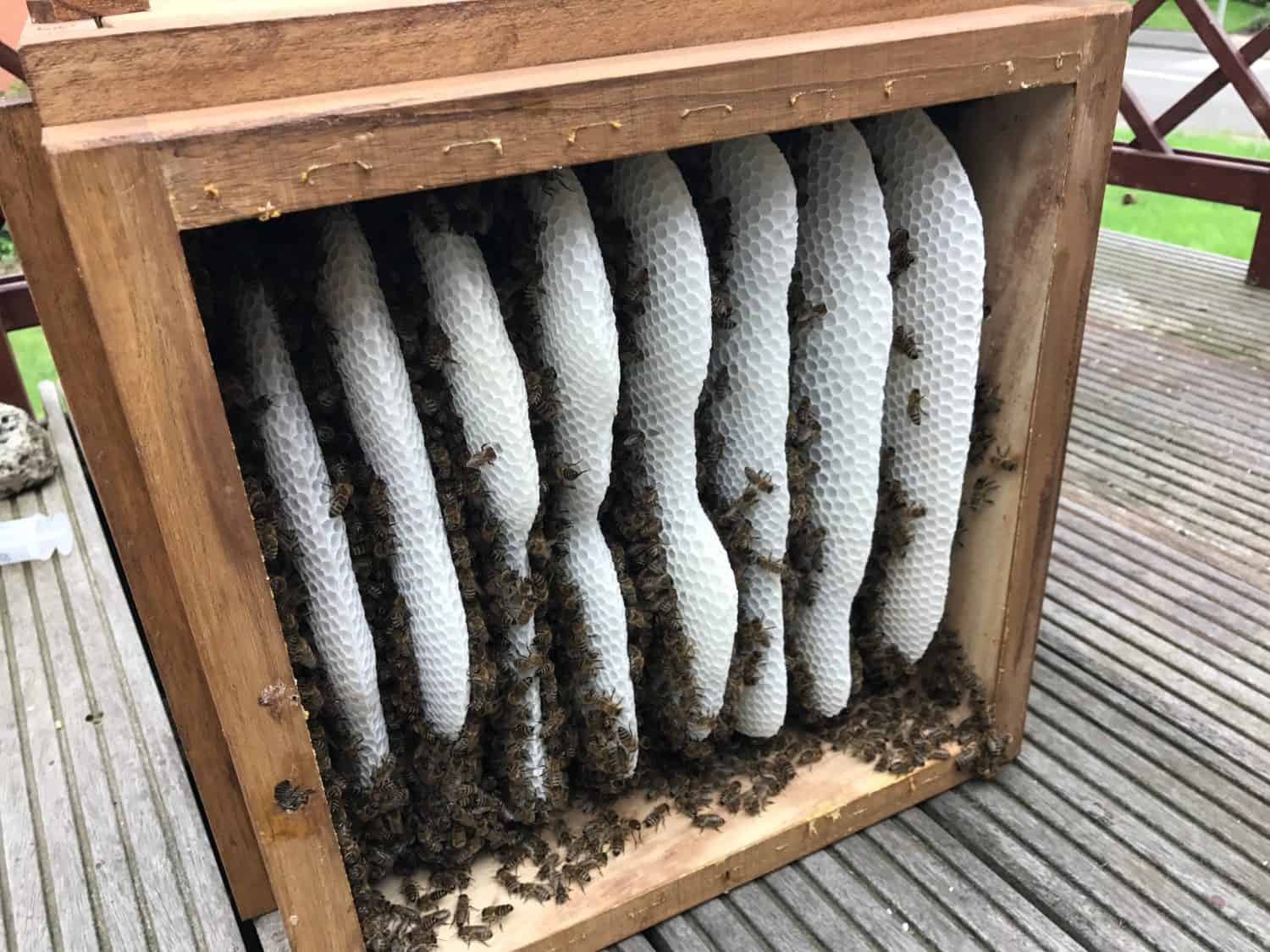
The Warré hive is a fixed-comb hive used by modern beekeepers.
©Bernhard Heuvel/Shutterstock.com
The pros of this hive type lie in its simplistic design and the capacity for multiple frame chambers. The insulated top layer also benefits the bees, providing them with shelter and warmth from the elements. However, the fixed frames in traditional Warré hives limit beekeepers when conducting hive inspections. Since some frames can’t be removed, it’s not possible to inspect the hive entirely. This means problems might be missed, and honey extraction is slightly more complex.
Flow Hive
While the Langstroth, Warré, and top bar hives are the most popular, several others are used by beekeepers. The Flow Hive is one of them, and features a unique design intended to simplify honey harvesting. This hive is relatively new and was designed in 2015 by Australians Cedar Anderson and his father, Stuart Anderson, who crowdfunded the idea. While the structure of the hive is wooden, it contains plastic combs that are filled by honeybees. A mechanism inside this hive breaks wax caps, allowing honey to flow freely out of spouts fixed to the bottom of each comb.
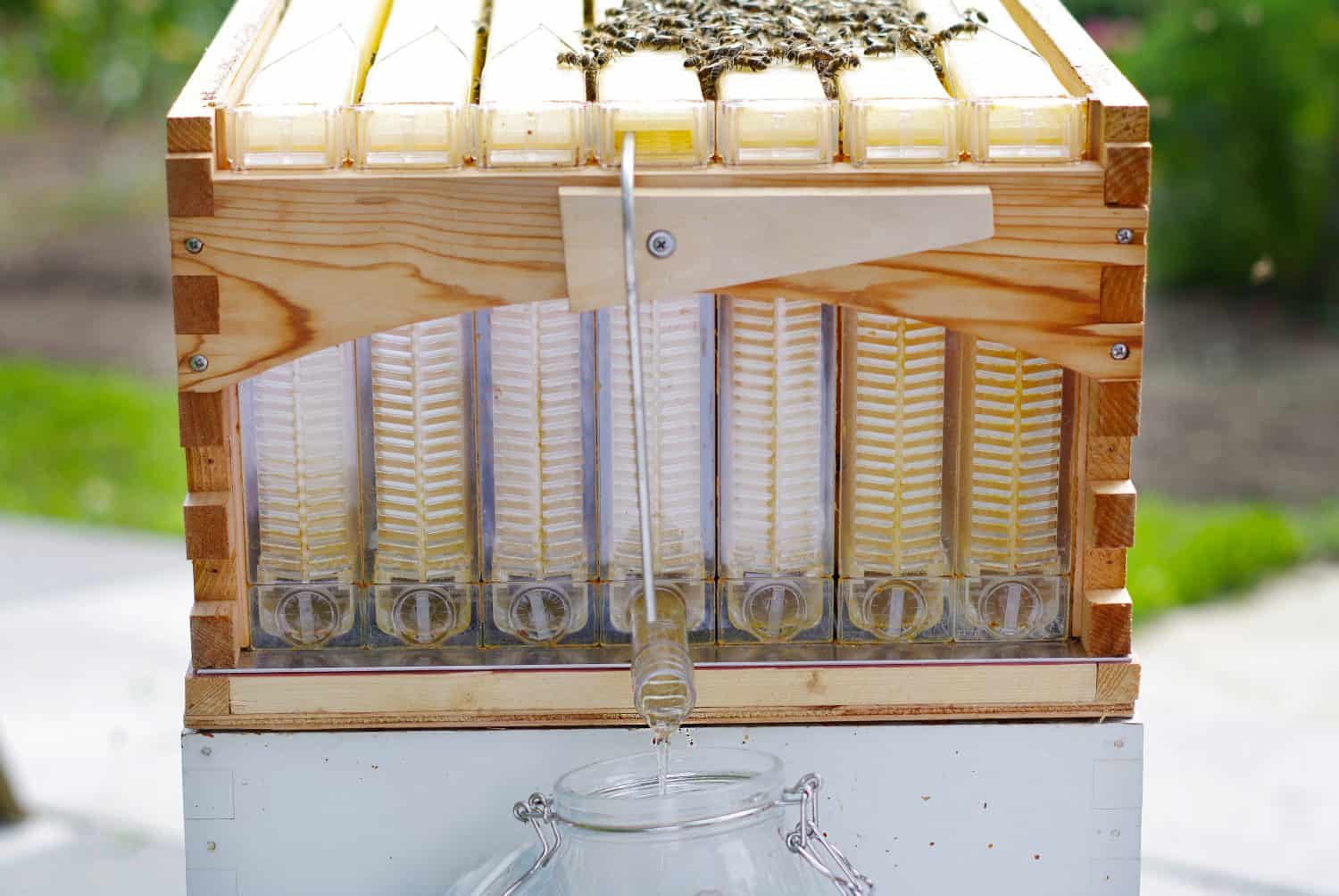
One big selling point on a flow hive is that it makes minimal mess when extracting honey.
©Brett Holmes/Shutterstock.com
The advantages of this hive type include minimal mess during honey harvesting and a clean hive for the bees. The plastic used is BPA-free, making it suitable for food contact and safe for bees. However, the cons lie in the price of this hive. Its advanced design and multi-material construction make it pricer than other hives.
Layens Hive
During the 19th century, Georges de Layens, a French beekeeper, created the Layens hive. These hives were designed with cost and production in mind, which are two reasons they’re still used today. The hive features a horizontal frame design rather than a vertical one. Frames are lined up within a large box and can be removed easily to harvest honeycomb. The Layens hive is still popular in Europe and is often used in the U.S. by small beekeepers.
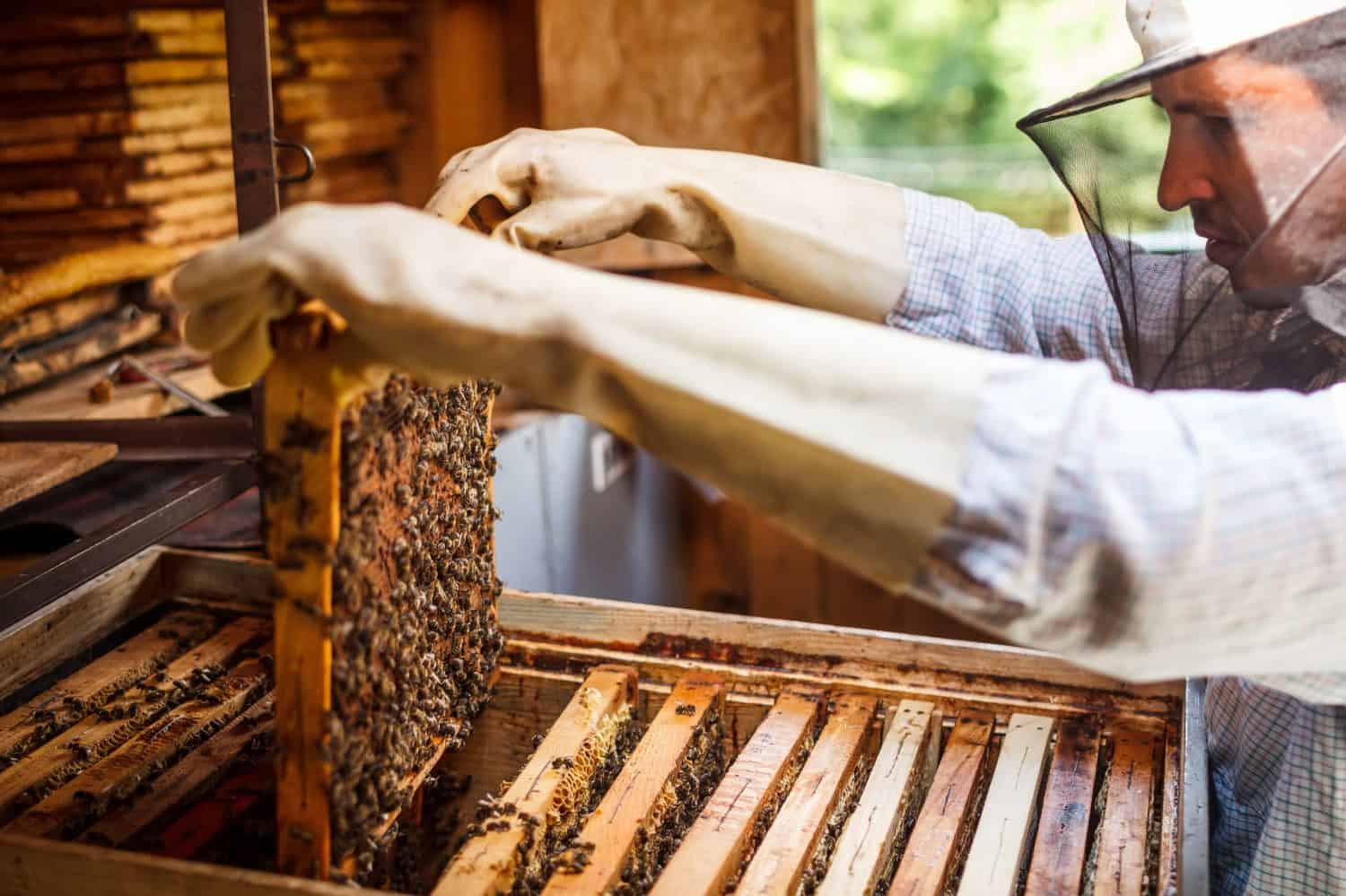
Layens hives feature a horizontal design rather than a vertical one.
©grafvision/Shutterstock.com
The advantages of this hive type include larger boxes, which provide more space for the bees. This ensures the queen has plenty of egg-laying room and is left mostly undisturbed. Since its design is so simple, these boxes can be set up quickly and in large quantities. However, the cost of these hives is a drawback, as they’re not as popular as the Langstroth or top bar hives. It’s also challenging to replace parts for this hive, since they vary in size and are not uniform throughout each region.
WBC Hive
The WBC Hive, a traditional British double-walled hive, features a very similar design to the Langstroth. It’s almost identical except for a tapered box at the top of the hive. This helps to insulate the honeycomb and adds an extra layer of protection for the bees. It enhances the overall design’s appearance and structural integrity, but it is not a popular choice compared to the Langstroth.
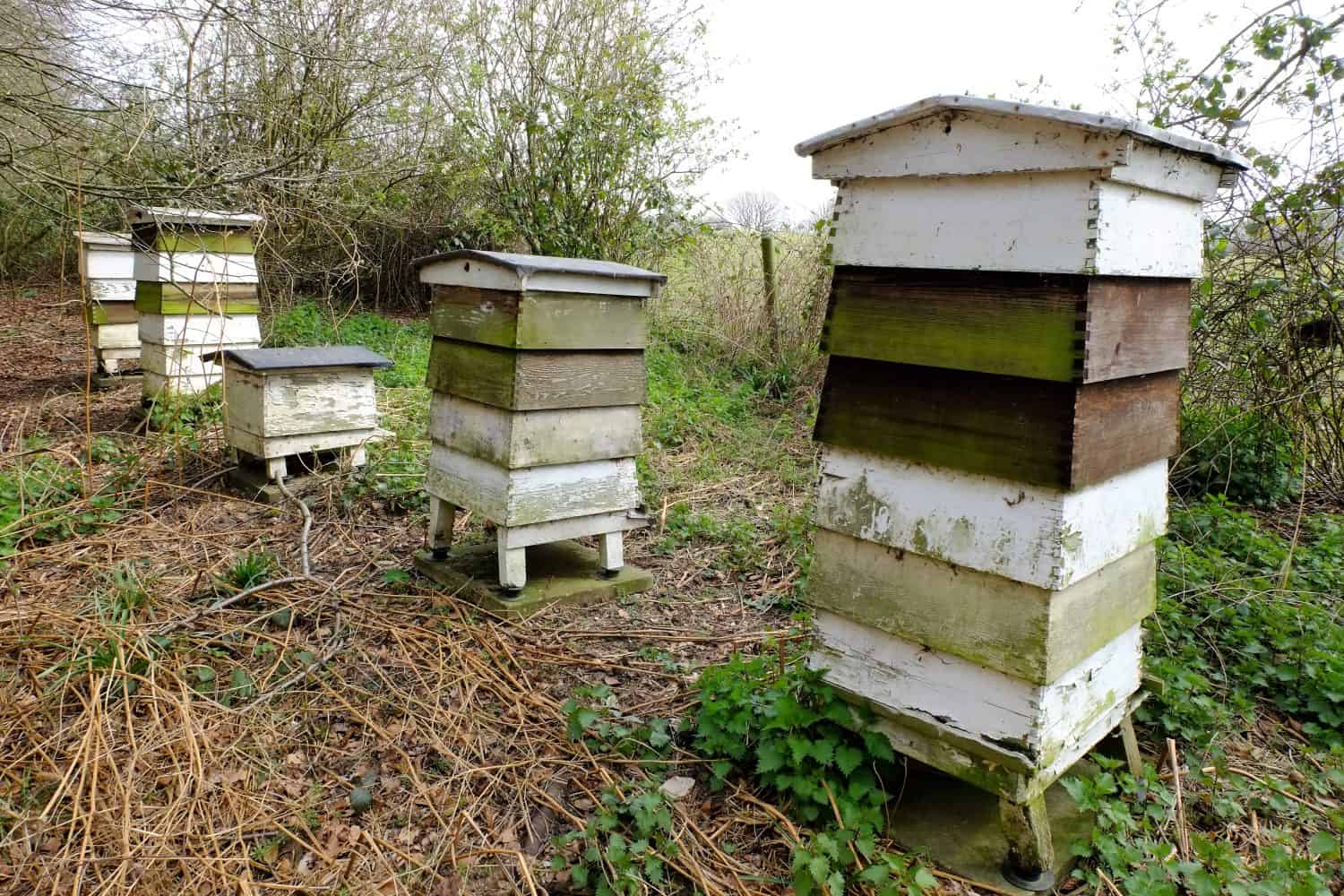
The WBC hive is similar to the Langstroth hive.
©Shen Stone/Shutterstock.com
The pros to this hive type are similar to those of the Langstroth, in both design and ability to house bees safely. However, its price point and lack of popularity are both cons. Since this hive is not as well-used as its simpler counterparts, it’s not cost-effective, nor does it yield better honey harvests.
Apimaye Hive
Similar to the Flow Hive, the Apimaye Hive was a revolutionized version of the Langstroth. Referred to as the “next generation beehive,” this hive does the most regarding protection for the bees. Kaftan LLC, a company based in Turkey, created this hive with the intention of enhancing honey production with a focus on quality. The entire hive is thermally insulated to provide up to six times more warmth than the average wooden hive. It’s fully enclosed but features a built-in ventilation system, which helps reduce the risk of mold and bacterial growth.

The Apimaye hive is considered a revolutionized version of the Langstroth.
©Apimaye USA – Original
The pros of this hive type include its exceptional quality, top-of-the-line design, and commitment to bee safety. However, the downside is the cost of each hive. Constructing a hive of this quality is expensive, and it’s a cost that’s rarely afforded to beekeepers, especially beginners.