
Quick Take
- One Indiana summer fish has sweet, firm white flesh, but most anglers don't eat it for a very specific reason. Discover the catfish paradox →
- Where you fish for catfish in Indiana matters more than how you fish, because the regulations can change everything. Check catfish regulations →
- Summer bass fishing success in Indiana often hides in the last place most anglers think to look. Find bass in summer →
- Not all Indiana summer fishing is equal, and the difference between Northern and Southern waters could completely change your target species. Explore northern glacial lakes →
Summer fishing in Indiana offers myriad opportunities across numerous rivers, lakes, and reservoirs, where anglers find success early in the morning or late in the evening when fish move to shallow water to feed. Northern Indiana has clear, natural glacial lakes filled with thick weed beds where fish such as Northern pike, walleye, and yellow perch are found. In Southern Indiana, summer fishing centers on deep, man-made reservoirs and large river systems like the Ohio and the Wabash that support abundant populations of catfish and bass. Continue reading to learn more about the best fish to catch in Indiana this summer.
Northern Pike
Northern Pike (Esox lucius) are torpedo-shaped fish with olive-green bodies, light yellow or gold spots, duck-bill snouts, and sharp teeth.
An average mature Northern pike measures 20 to 28 inches in length and weighs between 2 and 10 pounds. They inhabit glacial lakes and rivers, requiring anglers to cast lines in deeper, cooler weed lines or shaded river pools.
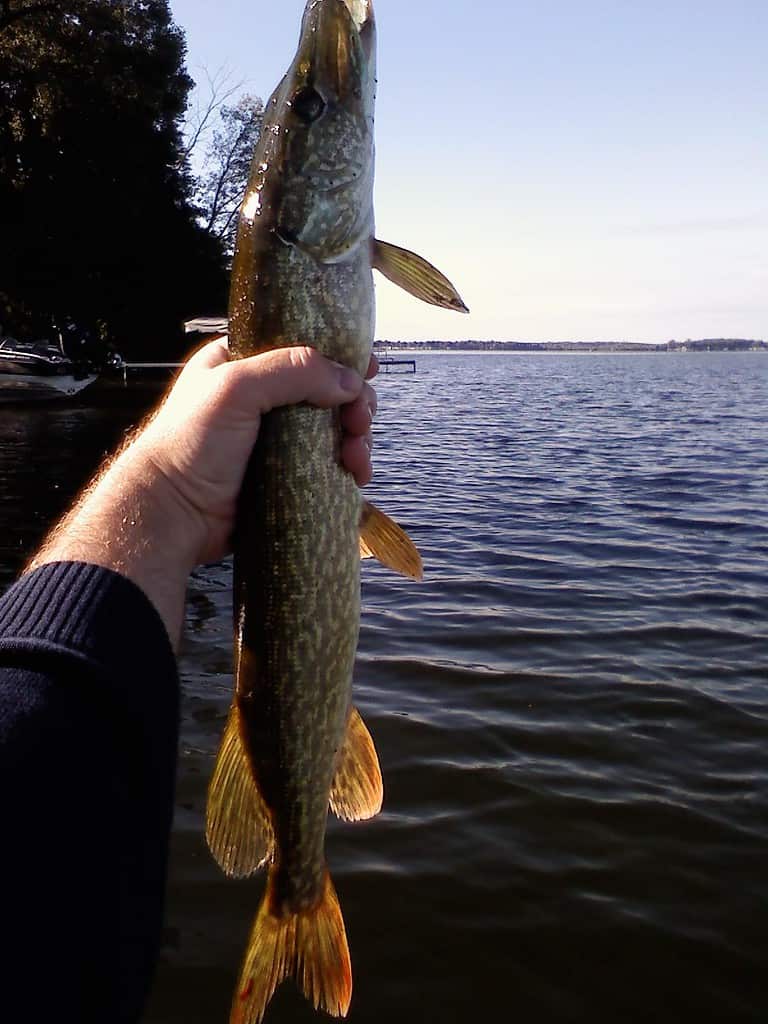
Northern pike are found in the glacial lakes of Northern Indiana.
Indiana’s Northern Pike regulations vary by location. In some northern lakes, the daily bag limit is 3 fish with a minimum size of 24 inches, and only one may exceed 30 inches. However, these limits do not apply statewide, so anglers should check local regulations before fishing.
Although they have firm, sweet, white flesh, they are not commonly considered table fare due to their notoriously complex bones.
Walleye
During the hot summer months, walleye (Sander vitreus) are a popular target for Indiana anglers. Walleye are sleek, golden-olive fish with large, opaque eyes and sharp canine teeth. An average mature walleye is 14 to 28 inches long and weighs between 2 and 10 pounds.
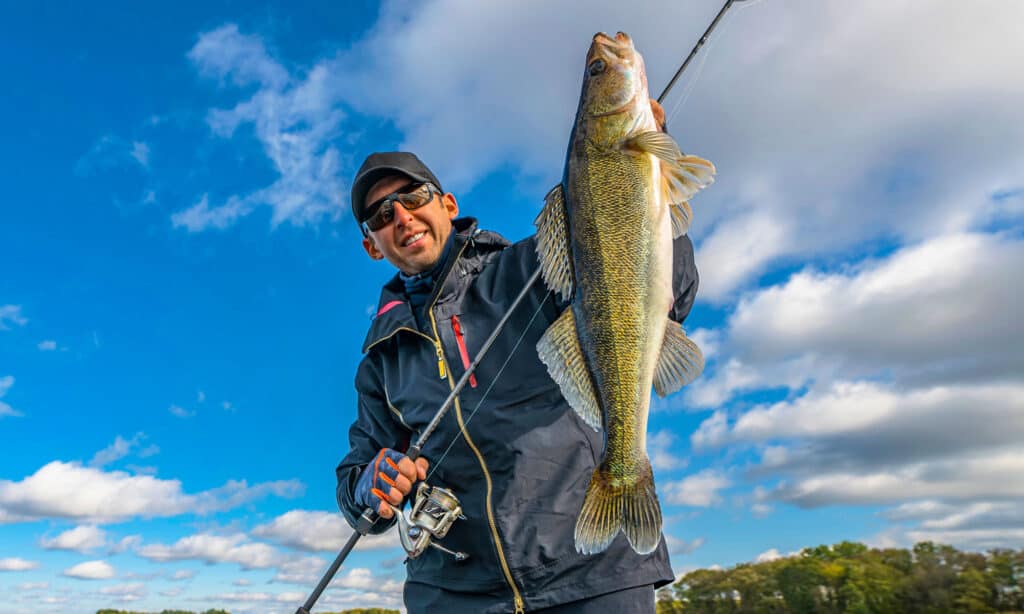
©FedBul/Shutterstock.com
In Southern Indiana, walleye are primarily found in large reservoirs such as Brookville Lake and Patoka Lake, where they are stocked and managed. In Northern Indiana, walleye are present in several natural glacial lakes, though population sizes vary by lake.
The statewide daily bag limit is 6 in any combination of walleye, sauger, and saugeye, with a minimum size limit of 14 inches statewide except for certain waters, such as Lake Michigan and the St. Joseph River, where the minimum is 15 inches.
Walleye are celebrated as a culinary delicacy, thanks to their mild, flaky, white meat.
Yellow Perch
Yellow perch (Perca flavescens) Southern Indiana’s walleye populations are confined to a few large, high-yield reservoirs such as Brookville Lake and Patoka Lake, while in Northern Indiana, walleye are distributed across dozens of smaller, natural glacial lakes. In Indiana waters, yellow perch typically reach an average length of 7 to 10 inches and weigh less than one pound. However, trophy catches from Lake Michigan can exceed 12 inches and weigh over one pound.
Anglers can find them in abundance within the state’s northern glacial lakes, reservoirs, and, most notably, the shallow nearshore waters of Lake Michigan, where they school over sandy or gravelly bottoms near weed beds to feed.
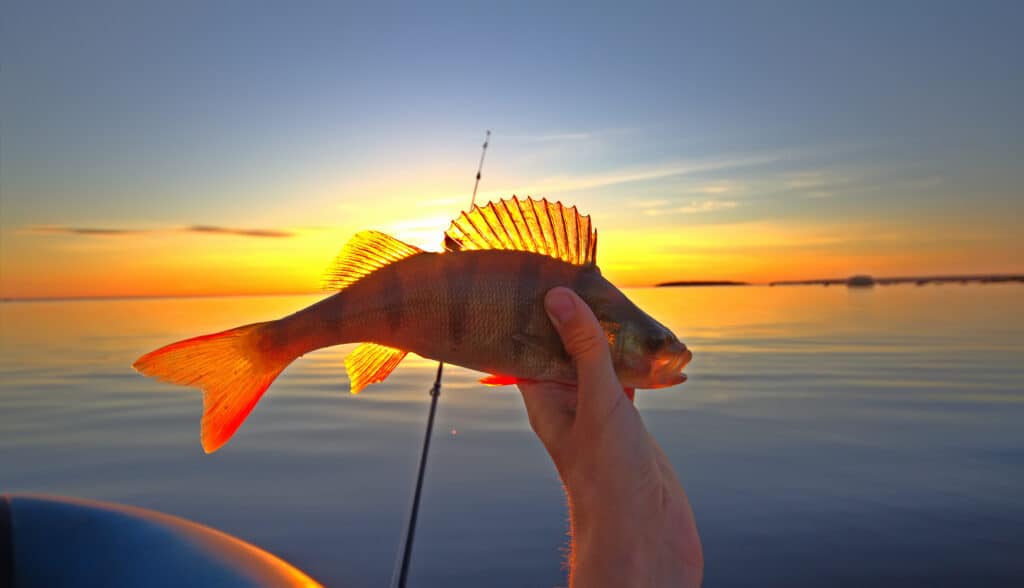
The Yellow Perch is a favorite of anglers, both for its level of fight and also its great taste.
©Maximilliam cabinet/Shutterstock.com
The daily bag limit for yellow perch on Indiana waters of Lake Michigan is 15 fish per person, with no minimum size limit or closed season. For inland waters, there is no statewide bag or size limit for yellow perch, but anglers should check for any special regulations on specific lakes
Yellow perch are widely celebrated as a premier culinary dish in the Hoosier state, revered for their firm, flaky white meat and sweet, mild flavor that makes them a staple for summer shore fries and local fish bakes.
Channel Catfish
Channel catfish (Ictalurus punctatus) are found abundantly in both Northern and Southern Indiana. They are the most widely distributed catfish species in the state, inhabiting waters across all 92 counties. Anglers across the state target this scaleless fish, which has olive-gray skin, a deeply forked tail, a rounded anal fin, and whisker-like barbels.
While record specimens can grow much larger, typical catches average 12 to 20 inches in length and weigh between one and five pounds. They thrive in diverse Indiana habitats, including midsize streams, small ponds, lakes, and major rivers.
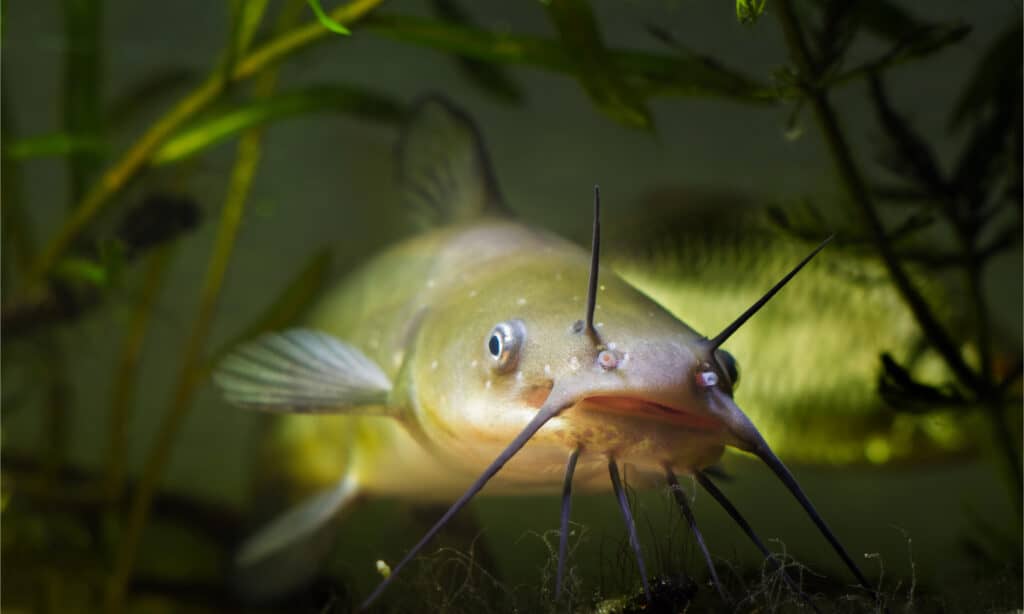
Channel catfish can grow to be over 20 inches long.
©Aleron Val/Shutterstock.com
Indiana’s channel catfish regulations set a daily bag limit of 10 fish and a minimum size of 13 inches for lakes and reservoirs. For rivers and streams, there is no bag or size limit.
Highly regarded for their mild, firm white meat, channel catfish are a celebrated culinary game fish, widely enjoyed as table fare across the state.
Largemouth Bass
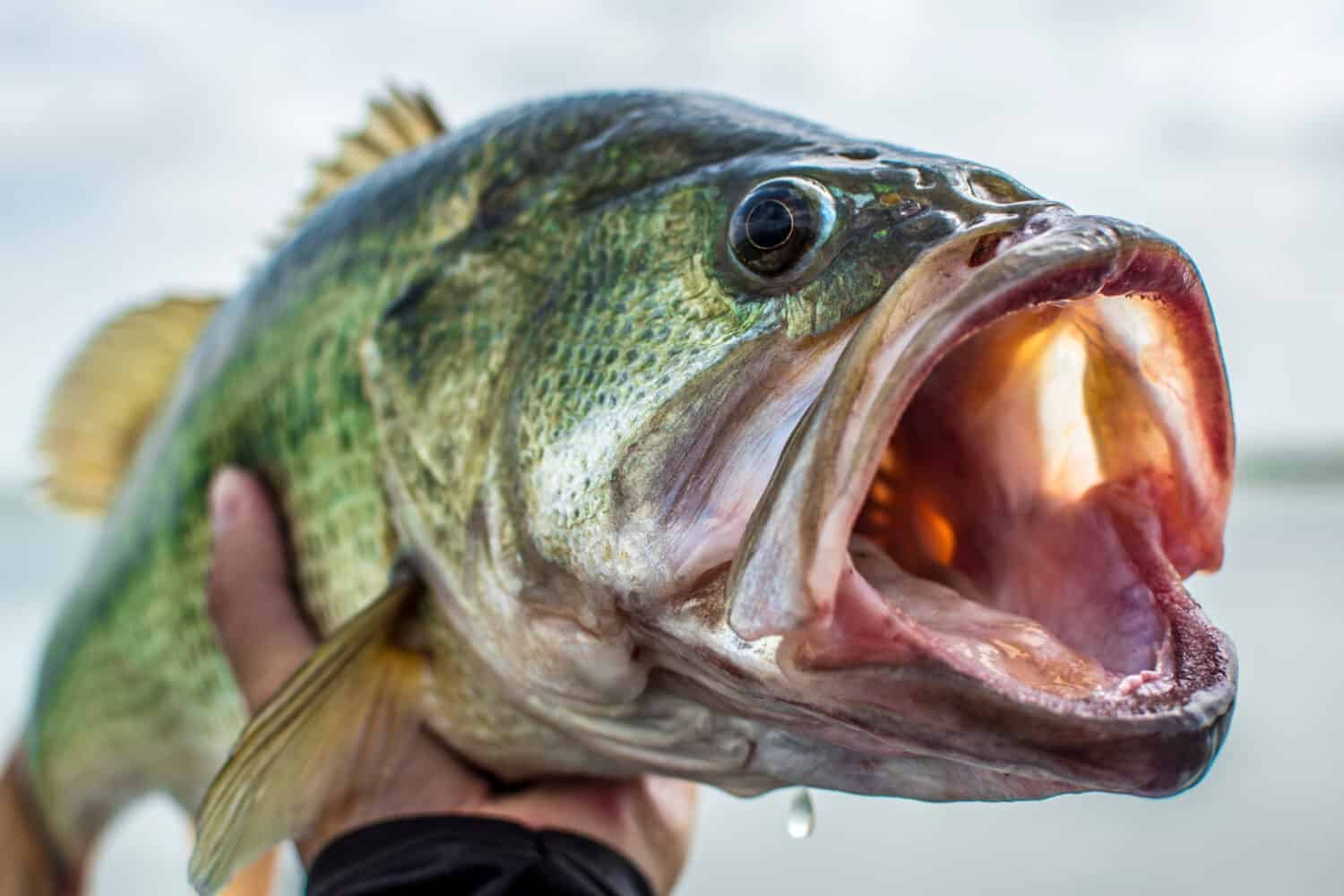
Largemouth bass (Micropterus salmoides) are a popular sport fish in Indiana. These fish are thick-bodied predators, distinctively marked by a dark, horizontal stripe along their greenish-silver flanks and an upper jaw that extends past their eye.
An average mature largemouth measures 12 to 15 inches in length and weighs between one and three pounds, though trophy catches can exceed eight pounds. During the summer heat, largemouth bass congregate under heavy cover, such as lily pads, weed lines, submerged logs, and docks.
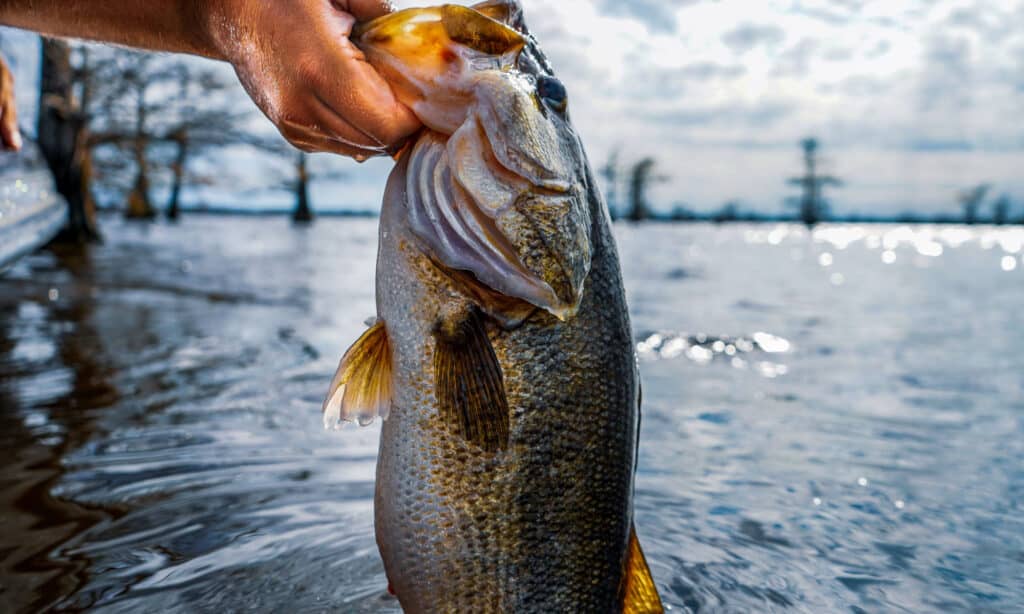
Bass use swimming muscles for suction feeding.
©Maclane Parker/Shutterstock.com
Statewide regulation for black bass (largemouth, smallmouth, and spotted bass combined) set a daily bag limit of 5 fish with a minimum size of 14 inches. However, specific rules may vary depending on the body of water, so it is best to check with local authorities.
Although they are legally classified as game fish and many anglers practice catch-and-release to protect local populations, largemouth bass are also considered excellent table fare, offering firm, white meat with a mild flavor.