
Quick Take
- Meerkats have a built-in feature that acts like sunglasses, and this feature is the key to their entire surveillance system. See their surveillance adaptations →
- With no schedule and no assigned roles, how do meerkats decide who stands watch next? How sentry rotation works →
- Standing guard sounds noble, but the real reason meerkats volunteer reveals something unexpected about animal fairness.
- Meerkats spend their days hunting venomous prey, and this habit is exactly what makes them so exposed to attack. Why foraging creates danger →
Meerkats may seem like silly little animals, but they are actually quite vigilant. As social animals, they come together in large groups that work together to protect one another. They accomplish this by taking turns serving as lookouts. This YouTube Short by @Kangkies talks about this important behavior. Read below to learn more.
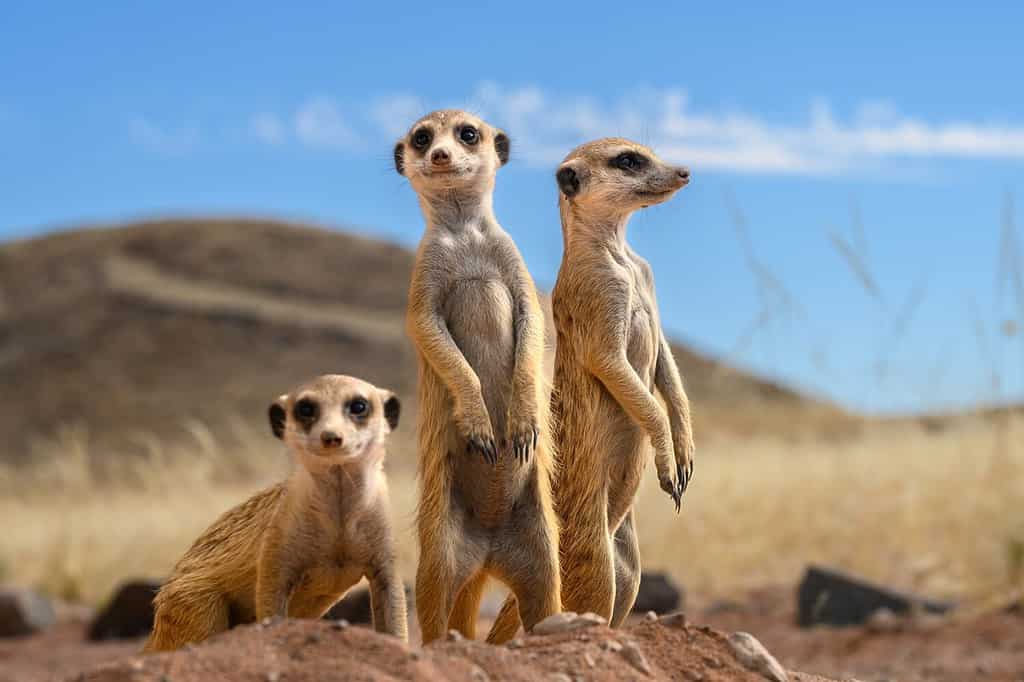
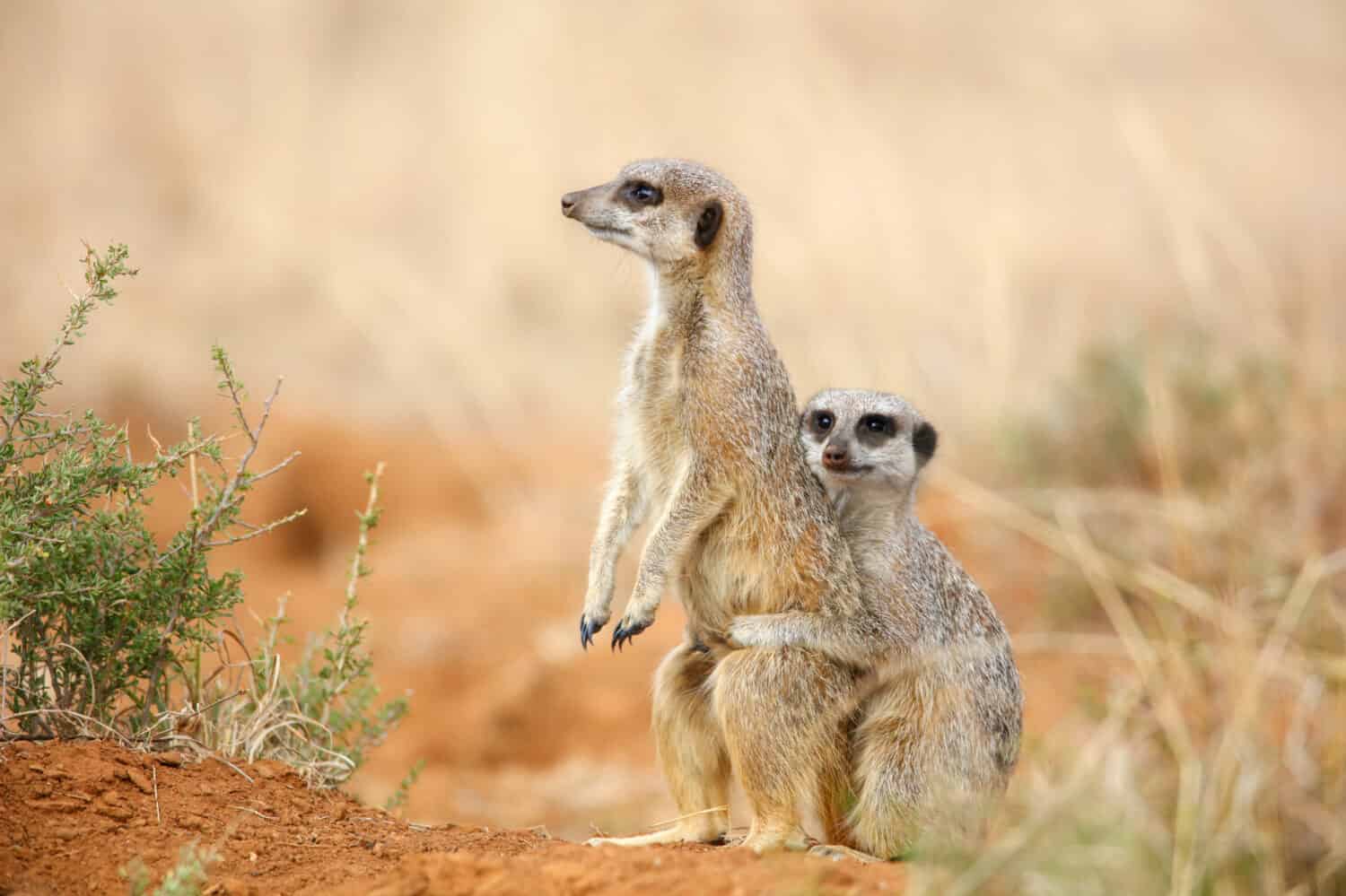
Meerkats take turns on sentry duty to allow each other to rest.
©Ward Poppe/Shutterstock.com
Meerkat Sentries
Meerkats are highly social animals that live in groups called mobs. A mob typically consists of up to 40 individuals, though some groups can number as many as 50 members. Meerkats live in grasslands and deserts throughout southern Africa, including the Kalahari Desert. Living in a group as large as this is important for their survival, as it helps them to avoid predators. Meerkats are hunted by birds of prey, snakes, wild cats, and other carnivores. When searching for food such as scorpions and spiders, they are often vulnerable to surprise attacks. To avoid danger, some meerkats act as sentries. The video above shows several meerkats standing guard as sentries while others in the group forage for food. Their iconic upright stance gives them a wider field of view, allowing them to quickly warn others of potential dangers.
Thankfully, sentry duty rotates naturally. Rather than following a schedule, well-fed meerkats are more likely to take over guard duty, allowing other group members to continue foraging. Meerkats are well adapted for this style of surveillance. They have amazing eyesight that can spot predators from a long distance. The black fur around their eyes acts like natural sunglasses that reduce glare. Their strong upright posture helps them stand comfortably for long periods of time, and they also have great hearing that can detect predators that they might not be able to see. Together, these traits help ensure the well-being of the group, which is an admirable characteristic of meerkats.