
Quick Take
- A harmless cave cricket earned one of fiction's most fearsome monster names, and the reason goes deeper than just living underground. See the naming story →
- Scientists found this cricket in a tunnel, though not the kind you would expect for a cave species discovery. Explore the discovery site →
- This tiny Greek island cricket has more in common with Turkish wildlife than with species on other Greek islands, a contradiction that rewrites what we thought we knew about the region's biodiversity. Uncover the island's wildlife link →
The Greek island of Kastellorizo is a place of greatness. At least, that’s what its official name, Megisti, means. In reality, it is the smallest of the Dodecanese islands. Situated in the Levantine Sea, Kastellorizo is also the easternmost Greek island. It’s one of the hidden gems in the region, partly for its equally hidden creatures. Recently, scientists discovered a previously unknown species of cave cricket there.
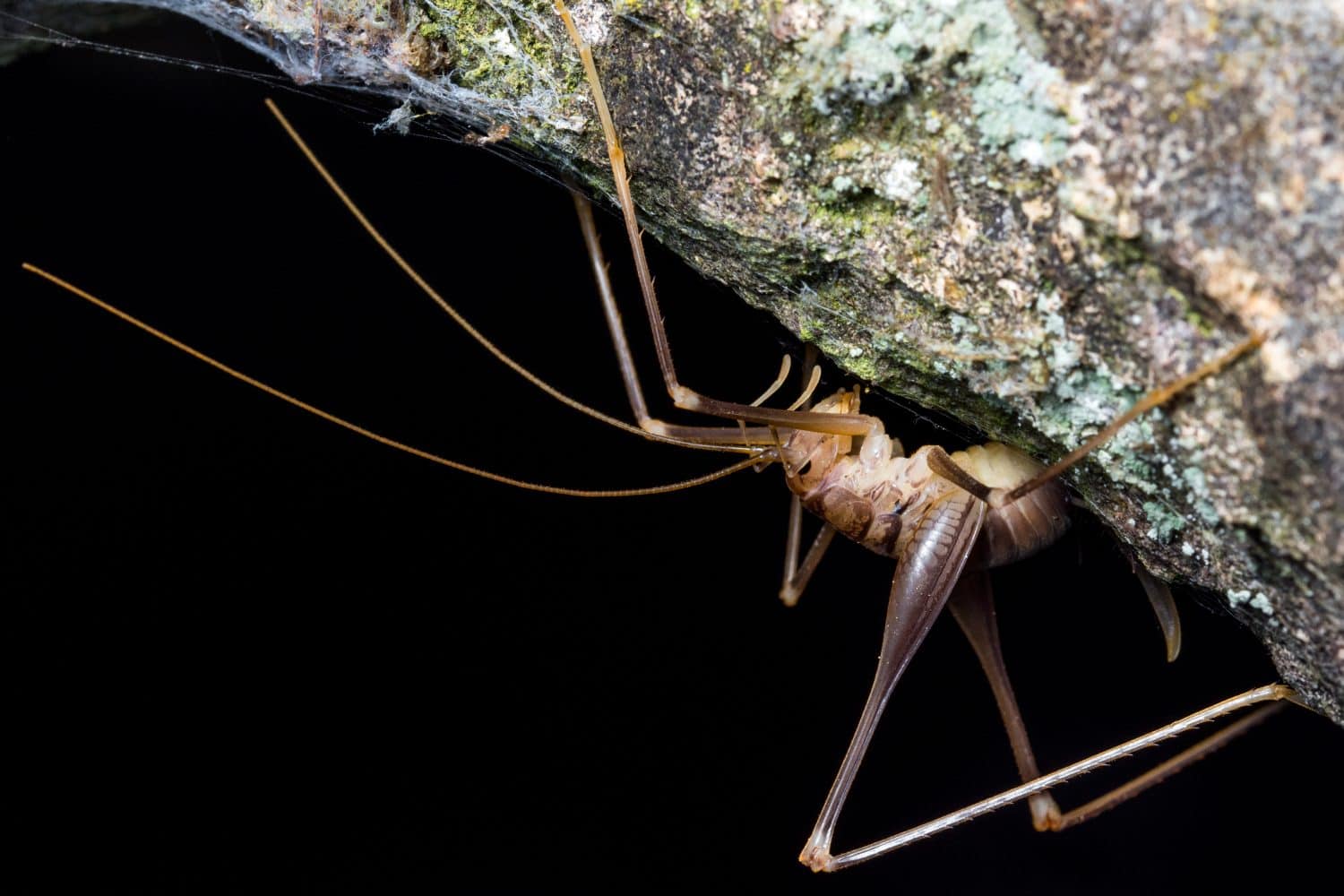
Found in an underground tunnel, the scientists decided to give it a name fit for a monster. Yet this cricket, a member of the Dolichopoda genus of cave crickets, is in reality harmless. Even so, it earned the name Balrog—a reference to a cave-dwelling monster from The Lord of the Rings—because of its dark, humid, underground habitat. Let’s learn more about this newly discovered species, where scientists found it, and why its discovery highlights the unique biogeographical location of the quaint, charming island of Kastellorizo.
Continue reading
An Underground Find

Kastellorizo is one of the smallest Greek islands.
©fokke baarssen/Shutterstock.com
Even from pictures of the Greek island of Kastellorizo, you can tell it’s a special place. The light hits the buildings just right, hinting at hidden mystery. Despite being one of the smallest Greek islands, approximately 4.6 square miles, it features diverse geography. Kastellorizo’s steep coastlines and rugged terrain have resulted in the formation of many caves. While most of these natural caves are inaccessible, several artificial tunnels have been constructed on the island. It is in one of these tunnels that scientists made a remarkable discovery.
In October 2025, lead researcher Konstantinos Kalaentzis surveyed a 25-meter-deep military tunnel on Mount Vigla. In the process, he spotted crickets that he had never seen before. Sensing their significance, he organized a full expedition the following month. During the trip, researchers saw these cave crickets scattered along the tunnel walls. For context, the tunnel is only 1.5 meters wide, and natural light stops at the entrance. They collected 37 individuals—including seven males, ten females, and 20 juveniles—and brought them back for further analysis.
They examined six body parts from the specimens—including reproductive organs, spine structures, and leg features—and took magnified photos of each using a stereomicroscope. From there, they extracted DNA from the leg tissue of four adult crickets. Using COI, commonly known as the DNA barcode gene, they made millions of copies of the gene sequence. To ensure rigor, they downloaded 53 matching DNA sequences of other cricket species from a public database for comparison.
A New Cricket Species
With DNA sequences in hand, they used specialized software to compare the genetic data. This analysis revealed a new species of cave cricket belonging to the Dolichopoda genus. At first glance, it resembled a cave cricket species found on the nearby Turkish coast, as both have similar male reproductive features. It also shared characteristics with another Turkish species. Beyond DNA testing, what helped solidify the discovery was the presence of a uniquely shaped central organ and back-plate structure. Additionally, females of this newly discovered species possess egg-laying organs with distinct characteristics.
Thus, a new species was identified, representing a unique evolutionary lineage on the island of Kastellorizo. Since these cave crickets live underground without much light, the researchers decided to give them a name with high fantasy origins. They named it Dolichopoda balrogi. The name ‘balrogi‘ refers to the Balrog, a demonic, subterranean monster from J.R.R. Tolkien’s The Lord of the Rings. Like the cricket, the Balrog lives deep underground, only revealed after dwarves dug too deep into the earth.
Unlike the Tolkien creature, which wields massive fiery whips to sow destruction, Dolichopoda balrogi is completely harmless. As the researchers explained in their paper, ” In Tolkien’s narrative, the Balrog is revealed only after the Dwarves “delved too deep”; similarly, Dolichopoda balrogi sp. nov. was discovered on Kastellorizo due to anthropogenic excavation on Mt. Vigla, as the island lacks accessible caves. The epithet thus symbolically links deep excavation with the revelation of hidden subterranean fauna.”
Biogeographic Significance
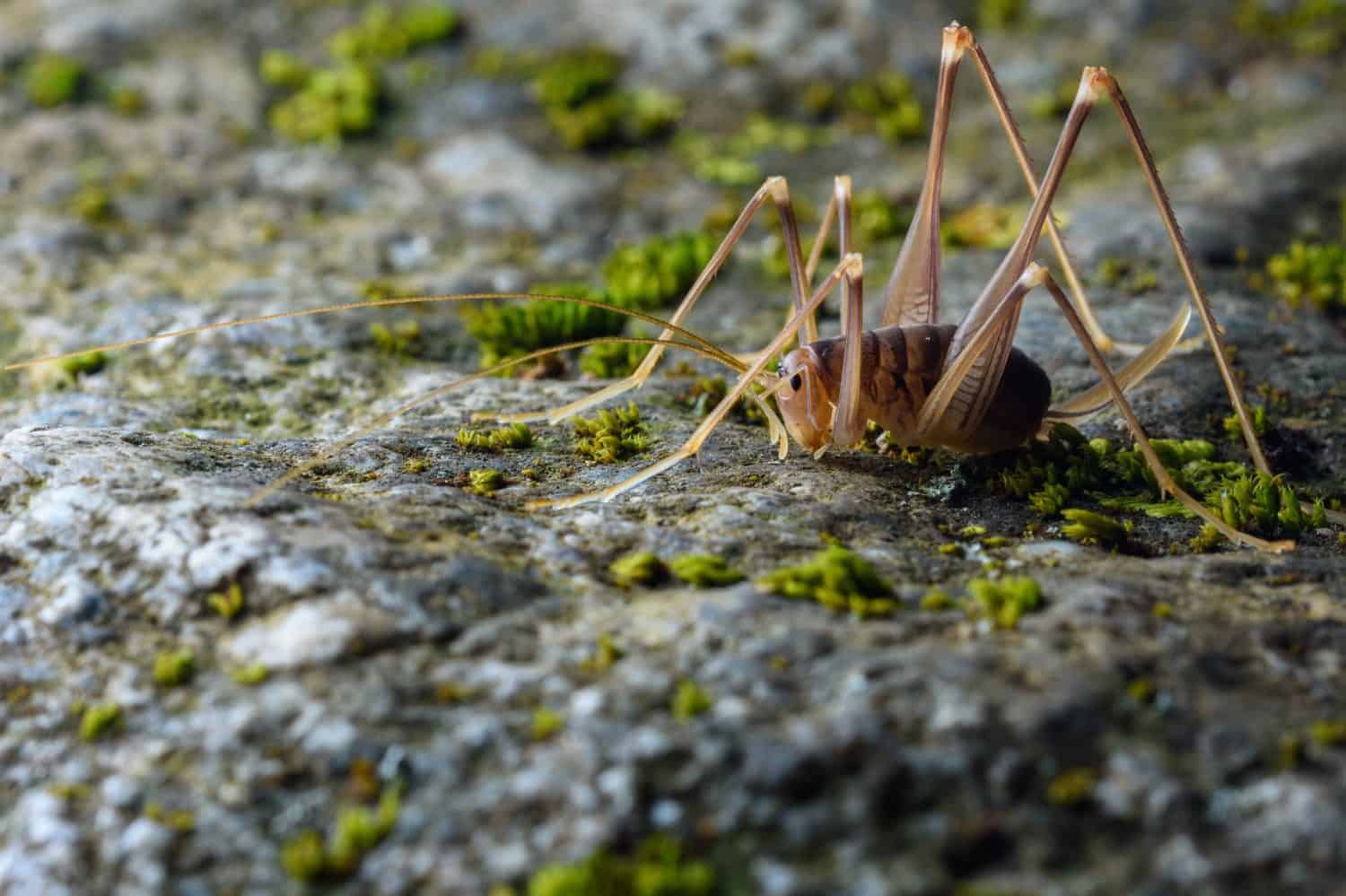
It will take further research to see if D. balrogi lives elsewhere on the island of Kastellorizo.
©Pedro Luna/Shutterstock.com
What makes D. balrogi unique—apart from its fiery name—is its biogeographic significance. Though Kastellorizo is quite close to Turkey, it is still considered part of Europe. This makes D. balrogi special, as it belongs to an Anatolian lineage instead of a European/Aegean one. There are cave crickets on other Greek islands like Crete, but they share a distinct body structure unrelated to D. balrogi. Instead, the newly discovered species belongs to a group of crickets native to Turkey and the Caucasus region.
Such similarities suggest that Kastellorizo serves as a wildlife bridge between Turkey and Greece. It also shows that even man-made structures can act as refuges for cave-dwelling creatures in areas lacking natural caves.
Despite the discovery of this new species, the researchers know their work isn’t done. Not only does the Dolichopoda genus contain many species that still require DNA sequencing, but researchers are also unsure about the full range of D. balrogi on the island. It will take further surveys to see if these cave crickets live elsewhere on the island of Kastellorizo.