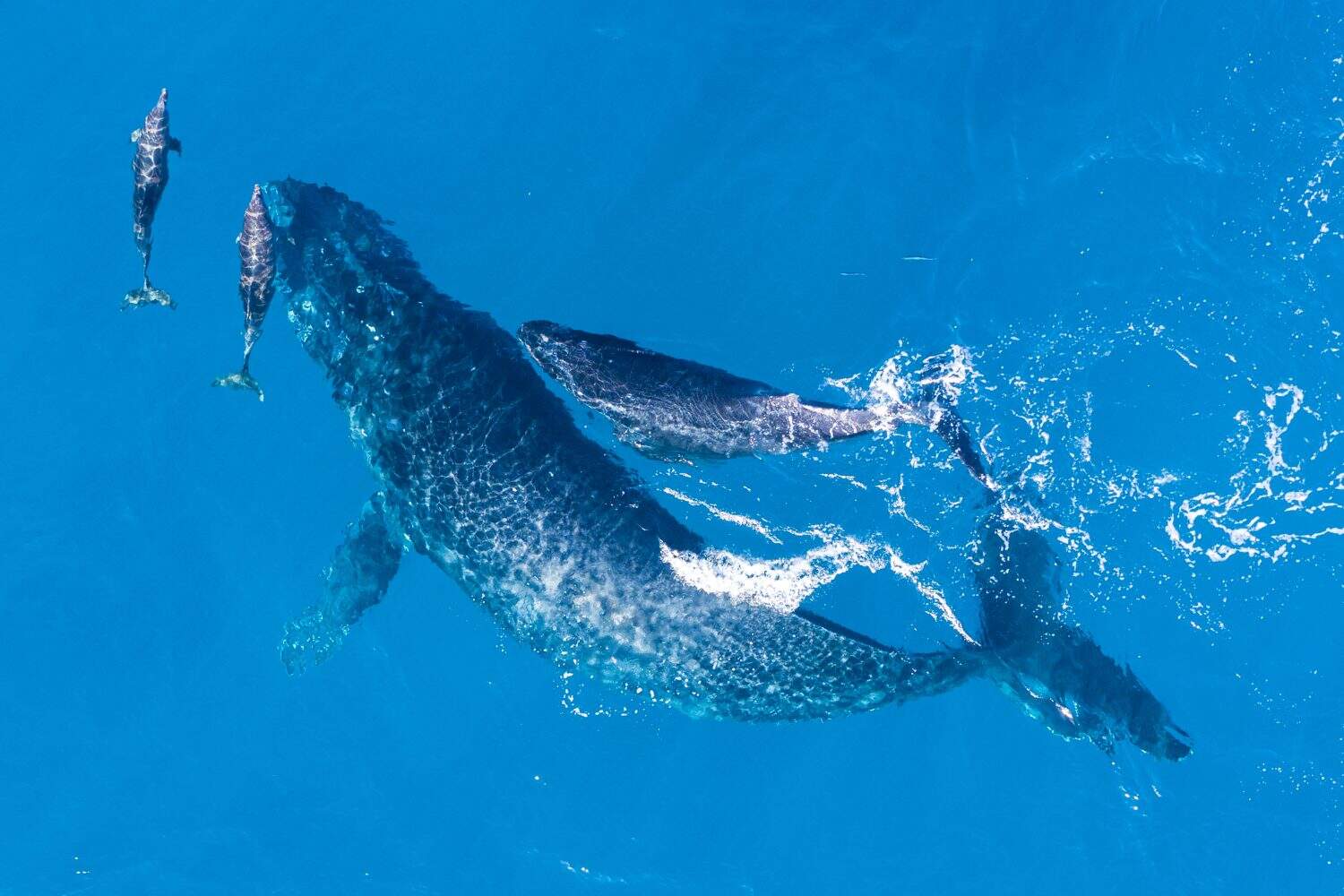

If you happen to be in Hawaii from November through April, you can witness one of the coolest natural phenomena: the arrival of thousands of humpback whales at a national marine sanctuary.
All about humpback whales
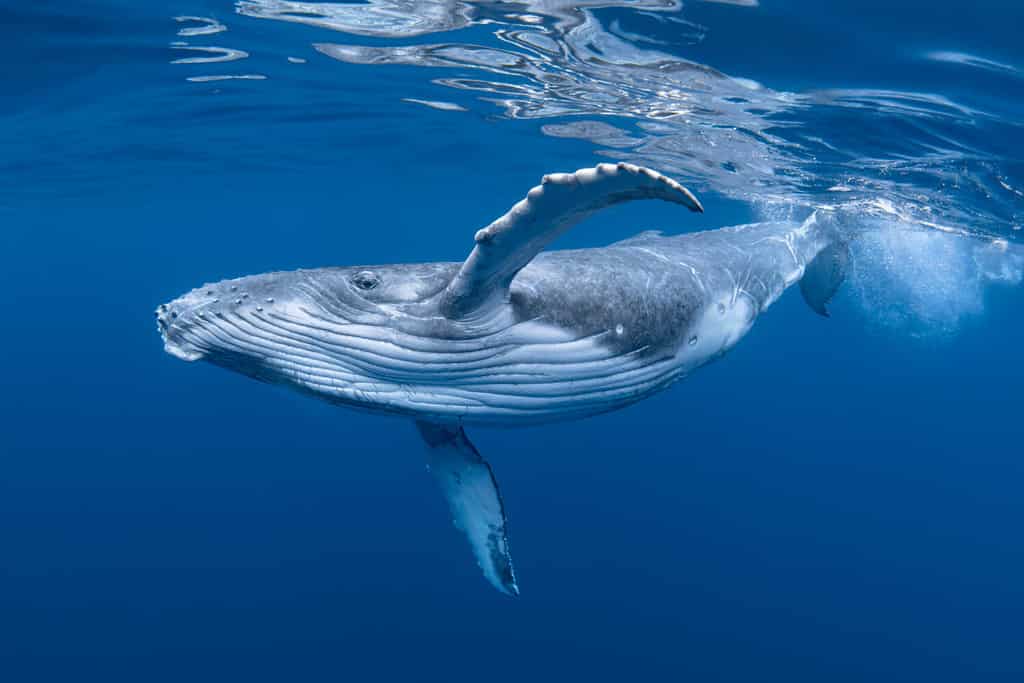
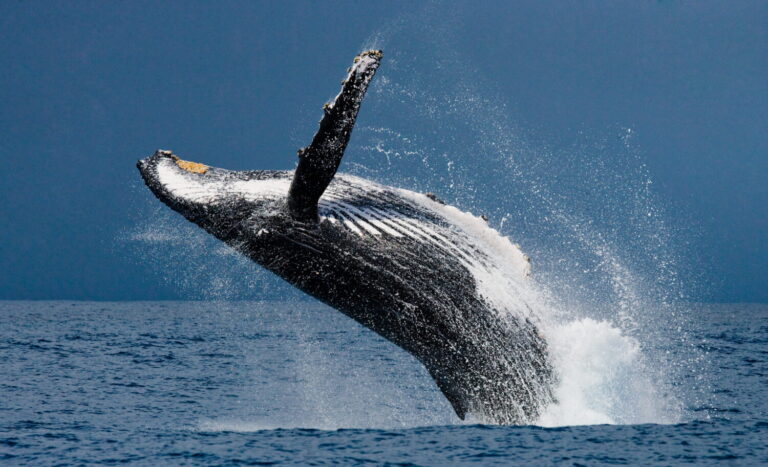
Humpback whales travel to Hawaii every winter to enjoy warmer waters.
©Craig Lambert Photography/Shutterstock.com
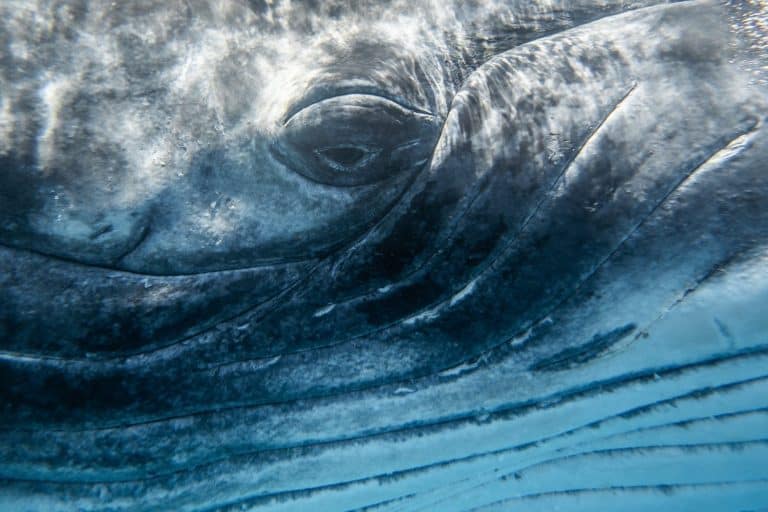
Humpback whales (Megaptera novaeangliae) are incredibly massive whales that weigh between 40-100 tons, reach 48-62 feet long, and live up to 50 years. Humpbacks spend almost 90 percent of their time underwater. These huge marine mammals are immediately recognizable by their small hump near the dorsal fin, large pectoral fins, dark skin on their backs with a lighter underside, and knobby protuberances on their heads and jaws.
These fascinating creatures travel to Hawaii in the winter to spend time at the Hawaiian Islands Humpback Whale National Sanctuary.
Migration
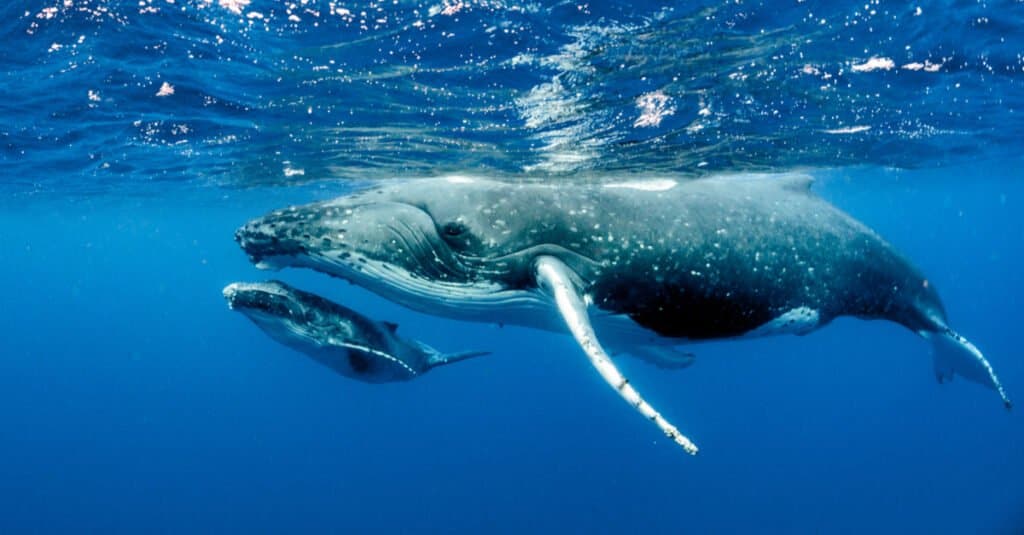
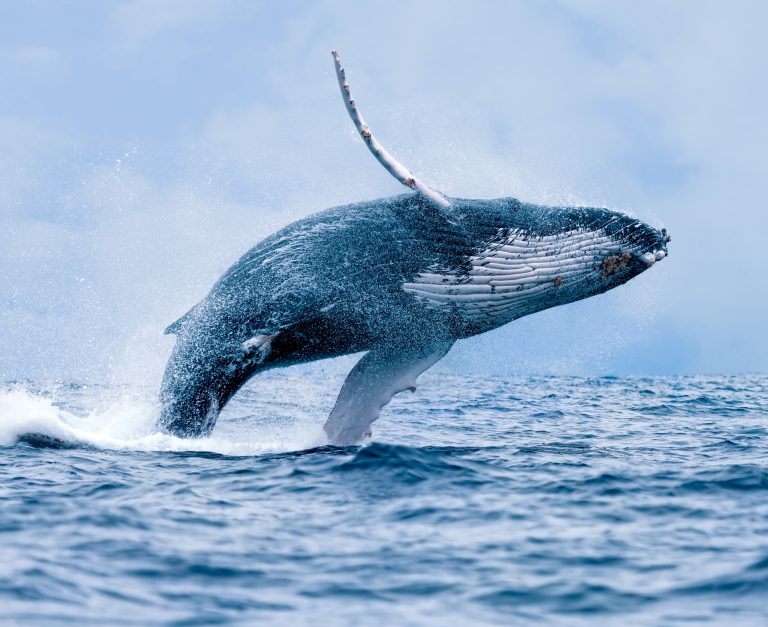
Thousands of humpback whales will migrate to Hawaii in the winter.
©Imagine Earth Photography/Shutterstock.com
“Every winter, thousands of humpback whales travel to the warm, shallow waters of Hawai‘i to mate, give birth, and raise their young,” stated the marine sanctuary’s website. “Hawaiian Islands Humpback Whale National Marine Sanctuary protects these whales and their habitat. From November through April, visitors to the sanctuary can see whales from shore and at sea.”
North Pacific humpback whales typically live in Alaska, but when the weather turns colder, they journey for between 4-6 weeks to reach Hawaii, according to the Hawai’i Wildlife Fund. The annual migration covers about 6,000 miles, making it one of the longest migrations of any mammal.
The first to arrive in Hawaii are mother whales still nursing their calves. Next come juveniles and mothers with yearlings, followed by adult males, adult females, and finally pregnant female whales.
Why do humpback whales return to Hawaii?
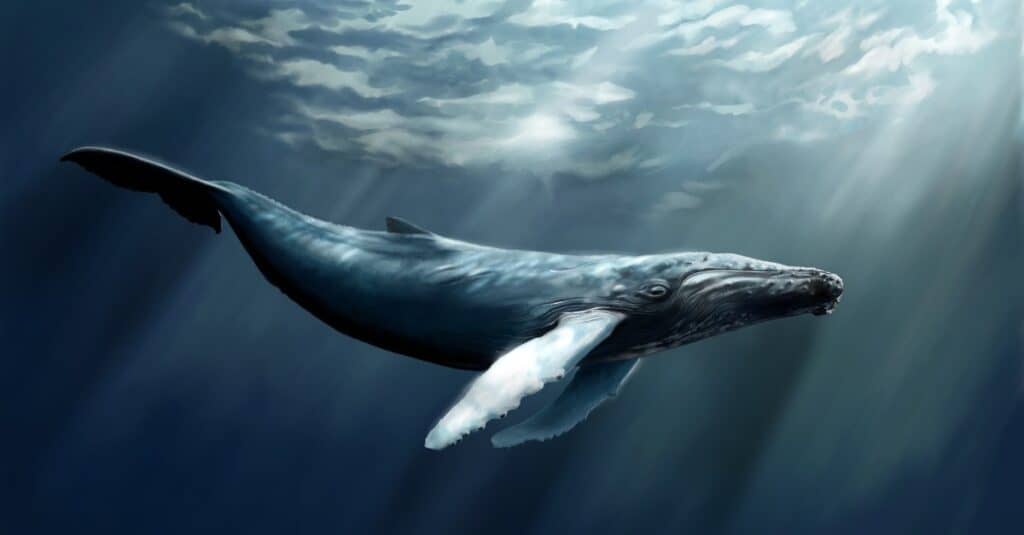
Humpback whales will breed, give birth, and nurse their young in the warmer Hawaiian waters.
©iStock.com/kenglye
According to the National Marine Sanctuary, more than half of the humpback whales in the North Pacific travel to these waters near the Hawaiian Islands to breed, give birth, and nurse their young over the winter.
“Because the Hawaiian Islands are such an important breeding habitat for the population, Hawaiian Islands Humpback Whale National Marine Sanctuary was created to offer protection for whales while in their preferred habitats, which are the relatively shallow waters less than about 600 feet deep that are found around the islands,” according to the sanctuary.
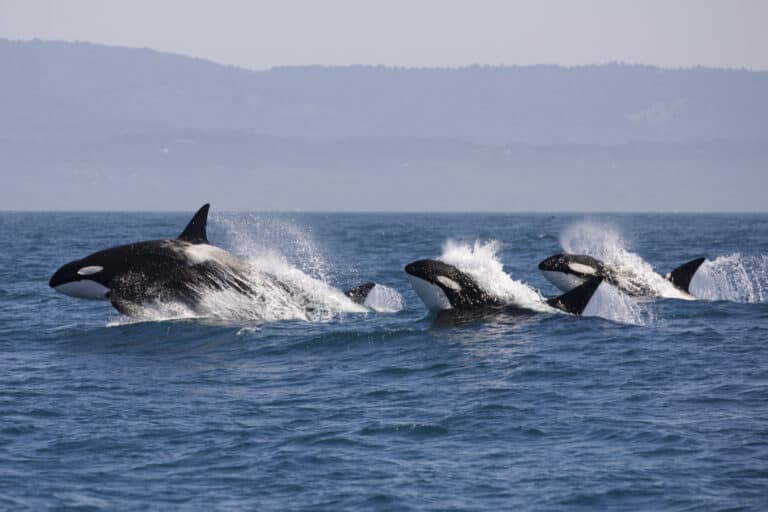
In addition to humpback whales, at least 25 other cetacean species have been found in the Hawaiian waters, including the bottlenose dolphin, the false killer whale, the spinner dolphin, and the spotted dolphin.
Humpback whale reproduction
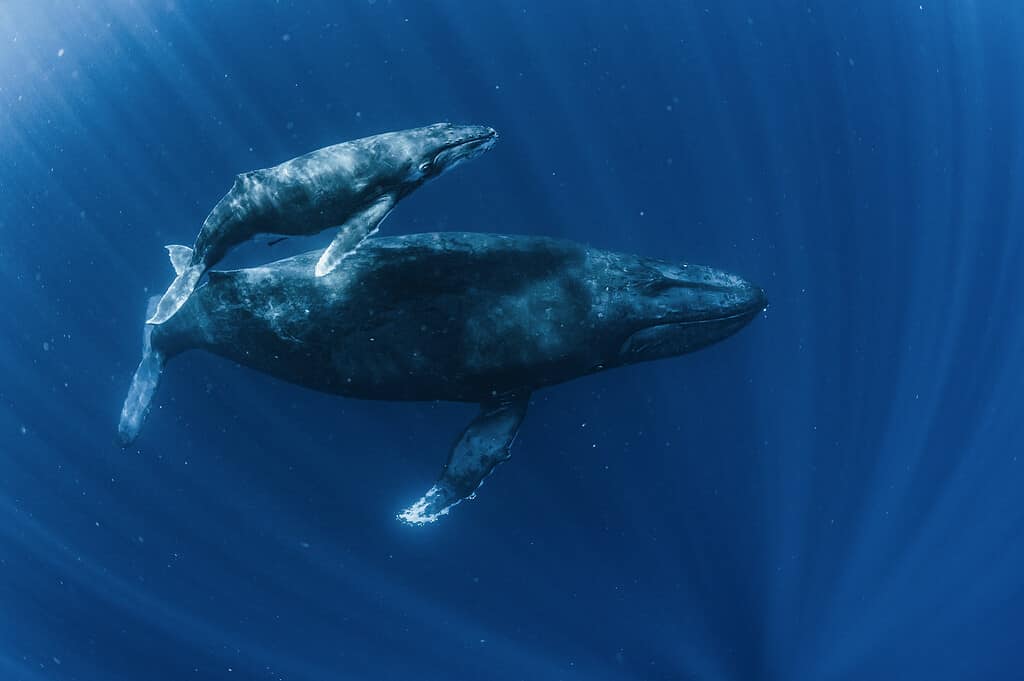
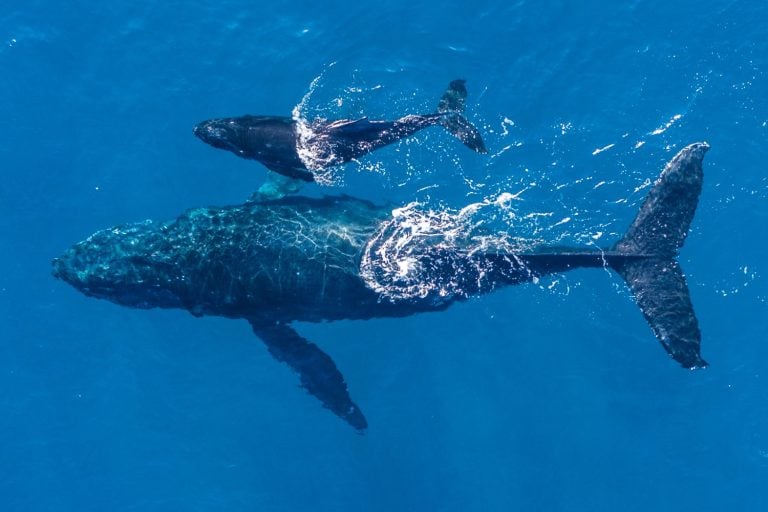
A whale is pregnant for 11 months before giving birth to a live calf.
©iStock.com/inusuke
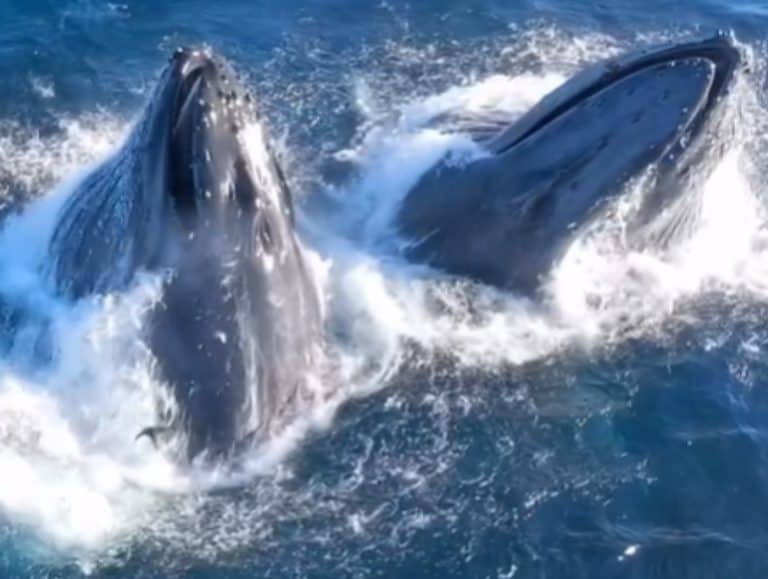
Once humpback whales reach sexual maturity (between 4 and 10 years old), they breed. After traveling to warmer waters, like the ones in Hawaii, whales will form competition pods. A group of males will fight for the chance to mate with a single female. The whales may fight, bump heads, slap tails, and splash their fins to fend off other males and attract the female’s attention. Eventually, one lucky male wins the opportunity to mate with the female.
Females produce a single calf every 2-3 years on average, after an 11-month gestation. These calves stay near their mothers for up to one year before weaning, swimming close to them to stay safe.
How long do they stay?
The whales remain in Hawaii through April, with peak season being between January and March. When they leave, they return to Alaska, northern British Columbia, and other subarctic regions to feed.
While the whales are at the sanctuary, researchers lead and collaborate on projects to assess the population and their use of sanctuary waters, document whale distribution and abundance, examine whale behavior, and monitor potential human impacts.
Other humpback whale populations
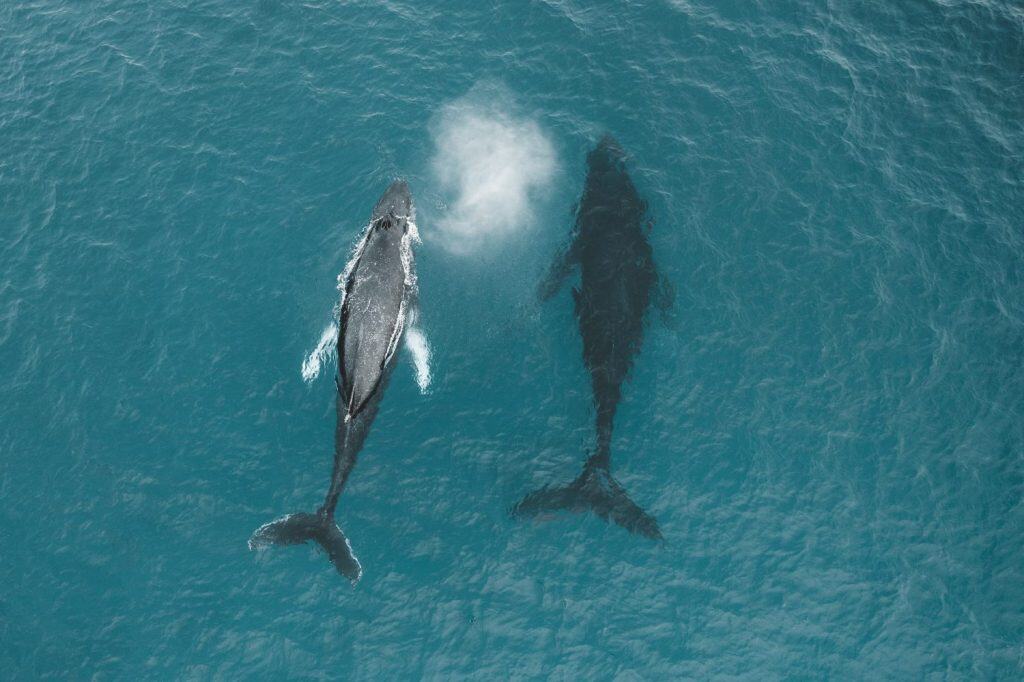
Some humpback whales travel to other parts of the world for warm winters.
©Stockfootage Solutions/Shutterstock.com
In addition to the humpback whales that migrate to Hawaii to breed and take care of their young, there are at least three other humpback whale populations in the North Pacific.
The Mexican population breeds along the Pacific coast of Mexico and feeds from California to the Aleutian Islands. The Central America population breeds along the Pacific coast of Central America, including Costa Rica, Panama, Guatemala, El Salvador, Honduras, and Nicaragua, and feeds off the West Coast of the U.S. and southern British Columbia. And the Western North Pacific population breeds in the areas of Okinawa, Japan and the Philippines and feeds in the northern Pacific, primarily in the West Bering Sea and the Aleutian Islands.
Potential threats
Humpback whales face several potential threats. These include vessel strikes, entanglement in fishing gear, and harassment by whale watching vessels or recreational boats. Climate change is also a factor, impacting optimal feeding and breeding locations, as well as the timing of environmental clues needed for navigation and migration.
You can help protect this beautiful species by maintaining a safe distance from them of at least 100 yards, reducing speed near known whale habitats, and reporting federal marine resource violations to the NOAA Fisheries Enforcement Hotline at 800-853-1964. Additionally, reporting sick, injured, entangled, stranded, or dead humpback whales is beneficial.