
Quick Take
- Being chrome-shiny in the open ocean sounds like a predator's dream target. For this fish, it's somehow the opposite. See the camouflage trick →
- The name 'frostfish' has nothing to do with how it looks, and the real origin is far stranger. Discover the name's origin →
- Guanine is in almost every fish's skin, so why does this one end up looking like polished chrome? Explore the guanine biology →
- This fish grows to a size most people would never believe from something found washed up on a beach. Check the size facts →
The frostfish is one of the most reflective fish in the ocean. Also known as the silver scabbardfish, the frostfish looks like a living mirror swimming through the water. So why are they so reflective in the first place? This Instagram post by @french_adrift shows a video of a freshly caught frostfish.
Continue reading

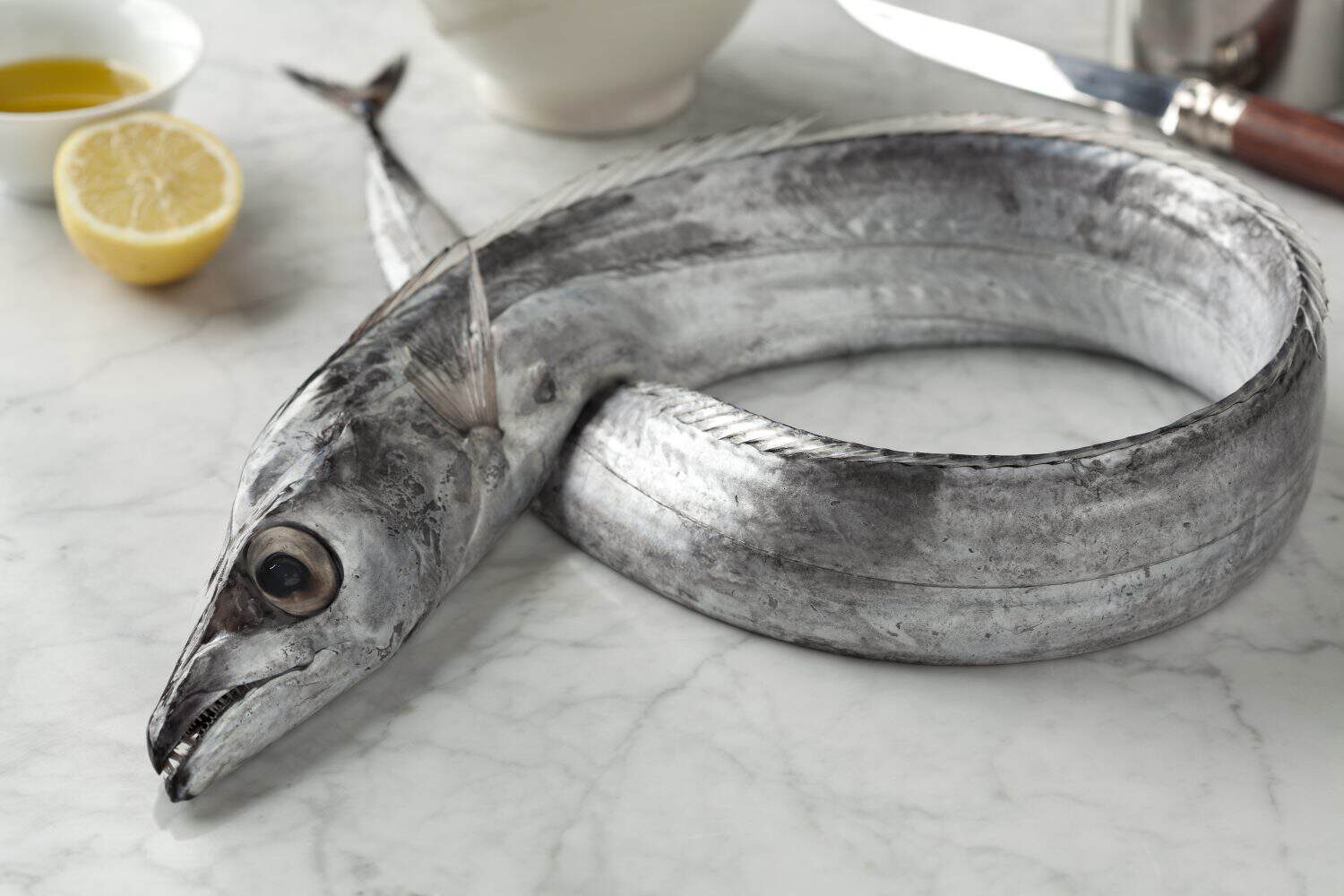
The frostfish has many nicknames, like silver scabbard and ribbonfish.
©Iuliia Karnaushenko/Shutterstock.com
About the Frostfish
The frostfish, or the silver scabbardfish, is an extremely shiny and reflective fish. They are deep-water fish that can be found in temperate waters across the world, including New Zealand, southern Australia, the Mediterranean, and southern Africa. In New Zealand, frostfish like the one caught in the video above live roughly 650 feet deep on the continental shelf. Although frostfish are uncommon to see due to their deep-sea habitat, they are also benthopelagic, meaning they may move up in the water column and can sometimes be caught by fishermen. Frostfish are also larger than you might imagine. With a ribbon-like body, frostfish can grow to over two meters (around six and a half feet) in length, though individuals of around one to one and a half meters are more commonly encountered. So what makes them so shiny?
The shininess of the frostfish is a remarkable trait, acting almost like a biological mirror. The metallic appearance comes from guanine crystals embedded in their skin. Guanine is a naturally reflective material that causes the silvery coloration in many other fish species as well. Light that hits their body is reflected, creating a chrome-like appearance. While it may seem strange, this is a great form of camouflage in the open ocean.
The reflective bodies of these fish make them harder to see against the brightness of surrounding water. So, whether they are deep in the ocean or near the surface, other fish have a difficult time spotting them. While one might assume they get their name from their frosty, mirror-like appearance, the name actually comes from how they have historically been found. Many frostfish wash ashore during winter, and it is from this habit of being found on beaches after a frosty morning that they take their name, creating an association between the fish and cold weather.