
All over the world, young couples are setting up home and creating a safe place for their family to grow. The amphibian community is no different, and we get to see a perfect example in this extraordinary Instagram post. Take a look for yourself and then look again! This is actually two frogs, not one, and is a combination of nest building and mating all at the same time. Read on to learn more about the Malabar gliding frogs seen in the clip.
Malabar Gliding Frogs
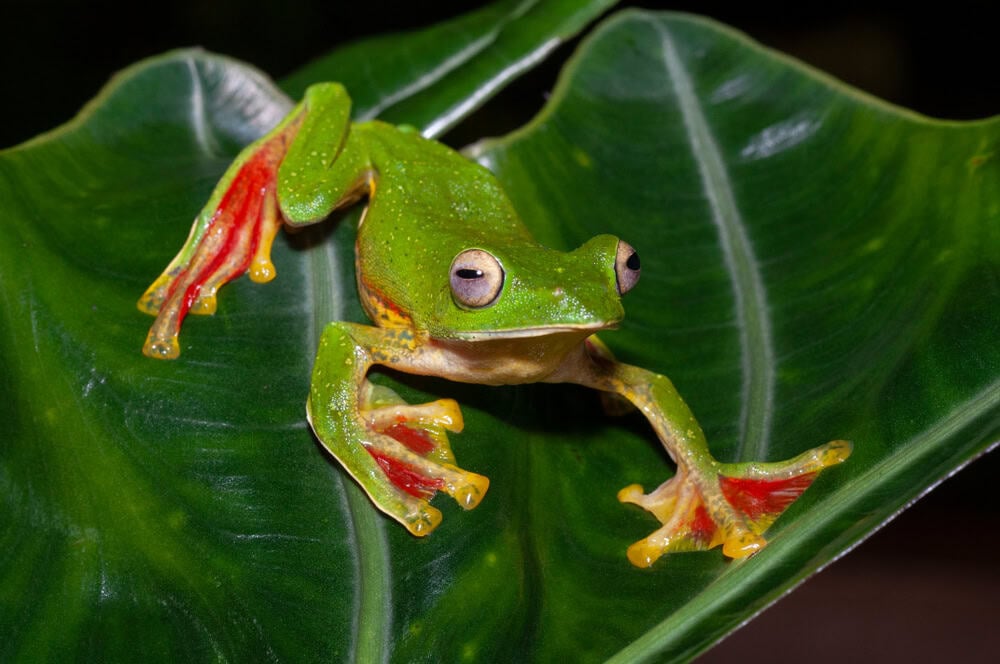
Malabar gliding frogs are also called Malabar flying frogs, and their scientific name is Rhacophorus malabaricus. They are named for their ability to stretch out the webbing between their toes when leaping from trees. The air resistance breaks their fall and allows them to glide for several feet.
These frogs are around four inches in length, and the males are smaller than the females. What you see in the above Instagram post is a small male on top of a larger female. Malabar gliding frogs are a vivid green color with no markings. These beautiful amphibians live in the Western Ghats of India in habitats of forests, plantations, and urban areas where they hang out in trees near streams and riverbanks.
Frog Breeding Season
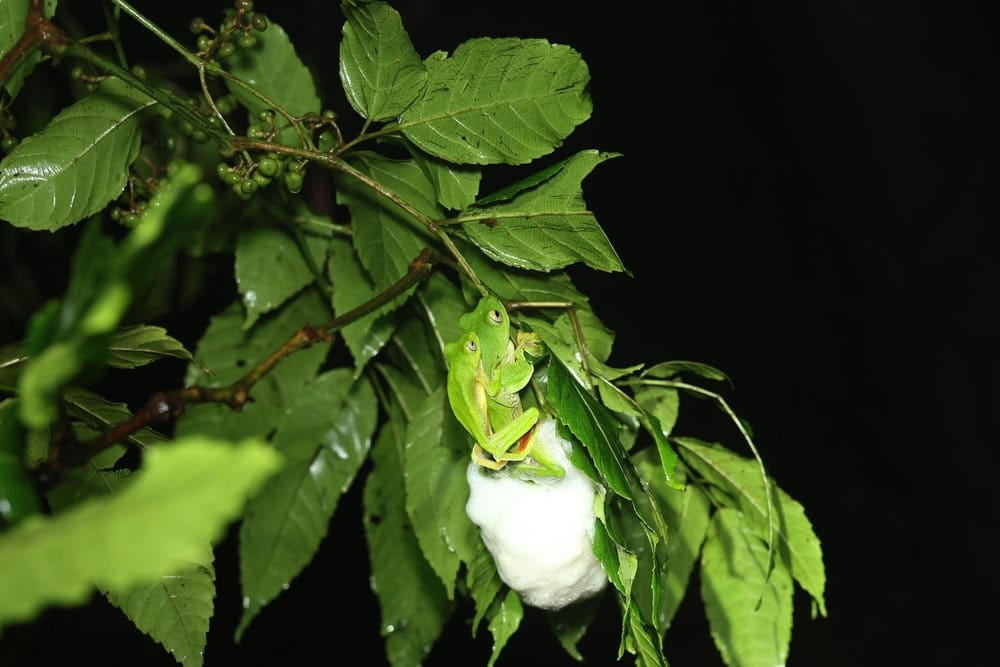
The foam nest is created by the male frog during mating.
©Christina bipin/Shutterstock.com
Breeding for this frog species takes place during the monsoon months of June-September in trees hanging above water. As mating occurs, the males whip up the foam seen in the clip from their seminal fluid. They take on a mating position specific to toads and frogs, known as amplexus. The male clasps the female’s back and fertilizes the eggs as she releases them into the foam. After mating, the females cover the egg-filled nests, which are around 3 inches in diameter and hold up to 200 eggs, each measuring 0.11 inches across. As the eggs hatch into tadpoles, they are protected from desiccation by the foam. Eventually, they drop into the water below and swim away.