
There are multiple snake species that overlap and look remarkably similar to one another. Copperheads and Eastern hognose snakes fall under this umbrella, often sharing the same neighborhoods across the eastern United States. However, are they truly similar in the grand scheme of snakes? Is one more powerful than the other, more capable of taking the other down in a snake-on-snake matchup?
If you’ve wondered how to tell them apart, what they eat, and which would win in a real encounter, we’re here to dissect the facts. One of these snakes poses a genuine medical concern to both humans and animals, while the other is far less dangerous. Does that automatically decide the fight between them? Not quite. Let’s learn about copperheads and the Eastern hognose snake now.
Basic Taxonomy
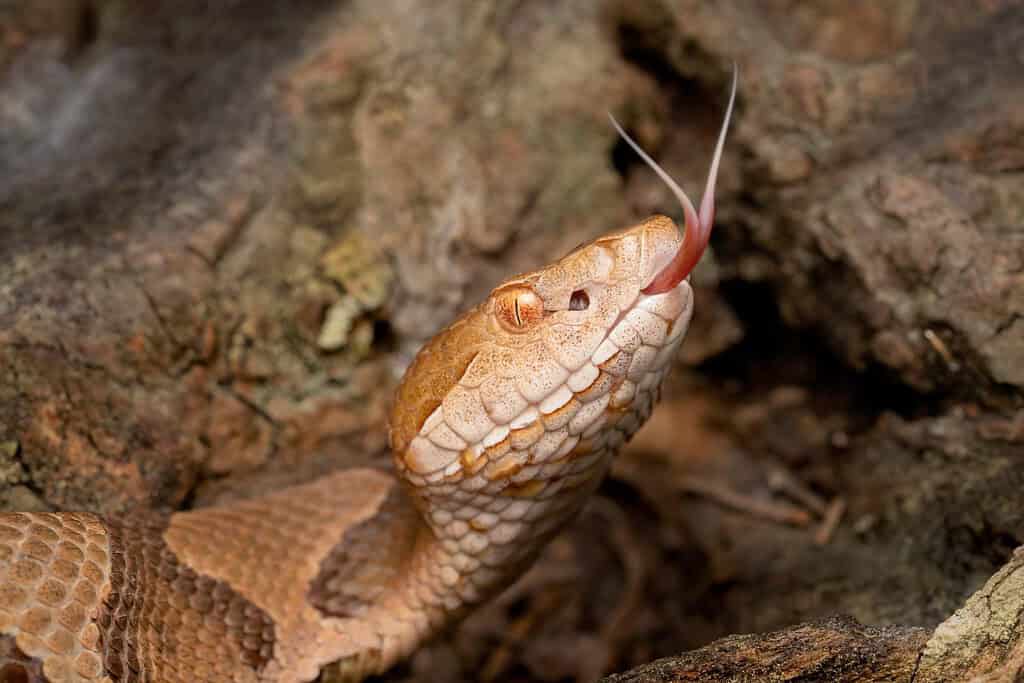
©Mark_Kostich/Shutterstock.com
- Copperhead: Agkistrodon contortrix (venomous pit viper).
- Eastern Hognose Snake: Heterodon platirhinos (rear-fanged colubrid).
Appearance: Pattern, Color, and Head Shape
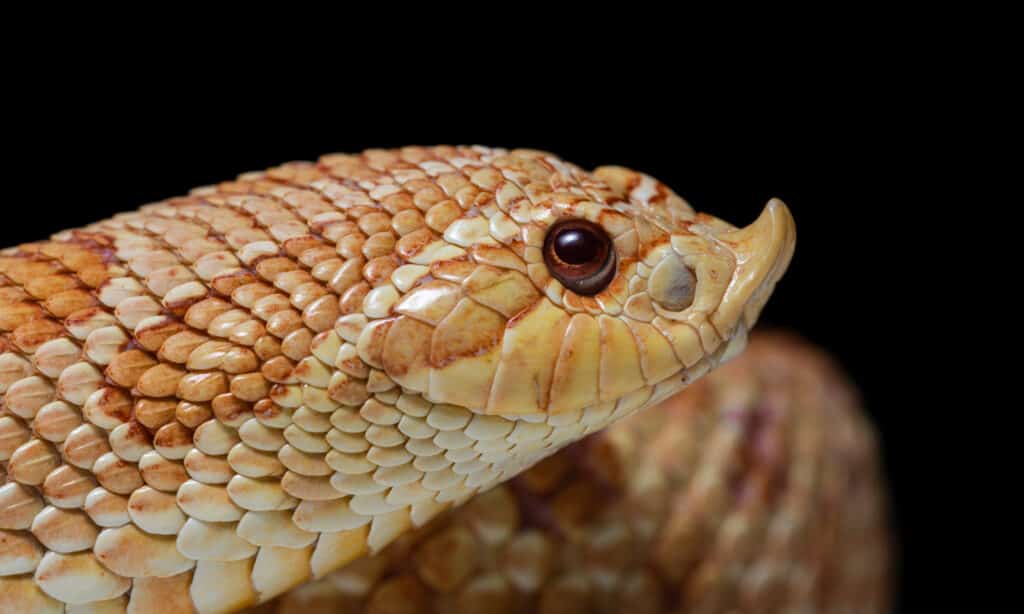
©Ana Dracaena/Shutterstock.com
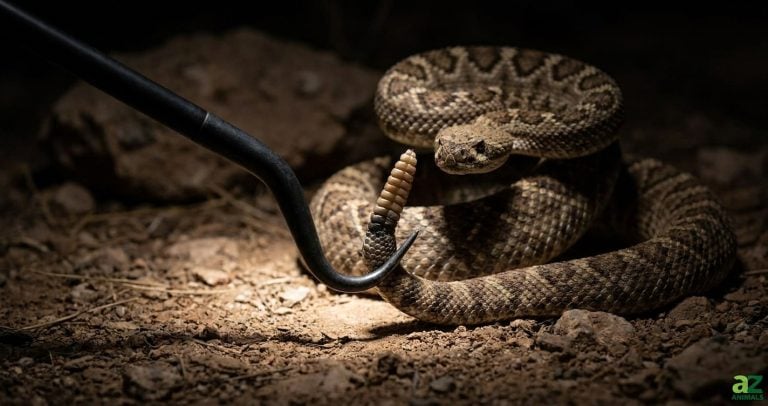
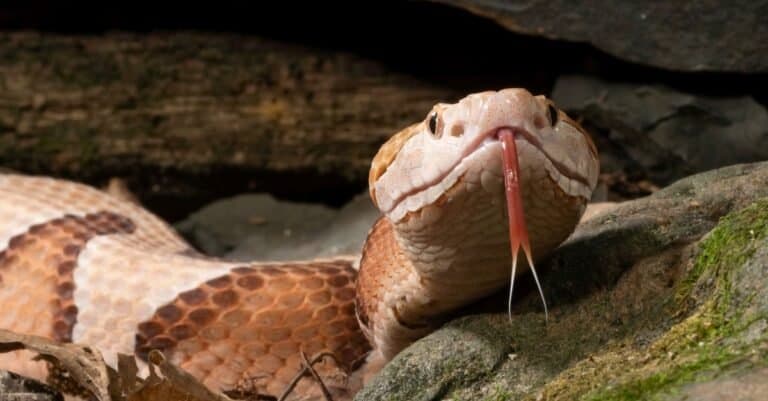
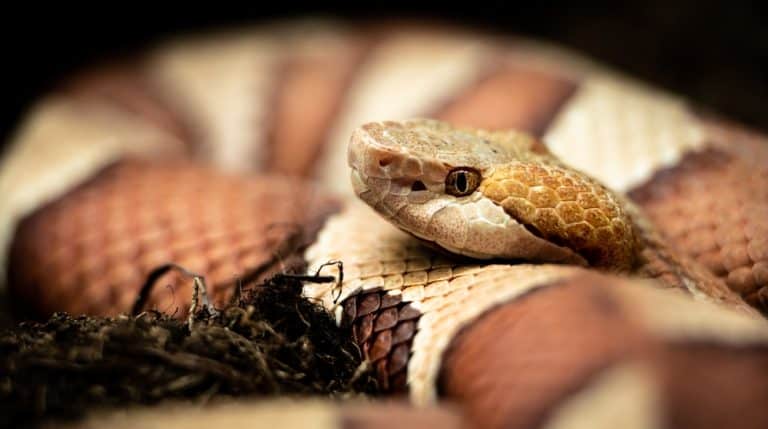
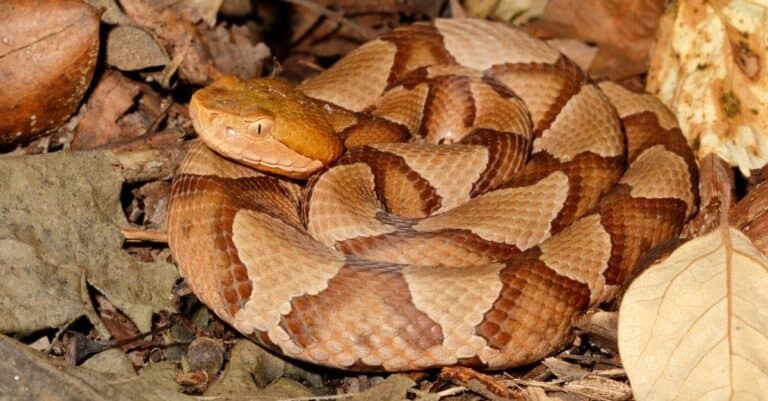
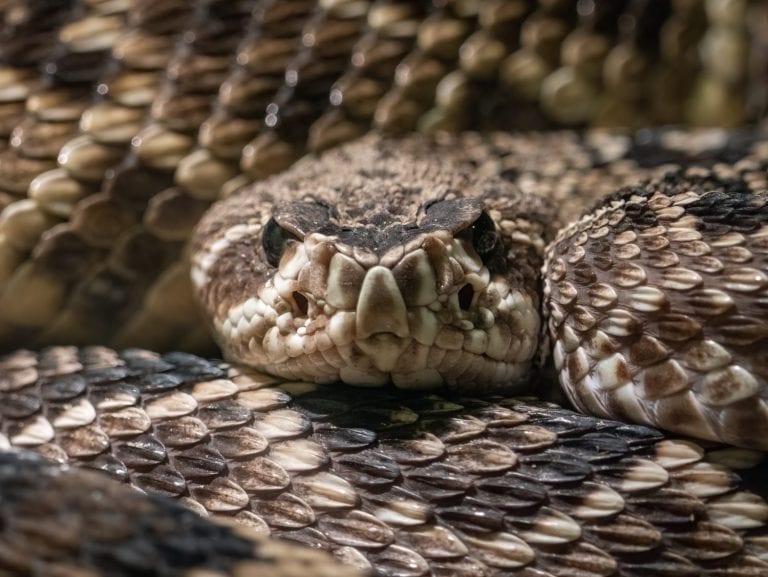
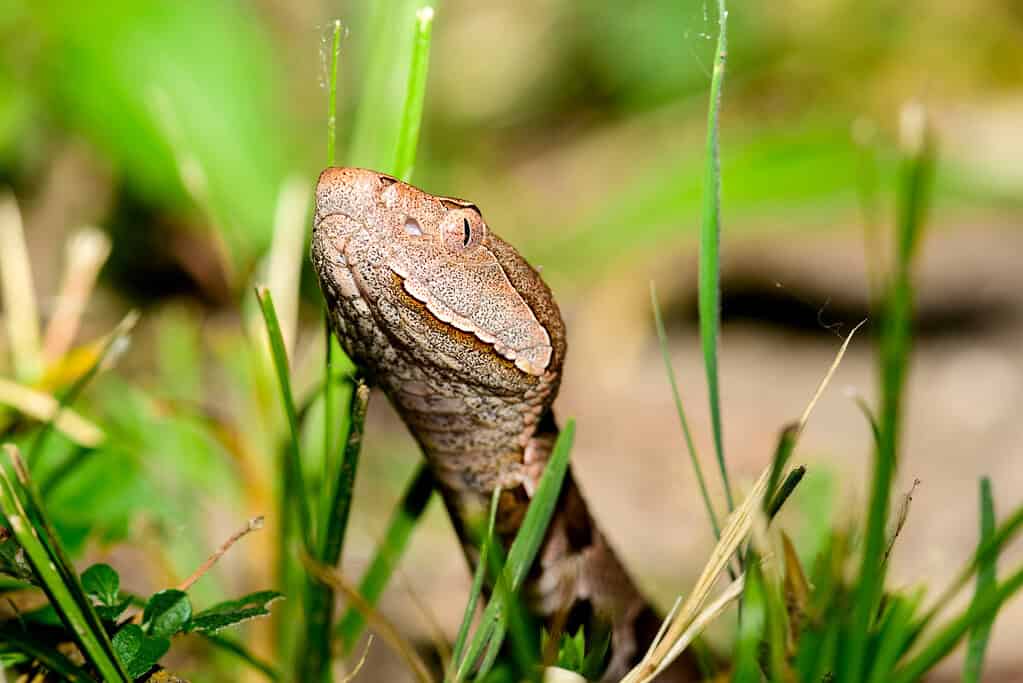
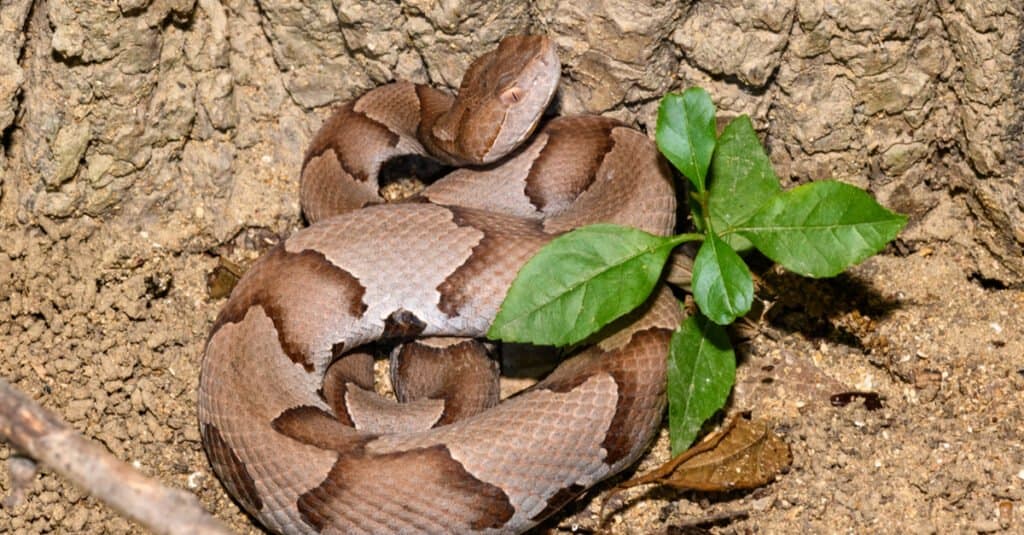
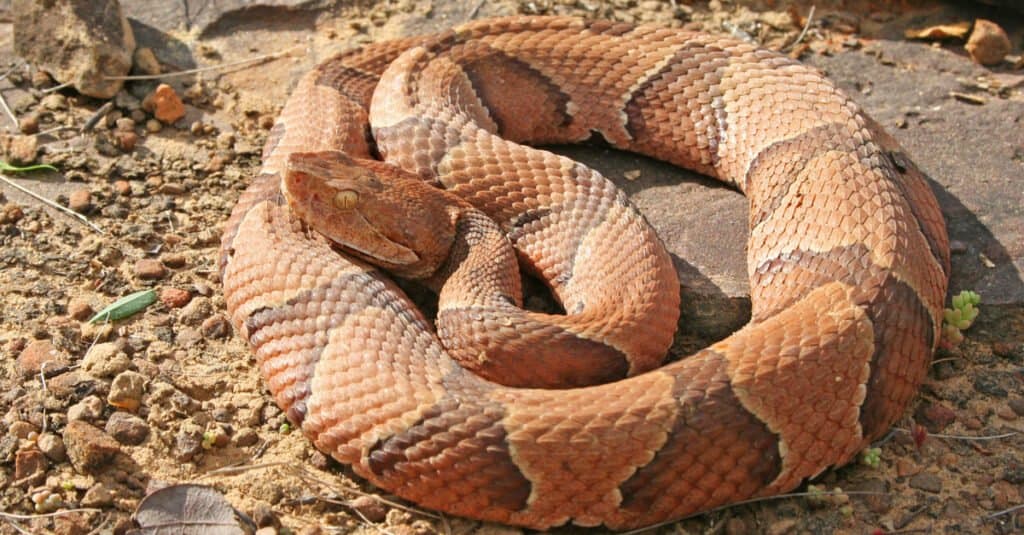
Copperheads are named copperheads for a reason. They have warm, coppery heads with crisp hourglass crossbands, varying in placement and pattern size. Their bodies are relatively stout, but the triangular head, vertical pupils, and heat-sensing pits between their eyes and nostrils give away their pit viper origins.
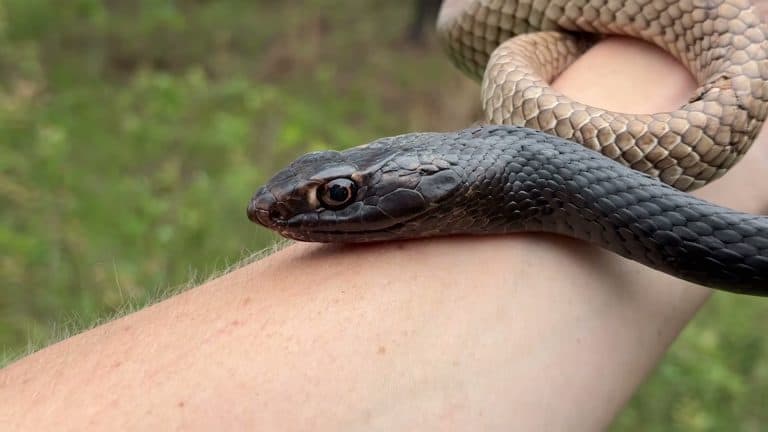
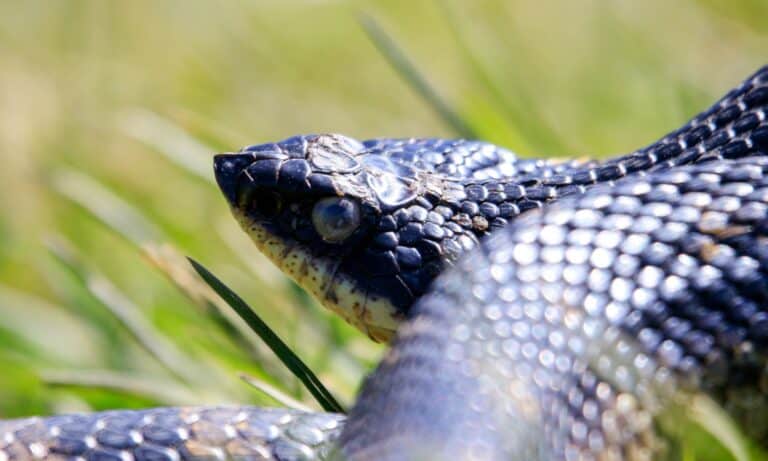
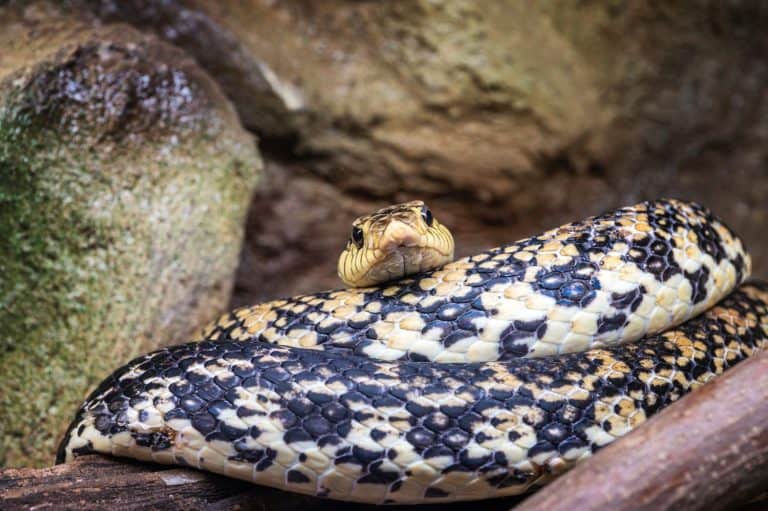
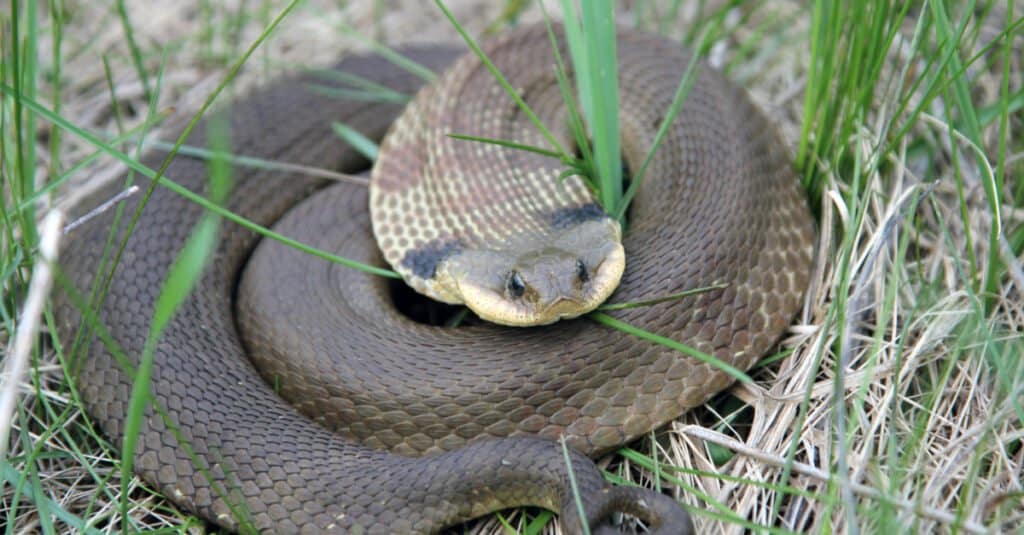
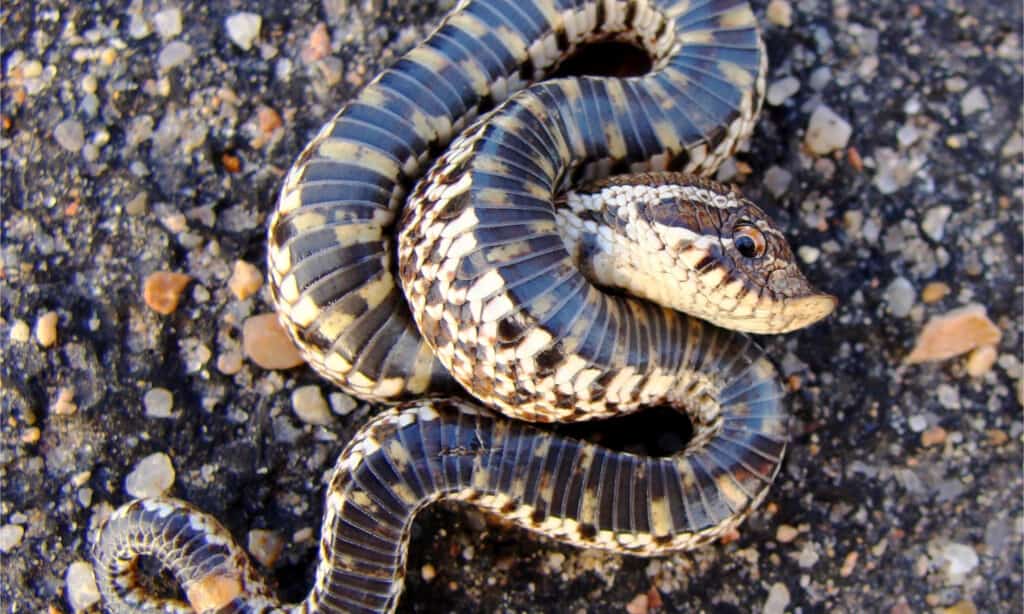
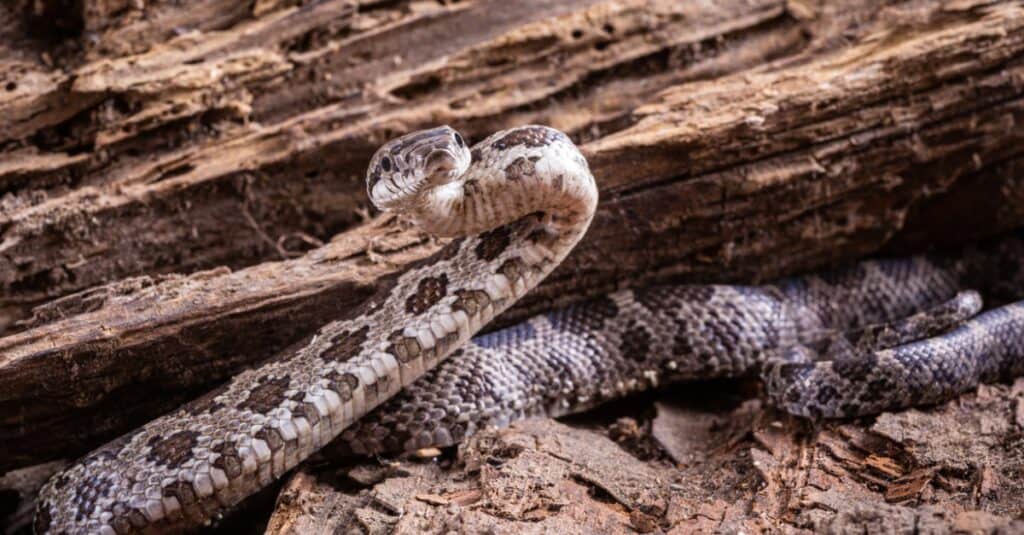
Eastern hognose snakes look similar, especially given that they also use their coloration to hide amongst leaves and debris. Color can range from yellow or orange to gray, brown, or nearly black. Many display bold blotches, but some are completely patternless. The snout is distinctly upturned, designed for digging in sandy soils, which is the reason why they have their unique namesake.
Size and Lifespan
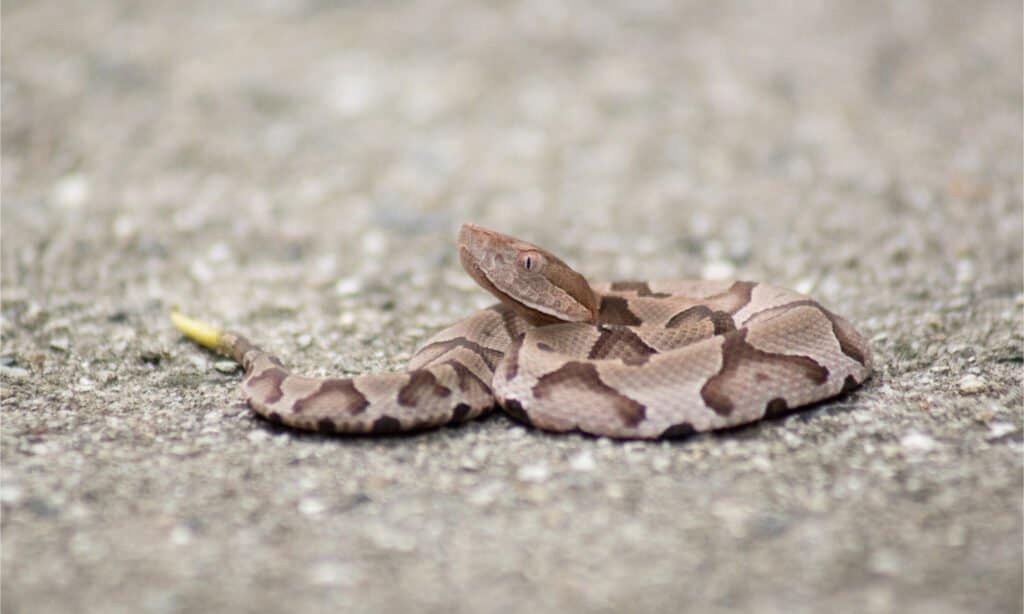
©woodphotography LLC/Shutterstock.com
Adult copperheads typically measure 2 to 3 feet, with some females growing slightly larger. They are thick-bodied for their length and commonly live a decade or more in the wild, with much longer statistics found when kept in captivity.
When it comes to Eastern hognose snakes, they usually reach 20 to 33 inches, though large individuals can approach 3 to 4 feet. They’re slimmer and lighter compared to copperheads, and are generally built for short bursts of digging and bluff displays. Wild lifespans commonly run several years to a decade, with longer spans occurring under human care.
Range and Habitat
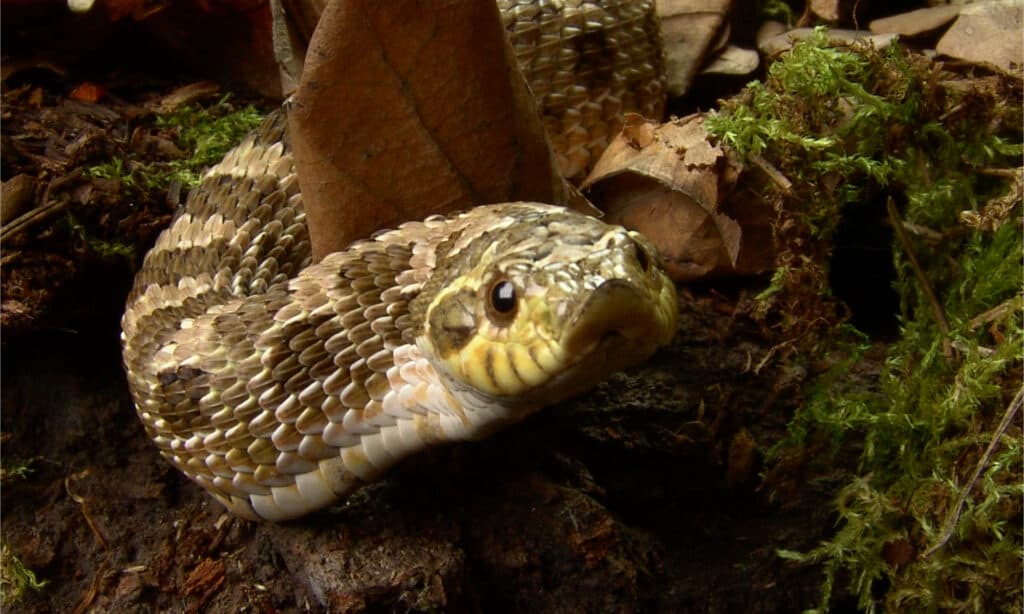
©skifbook/Shutterstock.com
Copperheads inhabit much of the eastern and central United States. They prefer forests and debris-littered sites ideal for hiding. Their overall activity peaks from spring through fall, and in midsummer heat, they often become crepuscular or nocturnal.
The range of Eastern hognose snakes overlaps the copperhead, both in geography and the habitats they enjoy. However, they tend to prefer loose, well-drained soils that are easy to excavate with their snouts. You’re most likely to see them in the daytime, especially on warm, breezy afternoons when their ideal prey is most active.
Behavior
©JWJarrett/iStock via Getty Images
The behavior of copperheads and hognoses differs, especially when we consider their species. Copperheads are sit-and-wait predators. They freeze and let prey wander close, then strike with precision.
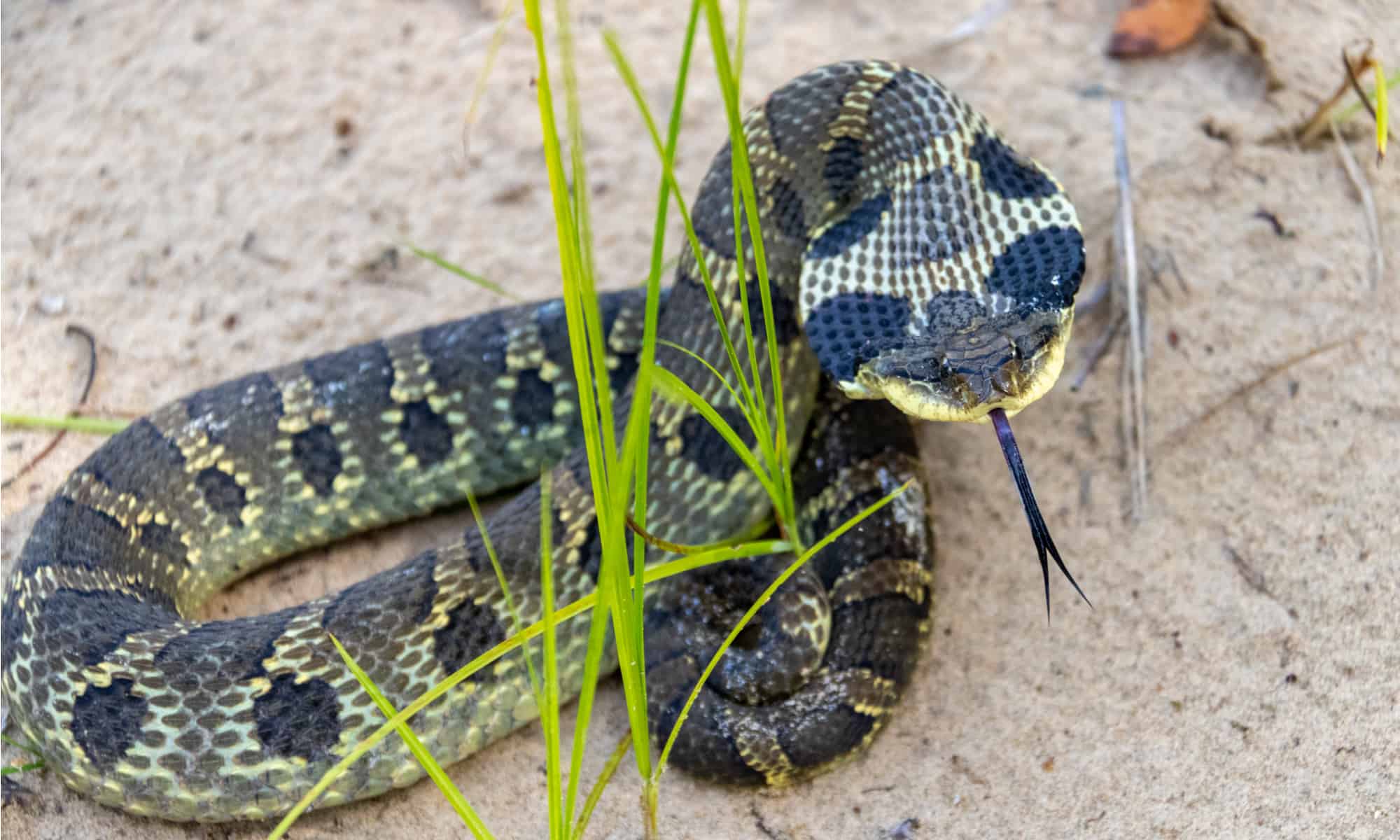
By contrast, Eastern hognose snakes put on a show should anything get too close. Given that they aren’t particularly venomous, bluffing is part of their routine, flattening their necks, hissing loudly, and fake striking with a closed mouth. They also have the habit of playing dead or releasing an offensive musk to ward off predators.
Diet: What They Eat
©iStock.com/deepspacedave
Copperheads regularly eat rodents, lizards, frogs, birds, and large insects when available. Eastern hognose snakes specialize in amphibians more than any other prey. Toads are the hognose’s favorite meal, as they have a natural resistance to the toxins found in toads, which many other snakes, including copperheads, generally lack.
Weapons and Defenses
©Jeff W. Jarrett/Shutterstock.com
The danger of these two snakes is very different. Copperheads possess front-hinged fangs and hemotoxic venom that immobilizes prey and can cause significant tissue damage. For people, bites are painful and medically important, with lasting injuries and rare fatalities possible if care isn’t sought.
Eastern hognose snakes are rear-fanged and produce a mild venom. In humans, legitimate bites are unusual and typically result in minor local effects, but no true lasting damage. Hognoses will always prefer to avoid conflict whenever possible.
Reproduction and Seasonality
©Matt Jeppson/Shutterstock.com
When it comes to reproduction, hognoses and copperheads continue to differ. Copperheads are viviparous, giving birth to live young in late summer or early fall. Courtship often occurs in spring, with males engaging in ritualized combat for females during the breeding season.
Eastern hognose snakes, by contrast, are oviparous. Females lay eggs in midsummer soils, rotting logs, or abandoned burrows. Hatchlings emerge later in summer, already equipped with their trademark nose.
Who Would Win in a Match-Up?
©Creeping Things/Shutterstock.com
In a real encounter between these two very different snakes, the odds favor the copperhead. Eastern hognose snakes will almost certainly escalate their faux displays of power and then play dead to avoid conflict. If cornered beyond escape, its mild rear-fanged bite isn’t designed to stop a pit viper.
Copperheads, meanwhile, have all the tools to end a fight with a hognose quickly, should they choose to engage. However, most wild encounters between these snakes don’t become violent. The hognose’s acts and displays usually buy time to slip away, and copperheads would often prefer to conserve energy rather than risking injury.
Humans Should Avoid These Snakes
©iStock.com/chas53
When it comes to humans, the copperhead is the snake that warrants ample medical caution. For snake-on-snake fights and showdowns, the copperhead’s venom and ambush style give it the clear edge. However, the Eastern hognose may still win if it’s able to play dead well enough. There’s no clear outcome, but humans are better off avoiding both snakes whenever possible!