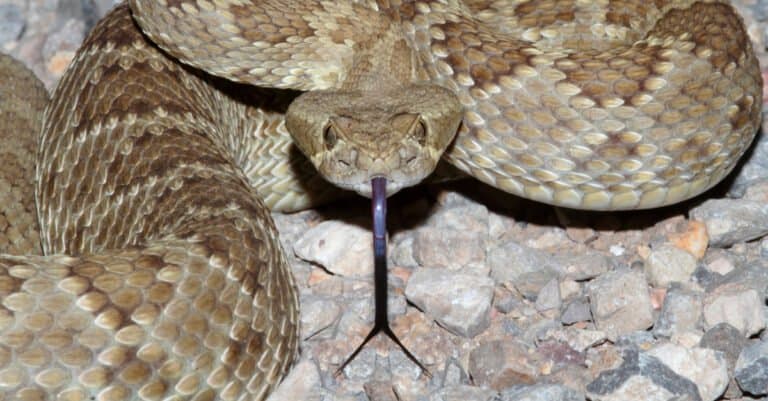
Just about every state in the United States has a rattlesnake population. However, there are just two states that the tiger rattlesnake calls home. This is because the venomous rattlesnake prefers particular, arid environments that most states cannot provide. Consequently, very few people have run across a tiger rattlesnake while out hiking or exploring.
If a person were to come into contact with a tiger rattlesnake, they might assume the snake is a juvenile given its small stature. These are not large rattlesnakes like some other species, such as the diamondback or timber rattlesnakes. But that does not mean that, from time to time, a massive tiger rattlesnake is not discovered, which makes the tiger rattlesnakes found in the 1950s or 1980s so interesting to learn about.
Largest Tiger Rattlesnakes Ever Discovered Were Massive

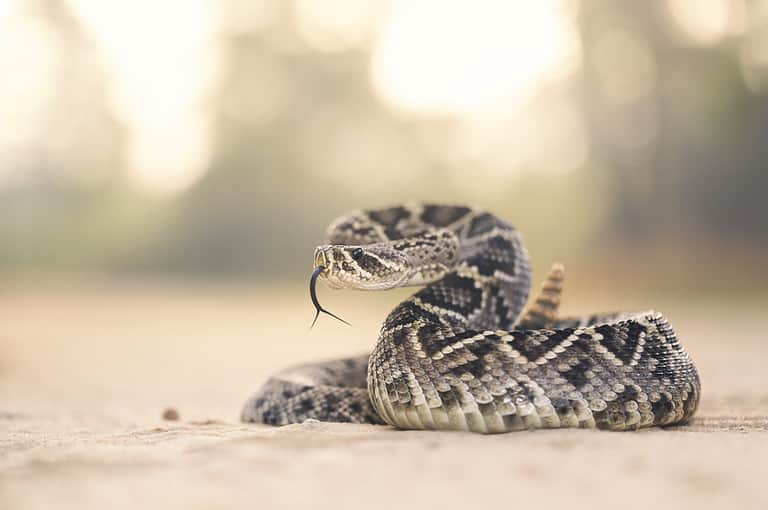
The largest tiger rattlesnakes ever found were 38.4 inches long and 35.9 inches long, in 1956 and 1982, respectively.
©K Hanley CHDPhoto/Shutterstock.com
In general, tiger rattlesnakes are a smaller species of rattlesnake. The tiger rattlesnake typically measures an average of 24 inches in length, allowing the snake to curl up and become nearly invisible as it blends into its surroundings when danger is present.
While tiger rattlesnakes are not large, larger specimens have been found over the years that are substantially larger than the average tiger rattlesnake. The first was located in 1956 by Laurence Klauber. Klauber noted his discovery in his book, Rattlesnakes: Their Habits, Life Histories, and Influence on Mankind, an Abridged Version, which became the encyclopedia on all things rattlesnakes for decades. The tiger rattlesnake was reportedly 38.4 inches long. Whether the snake was captured alive or dead is unknown.
The record Klauber set in 1956 was broken in 1982. H.M. Smith and Edmund D. Brodie, Jr. recorded their findings in their book, Reptiles of North America: A Guide to Field Identification. The tiger rattlesnake they discovered was 35.9 inches long. What happened to this tiger rattlesnake is not known. Since the early 1980s, there have not been any larger tiger rattlesnakes discovered. Tiger rattlesnakes tend to keep to themselves and are not always easy to locate, which may be the reason for the lack of larger discoveries. It could also have to do with the habitat in which the snakes tend to live, which is often incredibly hot and uninviting.
Where Tiger Rattlesnakes Live

Tiger rattlesnakes are found in Arizona, New Mexico, and Mexico.
©Jon Bolton/Shutterstock.com
Almost every state in the nation has at least one rattlesnake species that calls it home. As for the tiger rattlesnake, its territory is rather limited, preferring to live in the southwest region of the United States. Specifically, the tiger rattlesnake inhabits central and southern Arizona, as well as southwest New Mexico. The snake also inhabits the northern region of Mexico, primarily in the state of Sonora. Consequently, there are only a few areas where people may encounter these highly venomous snakes.
These specific regions of the U.S. and Mexico are chosen by tiger rattlesnakes due to the low rainfall and high temperatures, both of which the tiger rattlesnakes require to thrive. However, the landscapes play a significant role in why tiger rattlesnakes choose these areas to inhabit. The regions are known for having rocky hillsides, desert canyons, and grassland. All of these habitats are arid and provide ideal living, hunting, and hiding places for tiger rattlesnakes.
Tiger Rattlesnakes’ Many Colors

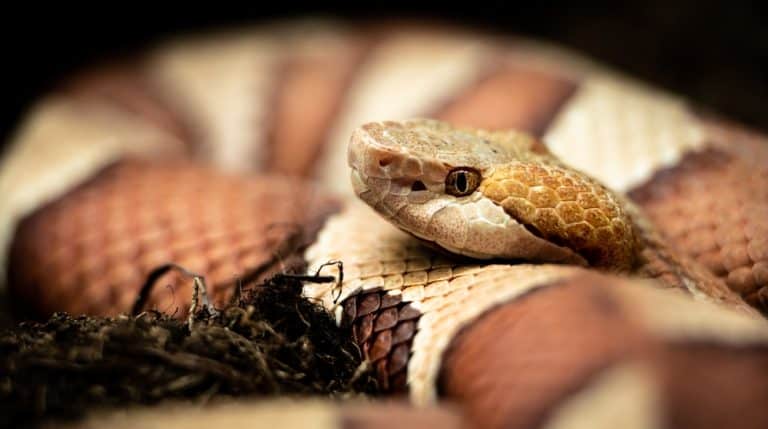
Tiger rattlesnake can be any combination of five different colors.
©DnDavis/Shutterstock.com
Tiger rattlesnakes would be easier to spot if they followed a simple, unified coloration across their bodies. However, given that tiger rattlesnakes can come in a multitude of colors, identifying one can prove to be difficult to do.
Most snakes have a few shade variations within their species. When it comes to tiger rattlesnakes, the species can be any of five different colors. Those colors include:
- Gray
- Lavender
- Pink
- Yellowish brown
- Orange
While the colors alone may not be enough to identify the tiger rattlesnake, there are some distinct characteristics that help the tiger rattlesnake stand out from other rattlesnakes. Specifically, tiger rattlesnakes are the only rattlesnakes that have crossbands on the anterior portion of their bodies. While the crossbands may be a bit “blotchy” near the neck, they become more pronounced as they move down the body, resembling the appearance of a tiger. Each snake has 34 to 52 of these crossbands on the front part of its body and four to 10 on its tail. Neither age nor sex determines the number of crossbands the snakes have. Additionally, the snakes have small heads that are not proportionate to their bodies and large rattles on their tails.
Tiger Rattlesnakes Do Not Always Rattle Their Tails Before They Strike

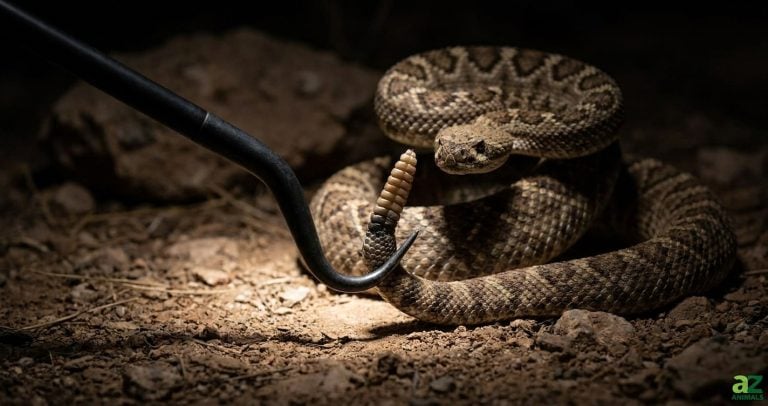
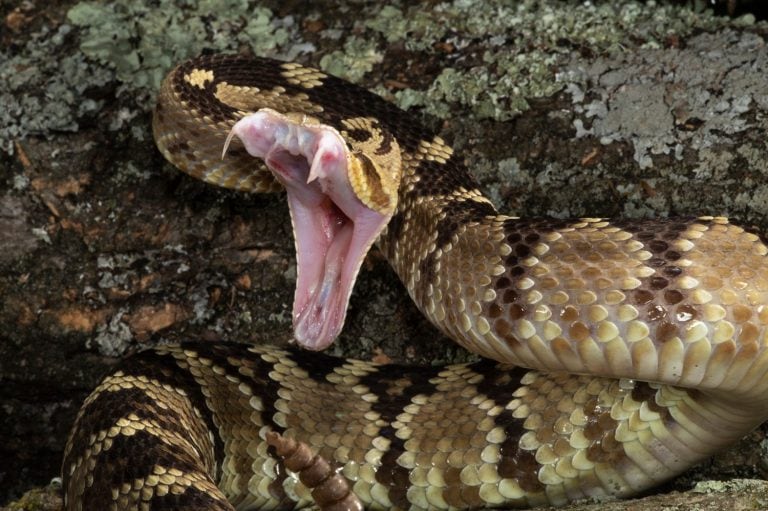
Tiger rattlesnakes will not always rattle their tail or coil up before they strike.
©Dan_Koleska/Shutterstock.com
Tiger rattlesnakes have massive rattles on their tails. These rattles are used to warn any animal or person they perceive as a threat to back away or face being bitten. However, while it is good practice to back away if rattles are ever heard, the unfortunate truth is that tiger rattlesnakes do not always shake their tails to warn of a strike.
This rule of not rattling before a strike is not specific to tiger rattlesnakes. Whether a rattlesnake will make its presence known before striking all depends on the age of the rattlesnake, whether it has had an opportunity to grow any rattles, the mood of the rattlesnake, and just how much danger it believes it is in. If the rattlesnake believes it has time to warn of its presence, it will shake its rattles. But if the perceived threat comes upon the snake quickly, it will not rattle, nor will it coil before striking.
The fact that rattlesnakes do not always warn before striking can lead to unwanted bites in regions where rattlesnakes are known to live. This can be particularly dangerous for those who unknowingly come into contact with the tiger rattlesnake, given the potency of its venom, which is not only more potent than that of other rattlesnakes but also all snakes in the Western Hemisphere.
Tiger Rattlesnakes Are the Most Venomous of All Rattlesnakes

Tiger rattlesnakes are the most venomous of all rattlesnakes and are the second most venomous snake in the Western Hemisphere.
©Vladislav T. Jirousek/Shutterstock.com
Like all rattlesnakes, tiger rattlesnakes are venomous. The main difference is that tiger rattlesnakes have one of the most potent venoms, not just among rattlesnakes but among all snakes in the Western Hemisphere. Tiger rattlesnakes do not inject massive amounts of venom into those they bite. However, the venom that is injected is the most potent of all rattlesnakes, just ahead of the Mojave rattlesnake. The venom, like that of the Mojave rattlesnake, contains neurotoxins (damaging nerves), which can lead to paralysis, respiratory failure, or worse. There are also myotoxins in the venom that can cause muscle damage and paralysis.
Unlike the Mojave rattlesnakes, which are aggressive toward people, the tiger rattlesnakes are not. They bite people so infrequently that there is limited information on the various symptoms that occur after the bite. Additionally, while the venom is incredibly potent, the fact that the fangs are short and produce relatively little venom at the time of a strike is why the antivenom is so effective for those bitten by the tiger rattlesnake.
Tiger rattlesnakes have been known to grow to some incredible lengths. That, combined with their potent venom, makes them a formidable foe. Fortunately, the snakes would prefer to stay away from people, which is why so few attacks have been recorded, and there have not been more illnesses or fatalities attributed to the tiger rattlesnake.