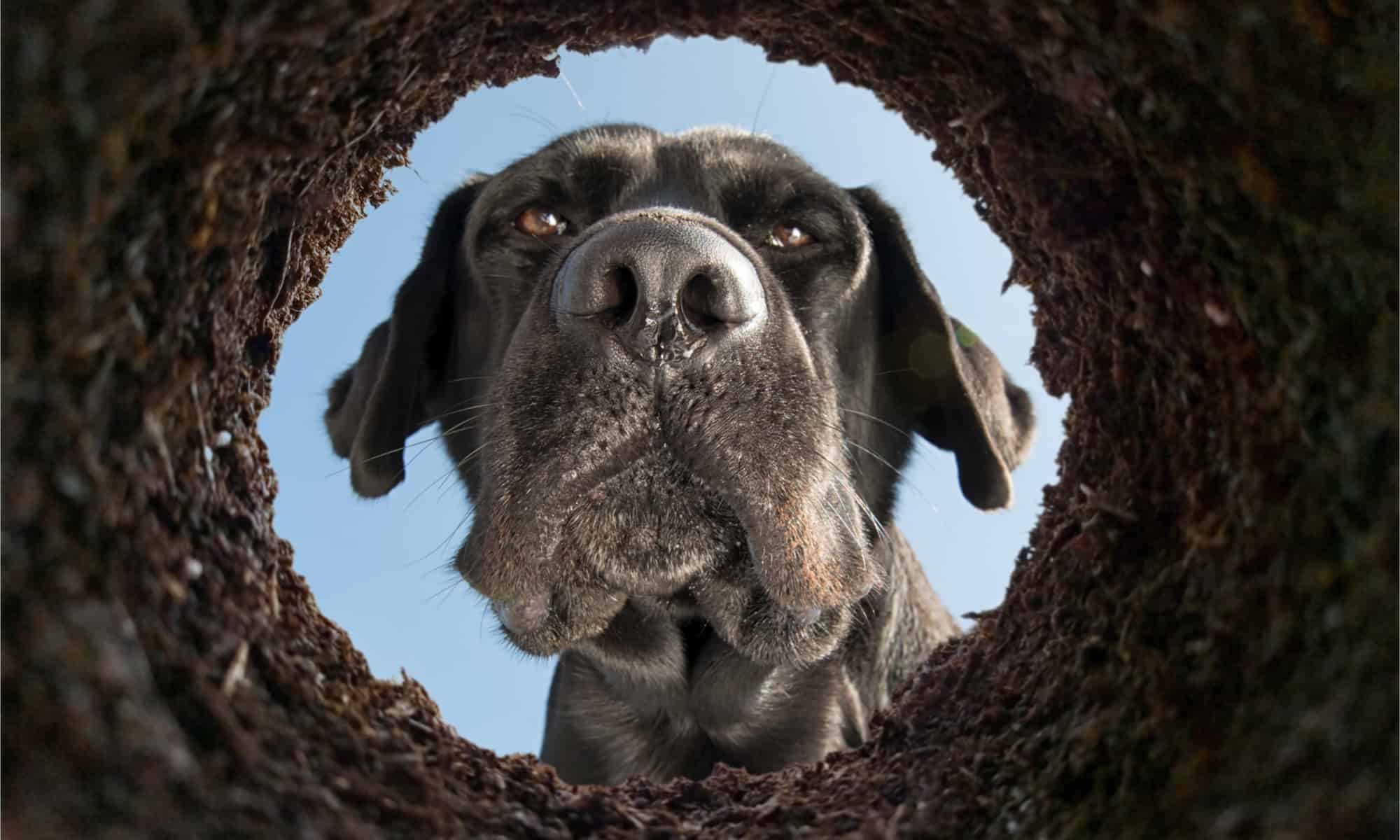

Is your dog’s digging in your yard driving you crazy? Have you given up trying to maintain a lawn or flower bed because your four-legged friend destroys it in a matter of hours? You are not alone! Many dog owners complain of this irritating behavior, but the good news is that there is plenty you can do about it.
Despite the fact that dogs have been domesticated for tens of thousands of years, they still display some behaviors that we find hard to accept. Digging up your garden is one of them. This activity seems to bring delight to the dog, but it very rarely makes their owner happy. So, why do they do it? Is there anything that we can do to discourage them? Read on to find out everything you need to know about dogs and digging.
Wild Dogs and Digging

Domestic dogs are descended from grey wolves.
©AB Photographie/Shutterstock.com
You can find the origins of many domestic dog behaviors by watching their ancestors and distant relatives. Our pet dogs are directly descended from grey wolves and are in the same family as many other wild dog species. There is plenty of evidence that wild canines like to dig!
Pregnant Mexican wolves dig dens in which to whelp their pups. Other wolves dig holes to help with temperature regulation. Maned wolves dig after burrowing prey, and check out this clip showing a wild dog in Botswana enthusiastically digging a large hole! So it is hardly surprising that many domestic dogs retain this behavior.
Why Do Domestic Dogs Dig?
Strictly speaking, your domestic dog no longer ‘needs’ to dig to survive because you provide food, shelter, and look after their well-being. However, that does not mean that the behavior will just disappear.
If you can pinpoint the cause of the behavior, you stand a chance of eliminating it or at least reducing it. Taking this action will probably make your dog happier at the same time. While digging may make dogs happy, it can also be a sign that something is wrong. Here are some reasons why your dog may be digging, with some potential remedies.
Seeking Prey
You may not realize that little animals are living under the ground in your yard, but your dog probably will. They may be trying to access insects or even small burrowing mammals. Signs of this will be your dog digging at the roots of trees or shrubs. They may also be digging in a specific area instead of randomly around the yard. You may also notice that they are digging along a specific path or in a particular pattern.
Digging Remedy
Check your yard for signs of burrowing animals or insect infestations and use appropriate pest control methods to tackle them. However, do not use any products that could be toxic or dangerous for your dog. If you must use traps, place them in a part of the yard your dog cannot access.
Seeking Shelter

Dogs may dig to find shelter.
©Hannah Dahl/Shutterstock.com
Your dog may be digging in hot weather to try to regulate their temperature. Lying in the cool dirt can be an effective way of reducing their body temperature. If your dog is left out in the yard when the weather is cold or wet, they may dig to find shelter. Signs of this are that your dog is digging near the foundations of a building or in the shade. Another sign is that your dog is lying in the holes that they have dug! On some occasions, dogs will dig to find water.
Digging Remedy
Find another way to provide the shelter that your dog is seeking. If your dog lives outdoors, provide them with an insulated doghouse so they are not exposed to extreme temperatures. In hot weather, provide your dog with some cooling aids. This could be a small swimming pool or a fan. Some owners find that cooling mats and vests are also highly effective. If your dog insists on running around in the sun, consider using a leash to limit their movement.
However, some dogs still prefer to make their own shelter in the dirt despite their owners’ best efforts. If yours is one of them, give them a specific area where they are allowed to dig so that they can find protection. Always provide your dog with fresh water in a bowl that cannot be tipped over.
Trying to Escape
Dogs may dig to escape if they are trying to get to something (or somewhere) or are trying to get away from something. A sign of this is that your dog constantly digs along the fence line or has been successful in burrowing under the fence. It is common for an intact male dog to go to extreme measures to get out of your yard if he detects that there is a female in heat in the neighborhood!
Digging Remedy
The remedy for this sort of digging is often physical as well as behavioral. You will probably need to make adjustments to your yard to make sure that your dog cannot get out. Many owners find that burying chicken wire at the base of the fence is a useful deterrent. However, make sure to roll the sharp edges away from the yard to prevent paw injuries.
An alternative is to place large rocks, partially buried, along the fence. It may also help if you bury the bottom of the fence. However, it will need to extend at least one or two feet below the surface of the ground for this to be effective. Finally, some owners have placed chain link fencing on the ground near the boundary fence, which makes it uncomfortable for the dog to walk in this area.
You also need to think about why your dog is so desperate to escape from your yard. Is there something inside the yard that is worrying or frightening them? Is your yard boring and is this making the outside world a lot more exciting? Is your dog being provided with sufficient food and water, or is it trying to seek these outside of your yard?
Looking for Attention

Playing with your dog can reduce digging.
©bogdanhoda/Shutterstock.com
If your dog has learned that by digging in the yard, they get your attention, then this could have become repeated behavior. Sadly, for dogs, even negative attention is often better than no attention at all. A sign of this will be that your dog always digs in your presence and that they have little in the way of interaction with you when they are not digging.
Digging Remedy
This will be hard, but the best remedy is not to give your dog attention when they dig! Try to ignore it. At the same time, interact with them in a fun way in the yard, giving them plenty of mental stimulation so that they don’t resort to being ‘naughty’ to get your attention.
Seeking Entertainment
Dogs will often indulge in instinctual behavior because it makes them feel good. Digging may be a sort of self-play, and they may be doing it simply because they enjoy it. A sign of this will be that your dog is left alone in a yard for long periods of time with very little else to do. If your yard has no toys or no playmates, then digging is a fun option for your dog. Younger dogs dig more often because they are more energetic and curious. Breeds that have been developed to dig as part of their job (including terriers), are more likely to indulge in this behavior. Active and sporting breeds, such as spaniels, are also more likely to dig in the dirt.
Digging Remedy
Give your dog something else to do that is more fun! Start with plenty of exercise outside of the home. Take your dog on a ‘sniffari’ where they are allowed to sniff whatever they want. This will allow them to use both their brains and their bodies as they’re exploring your neighbourhood.
When you are in your yard together, play with a ball or a frisbee to give your dog something else to focus on. Spend at least 5 to 10 minutes a day working on new tricks or commands and consolidating those that your dog already knows. When you cannot be in the yard with your dog, you can still make it interesting. Kong-type toys filled with paste (or frozen vegetables) will keep a dog occupied for quite some time. Rotate a variety of toys in the garden to keep your dog interested and engaged.
What Not to Do
Punishment for digging never works. The dog is unlikely to understand what they have done wrong, and it will not stop them from doing it again. It can cause anxiety in dogs, which may even make them resort to this comforting behavior even more. Filling the hole with water or squirting your dog with water are also not useful.
The Bottom Line
Digging is a natural canine behavior exhibited by both wild and domestic dogs. Your pet dog can dig for a variety of reasons, ranging from entertainment to trying to escape. They may even be trying to bury something! There are lots of remedies that you can try to get around it, but you need to identify the root of the problem first.
Dogs who have all of their needs met and who are both physically and mentally stimulated sufficiently are far less likely to dig. Punishment is never the answer. If your dog is a particularly dedicated digger, you may need to provide an area of loose soil or sand as an outlet for this behavior. Dogs can be trained to only dig in this designated area by teaching them some simple ‘dig’ and ‘no dig’ commands. If you suspect that obsessive digging behavior is part of a wider psychological problem, you should always speak to your vet for further advice.