
Quick Take
- Caring for a patient smaller than a penny demands a level of precision that pushes wildlife rehabilitation to its absolute limit. See the precision care →
- Almost no wildlife center in Colorado can do what this one does for hummingbirds, and the reason why is rarer than you'd think. Discover what makes this center rare →
- A hummingbird chick must clear four distinct survival stages before release, and failing any one of them is not an option. View the four survival stages →
- What fills the role of an absent mother for a 0.62-gram chick is not what most people would guess. Meet the surrogate mother →
At the Colorado Wildlife Center, one of the tiniest animals was saved and rehabilitated. After being rescued from abandonment, the center helped a small hummingbird hatchling. Caring for such tiny patients requires a great deal of attention. This Instagram reel from @nocowildlifecenter shows this process as the baby grew bigger. Read on to learn more.
Continue reading

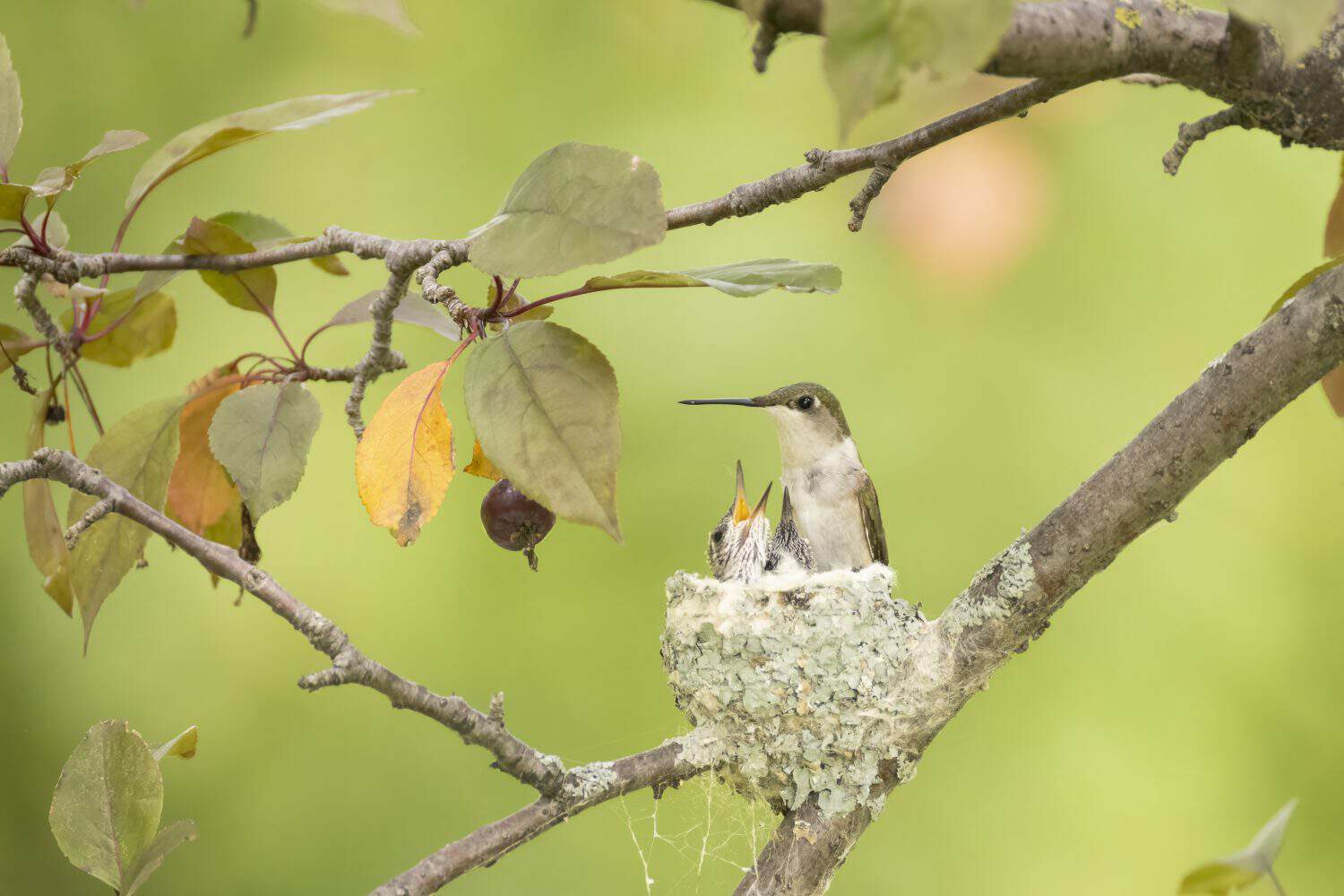
Without parental care, a hummingbird chick may not receive the food, warmth, and protection it needs to survive.
©RobDemPhoto/Shutterstock.com
Hummingbird Rescue
The video above comes from the Northern Colorado Wildlife Center. The center is one of the only ones in the state that helps hatch hummingbirds. Thanks to their efforts, one of the tiniest patients out there is receiving excellent care. The video above shows a hummingbird chick that, while still an egg, had unfortunately been abandoned by its mother. After discovering the egg, staff brought it to the center for incubation and hatching. The baby was smaller than a penny and weighed roughly 0.62 grams! This is definitely one of the smallest patients out there. At this size, constant attention is ideal to make sure it is developing healthily. The video offers a rare behind-the-scenes look at work that is seldom shown on social media.
Just like many other rescue and rehabilitation centers, the goal is often to produce a self-sufficient hummingbird that can survive in the wild. The length of the rehabilitation process depends on the species, but it can take anywhere from a few weeks to several months.
The chick needs to go through the normal development stages for each bird. These stages include hatchling, nestling, fledgling, and finally, independent adult. With proper care, the chick will develop stronger muscles, more feathers, better coordination, and improved vision, all of which will help it survive in the wild.
The center provides the specialized care and resources needed to support this development. This includes safety from predators as well as food, water, and medicine that replaces what the mother would have provided.
Thanks to the Northern Colorado Wildlife Center, chicks just like the one in the video are given a chance to survive in nature.