
Quick Take
- One reef has already crossed the point of no return, and the cause might not be what you'd expect. See the collapsed reef →
- Heat is killing coral reefs, but scientists say a seemingly unrelated fishing practice may be sealing their fate. Discover the fishing threat →
- The dollar value of what's at stake when a reef collapses will likely surprise you. See the economic stakes →
- Scientists say there's a narrow window to act, though the strategy they're calling for isn't what most people assume. Explore the action window →
The first global coral reef assessment under the IUCN Red List of Ecosystems revealed startling news. Nearly every assessed shallow-water coral reef ecosystem on the planet faces an extremely high risk of collapse by 2075, with 96% being classified as Critically Endangered.
What, if anything, can be done to save the world’s coral reefs?
What the Research Showed
The study looked at every coral reef system in warm, shallow waters across 127 tropical and subtropical eco-regions. It covered more than 72,000 square miles of coral reefs around the world. It found that 122 of them qualify as Critically Endangered.
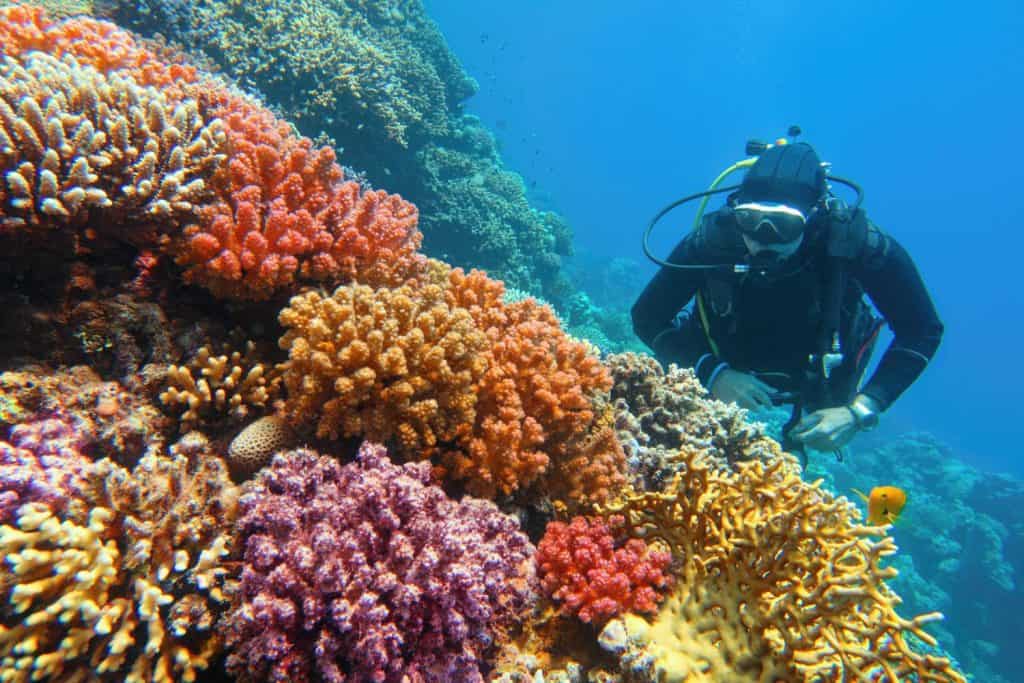
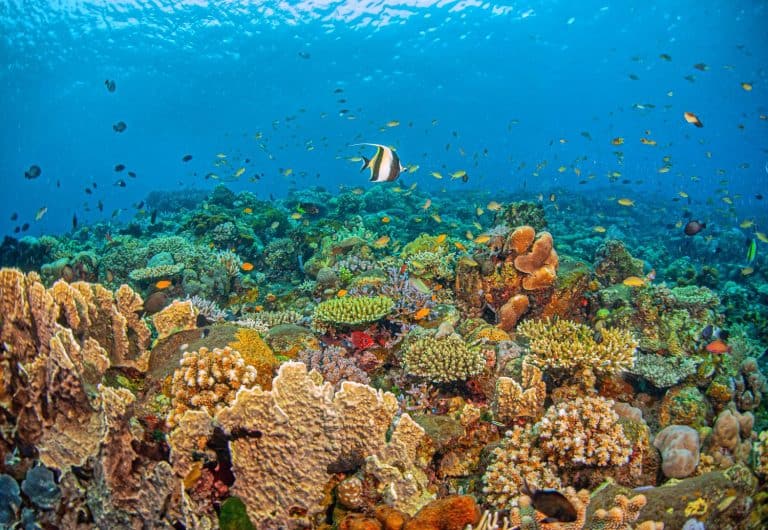
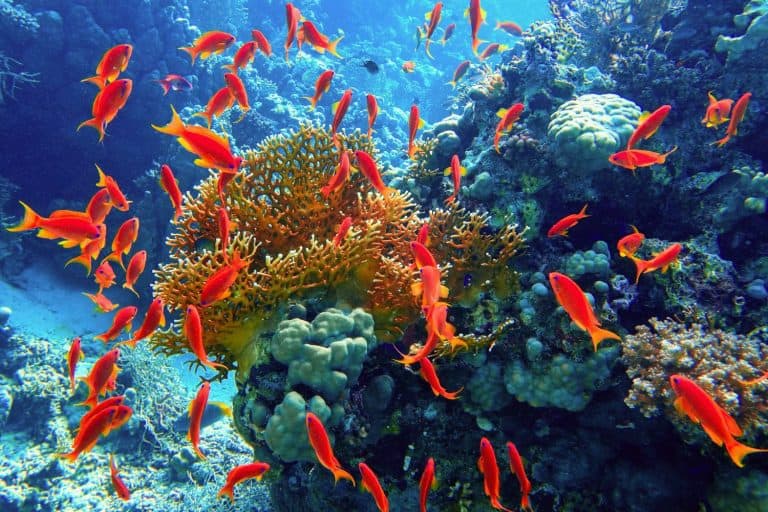
Healthy coral reefs may just be a memory by 2027, according to the IUCN’s latest assessment.
©Tunatura/Shutterstock.com
Critically endangered means the ecosystem is at extremely high risk of collapse. The study evaluated the risk of ecosystem collapse using historical observations, current conditions, and future projections of ocean warming.
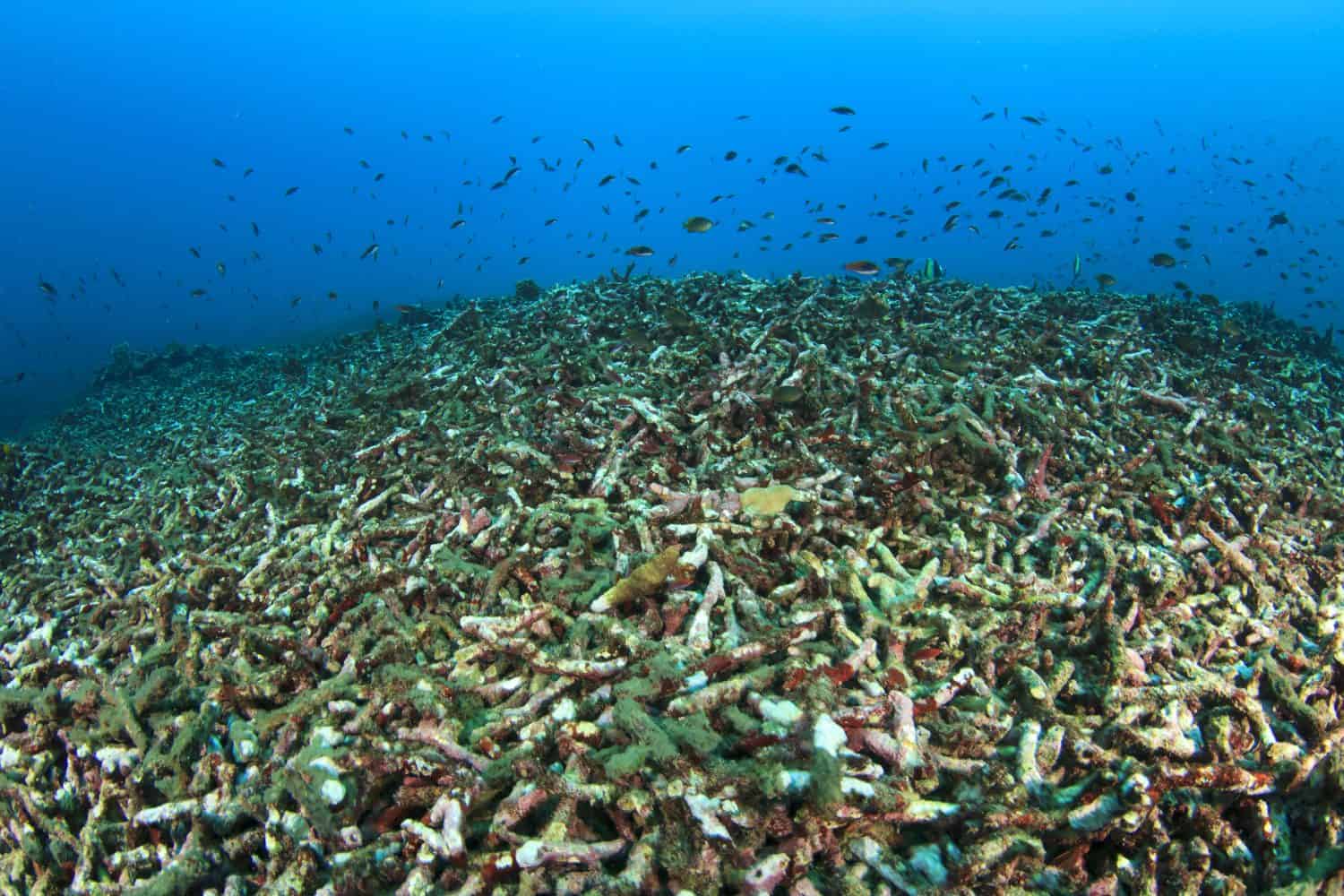
Of the remaining five reefs that didn’t qualify as Critically Endangered, one (Western Galápagos Islands) already collapsed after the 1982-83 El Niño event. The four others lacked enough data to make a determination.
What Does Collapsed Mean?
A coral reef is considered “collapsed” once it loses its defining features. Hard corals, which are foundational for the reef’s living and growing inhabitants, virtually disappear and are replaced with algae, rubble, and sponges. When that happens, the reef can no longer support diverse marine life. Food webs, from the smallest invertebrates to reef fish to large pelagic predators, are disrupted.
“Coral reefs are one of the clearest vital signs of the ocean’s health. They support a quarter of all marine species and serve as an early warning system for the state of the seas. Their decline is depriving countless species of the food, shelter and breeding grounds they depend on, while threatening the safety and livelihoods of coastal communities and undermining key economic sectors such as fisheries, aquaculture and coastal tourism,” said Dr Grethel Aguilar, IUCN Director General.
What Is the Biggest Threat to Coral Reefs?
Marine heatwaves are the top threat to the world’s coral reefs. Heat stress already threatens 77 percent of reef ecosystems. The researchers say 95 percent of the Critically Endangered coral reefs are threatened from heat alone.
When water temperatures get higher than normal, it causes corals to become stressed. The stress causes the algae the coral depends on for food to disappear. Without that food source, the coral turns white. While bleached coral doesn’t always die right away, the longer extreme water temperatures last, the higher the chance that the coral won’t be able to tolerate it and will die.

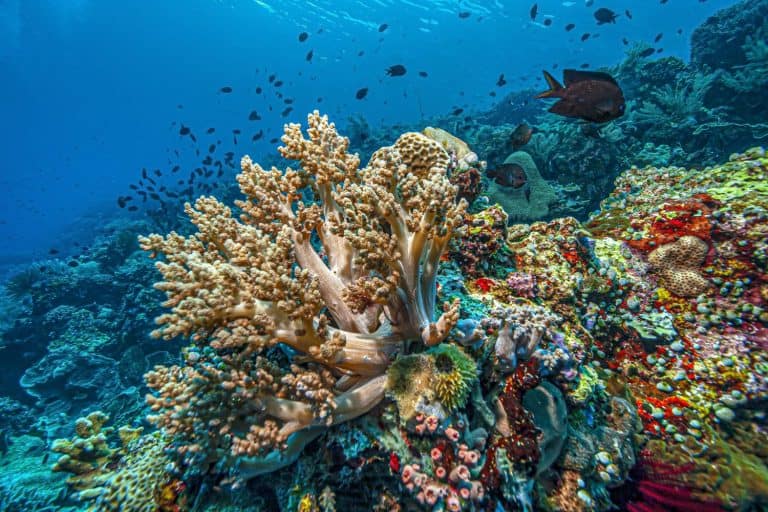
Human-caused global warming is the biggest threat to coral reefs.
©Ed Connor/Shutterstock.com
One such global event occurred in 2024. Coral reefs experienced significant bleaching driven by record-breaking ocean heat fueled by human-caused climate change.
“Corals carry a deep evolutionary record of coping with environmental change, yet the reef ecosystems we see today are remarkably young, shaped over only the last 5,000 to 7,000 years of stable climate. Ocean warming is now outpacing anything in their history, and recurring heatwaves are causing mass bleaching faster than reefs can recover or adapt,” Marcos Valderrábano, Programme Manager at IUCN, Red List of Ecosystems said in an article detailing the new report.
Heat Isn’t the Only Threat
Overfishing is another threat to healthy coral reefs. Across several regions, including East Asia, the Western Indian Ocean, the Caribbean, and Brazil, overfishing of parrotfish and grouper is a major current threat.
These herbivorous and predatory species help control competitive algae and balance the marine food web. When these species disappear, the ecological balance is disrupted and the reef’s ability to recover from heat stress is undermined. The researchers believe overfishing threatens 63% of coral reef ecosystems.
Coastal development, pollution, overtourism, industrial development, aquaculture, more frequent storms, freshwater flooding, and crown-of-thorns starfish outbreaks are also significant threats driving reef degradation and ecological imbalances, according to the news release.
Why Coral Reef Loss Matters
Healthy reefs support the food, income, and coastal protection of hundreds of millions of people. Reef tourism is estimated to be a $36-billion-a-year industry. One study linked 70 million trips annually to coral reefs.
But it’s about more than money.
Reefs provide flood protection to coastal communities. In the U.S. alone, reefs protect more than 18,000 people and more than $1.8 billion a year in hazard risk reduction.

Coral reefs protect and support many coastal communities and residents.
©PTAP Aerial/Shutterstock.com
Reefs also support numerous industries, including fishing, dive operations, and coastal tourism. When reefs die, the people and businesses relying on them suffer, too.
What Can Be Done?
Change begins with understanding the data. The assessment was compiled through the work of more than 250 coral reef experts and combines decades of reef monitoring data, degradation records, and satellite records of sea-surface temperatures.
“This landmark assessment is an important step towards understanding and protecting coral reef ecosystems, highlighting a critical 50-year window for conservation action. Continued monitoring, reliable data and regular assessments are essential to track changes, evaluate conservation efforts and guide future action,” Daniela Picco, Executive Director of the MSC Foundation, a major funder of the assessment, said in the press release.
Now that the scope of the issue is known, work can begin on strategies to mitigate future damage.
“It is not too late to give coral reefs a chance to recover, but it requires decisive action to tackle climate change and halt further ocean warming. We know what is needed: ambitious emissions reductions, stronger protection and restoration efforts, and sustained investment in resilient coastal ecosystems and the communities that depend on them,” Aguilar said in the news release.