
Quick Take
- Emperor penguins survive Antarctic winters by huddling in massive groups that trap and share body heat.
- Tiny, synchronized steps ripple through the huddle every 30 to 60 seconds, slowly rotating penguins from cold edges to the warm center.
- Scientists have modeled these movements using traffic-jam physics and thermal convection to explain how waves form.
- This constant motion creates a warm microclimate that helps adults incubate eggs and keep chicks alive in subzero conditions.
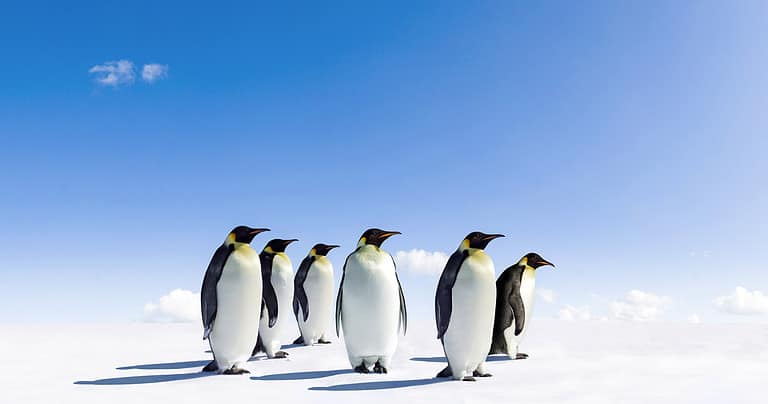
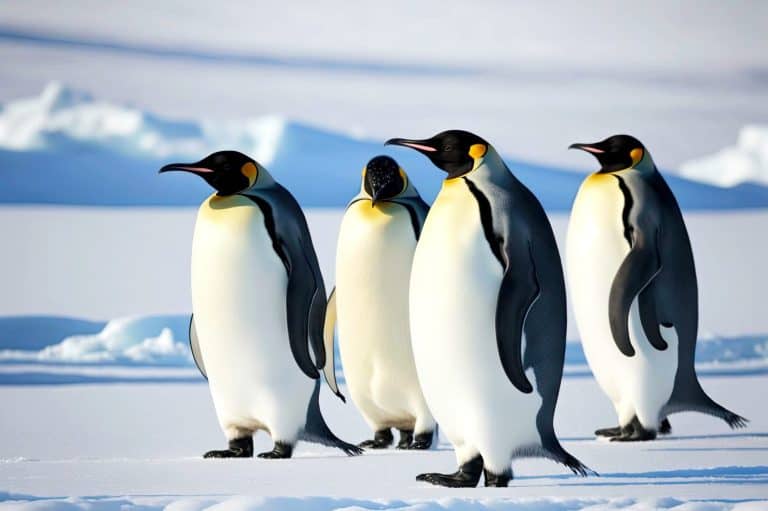
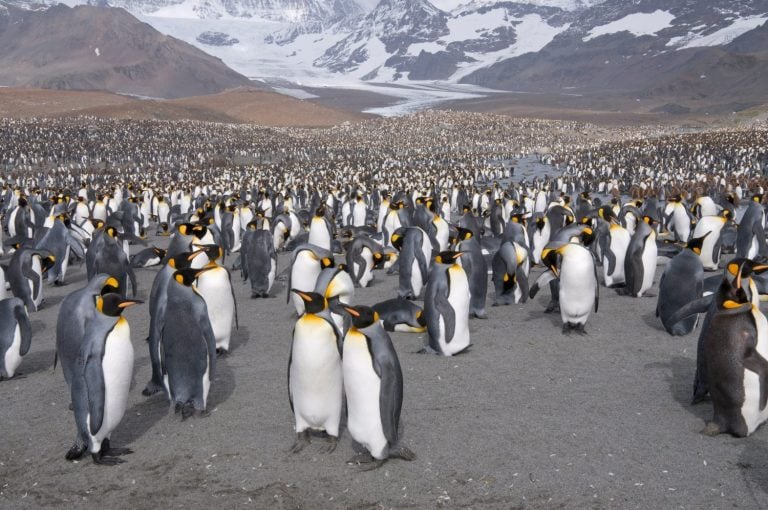
Even when temperatures drop below zero degrees Fahrenheit in the frigid Antarctic, emperor penguins can stay toasty warm. The penguins huddle together in groups of more than 5,000 adults and chicks, using each other’s body heat as a furnace. The center of the group is the warmest, but the penguins on the outer edges must bear the frigid winds. However, the penguins are fair. They are in constant motion, with each bird slowly waddling and cycling from the outer edges to the warm center. However, organizing a crowd of thousands is complicated, and the mechanics of the penguins’ wave-like movement have fascinated scientists for years. Recently, scientists have used thermodynamic models to better understand huddle movement.
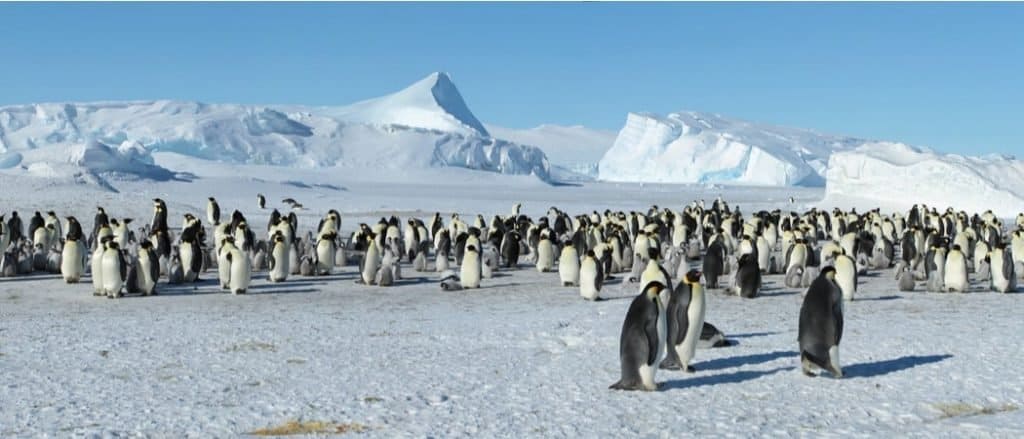
Penguins have many adaptations to survive extreme cold, including gathering in huddles for warmth.
©Sergey 402/Shutterstock.com
Penguins Make Tiny Coordinated Movements in Their Huddle
Scientists used to believe that penguins in huddles were too tightly packed to move. They thought the penguins on the colder edges were the unlucky ones, stuck on the periphery while the penguins on the inside benefited from the warmth. The interior of an emperor penguin huddle can reach as much as 99.5 degrees Fahrenheit, even when the temperatures are well below freezing.
This would mean it’s much better to be a penguin in the middle than one stuck on the outside. But this puzzled researchers because penguins do not have a social hierarchy. They aren’t aggressive over territory, they have very few conflicts, and no individual is dominant over the others. Therefore, it seemed that the penguins on the outside were not receiving as many benefits as those in the inner huddle.
Research from 2011 on the birds’ movement as they huddle helped answer this question. Time-lapse footage showed that the penguins move a tiny bit collectively every 30 to 60 seconds. The small steps by each individual form a wave through the group. Over time, these incremental movements reorganize the group, letting each penguin have time in the warm center. The scientists compared these waves to the movement of soft glass. The movements are so slight that scientists did not observe them until they used time-lapse photography.
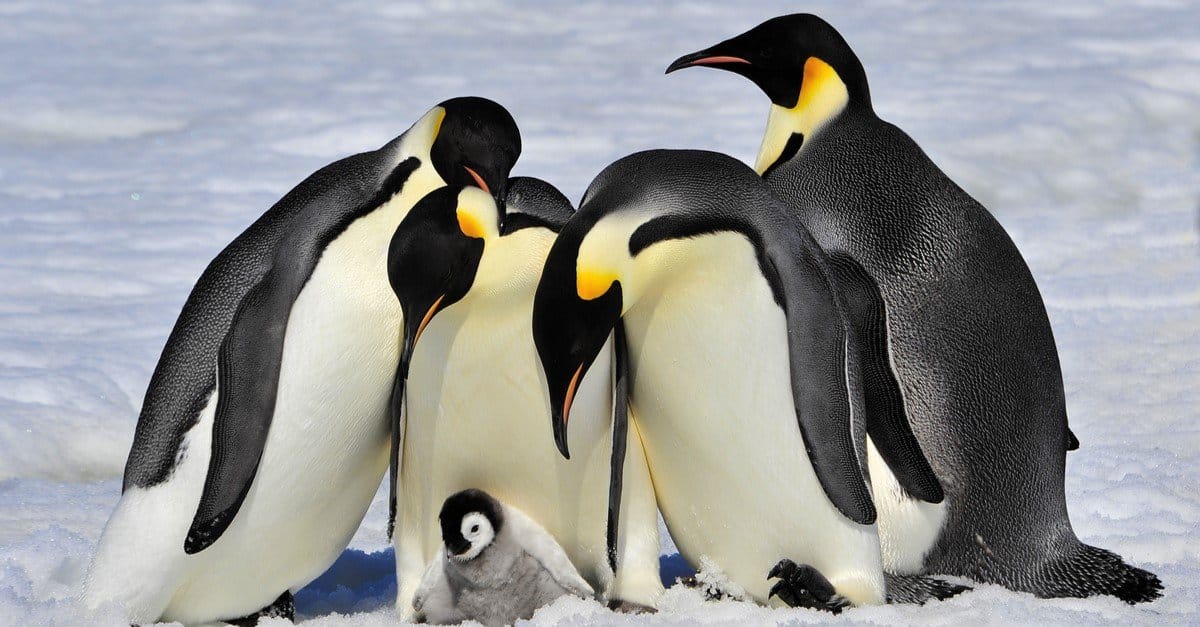
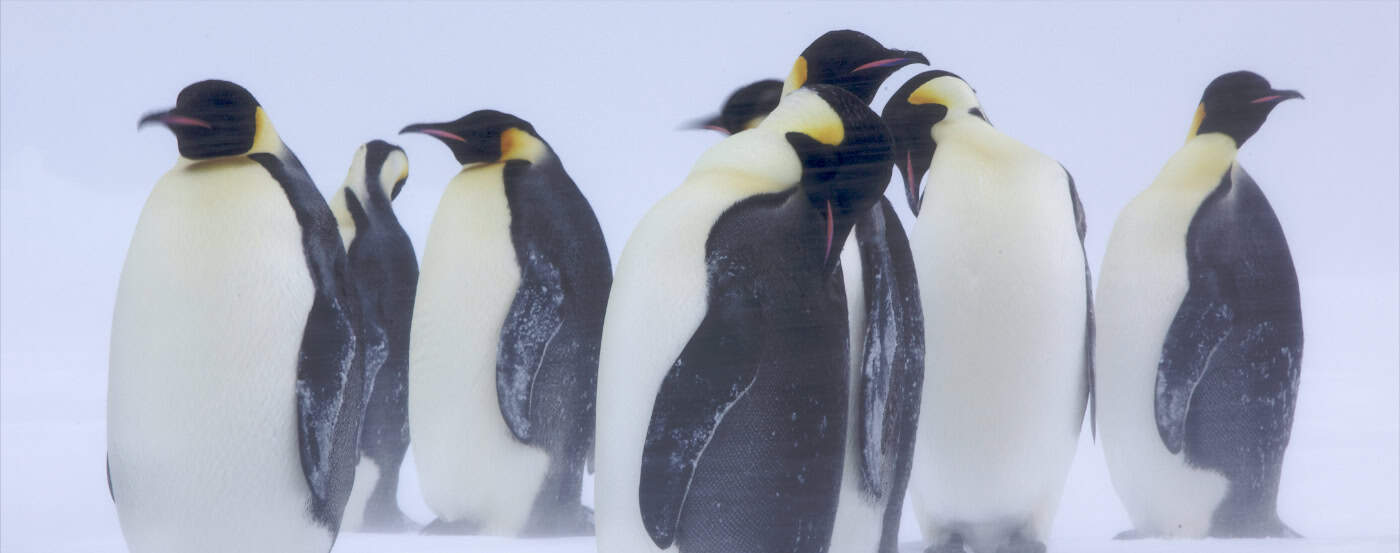
Emperor penguin fathers keep their chicks safe and warm while the mother is at sea feeding.
©vladsilver/Shutterstock.com
A Penguin Traffic Jam
Later research used a traffic jam model to explain how the penguins can move and shift places in such a tightly packed crowd. In a traffic jam, a slowdown from one car affects the cars directly behind it, triggering a wave of movement. In a penguin huddle, when any one penguin steps forward, it can push the penguin in front to move forward and trigger the penguin behind to keep in step. This movement spreads through the group in a wave. Researchers found the wave could start from any penguin anywhere in the group.
Thermodynamics: The Thermal Convection Analogy
Recent research published at the end of 2025 explores how the penguins move in their huddles, using the analogy of thermal convection (a method of heat transfer through liquid). The colder penguins from the outside move to the center, warm up, and then cycle back out again, behaving more like a fluid than a static block. The movement waves act like convection currents, redistributing the warmth evenly for the group and creating a warmer microclimate for the penguins.
The Huddles Allow Eggs and Chicks to Survive Below Freezing Weather
After laying her egg, the female emperor penguin leaves it with her mate as she heads off to sea to feed for nine weeks. The males incubate the eggs during the cold Antarctic winter. Penguins breed in the winter so that when the chicks hatch in the spring, food is plentiful. But incubating an egg during an Antarctic winter means keeping it warm. If the egg touches the ice, it will freeze.
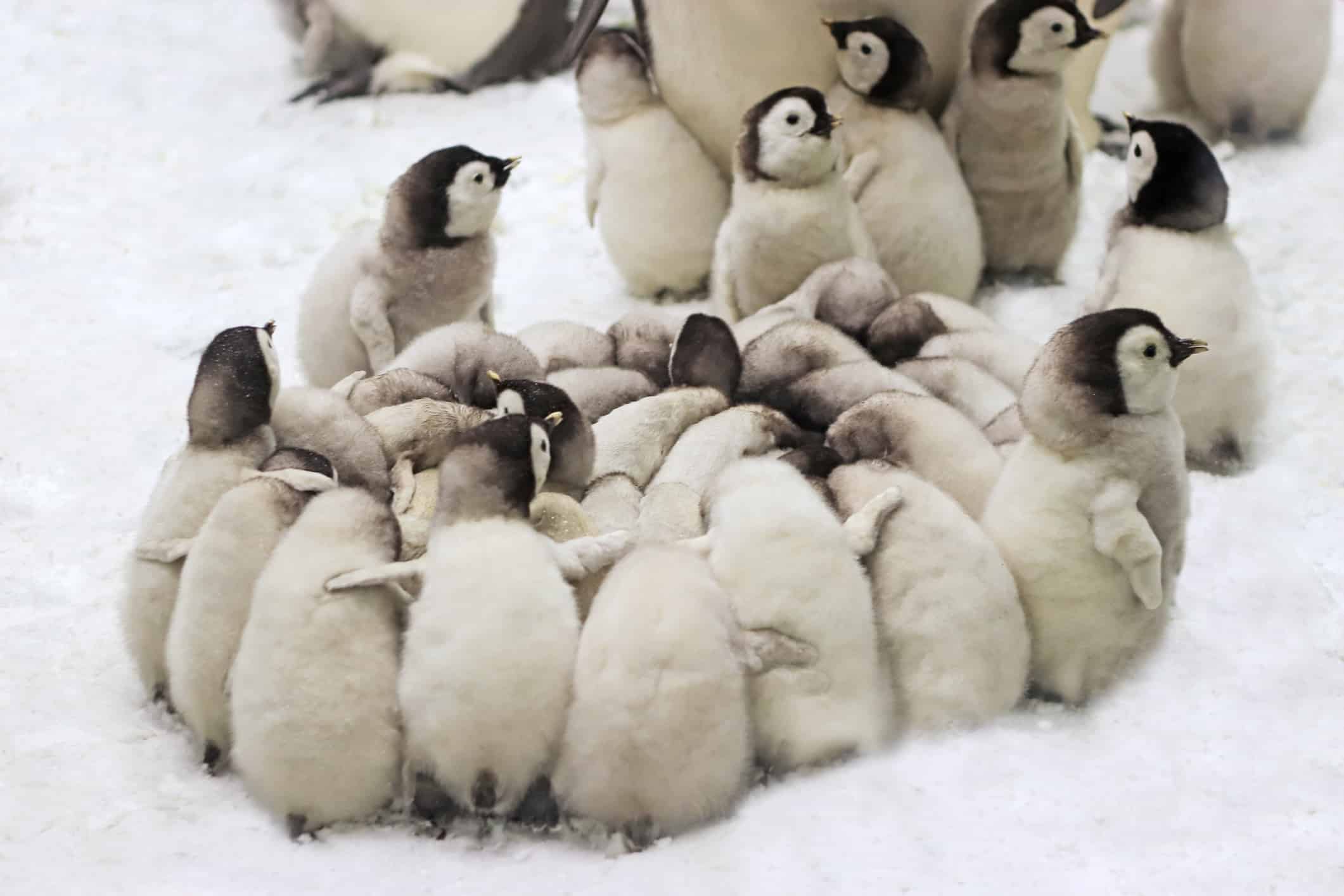
Emperor penguin chicks form their own huddles to protect against the cold and the frosty wind.
©iStock.com/Gabriele Grassl
The males carefully balance the eggs on their feet, tucked warm inside their brood pouch, as they slowly march through their huddles. A brood pouch is a flap of naked skin on the penguin’s abdomen that protects the egg. Once the eggs hatch, the chicks stay warm and safe in their father’s brood pouch and under his fluffy, warm feathers as he shuffles through the huddle to stay warm.
When their parents go to sea to feed, penguin chicks that are a little older form their own huddles, called crèches. While the crèches keep the little penguins warm, they are not nearly as organized and complex as the wave movements of the parents’ huddles. The chicks are young and inexperienced, often competing with each other for the warm center.