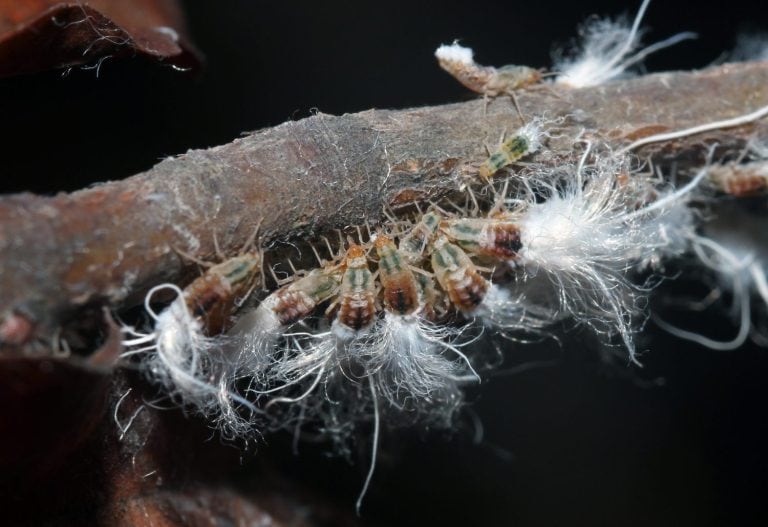
Insects are some of the best camouflagers out there. With so many unique disguises, there are some unimaginable ways that insects hide themselves. One of these insects is the flatid planthopper nymph. Resembling a small tuft of cotton blowing in the wind, this insect is a master of camouflage. This Instagram post by @explainingnature shows this bug up close. Read on to learn more about this insect and how it uses its unique appearance to its advantage.
About the Flatid Planthopper Nymph
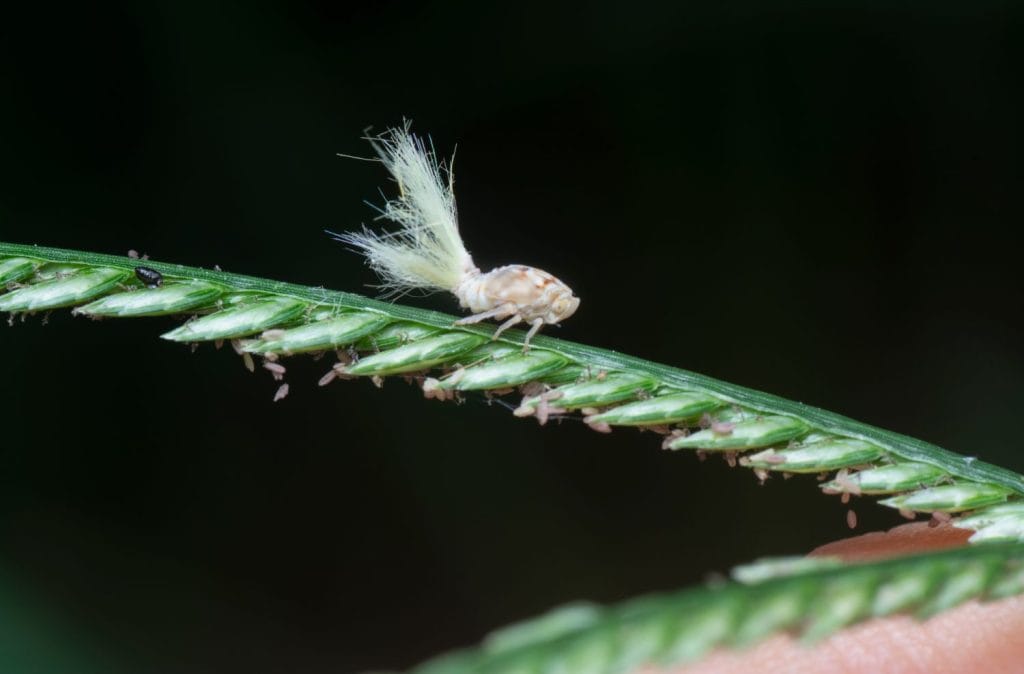
This insect has a waxy coating that repels rain.
©Young Swee Ming/Shutterstock.com
The flatid planthopper nymph is the immature stage of a planthopper. However, these insects receive more attention due to their unique appearance. They are often said to resemble clouds or popcorn thanks to their bright white color and fluffy appearance. Their waxy coating helps to repel rain, one of the biggest threats to an insect so small. Flatid planthopper nymphs, belonging to the Flatidae family, are found in many parts of the world, including North America, Europe, and Asia, with the greatest diversity occurring in tropical regions. They inhabit various host plants such as trees, shrubs, and vines. However, they are most often found on the bottom side of leaves or stems as the cover provides protection from the sun, wind, and rain.
The flatid planthopper nymph is amazing thanks to its camouflage. Although it is a small bug, its fluffy appearance makes it look larger than it actually is. When hunted by a predator, its fluffy body can trick the predator into thinking it is larger than it actually is. Additionally, it also resembles inedible materials. As it moves around, it looks more like a piece of fluff or cotton floating in the wind, making it difficult for animals to distinguish it. When disturbed, the nymph extends fibers from its body, which scatter and reflect light to enhance its camouflage. So while they may be small, they are mighty thanks to their amazing and unique camouflage!