
Few things are as equal parts fascinating and horrifying as watching predators eat their prey… especially when they are still alive. A recent Instagram video is definitely a “viewer beware” situation. It shows the moment a bird finishes swallowing a very much alive snake, with the snake’s head—eyes wide open and mouth gaping—going down last. It’s an unsettling scene, but just ordinary life for this bird, known as a coucal.
Meet the Coucal
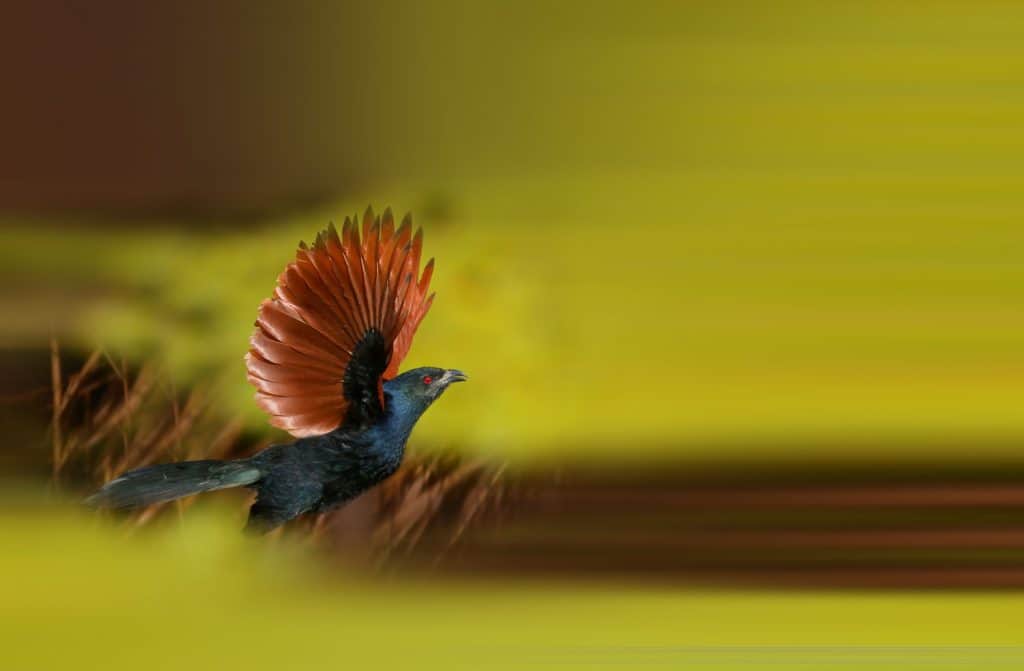
Coucals are poor fliers.
©Wang LiQiang/Shutterstock.com
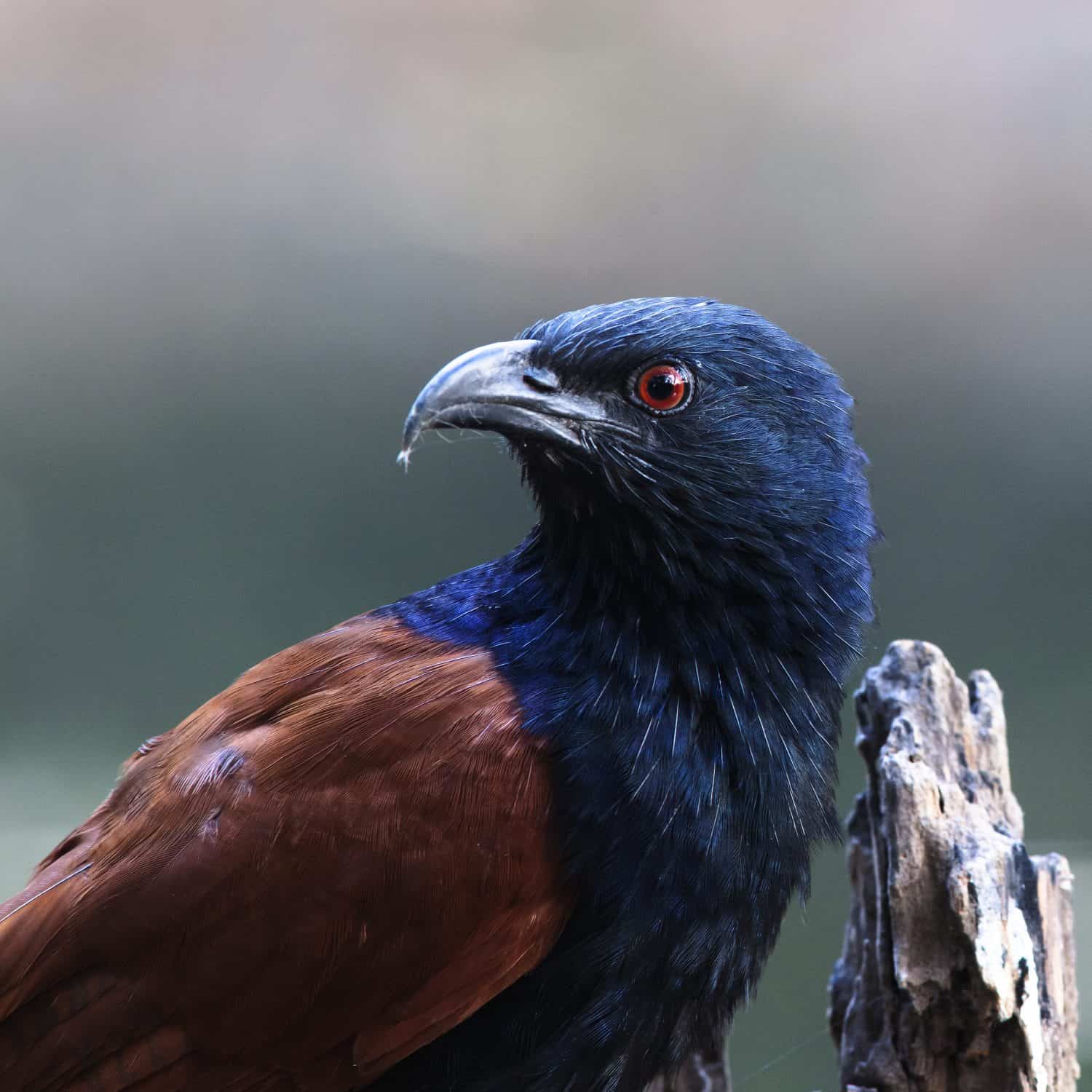
Coucals are members of the cuckoo family that, unlike their relatives, actually care for their own young instead of laying their eggs in another species’ nest. There are about thirty species spread across Africa, South and Southeast Asia, New Guinea, and eastern Australia. They are chunky birds with long, stepped tails, sturdy legs, and slightly curved beaks. Many show rusty-red wing panels on a darker body; others look all black or deep brown. They fly poorly with short, awkward flutters, so they spend most of the day on the ground slipping through grass, reeds, and thorny shrubs.
They like thick cover. Reed beds, tall weedy grass, rice fields, tea estates, thorn scrub, hedgerows, and forest edges all work for them. That low, dense growth lets them stalk food and stay out of sight from hawks. Some species handle human-made places well: farms, canals, village edges, and even scruffy suburban lots. The key is they want good hiding spots near open ground, water, or field margins where insects, small reptiles, and other bite-sized animals are easy to find.
What Do Coucals Eat?
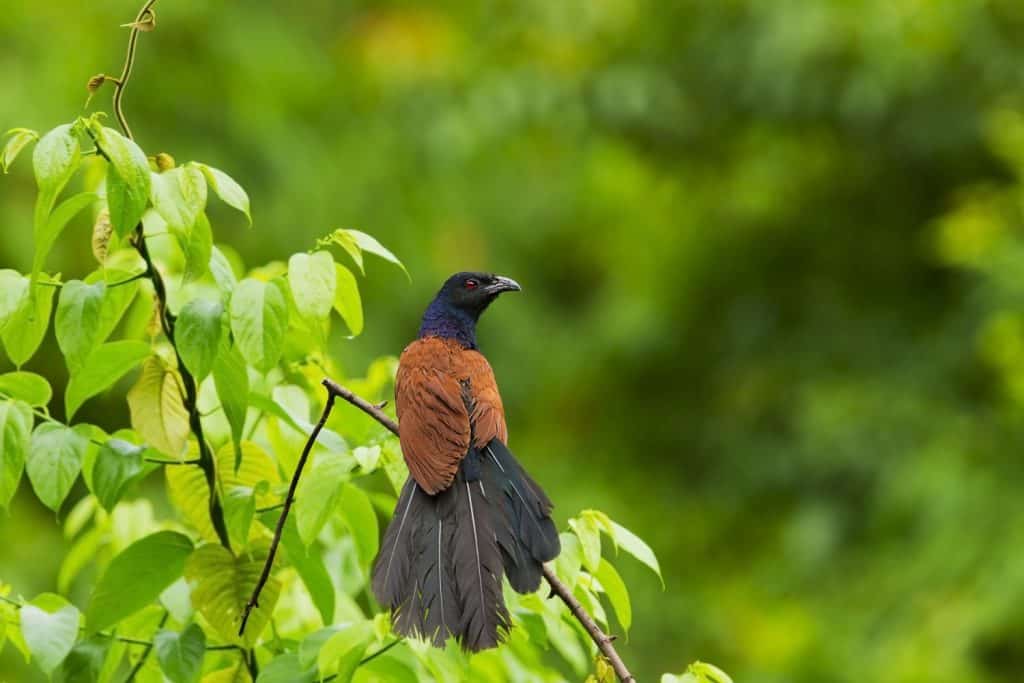
Coucals are not picky about their diet.
©Sainam51/Shutterstock.com
Coucals are flexible hunters. Insects such as grasshoppers, crickets, beetles, and caterpillars make up a large share of daily calories. They also take spiders, snails, small lizards, young rodents, bird eggs, and nestlings. They will scavenge for fallen fruit or the odd scrap near people. This wide menu explains why coucals occupy so many habitats across three continents.
A snake is a calorie-dense prize when the chance appears. Coucals grab slender snakes they can swallow whole, like pencil-thin juveniles up to a foot long or so. The larger species of coucal (Greater, Pheasant, Burchell’s) will also peck apart or dismember bigger snakes rather than swallow them intact. There are records of Greater Coucals taking venomous species like saw-scaled vipers and even a banded krait, but those are the exception, not the norm.
Here’s How They Hunt Snakes
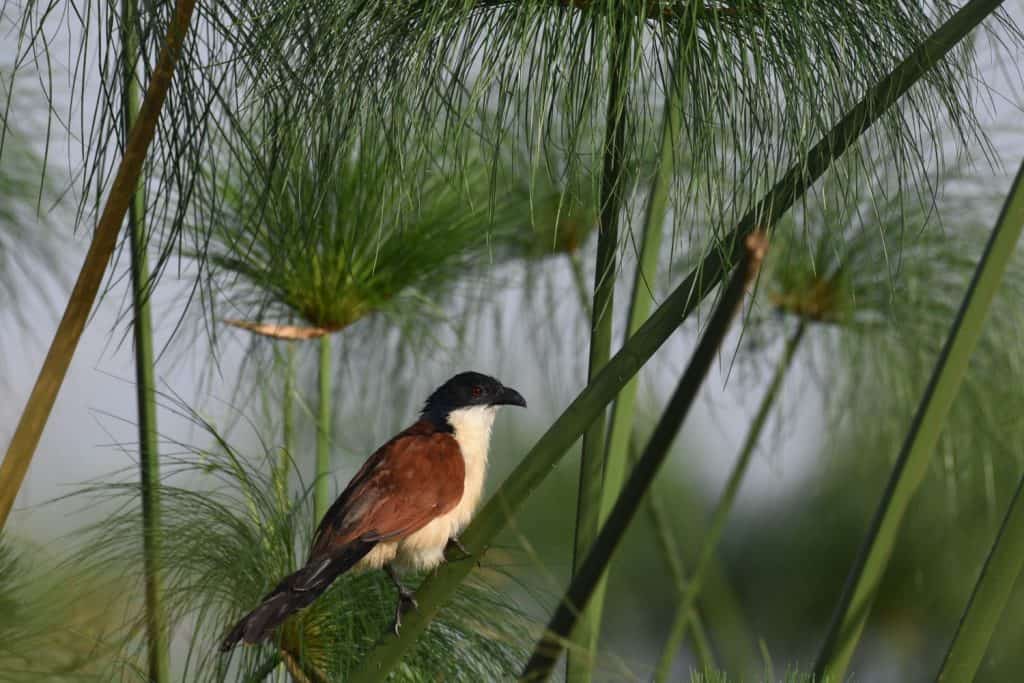
The coucal kills snakes by battering them against the ground or a branch.
©Arjen de Ruiter/Shutterstock.com
When a snake appears within reach, the bird uses stealth, then an explosive lunge. It grabs the head or neck, pins the body with a foot on the ground, and delivers shaking blows against dirt or a branch to stun the prey. It then swallows the snake, using a flexible mouth and strong throat muscles to eat meals that can look shockingly large.
A surprising thing about the Instagram video that recently caught so much attention is that it shows a snake being eaten tail-first. This is highly unusual. The coucal, like most snake-eating birds, usually aligns the snake head-first. This prevents the snake from flipping around to bite the bird or get away, and it lays the scales flat in a direction that slides down more easily rather than snagging on scales being rubbed the wrong direction.
So why did this bird swallow its meal “backwards?” This can happen if the snake was dead or badly stunned, or decapitated. It can also happen if the bird has mangled the snake and starts wherever the body opens, or if the head was pinned in such a way that it was awkward to reach, so the tail was the easiest end to start with. Coucals also sometimes tear a snake into pieces and eat chunks. So at this particular moment in the video, it could have been swallowing a short portion of the front end of the snake, which was still moving reflexively as it died.
Can the Snake Survive Inside?
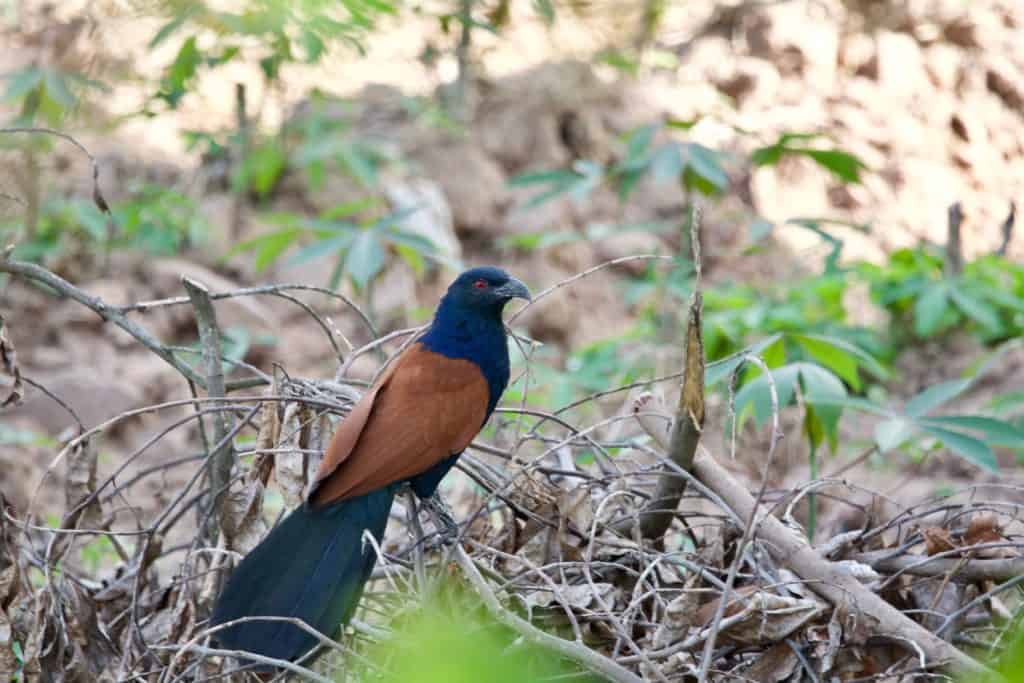
The bird’s high body temperature hastens death for anything it swallows alive.
©pangcom/Shutterstock.com
We’re all thinking the same morbid question: if the snake is swallowed alive, how long will it survive in there? Not long. Once a snake is swallowed by a bird, it usually blacks out within minutes. Death follows in about 5–30 minutes. Suffocation is the main cause: even if the bird gulped some air into its stomach as it ate, the snake is compressed by the bird’s muscles so tightly its lungs can’t expand. The bird’s high body temperature (around 104°F) increases the snake’s oxygen needs and hastens death. And finally, the snake is immediately being digested by hydrochloric acid in the stomach. Soft tissue breaks down within an hour or two, internal organs within 6-12 hours, and any indigestible fragments are passed or coughed up within 24-48 hours.
Can the Snake Hurt the Bird?
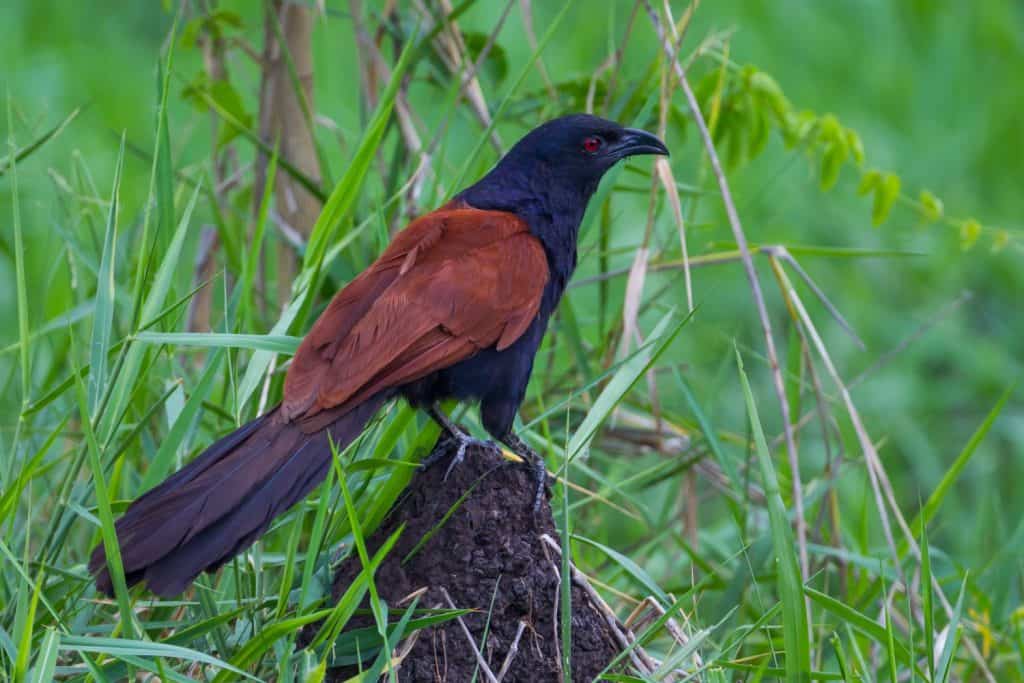
The bird uses a hunting and eating strategy that helps protect it from injury from live prey.
©kajornyot wildlife photography/Shutterstock.com
A snake can bite an attacking coucal and potentially kill it if it is a venomous species. To prevent injury, the coucal watches its prey and chooses its moment of attack. It aims for the head to stop bites, pinning the skull to the ground or a branch, then striking from above or behind with its beak, where a snake has less reach. If the snake is lively, the bird batters it first to stun or kill it. It eats quickly before the snake can recover, if it is still alive.
Swallowing head-first can keep the snake’s mouth closed and prevent it from biting into the bird’s narrow throat with its tough lining. Venom is most dangerous when injected into tissue. It is made of proteins that break down in the stomach when swallowed, without hurting the bird. A snake cannot coil for leverage and get a grip on the tough, mucus-lined stomach walls before it passes out from oxygen loss.
Other Snake-Snacking Birds
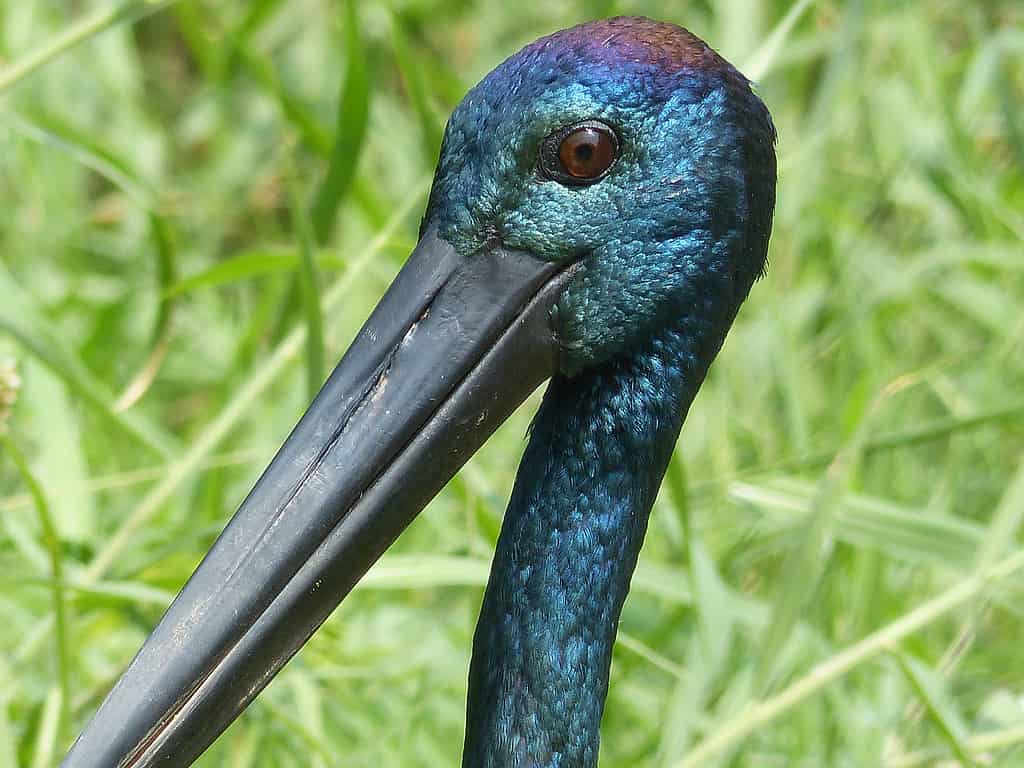
Black-necked storks are one of many bird species that eat snakes.
©Yvan Tessier/iStock via Getty Images
Several bird groups take snakes with regularity. Herons and storks spear and gulp water snakes along marsh edges. Many hawks and eagles seize snakes with talons, crush or tear them, and then swallow large portions. Secretary birds in Africa deliver precise kicks that stun or kill before eating. Roadrunners in North America shake small snakes against rocks. Coucals stand out for their ground-stalking style in thick cover and their willingness to swallow prey nearly their own body length after a brief subduing shake.
Do People Like Coucals?
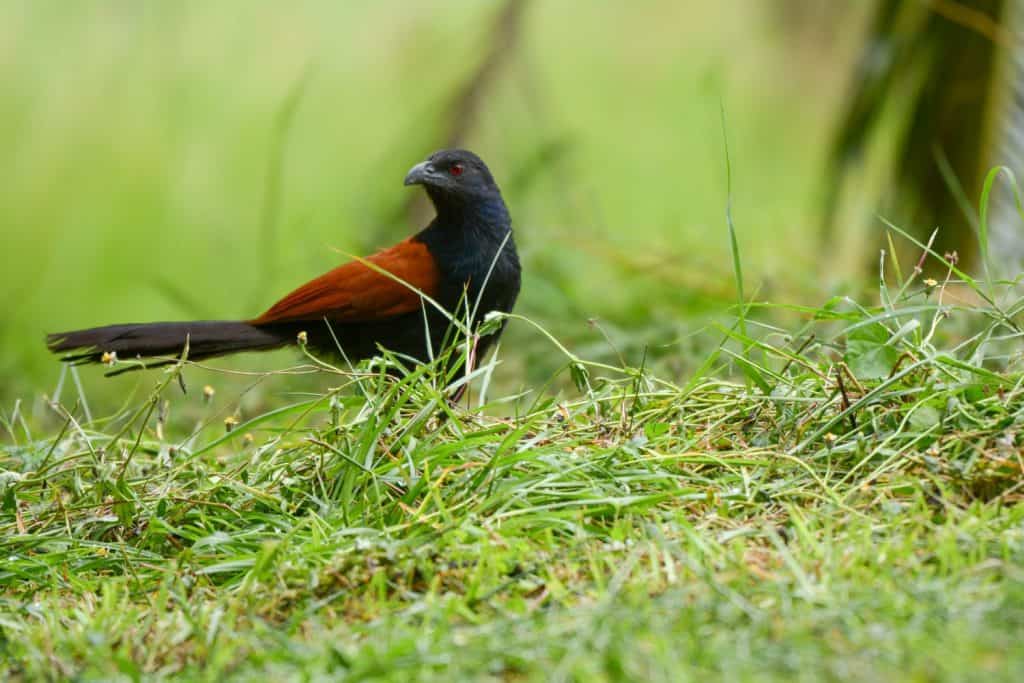
Coucals are often welcomed by people for their work controlling insects and snakes.
©Thanit Weerawan/Shutterstock.com
Because these birds hunt pests, people often tolerate or welcome them. Farmers in South Asia know the deep “coop-coop” call of the Greater Coucal from field margins. In Australia, Pheasant Coucals slip through sugarcane, roadside weeds, and gardens with dense shrubbery. The habit of raiding nests means smaller birds may chase them, yet coucals spend much of the day out of sight in cover. Quiet management of hedges, reedbeds, and mixed edges near farms or canals tends to support local populations without special effort.
Conservation Status
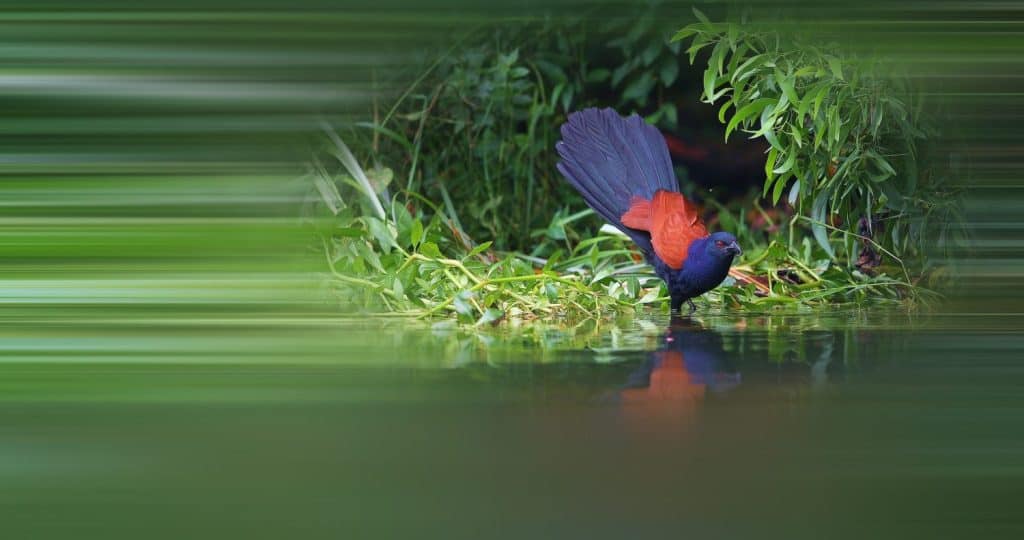
Most coucal species are not endangered, though habitat loss does affect local populations.
©Wang LiQiang/Shutterstock.com
While most coucal species remain widespread and are not threatened, a few island species, such as the Black-hooded Coucal of Mindoro, are critically endangered and require urgent conservation efforts.’ Habitat loss always matters, since they rely on thick, messy growth that vanishes when fields get scraped clean. Wetland drainage also removes prime foraging areas. A few island forms have small ranges and need careful monitoring. In contrast, several common species adapt well to rice fields, canal banks, and weedy roadsides. Local protection of marsh edges and fallow strips can keep populations steady without complex programs, since these birds thrive where the ground stays brushy and bugs stay abundant.
Not the Whole Story
Watching a coucal down a snake is unsettling, but it also shows how wildlife makes a living in the tight margins we often overlook. These birds succeed because they combine simple tools—stealth, a firm grip, quick strikes—with habits that match the places we leave messy: reedbeds, hedges, weedy ditches, and field edges where insects, frogs, and small reptiles gather. But short videos of one dramatic meal don’t tell the whole story. A coucal’s day is mostly quiet work in cover, eating insects and whatever else it can find. This kind of epic battle with a snake is not an everyday occurrence. But when it does happen, it’s unforgettable.