
Quick Take
- Snakes have less complex brains compared to mammals, so they show affection and comfort differently.
- Snakes coil around each other for a few reasons, like mating, fighting, or warmth.
- How social snakes are differs by species, but most are completely solitary.
Snakes can be pretty intimidating creatures. They don’t have the best reputation given the dangers they pose, but they have their own ways of showing affection. This video shows two pet snakes hugging and spending time close to each other, but what does this actually mean? The YouTube short by @Ballpython_love is a great way to better understand how snakes get along with each other. Read here to learn more.
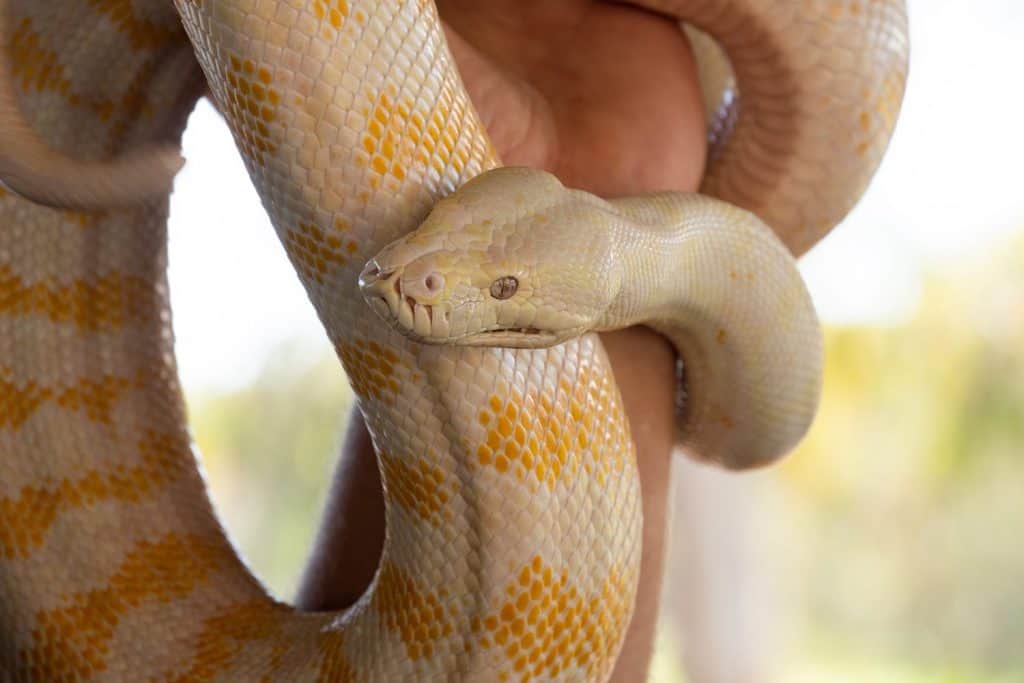
How snakes show comfort varies by species, with some more social than others.
©IngeBlessas/Shutterstock.com
How Do Snakes Show Affection?
In the video above, pet snakes Petra and Charlotte are seemingly cuddling together by coiling around and lying close to each other. The adorable video is a great look into snake behavior, but are they actually being affectionate towards each other? There are many ways to answer that question; however, the answer is most likely no. Unlike mammals, which experience emotions, affection, and bonding, snakes have a different and less complex experience. Snakes’ brains are more simply wired and have simpler structures. This means that bonding and affection have less influence on their behavior.
Snakes can be comfortable around other snakes and humans, but this comfort does not equate to emotional affection. Typical behaviors when snakes are comfortable include wrapping around their owners, resting near them, and tolerating handling. As they adjust to human presence, they begin to feel safe and may even use humans to warm themselves. They interact with other snakes using visual and chemical signs. Visual signs such as tongue flicking, vibration, and body posture can indicate when snakes are comfortable or feel threatened around each other. Chemical signals are detected by a specific organ known as the vomeronasal organ. Also known as Jacobson’s organ, it specializes in detecting pheromones and chemical signals. It helps snakes determine whether another snake poses a threat.
Why Might They Coil Around Each Other?
For the most part, snakes are solitary creatures. The only time a snake may purposefully seek out another is during breeding season. Because of this, the coiling behavior in the video above is interesting. While most snake species are solitary, there are a few that are somewhat social. This includes garter snakes and some rattlesnakes. Recent research shows that these species can exhibit complex social behaviors, such as communal hibernation, forming social bonds, and even cooperative interactions, not just gathering for nesting or warmth.
Coiling around each other is an unusual form of social behavior. As mentioned above, since snakes mostly interact during the breeding season, it is uncommon to see them coiling together outside of that context, as shown in the video. One reason they might coil is during fights. Coiling, especially for constrictor snakes, can be a great way to defend themselves. However, in the video, the two snakes are interacting peacefully. The most likely reason for their coiling is to stay warm. Since snakes are cold-blooded, they may pile together to conserve heat. So, while their friendly behavior may not be due to affection, they still look adorable.