
Quick Take
- In 2025, a new sail-backed iguanodontian was discovered from fossils on the Isle of Wight.
- The Isle of Wight is one of Europe’s most important Early Cretaceous dinosaur sites.
- Istiorachis macarthurae was a plant-eater with an unusual sail formed by elongated spines along its back.
- The sail was likely used for visual signalling or courtship.
The Isle of Wight is one of the most famous places in Europe for discovering dinosaur fossils. Known as “Dinosaur Island”, its cliffs and beaches expose rocks dating back to the Early Cretaceous period – a time when vast numbers of dinosaurs roamed the earth. In August 2025, yet another new dinosaur discovery was made. However, this time it was a previously unknown species of iguanodontian with a completely unexpected feature. Keep reading to discover what makes this species so unusual!
The Importance of “Dinosaur Island”
If you’re a fan of dinosaurs, then the Isle of Wight is one of the most fascinating places around due to the vast number of dinosaur fossils that can be found within its boundaries. Dinosaur Island, as it is dubbed, provides one of the best records in Europe of life during the Early Cretaceous period. This is particularly important as the Early Cretaceous period was a crucial period in dinosaur evolution, yet it has a surprisingly poor fossil record. This lack is especially evident when compared with the number of fossils from the Late Cretaceous period.
Most of the fossils on the Isle of Wight date back to between 125 and 110 million years ago. This was a time when the island had a subtropical habitat and was part of a vast system of rivers, ponds, and swamps. Sediments built up across this landscape and were later compressed into layers of rock that form part of the Wealden, a sequence of river and floodplain deposits from the Early Cretaceous period. Rocks from this period are rare or poorly exposed across the rest of Europe. However, due to the favorable conditions on the Isle of Wight, these rocks are exposed along the coast, where erosion continues to reveal new fossils.
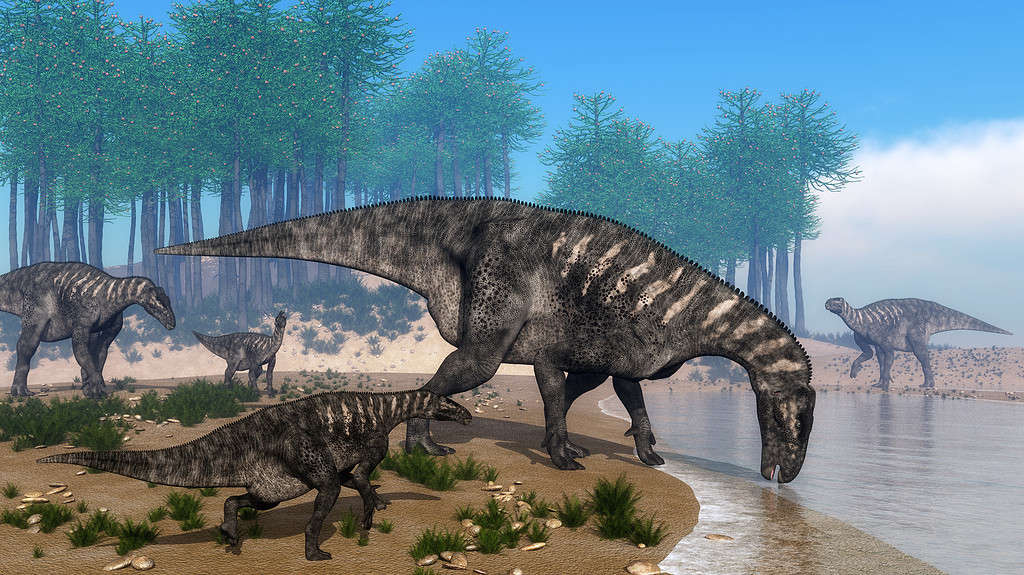
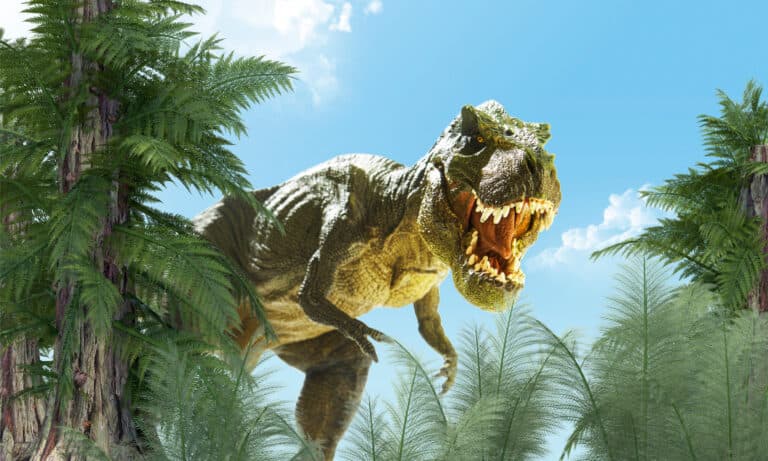
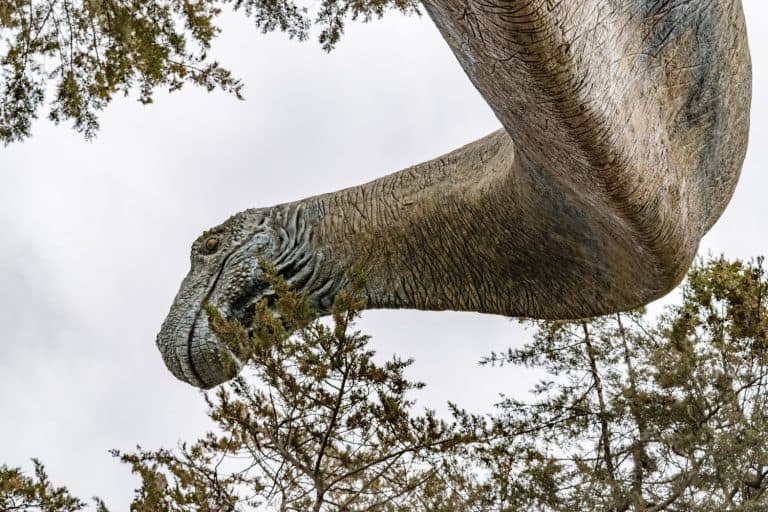
Many species of dinosaurs have been found on the Isle of Wight, including iguanodons.
©Elenarts108/iStock via Getty Images
So far, fossils of around twenty different species of dinosaurs have been identified on the island. Fossils of many turtles, crocodiles, and marine reptiles have also been discovered there. This unique fossil record portrays the island as a varied, complex ecosystem, home to both herbivores and carnivores of many shapes and sizes. Evidence suggests that the island was home to a wide variety of dinosaurs, including sauropods, ornithopods, raptors, and iguanodontids.
Meet the New Sail-Backed Dinosaur
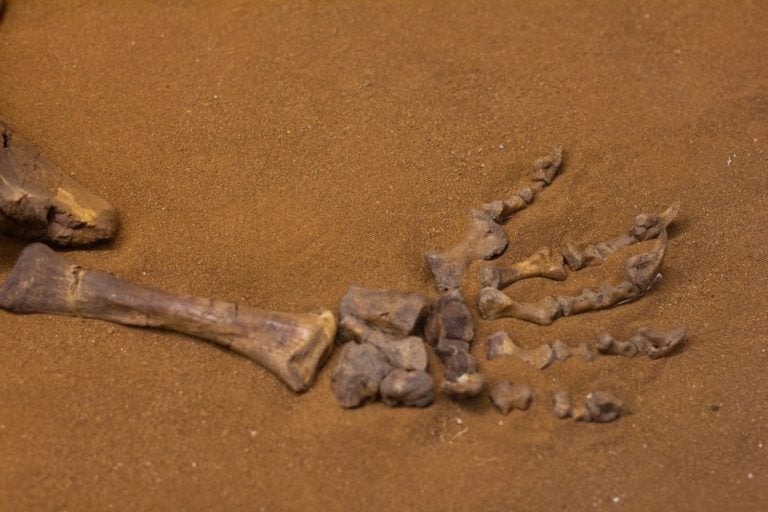
In 2025, the fossilized remains of a new dinosaur species were found on the Isle of Wight. The remains consisted of several ribs, vertebrae, and a partial pelvis. The discovery is that of an iguanodontian with a distinctive sail along its back. The species was named Istiorachis macarthurae, with “Istiorachis” meaning “sail spine,” in honor of Dame Ellen MacArthur, an Isle of Wight resident famous for completing the fastest non-stop solo voyage around the world.
Istiorachis macarthurae was a medium-sized dinosaur, reaching approximately 18 feet long and standing around 6.5 feet high. Despite its powerful build, it was a herbivore. It fed on vegetation such as ferns, horsetails, and conifers, which it cropped with its powerful beak. In this respect, it looked and behaved in a manner similar to other iguanodontians.
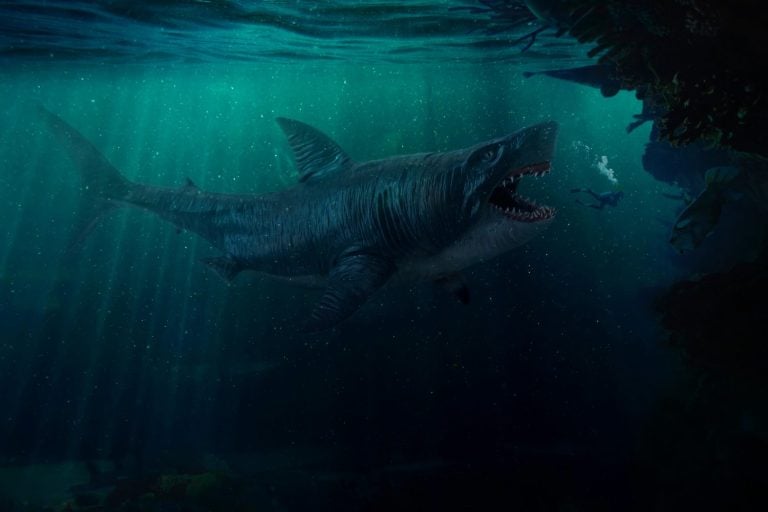
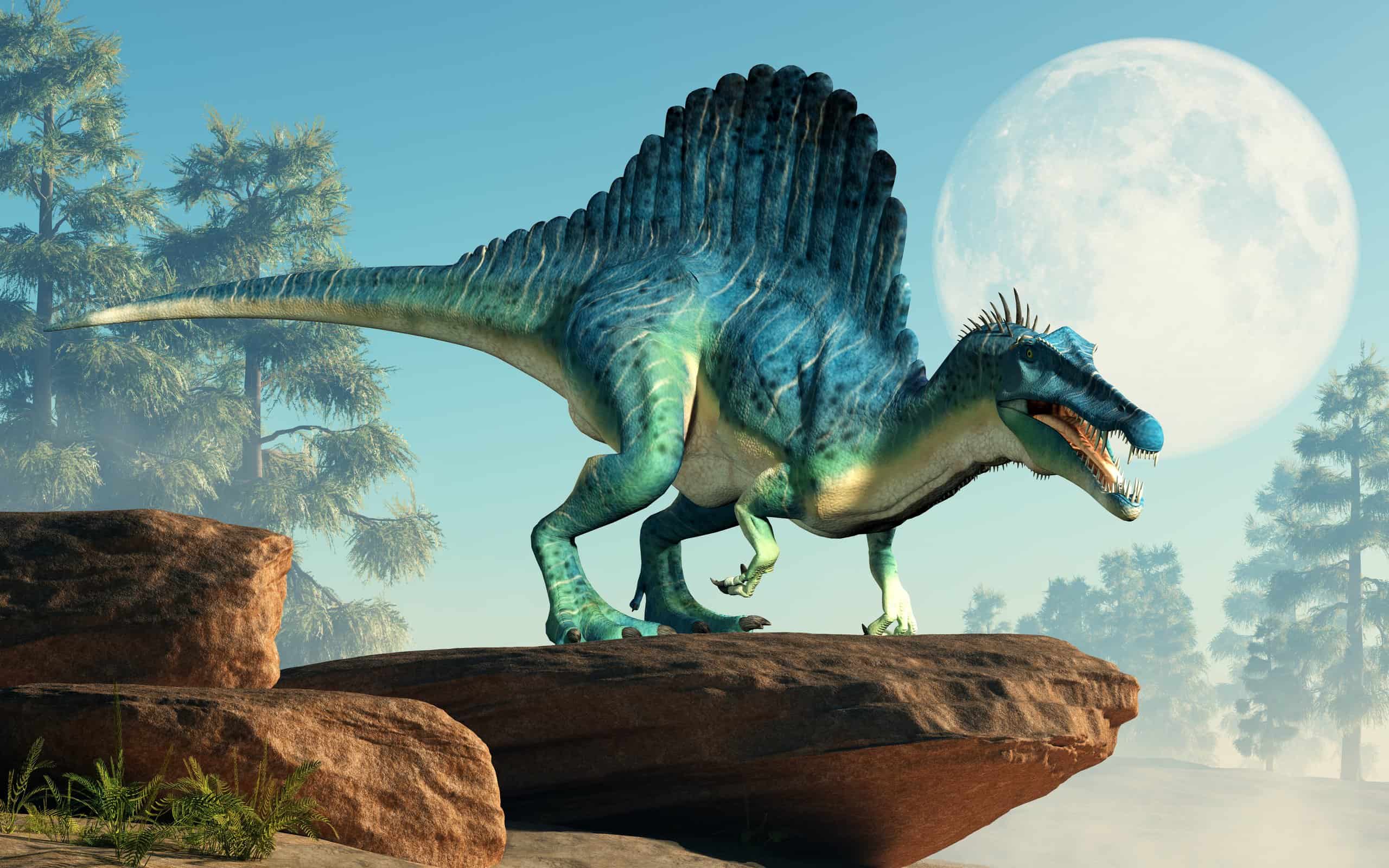
However, the most fascinating feature of Istiorachis macarthurae is its spinal structure, which consists of a series of elongated spines or projections. These created the distinctive sail-like structure on its back. Although some iguanodontians are known to have modestly lengthened neural spines, what sets Istiorachis macarthurae apart is the extent of its spinal projections. Other closely related dinosaurs living at the same time lacked this feature. Therefore, this was not a typical trait of dinosaurs from that era.
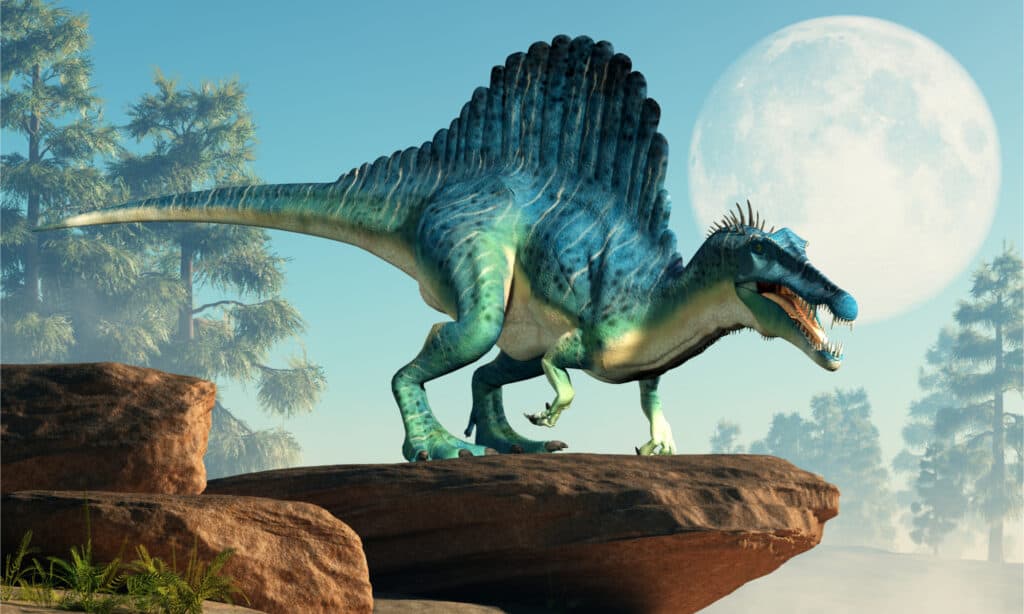
Istiorachis macarthurae had a distinctive sail on its back, similar to that of a Spinosaurus.
©Daniel Eskridge/Shutterstock.com
What Was the Sail For?
Sail-like structures are rare among living animals, but they were not entirely uncommon in extinct species. The most famous species of sail-backed dinosaur was the Spinosaurus, which lived during the Late Cretaceous period. Other species included the Dimetrodon and Ouranosaurus. Like Istiorachis macarthurae, the sails on these dinosaurs were formed from elongated neural spines on the tops of their vertebrae.
Several theories have been put forward as to what dinosaurs used their sails for. Some researchers have speculated that it could have been used to control body temperature. However, this theory has its own set of problems, making it unlikely. For a sail to function this way, it would need to be filled with numerous small blood vessels. However, this makes it vulnerable to injury. If the sail were damaged in an attack or fight with a predator, it could result in massive blood loss for the animal, which could be catastrophic and even fatal.
Another theory—considered more likely—is that the sail could have been used for signaling to others of the same species. This could have served as a visual signal to help individuals recognize each other in areas where many similar species lived together. Furthermore, it may have played a role in courtship by helping individuals attract a mate. In living reptiles, comparable structures are often most prominent in males, who use them to either attract females or intimidate rival males.