
Evolution works in mysterious ways, often giving rise to some truly bizarre features. One such example is the Myanmar snub-nosed monkey. The nose of this species faces upwards, acting as a rain funnel. An Instagram post by @science discusses this monkey, focusing specifically on its habit of sneezing in the rain. Read on to learn more about this species.
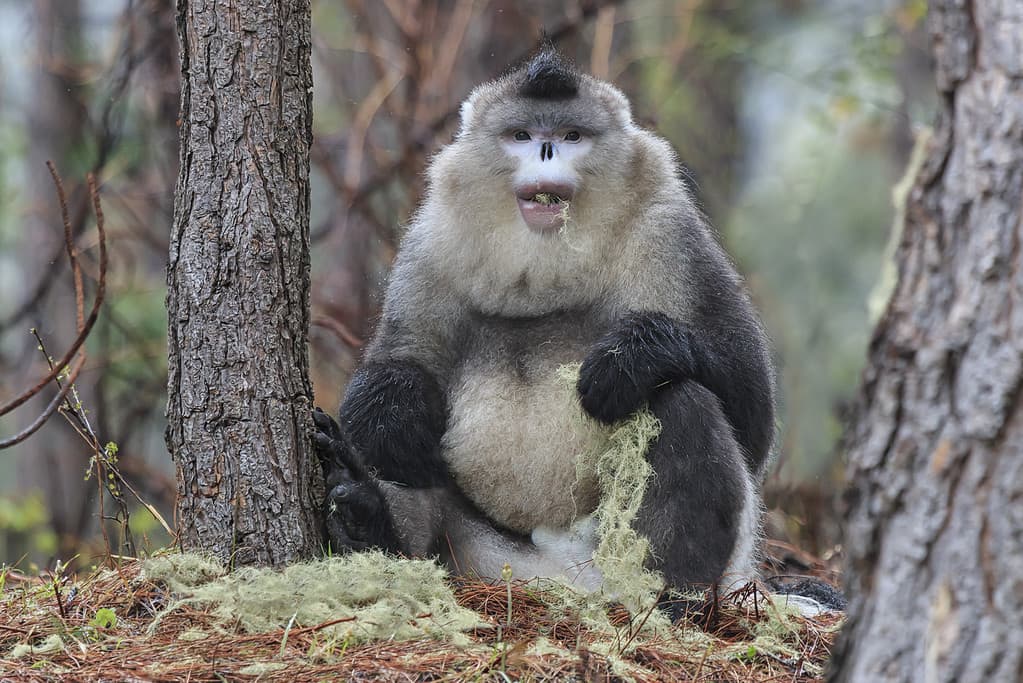
Scientists first described this species in 2011.
©outcast85/iStock / Getty Images Plus via Getty Images
About the Snub-Nosed Monkey
The Myanmar snub-nosed monkey was only described scientifically fairly recently. The species was first described in 2011 and placed in the genus Rhinopithecus. Members of this genus of snub-nosed monkeys inhabit China, Myanmar, and Vietnam. Due to their small population, they are classified as critically endangered by the IUCN Red List. These monkeys have black fur and light facial skin. Their most prominent feature is their upturned, snub noses. This particular species lives in the mountainous forests of northeast Myanmar, primarily in Kachin State, and has also been found in the Gaoligong Mountains along the China-Myanmar border. This secluded environment isolates them from other animals and makes conservation efforts difficult. As arboreal creatures, they feed on leaves, bark, and fruits. Given their recent discovery, much about these monkeys remains unknown.
Why Does Rain Make Them Sneeze?
Before the species was scientifically described, local hunters were the most knowledgeable about these monkeys. Locals explained that because the monkeys have upturned noses, rainwater can easily trickle into their nostrils and cause them to sneeze. Hunters heard these sneezes, helping them locate the monkeys quickly. To avoid revealing their location, the monkeys developed a specific posture to prevent sneezing. When it rains, they tuck their heads down to prevent their nostrils from facing upward. Because of their unique facial anatomy and sneezing behavior, these monkeys have earned various nicknames. One of the most common is “the sneezing monkey.”