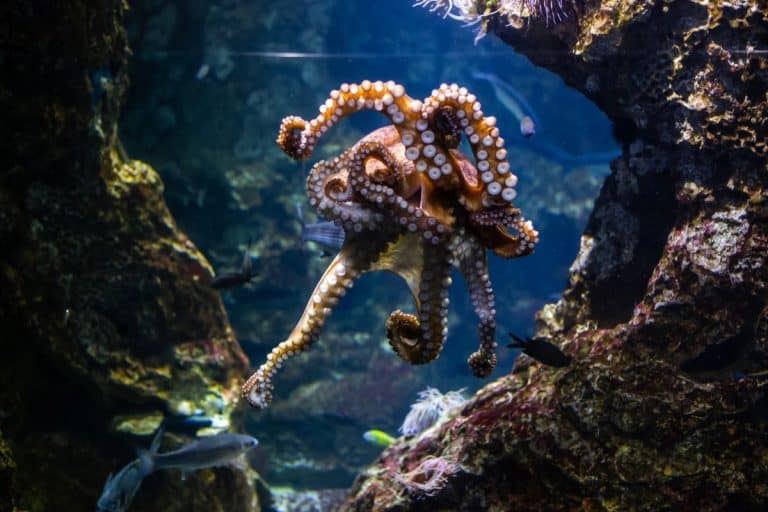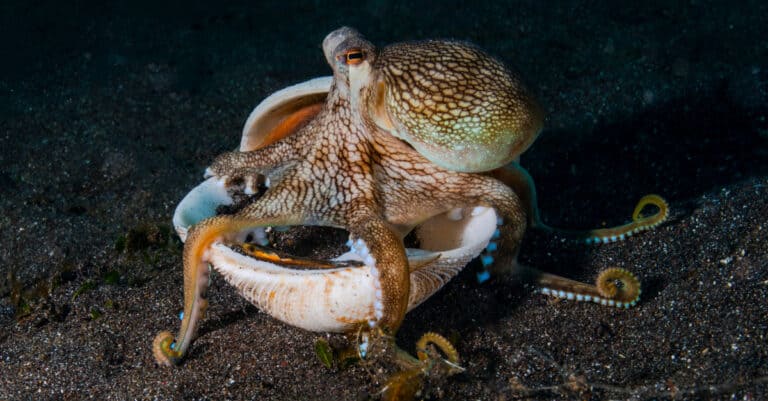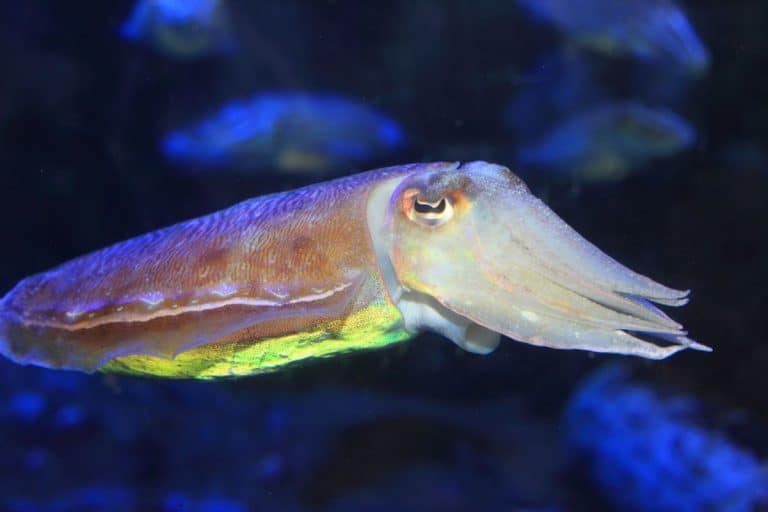

The ocean is home to some of the most intelligent creatures in the world. Out of all the marine animals out there, octopuses are high on that list. Thanks to their high intelligence and unique bodies, they can navigate the ocean with ease, using several adaptations to their advantage. The mimic octopus is one of these intelligent octopuses with amazing camouflage, as seen on this YouTube Short by @naturepbs. Read here to learn more about the camouflage of the mimic octopus!
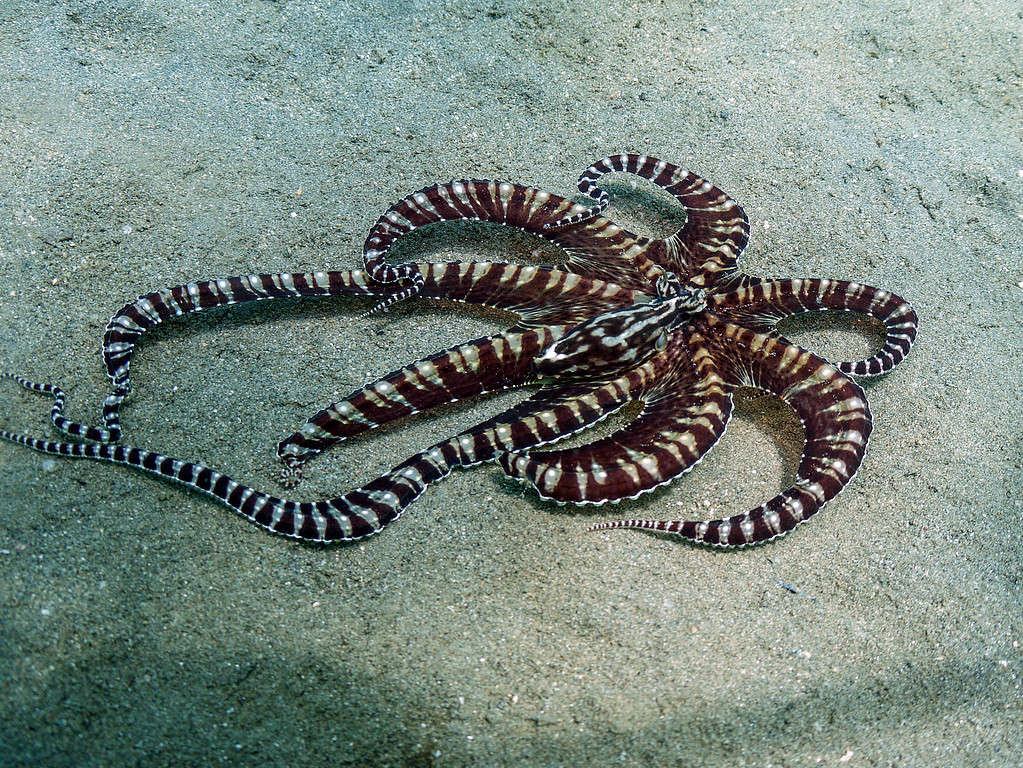
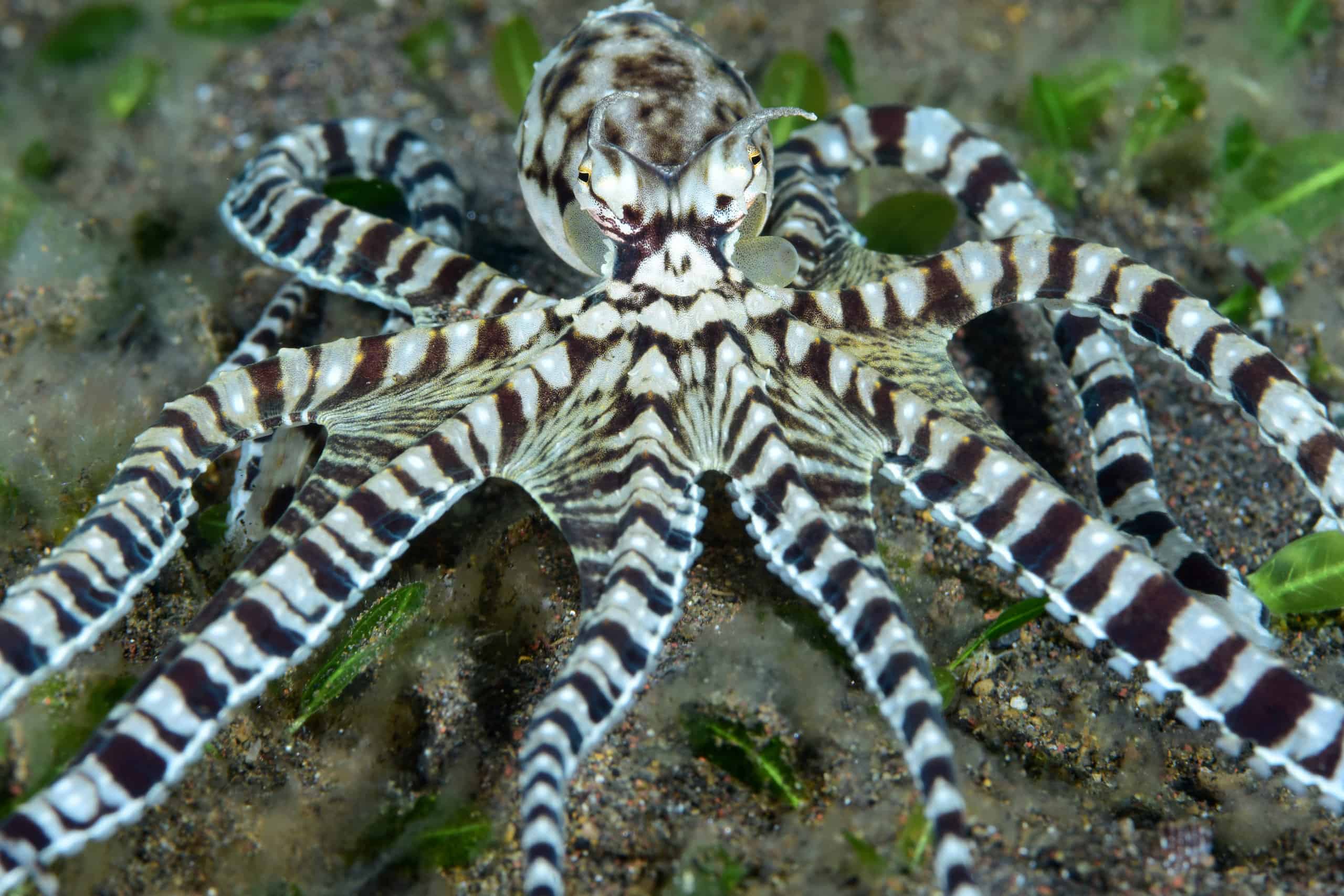
Mimic octopus can change their texture and appearance to match their background.
©Jenhung Huang/iStock via Getty Images
About the Mimic Octopus
The mimic octopus is a species of octopus inhabiting the oceans of Southeast Asia, Northern Australia, and parts of the Indian Ocean. They inhabit muddy or sandy seabeds that are extremely flat and open. Although being in such an open environment may seem dangerous due to the risk of predation, there is also plenty of prey and many opportunities for camouflage. Although their unique mimicking abilities may appear to be simple camouflage, mimicry is actually more complex and strategic. Camouflage is used defensively to avoid predators, while mimicry involves intentionally imitating other species. This highlights the incredible intelligence of these octopuses.
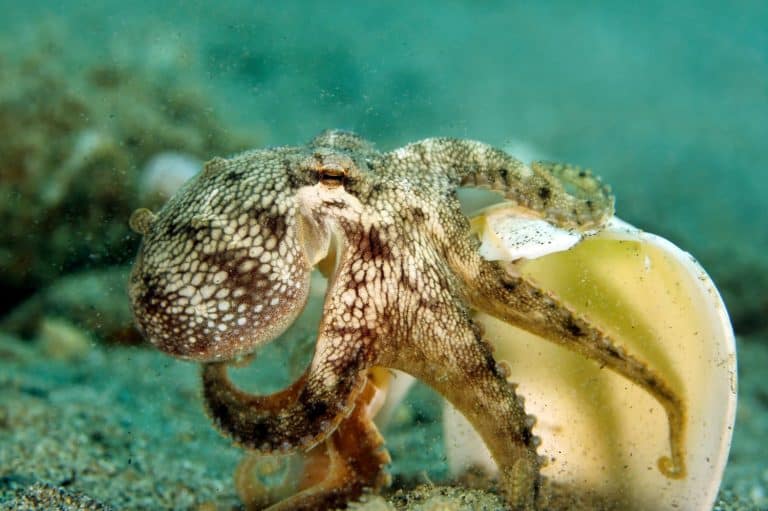
The mimic octopus can mimic thanks to chromatophores. Chromatophores are pigment sacs that expand and contract across the surface of the octopus’s body. They can shift between shades of brown, black, white, and red tones. Along with these pigment sacs, their skin also has iridophores and leucophores, reflective cells that can scatter light. This creates a shimmery appearance, adding depth to their mimicry. Using their ability to shift colors, they can accurately mimic their surroundings, such as sand or seagrass. To make it even more convincing, they can relax or tense their muscles to change texture, creating rigid, coral-like appearances or smooth surfaces. This makes them some of the best camouflaging marine animals out there!
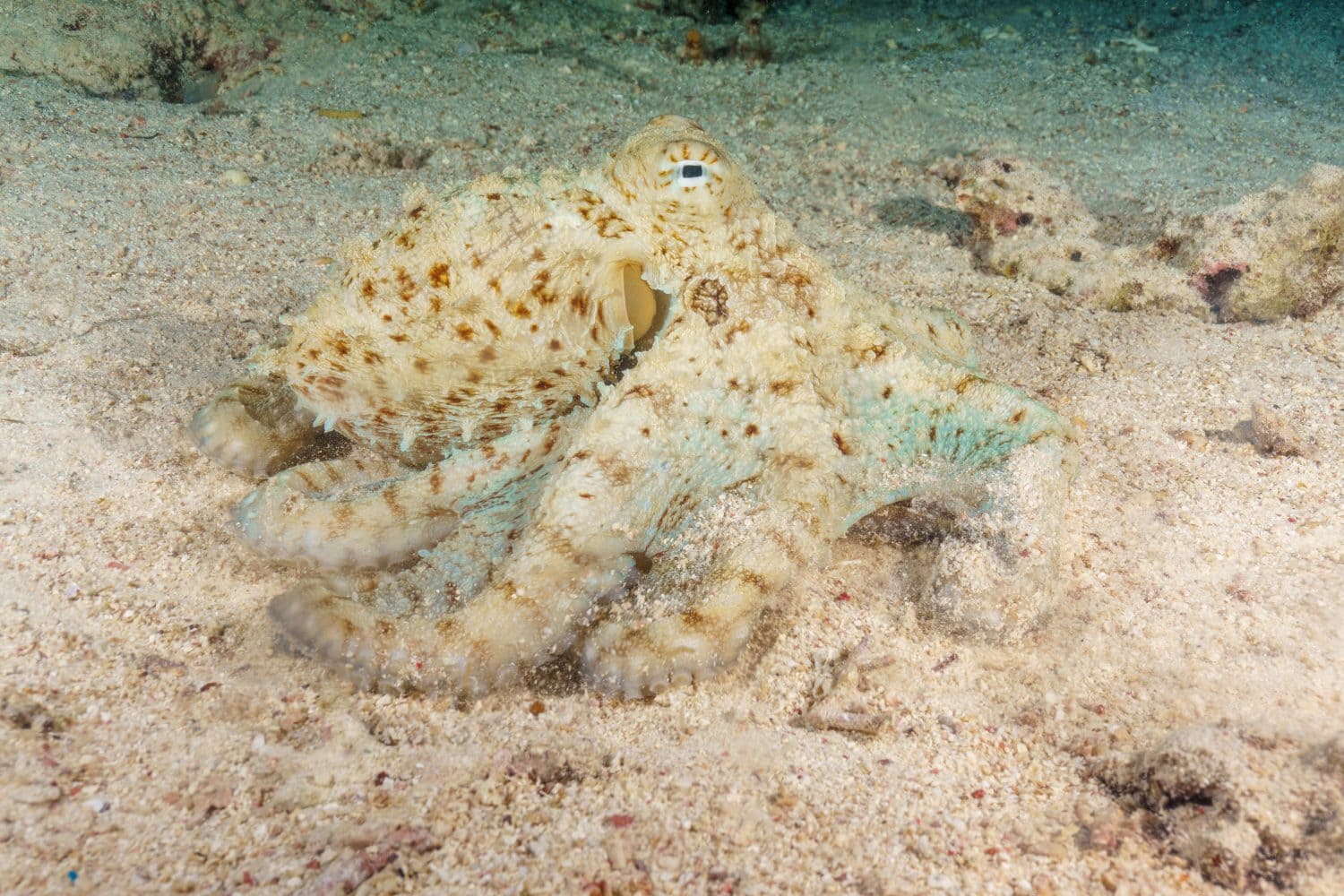
A mimic octopus blends into the sand.
©Artur_Sarkisyan/Shutterstock.com
Why Do They Mimic?
Mimic octopus mimics for both offensive and defensive reasons. While aggressive mimicry is not a common hunting style, it is used as a tool of deception. By blending in seamlessly with their background, they can wait to ambush prey until it swims by. Its main reason for mimicry is defense. Blending into its environment can help prevent predators from noticing the octopus, keeping it safe for another day. While camouflage is often seen in the wild, the mimic octopus also does an amazing job at impersonation. They are most notable for being able to mimic a wide variety of marine animals—at least 15 or 16 different species—including sea snakes, lionfish, flatfish, and more. By changing their texture, tucking their tentacles into different positions, and matching the colors of their target, they can mimic dangerous marine predators to avoid their own demise.