
Love is in the air at the Marabou stork enclosure at North Florida Wildlife Centre! This charming Instagram clip shows a pair of Marabou storks, Ingrid and Ivan, bonding over their nest. They peck around the nest, mirror each other’s movements, and make distinctive noises. Let’s find out more about breeding and courtship in this fascinating species.
Marabou Storks in the Wild
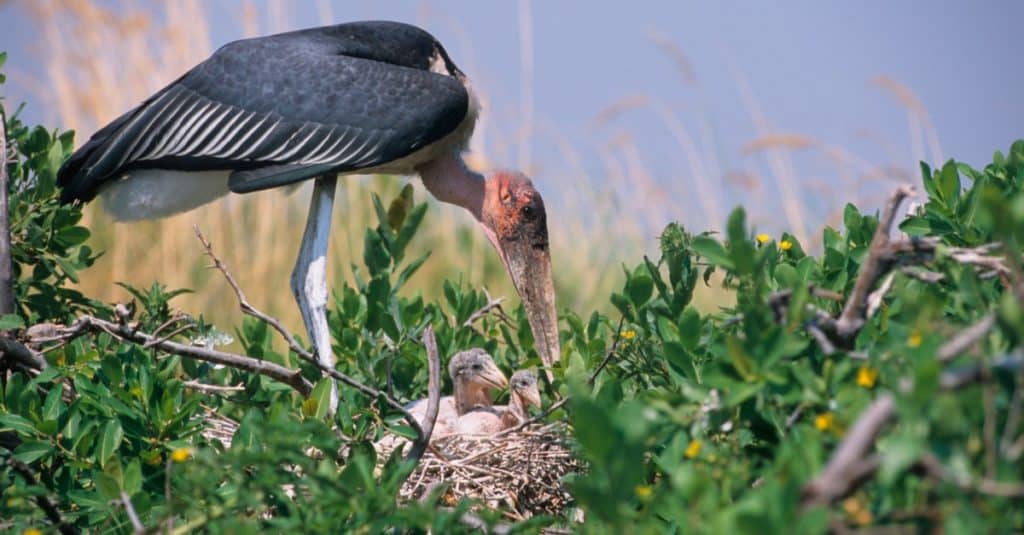
Marabou storks are found in Africa.
©COULANGES/Shutterstock.com
The pair of Marabou storks (Leptoptilos crumeniferus) in this clip are in captivity in the US, but in the wild, they are found throughout Africa. They are most often found between the Sahara Desert and South Africa. When it comes to habitat, they are not that fussy! They are willing to live in both aquatic and arid areas and are often spotted near fishing villages and even on landfills. These manmade locations suit their scavenging method of feeding. These storks primarily rely on the carcasses of dead animals for their food. At times, they will also feed on live prey, including fish, locusts, and reptiles.
Bonding and Breeding
Marabou storks are described as colonial nesters. In the wild, they gather together to breed in colonies of between 10 and 30 pairs.
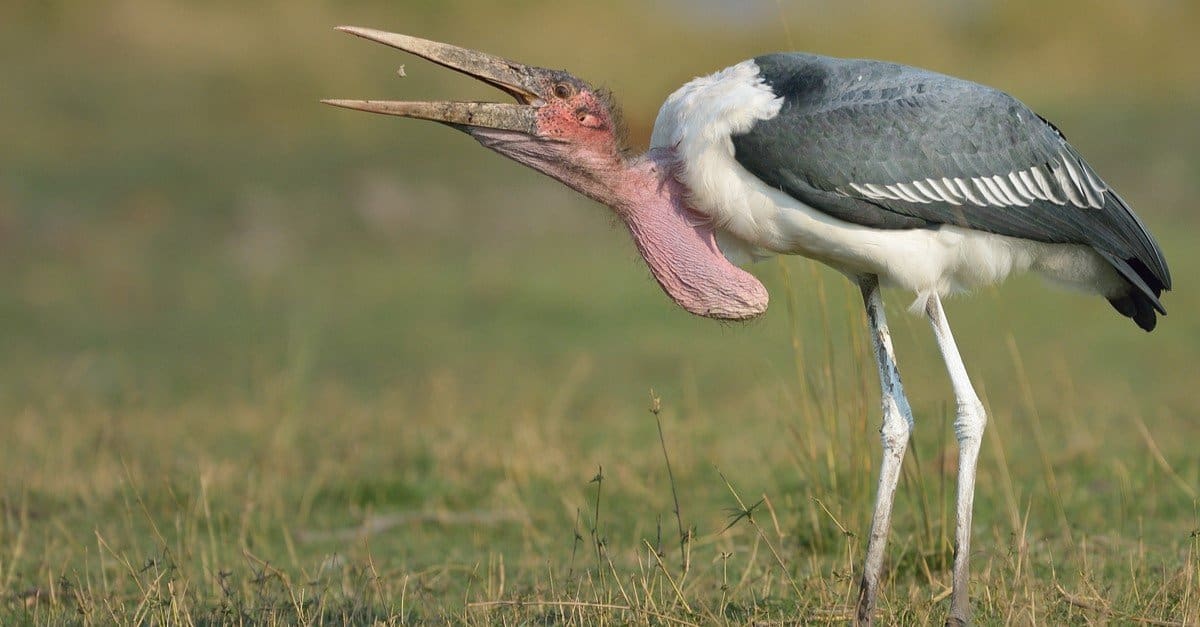
These are striking-looking birds with long, gray legs and white and dark gray plumage. You may also have noticed that they lack head or neck feathers and have a long, red pouch hanging from their neck. This pouch is used in courtship rituals. Essentially an inflatable sac, it becomes larger during the breeding season, connects directly to the left nostril, and acts as a resonator. The birds use it to produce a distinctive guttural croak.
Their nests are built of sticks, and in the wild, they are typically located on treetops or cliffs. In the clip, you can see the pair of birds strutting and fussing around the nest. During the courting period, males rapidly clatter their bills, puff up their throats, spread their wings, and engage in frequent head bobbing to impress the female. Eventually, the birds form a monogamous pair for the breeding season and usually mate for life. Two or three eggs are laid at a time and are incubated for 30 days. The chicks fledge between 95 and 115 days after hatching. If they survive, they will reach adulthood at 4 years of age and will start families of their own.