
If any bird is worthy of achieving mythical status, it’s the great-eared nightjar. It’s been compared to Toothless from How to Train Your Dragon and even resembles Pidgeotto from Pokémon. In this post from @Pubity, it’s easy to see the comparison between this quirky bird and a fantasy creature. While this bird’s appearance seems straight out of a storybook, its skills as a hunter are even more astounding. The great-eared nightjar, with its dragon-like features, is one of the world’s most fascinating bird species.
The Nocturnal Great-Eared Nightjar
As a bird of the night, the great-eared nightjar hunts by moonlight. This bird’s cute face and small beak hide an enormous mouth with a wide gape perfect for catching flying insects in the dark. It feasts on moths, large beetles, and other flyers, such as mosquitoes. If the insect flies, the great-eared nightjar will eat it. As this nightjar swoops down, its mouth opens, creating a trap for its prey. Large wings help the great-eared nightjar twist mid-flight, making it an efficient and speedy nighttime hunter.
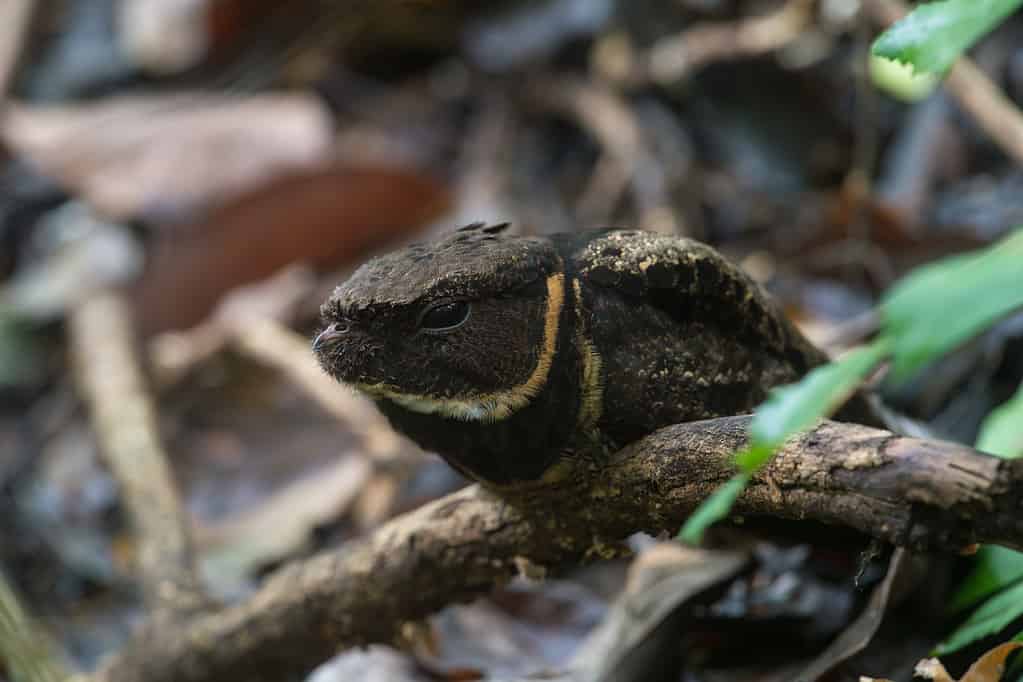
The great-eared nightjar hides in trees during the daytime.
©https://www.flickr.com/photos/79492850@N00/, CC BY 2.0, via Wikimedia Commons – Original / License
During the day, those brown and tan wings are the perfect camouflage. These birds remain in the trees, blending into the surrounding branches. More often than not, people walking by don’t even notice these majestic birds as they rest just above their heads. Great-eared nightjars inhabit the tropical lowland forests of Southeast Asia and certain parts of India. Here, they thrive in forests where they can easily disappear into thick tree groves.
The Great-Eared Nightjar’s Unusual Appearance
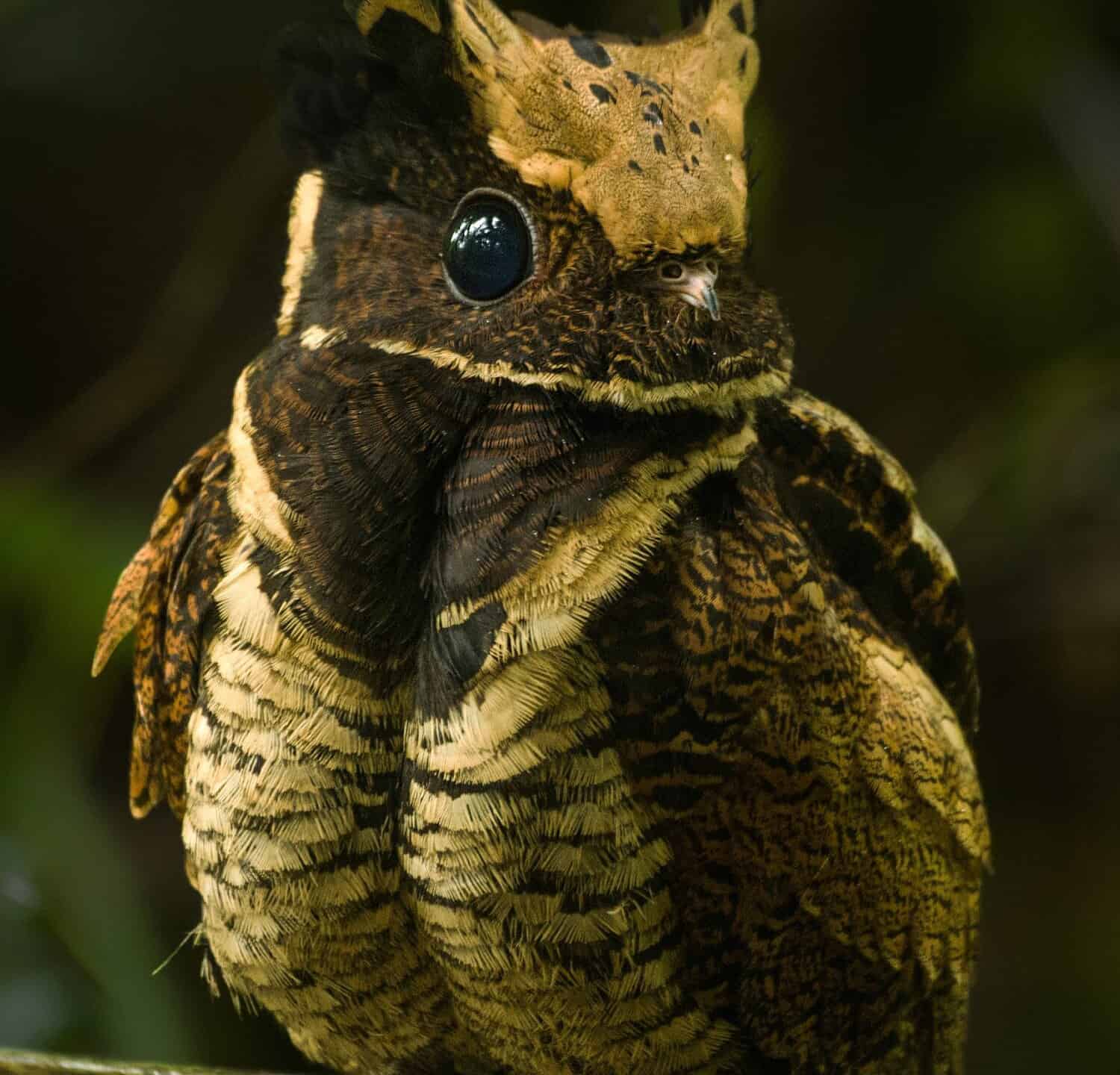
Often nicknamed the “dragon bird,” the great-eared nightjar has a unique look. Its head tufts give the appearance of small, pointed ears, which aid in camouflage. Large, forward-facing eyes give this species an intimidating look, albeit one that adds to the “Pokémon” vibes. And lastly, its strong, barred wings make it a proficient flier. If this bird were flying at you with its mouth open 120 degrees wide, it would look every bit the part of a dragon.
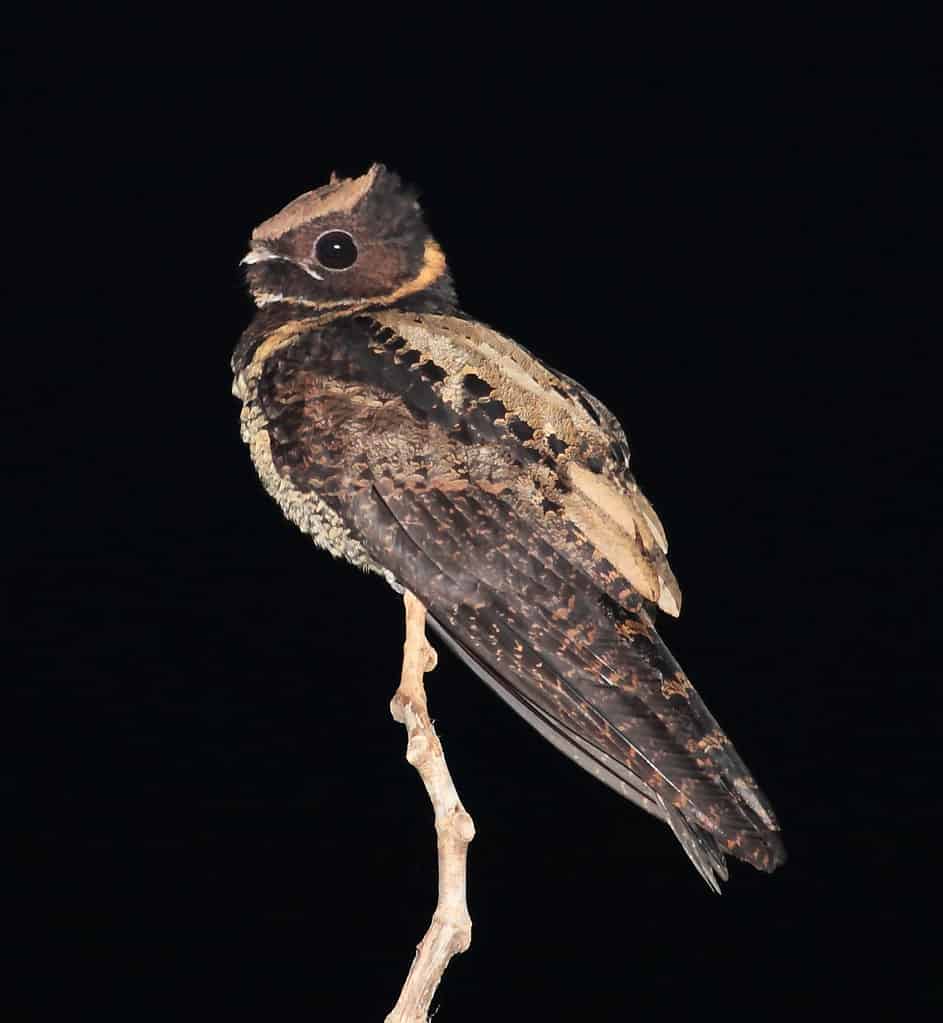
Large eyes help the great-eared nightjar track prey at night.
Despite its dragon associations, this bird is relatively docile toward humans. It can show aggression if threatened or protecting eggs, as is typical of birds. If a great-eared nightjar becomes defensive, it will spread its wings, hiss, or open its mouth as a warning. These birds are described as shy and elusive, primarily due to their nocturnal nature. To a moth, the great-eared nightjar is a silent killer. To humans, it may be the closest thing to a real-life Pokémon that we’ll ever experience!