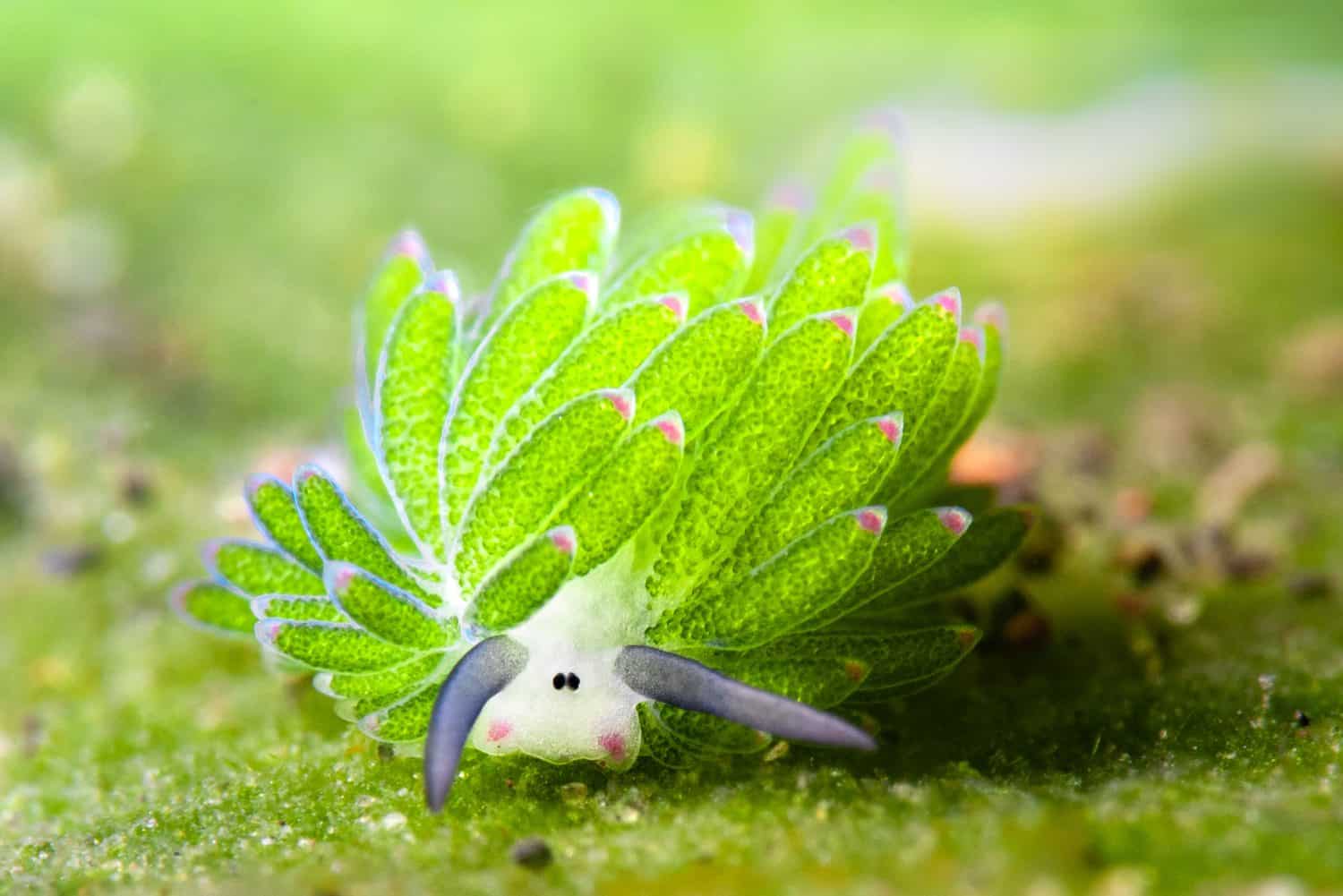

If you’re ever diving off the coast of the Philippines and have a keen eye, you might be lucky enough to spot something that looks remarkably like an underwater Pokémon character: the Costasiella kuroshimae, more charmingly known as the “leaf sheep.” However, beyond its exceptional appearance, this tiny creature is one of the few animals on Earth capable of harnessing solar energy through photosynthesis.
The Ocean’s Cutest Grazer

The leaf sheep belongs to the sacoglossa superorder, a scientific group known as “sap-sucking sea slugs.”
©Joseph Daniel Doherty/Shutterstock.com
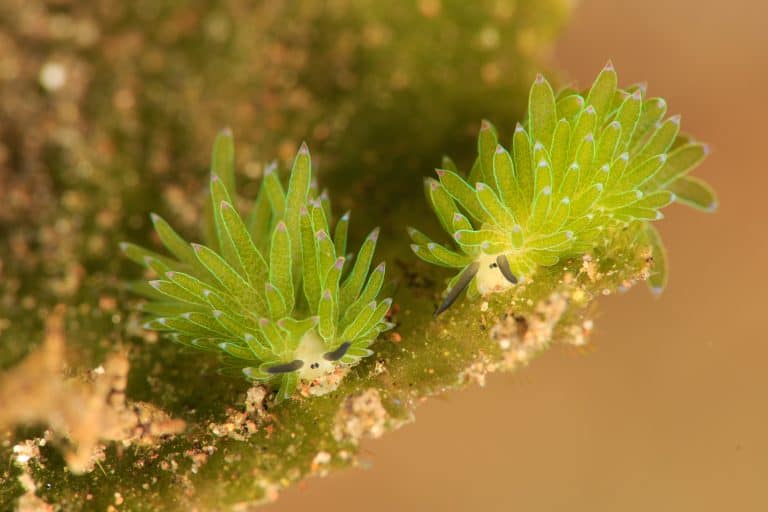
The Costasiella kuroshimae, often called the leaf sheep, leaf slug, or even “Shaun the Sheep,” is a captivating creature. These tiny invertebrates are only about a quarter of an inch (8 millimeters) long, but if you get a close enough look, you’ll see why they have such interesting names.
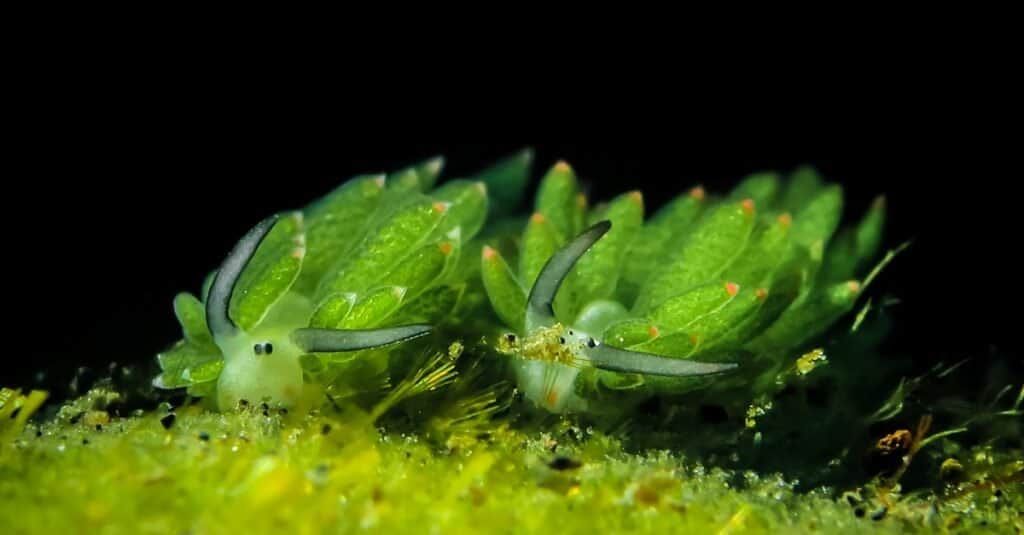
These little slugs have two small, dark eyes set close together, giving them a distinctly sheep-like face. Many divers even refer to them as “Shaun the Sheep” slugs. Adding to their sheep-like appearance are two black-tipped rhinophores on top of their heads. While these may look like long ears or horns, they are actually receptors that help the slug locate food through scent and taste by picking up chemical signals in the water. These cute sea slugs have bodies covered in seven rows of leafy green, horn-like projections called cerata. These cerata, which resemble iridescent aloe vera plants, function like gills and help the slugs absorb oxygen from the water.
Where Do Leaf Sheep Live?
We don’t really know how long leaf sheep live, but scientists estimate their lifespan is somewhere between six months and two years.
©kaenscuba/Shutterstock.com
You can find leaf sheep sea slugs near tropical coral reefs across the Indian and Pacific Oceans. They were first discovered near Kuroshima, a Japanese island, in 1993. Since then, they’ve been spotted in a wide range of locations in Asia and Oceania. Leaf sheep thrive in warm, tropical waters where there’s plenty of sunshine and a specific type of algae called Avrainvillea. They live directly on this type of algae, usually at depths no greater than 33 feet below the surface.
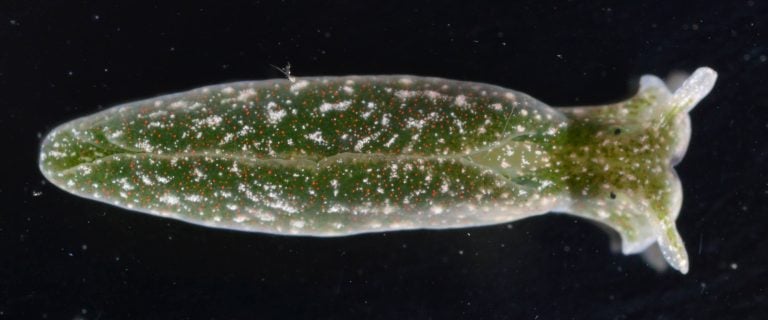
These slugs are hermaphrodites, meaning they have both male and female reproductive organs. However, they still need to mate with another slug to produce eggs. They lay their eggs in tiny, intricate spiral coils directly on the Avrainvillea algae. When the larvae hatch, they possess small protective shells, which they eventually shed as they mature into leaf sheep sea slugs.
Solar Power and Survival

Leaf sheep are also called “solar-powered sea slugs.”
©Sylvia Jenkins/Shutterstock.com
Sunlight is incredibly important to the leaf sheep because, just like a plant, it performs photosynthesis. These tiny green slugs live on Avrainvillea algae, which also serves as their only food source. Like land-dwelling sheep, these sea slugs are grazers, feeding on the algae they inhabit. They store the algae’s chloroplasts in their leafy green cerata through a process called “kleptoplasty” (from the Ancient Greek word for “thief”), which enables them to perform photosynthesis.
These stolen chloroplasts provide the leaf sheep with nutrition and give its cerata their vibrant green color. This green color comes in handy, offering camouflage from predators like sea stars, bristle worms, crabs, and sea spiders. The leaf sheep may also gain some chemical defenses from compounds in the algae it eats, which can help deter predators. The stored chloroplasts can remain active in the leaf sheep’s cerata for up to ten days, allowing the slug to continue photosynthesizing even when not actively feeding. Beyond camouflage and chemical defenses, the leaf sheep has another clever trick to escape danger: autotomy. This allows it to eject parts of its cerata, distracting predators while it makes a quick getaway.