
Quick Take
- Hairy frogfish (Antennarius striatus) feed on crustaceans and fish such as flounder.
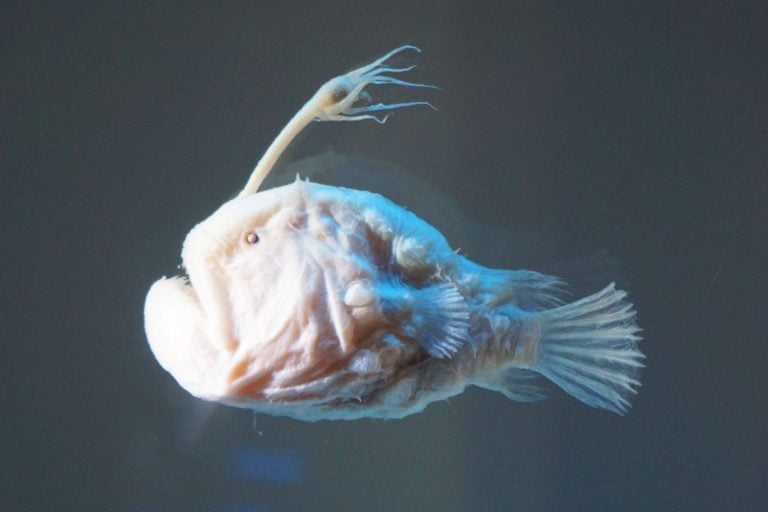
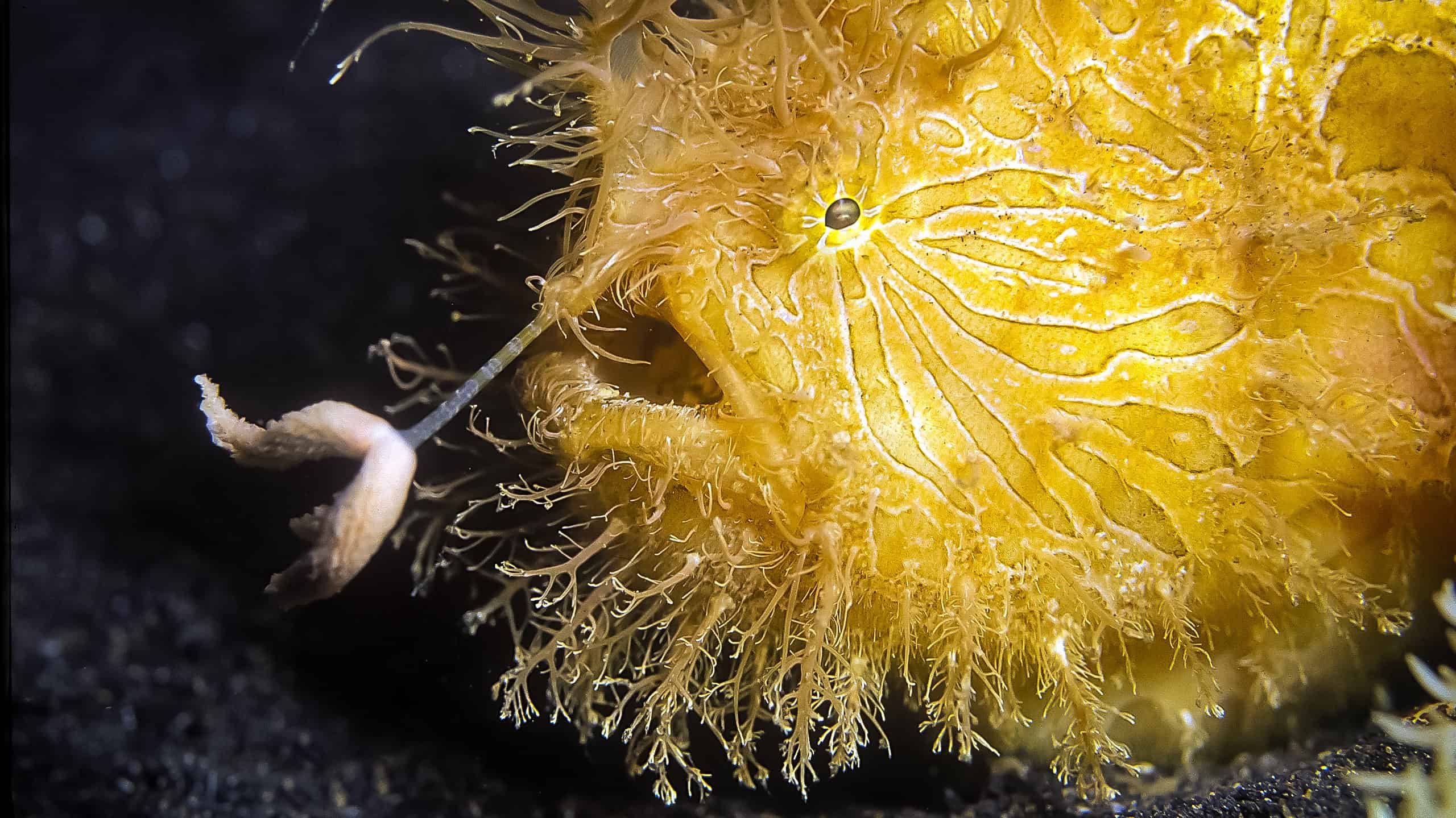
- They use a modified first dorsal fin spine called an illicium like a fishing rod.
- It has an appendage called an esca on the end that looks like a worm.
- As the prey approaches to get the ‘worm’, the frogfish rapidly opens its jaws and sucks in the prey.
Have you ever seen a fish go fishing? The frogfish in this extraordinary Instagram post is very good at it! Watch the clever way it uses its own body as bait to lure unsuspecting prey and then swallows it whole. Here is a scientific breakdown of what you have just seen.
All About Frogfish
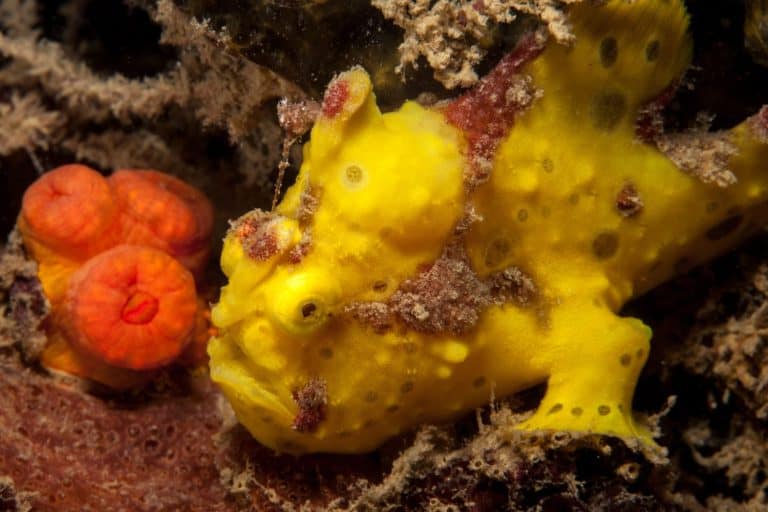
Hairy frogfish, also called striated frogfish (Antennarius striatus), are a marine ray-finned fish belonging to the family Antennariidae. They are subtropical benthic fish that live in rocky, sandy, and rubble habitats, as well as coral reefs. They can be found along the east coast of Africa, in shallow estuaries at depths ranging from 33 to 718 feet.
As fish go, they look a bit strange! They have no scales and their stocky body is covered in bumpy bifurcated spinules, which makes them look hairy. Their coloration is highly variable, ranging from light yellow to solid black.
How Do Frogfish Feed?
Hairy frogfish feed on crustaceans and fish such as flounders, shrimp gobies, and lionfish. They lie in wait until they spot unsuspecting prey, then track it with their eyes. As the prey gets close, they go fishing!
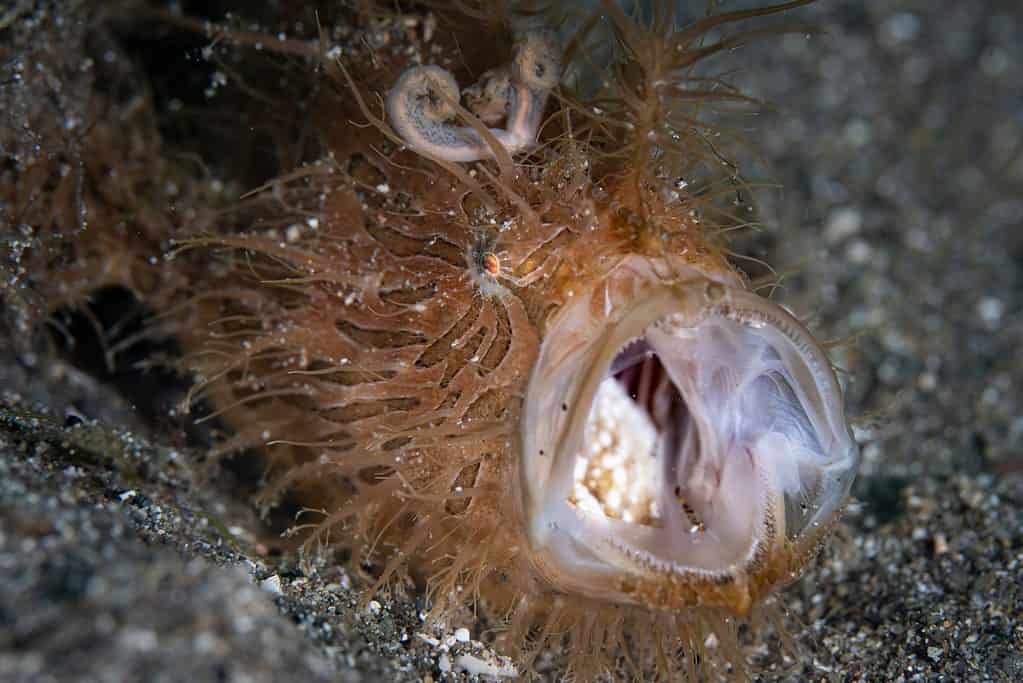
Hairy frogfish have large mouths and swallow prey whole.
©Paul Tuazon/Shutterstock.com
These fish have a modified first dorsal fin spine called an illicium, which acts like a fishing rod. At the end of the illicium is an appendage called an esca, which acts as a lure because it resembles a worm. As the prey gets closer, the frogfish moves its illicium so that the esca starts to wobble. They can do this because there is a bone supporting the illicium that extends in front of the upper lip. Quietly, it adjusts its mouth in preparation for the attack.
Once the prey is close enough, the frogfish suddenly opens its jaws and increases the volume of its mouth by 12 times. Water rushes in, taking the prey with it. The whole process takes milliseconds. These amazing fish can even regenerate their esca if it becomes damaged, ensuring they are never short of bait!