
Quick Take
- Shedd Aquarium secured the first captive hatching of a warty frogfish in aquarium history.
- Monitoring a juvenile no larger than a pea emphasizes just how vulnerable and fragile this species is.
- Warty frogfish are native to Indo-Pacific coral reefs and often survive at depths of 65 feet in craggy rock ledges.
- The new hatchling was fed a steady diet of brine shrimp that were also farmed in-house at the aquarium.
Shedd Aquarium is celebrating a significant conservation win. It’s the home of a newly hatched warty frogfish (Antennarius maculatus), a species that has never been hatched in captivity until now. Native to subtropical Indo-Pacific coral reefs, it’s rarely seen by anyone but experienced divers. This species can also be found at depths of 65 feet in rocky seabeds. Now, its healthy existence in the Chicago aquarium offers hope for the species’ future survival.
A Ferocious Fish No Larger Than a Pea
It’s almost ironic that one of the biggest accomplishments in aquarium history comes down to a pea-sized fish. The warty frogfish is only 11 to 15 centimeters as an adult, meaning if you blink, you’d miss it as a juvenile. Yet Shedd has managed to hatch this tiny wonder for the first time in aquarium history. Despite its small size, this species has a reputation among the reefs as an efficient hunter. It’s part of the anglerfish family and uses a specialized lure, called an illicium, to attract prey.

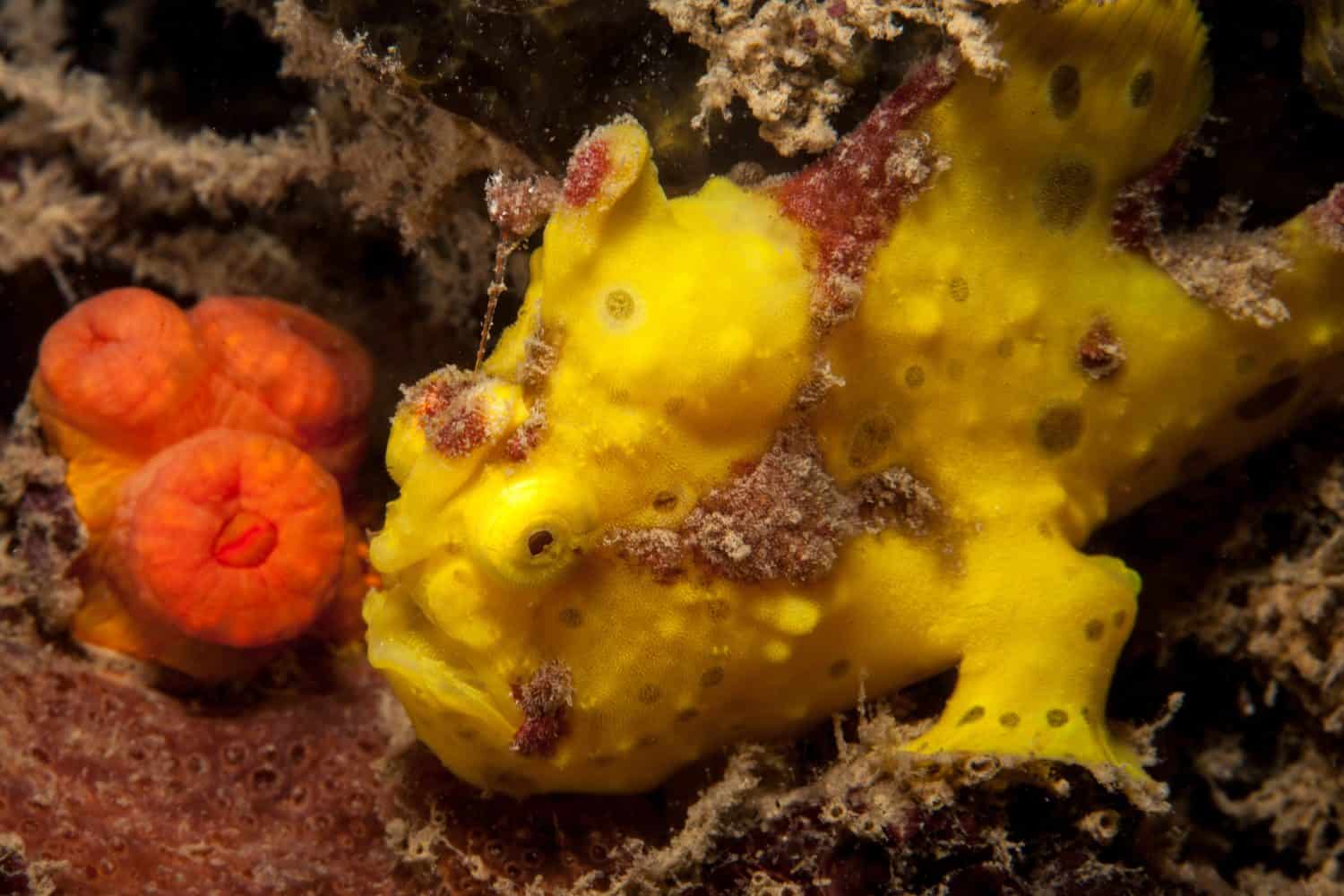
Also called the clown frogfish, the warty frogfish easily blends into brightly colored coral reefs, waiting for prey.
©DiveIvanov/Shutterstock.com
Combined with top-notch camouflage, warty frogfish attack before their prey has a chance to realize what’s happening. The fish’s wart-like, bumpy appearance helps it mimic the surrounding rocks and coral. Its neon yellow or white coloring matches the surrounding coral, helping it remain hidden. Among the tropical corals of the Pacific, warty frogfish are nearly imperceptible to smaller species swimming by. While lying in wait for unsuspecting prey, it prepares to quickly suck in anything that passes by. In only six milliseconds, the warty frogfish has a meal, and its prey never even knew the encroaching danger.
This species’ hunting technique isn’t its only unique trait. The warty frogfish is also a surprisingly poor swimmer. This is why camouflage is crucial—the more it blends into its surroundings, the less movement it requires to hunt. When it does need to move, its pectoral fins act as “legs,” helping it hobble across the seafloor. In extreme cases, warty frogfish can use these fins for jet propulsion, sucking in and expelling water to move themselves farther. Its environmental needs are only one reason the species has never been raised in captivity before.
The Miracle Hatching of Shedd’s Warty Frogfish
The senior aquarist at Shedd called the tiny warty frogfish hatchling “one in a million.” Its unique lifestyle and hunting habits make it challenging to raise in captivity. The fact that this one has hatched, is healthy, and is growing is a testament to the aquarium’s care and the resilience of this species. However, it did not happen overnight. The team at Shedd spent five months preparing the tanks and diet for their future resident. They worked around the clock to monitor the fish from its microscopic juvenile stage through its larval development. As of April 2026, it has grown to one centimeter in size. In another three months, it will be a fully grown adult with bright coloring and a flashy angler lure on its dorsal fin.
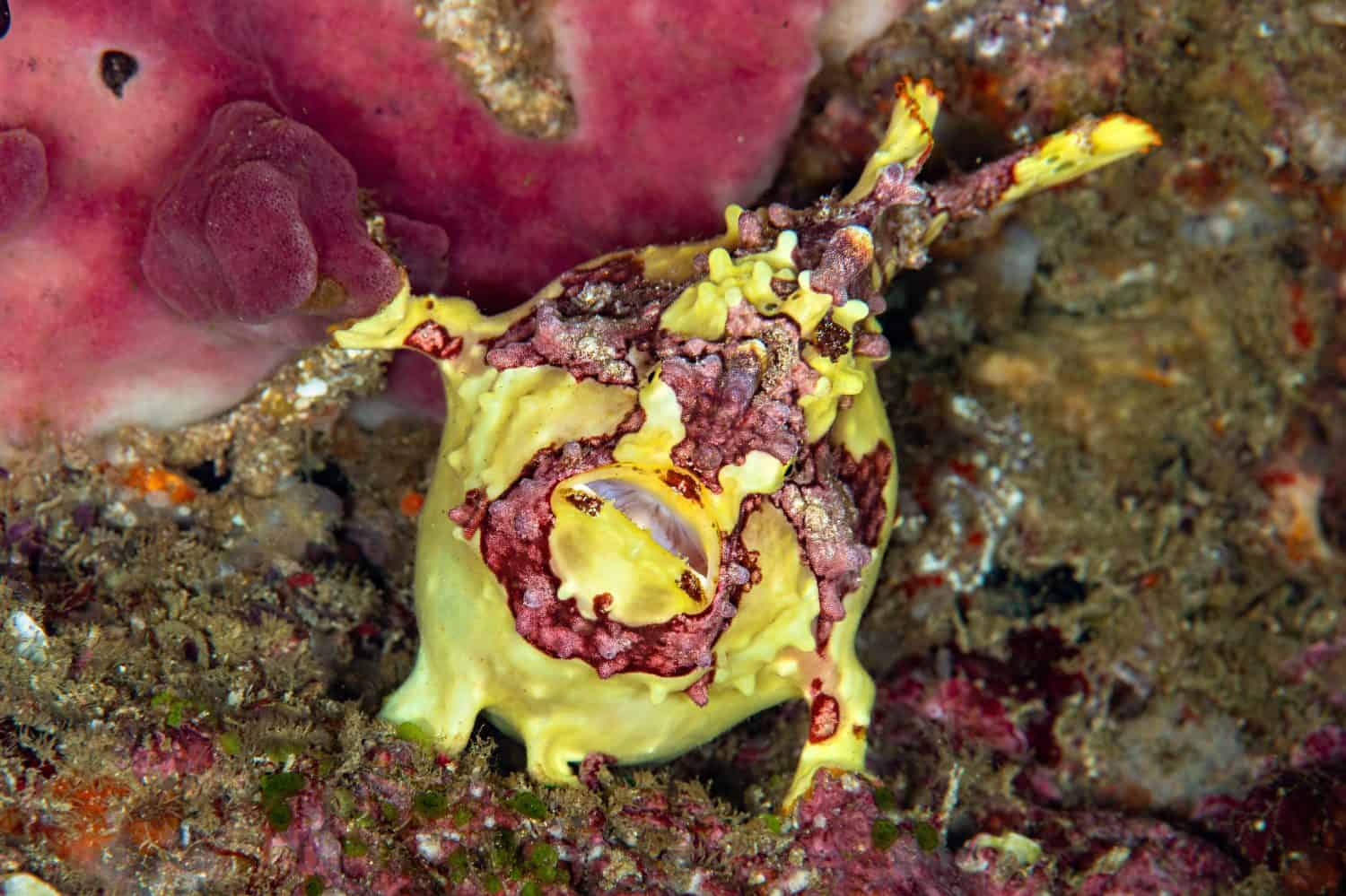
The first successful in-house hatching makes the Shedd one of the earliest aquariums in history to breed a warty frogfish.
©Burdos/Shutterstock.com
Nurturing this small fish was also something of a surprise for Shedd. Caretakers didn’t set out to find the gelatinous egg mass that appeared in the Wild Reef, inhabited by two adult warty frogfish. Experts quickly removed the egg sac and relocated it to a tank for monitoring. As it turned out, this was the best thing they could have done.
Mating and successfully breeding warty frogfish in aquariums is unprecedented. While tens of thousands of eggs were laid, only one larva survived. This demonstrates just how difficult it is to rear this species in captivity. It’s also the first documented account of successfully rearing warty frogfish, and Shedd is doing everything it can to protect and preserve the species. That even includes feeding the newborn a steady diet of brine shrimp, which are also raised in the aquarium. This in-house care is making a difference and may be the first step toward helping repopulate Pacific reefs with warty frogfish.